
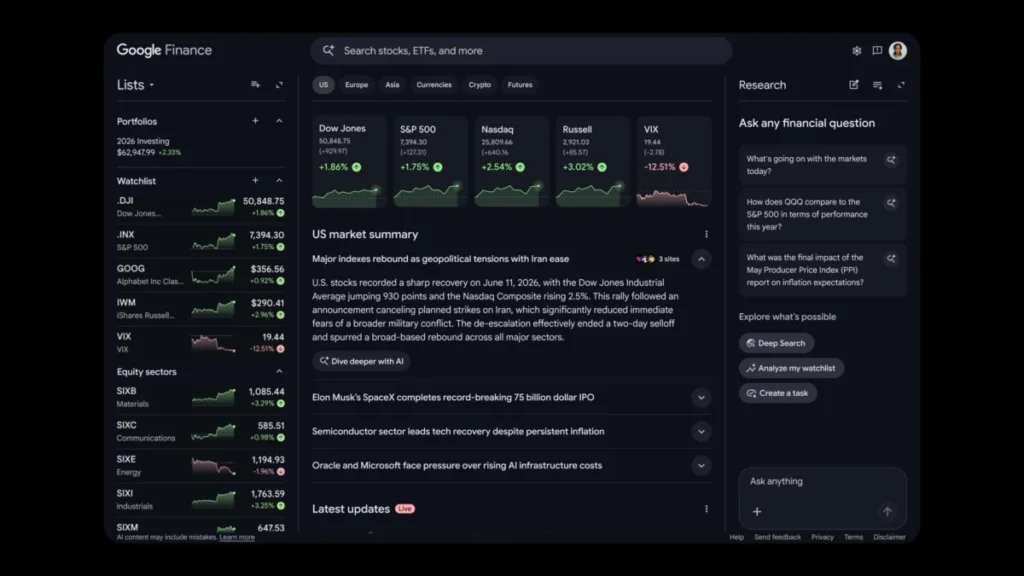
The Future of Financial Intelligence: Google Finance Exits Beta with Agentic AI Integration
After a ten-month developmental sprint that reshaped how retail investors interact with market data, Google has officially transitioned its redesigned Google Finance platform into general availability. As of June 25, 2026, users worldwide gain access to a fully realized suite of tools that bridge the gap between static data visualization and proactive, agentic financial analysis.
The launch introduces three pivotal features—investment portfolio management, scheduled AI-driven market briefings, and a dedicated Android application—marking the end of a beta period that began on August 8, 2025. With this update, Google is positioning its platform not merely as a news aggregator, but as a robust, AI-native research terminal capable of competing with professional-grade analytical tools.
The Chronology of Transformation: From Beta to Global Standard
The journey toward today’s full-scale launch was defined by a methodical, phased rollout. When Barine Tee, Principal Engineer for Search at Google, first unveiled the reimagined platform last August, the focus was squarely on natural language research and real-time data feeds. However, the roadmap was clearly defined by user feedback, which prioritized the return of portfolio tracking—a staple of the classic experience that had been noticeably absent from the initial AI-focused build.
- August 2025: The beta opens in the United States, introducing advanced charting and natural language search.
- November 2025: Google integrates prediction market data from Kalshi and Polymarket, while simultaneously expanding the platform’s footprint to India.
- April 2026: The service reaches over 100 countries, bringing localized language support to major markets including Brazil, Canada, and Japan.
- May 2026: The "Deep Search" capability—a high-compute, citation-heavy research engine—goes global, coinciding with a full rollout across European markets.
- June 25, 2026: Google Finance exits beta, cementing the ecosystem with portfolio management, automated tasks, and a dedicated Android mobile presence.
Portfolio Management: Analytical Depth Powered by Gemini
The most anticipated feature of the general release is the new portfolio management system. Unlike its predecessor, which served primarily as a static ledger for tracking ticker symbols, the new Google Finance implementation utilizes AI to provide actionable, structural insights into an investor’s holdings.
Users can populate their portfolios through a variety of high-friction-reducing methods: uploading screenshots of brokerage statements, importing CSV or PDF files, or utilizing the "Ask anything" bar. The natural language processing is sophisticated; for example, a user can simply type, "Create a new portfolio and add 50 shares of GOOG and 100 shares of SPY," and the system will instantly ingest and structure the request.
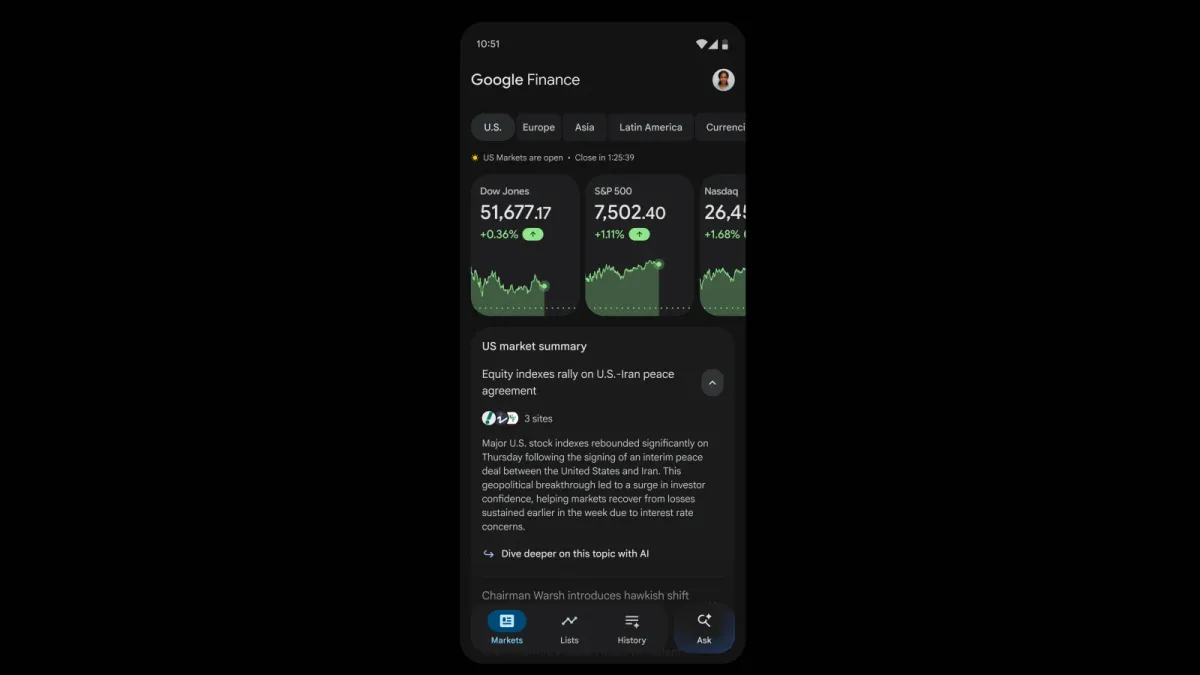
Once established, the "Insights" tab acts as a personal financial auditor. It offers three distinct analytical lenses:
- Asset Allocation: A granular breakdown of holdings across sectors and indices.
- Concentration Risk: An automated diagnostic tool that flags if a portfolio is overly exposed to a specific asset or sector.
- Performance Heatmaps: A visual representation of gain/loss drivers.
Crucially, the research panel remains available for deep-dive queries, allowing users to ask, "How does my fixed-income allocation impact my long-term growth potential?" The platform draws from a vast repository of web data to provide context-aware, personalized responses. To address growing privacy concerns, Google has clarified that while it processes these inputs, it does not retain user-uploaded files or images, and full control over data deletion remains with the user.
Scheduled AI Briefings: A Shift to Agentic Monitoring
The introduction of "scheduled briefings" represents a fundamental shift in user behavior. By enabling users to set up recurring, AI-synthesized updates—such as "Send me a daily pre-market briefing analyzing significant overnight moves across major cryptocurrencies"—Google is moving the platform from a "pull" model (where users must search for information) to a "push" model (where the platform acts as an agent).
This task-based system operates as a background monitoring service. Once a task is defined, the system periodically scans the web, synthesizes relevant developments, and delivers the briefing via the Google app on mobile or the web-based research panel.
This functionality mirrors the "information agents" introduced at Google I/O 2026, though with a distinct advantage: the Finance version is entirely free of charge, avoiding the paywall restrictions currently applied to the premium "AI Ultra" subscription tier. While the mobile app does not yet support the creation of these tasks—a feature slated for a future update—the web interface serves as a centralized hub for managing these recurring threads.
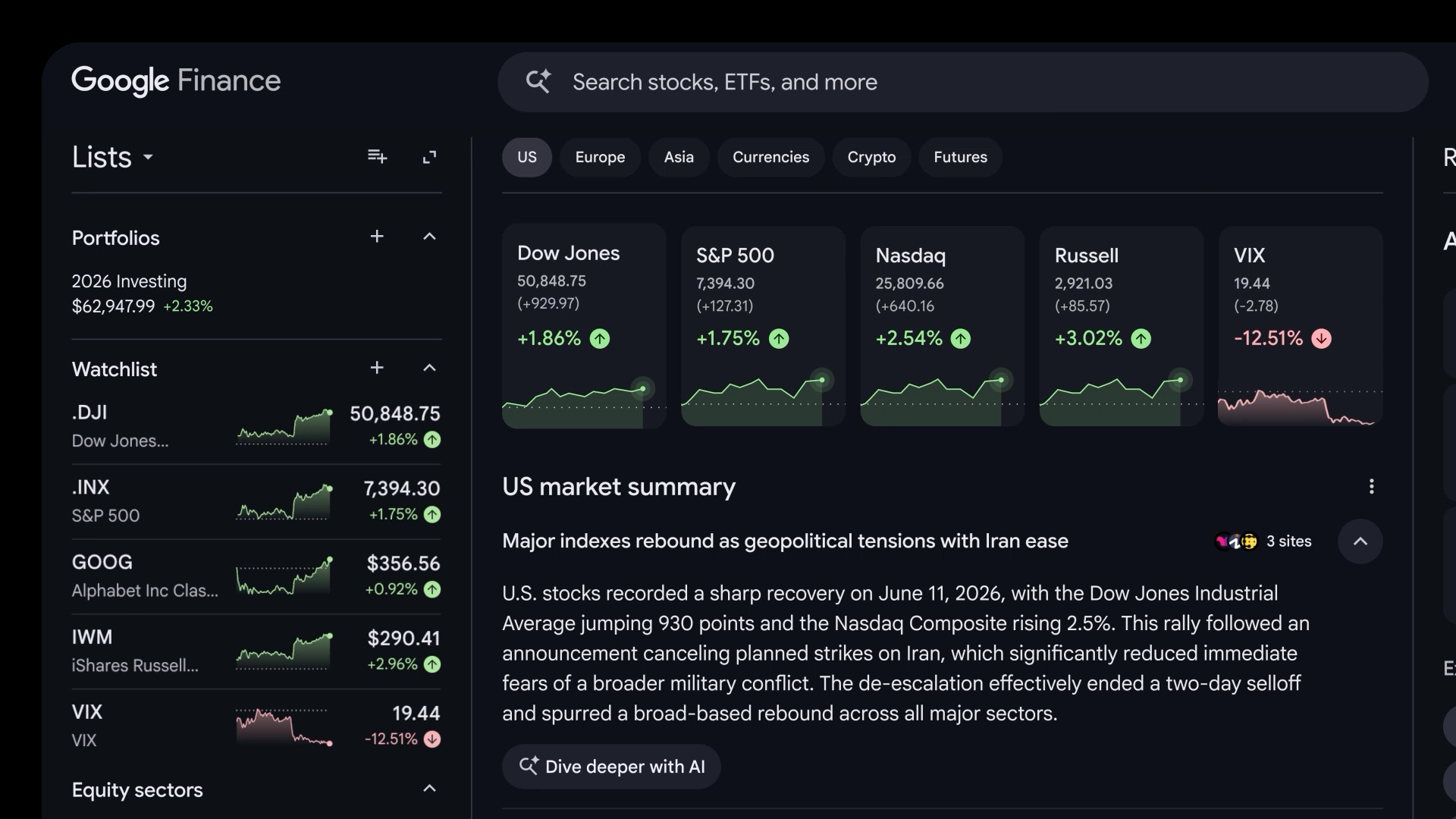
The Android Surface: Mobile-First Finance
The launch of a standalone Google Finance app for Android is a strategic play for mobile engagement. Currently, the app provides access to watchlists, real-time data, and the AI research tool. It also features "Key Moments," an innovative overlay that uses AI to explain the context behind specific stock movements on a given day.
While the app currently lacks the portfolio and task-management features found on the web, Google has confirmed that these are "coming in the months ahead." With over 29,500 reviews, the app has seen significant activity, though its early rating reflects historical baggage from the defunct version of the app. By providing a dedicated, persistent mobile surface, Google is effectively targeting the "always-on" investor who requires immediate access to market sentiment and rapid-fire research.
Implications for the Financial and Advertising Sectors
The exit from beta carries significant weight for the financial services industry. As AI Overviews become the default search interface, financial advertisers are navigating a new reality. Recent data from April 2026 indicated that the finance sector leads all industries in AI Overview visibility growth, hitting 9.9% year-over-year.
The shift toward an agentic model in Google Finance creates a "walled garden" for research. When a user conducts their entire journey—from pre-market briefings and portfolio analysis to earnings call streaming—within Google’s ecosystem, the touchpoints for third-party financial institutions change. The consolidation of these tools suggests that Google is not just competing with news sites; it is competing with legacy professional platforms like Bloomberg and FactSet for the mindshare of the retail and semi-professional investor.
For the marketing community, the platform’s evolution raises critical questions regarding measurement and attribution. If the platform becomes the primary destination for financial "homework," the traditional search funnel—where a user might visit multiple independent websites to compare data—may be truncated. Advertisers will need to monitor how this "agentic" shift impacts the visibility of financial services and whether the platform will eventually introduce native ad placements within its personalized, AI-generated reports.
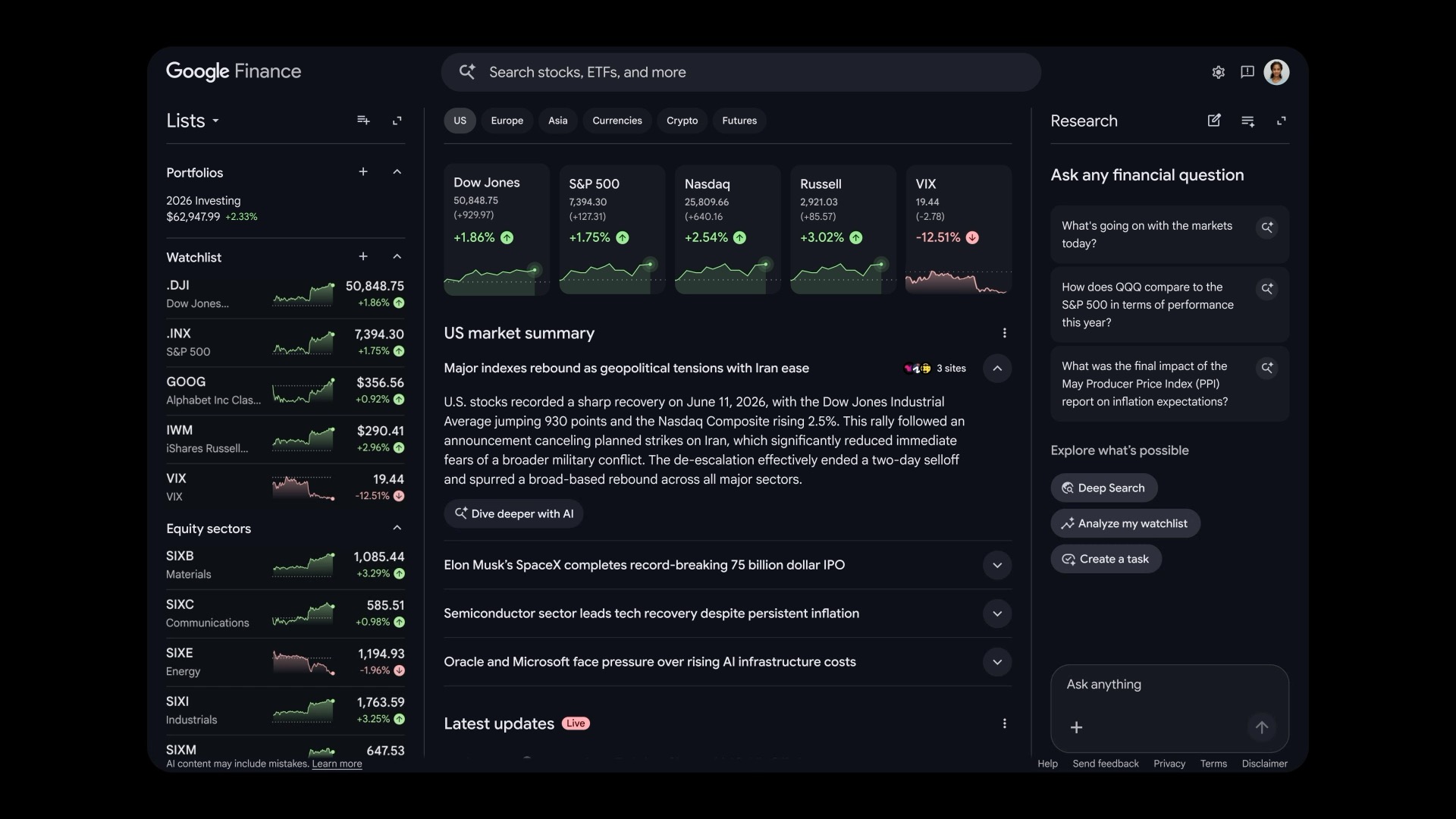
Official Stance and Safety Disclaimers
Google has been careful to maintain a firm boundary between informational content and professional advice. The company’s Help Center documentation is explicit: Google Finance does not provide personalized investment, tax, or legal advice.
The platform’s reliance on AI-synthesized summaries carries inherent risks of hallucination or error. As such, Google emphasizes that all AI-generated insights are for informational purposes only and that users should independently verify data before making financial decisions. The system is designed to provide breadth and efficiency, not to replace the role of a licensed financial advisor.
Conclusion: The New Baseline
The maturation of Google Finance is a testament to the speed at which generative AI is being integrated into utility-focused products. By layering complex analytical agents over a legacy data structure, Google has created a compelling, sticky, and highly useful interface that serves as a case study for the future of "agentic" software. As these tools continue to roll out to mobile and integrate further into the user’s daily workflow, the platform will undoubtedly become a foundational pillar for millions of investors, forever changing the expectations of what a "free" financial tool can accomplish.
