
The Great Rewiring: How AI Agents are Transforming the Marketing Landscape for 2026
The marketing industry stands at a pivotal intersection. As we approach the dawn of 2026, the promise of Artificial Intelligence has moved beyond the "hype cycle" of generative chatbots and into the pragmatic, high-stakes world of autonomous AI agents. According to the latest AI & Data in Marketing study, a staggering 90.3% of marketing professionals are already integrating AI agents into their operational stacks.
This isn’t merely an upgrade to existing workflows; it represents a fundamental shift in the power dynamics of the buyer-seller relationship. On December 2, the Martech for 2026 report will be unveiled, detailing how these "agentic" systems are poised to rewrite the rules of engagement, search, and commerce.
The Rise of the Agentic Stack: Main Facts
The shift from static software tools to dynamic, autonomous agents is the defining trend of the coming year. While early AI adoption in marketing focused on productivity—content generation, email drafting, and data synthesis—the current landscape has evolved.
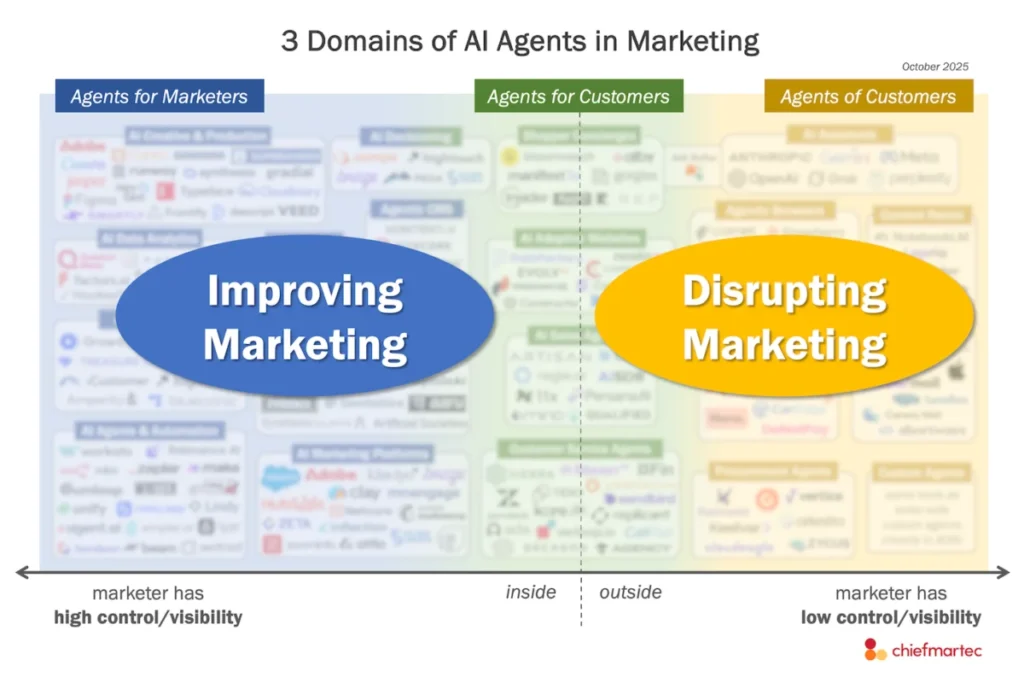
An "AI agent" is defined not by its processing power, but by its autonomy and the domain in which it operates. Currently, these agents are split into two distinct, often opposing, camps:
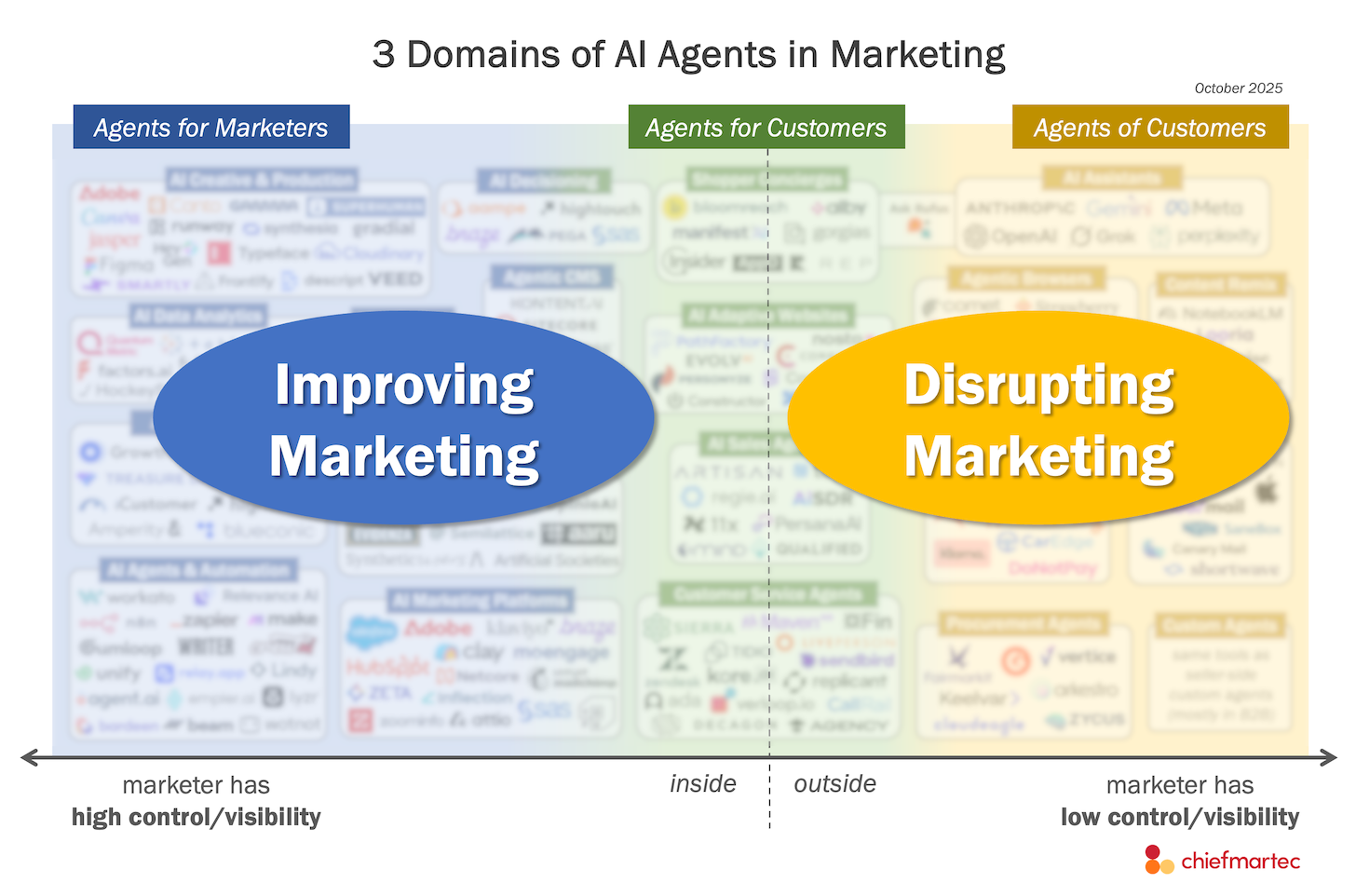
- Marketer-Side Agents: Tools designed to improve internal efficiency, campaign execution, and data analysis.
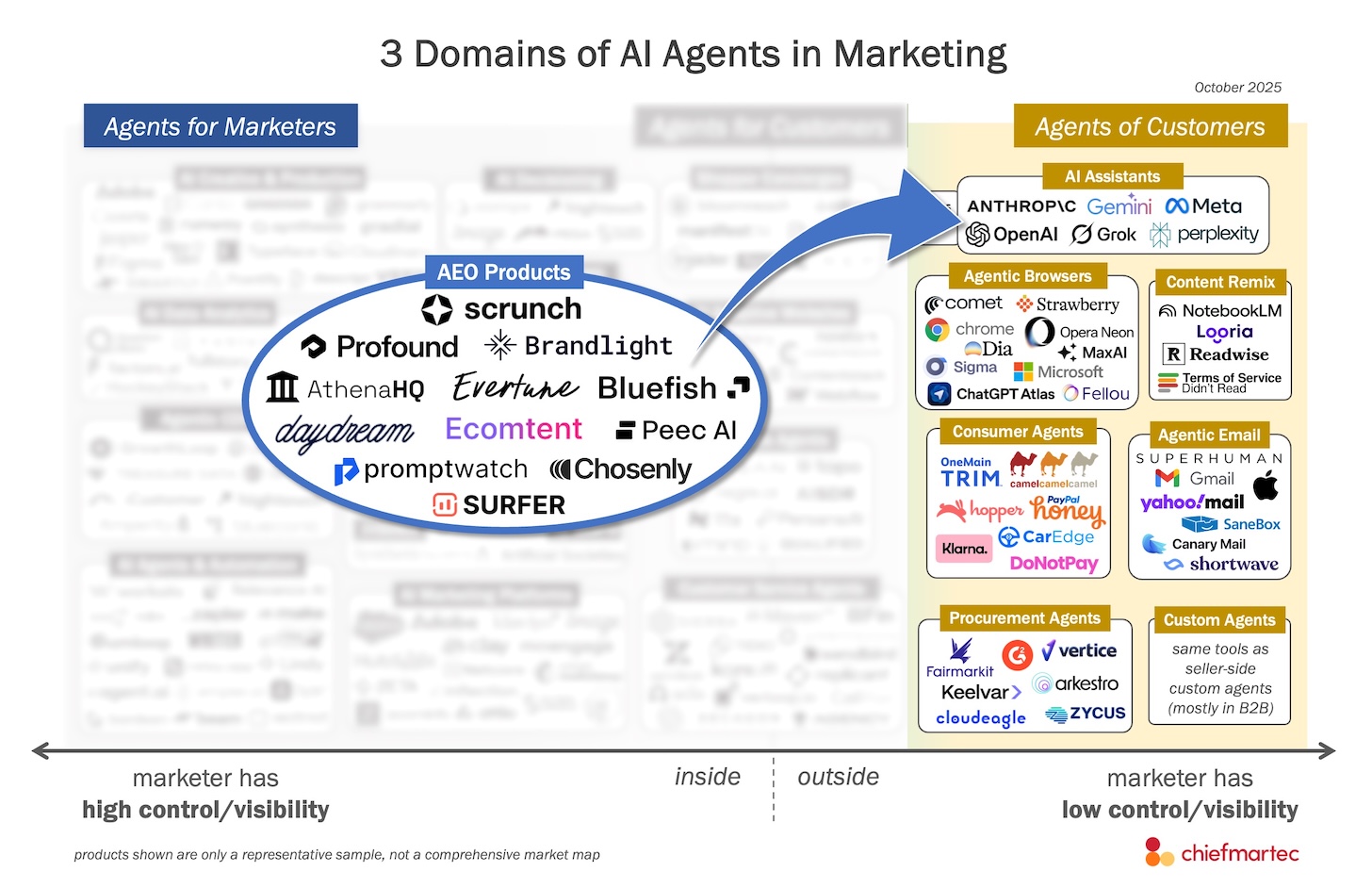
- Buyer-Side Agents: Autonomous assistants (like ChatGPT, Claude, and Gemini) that act on behalf of the consumer to navigate, evaluate, and even execute transactions.
The industry has reached a point of saturation regarding the former. Nearly every major martech platform is now embedding agents to assist marketing teams in brainstorming and distribution. However, the true disruption lies in the latter, where the buyer is no longer navigating a website but is instead deploying an agent to do the "shopping" for them.
A Chronology of the Agentic Shift
The transition from manual interaction to agent-to-agent commerce has occurred with breathtaking speed over the last 18 months:
- Early 2024: The proliferation of Generative AI tools (ChatGPT, Midjourney) creates a surge in content production, leading to an "efficiency" boom in marketing departments.
- Mid-2024: Companies begin deploying outbound AI SDRs (Sales Development Representatives) to automate lead generation, flooding inboxes with "personalized" outreach.
- Q3 2025: OpenAI introduces "Instant Checkout" for Etsy and Shopify, signaling a move toward transactional AI.
- October 2025: Walmart announces a landmark partnership with OpenAI, allowing consumers to complete end-to-end shopping experiences within an AI interface.
- Late 2025: Google rolls out "agentic checkout," an AI assistant that monitors product pricing and automatically executes purchases when criteria are met.
- Current State: We are witnessing the birth of "Voice Agent Inquiries," where AI assistants physically call brick-and-mortar stores to check inventory and pricing on behalf of the user.
Supporting Data: The Pragmatism of Adoption
The Martech for 2026 research highlights a critical distinction: marketing teams are not being "reckless" with this technology. The 90.3% adoption rate noted in the study reflects a measured, professional approach to integrating AI into production environments.
Key Research Insights:
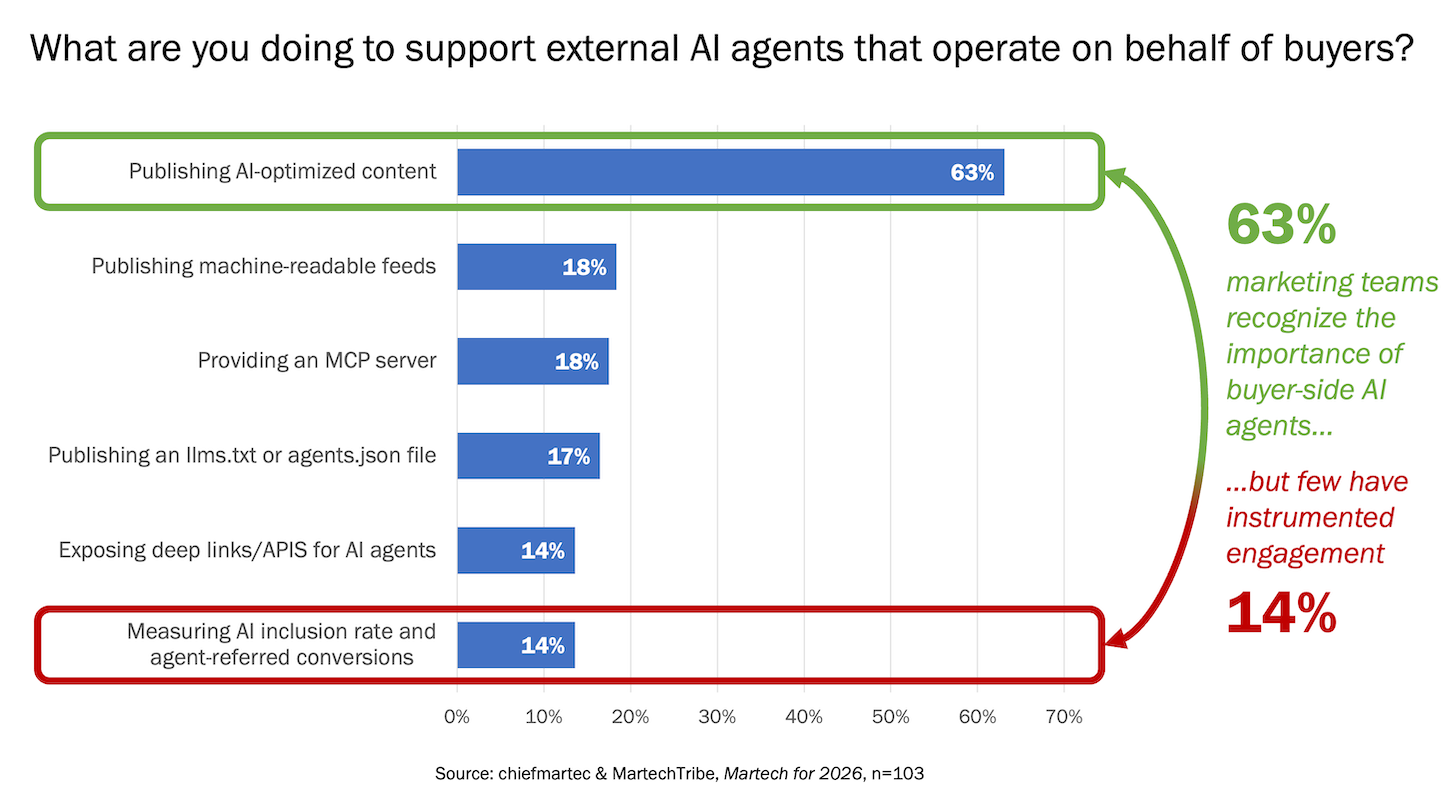
- Strategic Alignment: 63% of marketing teams acknowledge that buyer behavior has shifted toward AI-driven search channels.
- The Implementation Gap: Despite this awareness, only 14% of organizations have successfully instrumented their systems to cater to these buyer-side agents. This "readiness gap" is expected to be the primary focus of marketing operations in the coming year.
- Efficiency vs. Effectiveness: While most agents are deployed to "do more with less," the most competitive firms are shifting their focus from simple task automation to increasing the effectiveness of their marketing outcomes.
Official Perspectives on the "Agentic" Future
Industry experts and the authors of the upcoming report characterize this era as a "Great Rewiring of the Buyer’s Journey." The consensus is that the traditional SEO playbook—a cornerstone of marketing strategy for the last 25 years—is facing an existential crisis.

"We are witnessing a shift where the buyer is no longer the target of a broadcast, but the commander of an agent," says the report’s lead researcher. "When a buyer uses an AI assistant to research a product, they aren’t looking at your landing page; they are looking at the summary provided by an AI. If your brand isn’t part of that answer, you don’t exist."
The irony is not lost on the industry. After a year of marketing teams using AI to "harass" prospects with automated outbound emails, the tables have turned. Now, the buyer is using AI to avoid those very interactions, forcing salespeople to answer calls from AI agents on the other end of the line.
Implications: The New Frontier of Marketing
The rise of autonomous buyer agents carries profound implications for every department from CMOs to Sales Operations.
1. The Death of the Traditional Funnel
The linear path from "Awareness" to "Purchase" is being disrupted. When a user asks an AI to "find the best CRM for a mid-sized firm and purchase the one with the best integration," the traditional marketing funnel—filled with white papers and nurture campaigns—is bypassed. Brands must now optimize for "Agentic SEO," ensuring their data is accessible and favorable to the AI models that represent their customers.
2. From Human-to-Human to Agent-to-Agent
We are currently in a "messy" intermediate phase where AI agents are calling human representatives. This is unsustainable and inefficient. The next stage, which will likely take hold by late 2026, is direct agent-to-agent communication. Your brand’s AI will need to communicate directly with the customer’s AI to negotiate pricing, check compatibility, and finalize contracts.
3. The Re-Prioritization of Content
Content strategy will undergo a radical transformation. Instead of creating content purely for human consumption, marketers must create "agent-friendly" data. This means clear, machine-readable specifications, transparent pricing, and API-first structures that allow AI assistants to pull accurate information in real-time.
4. A New Skill Set for Marketers
The marketing professional of 2026 will require a hybrid skillset. Beyond traditional storytelling, the ability to manage AI agents, optimize for LLM (Large Language Model) recall, and oversee the governance of automated interactions will become the baseline for success.
Conclusion: Preparing for 2026
The transition to an agent-first world is not coming—it is already here. For marketers, the choice is clear: continue to focus on the marginal gains of internal productivity, or pivot to address the massive, disruptive reality of the buyer-side agent.
The upcoming Martech for 2026 report, supported by industry leaders such as GrowthLoop, Hightouch, and SAS, provides the roadmap for this transition. The data suggests that the firms that act within the next 6 to 12 months will define the competitive landscape for the remainder of the decade.
Join the conversation: The official launch event on December 2 will feature a deep dive into these findings, offering participants a blueprint for navigating the "Great Rewiring." By signing up for the webinar, professionals will receive the comprehensive 100+ page report and gain access to the live discussion on how to secure their brand’s place in an agentic future.
In this new era, the goal is no longer just to be found; it is to be selected by the digital assistants that hold the keys to the modern buyer’s wallet. The race has begun—will your brand be ready to answer the call?
