
The Great Rewiring: How AI Agents Are Transforming the Marketing Landscape for 2026
The marketing industry is standing on the precipice of a structural shift that dwarfs the introduction of social media or the dawn of the programmatic advertising era. As we look toward the horizon of 2026, the primary narrative isn’t just about the adoption of artificial intelligence—it is about the transition from "AI as a tool" to "AI as an autonomous agent."
On December 2, the Martech for 2026 report will be unveiled, offering a comprehensive deep dive into this new reality. Early findings from this research suggest that the marketing stack is no longer merely a collection of software applications; it is becoming a complex, interdependent ecosystem of agentic workflows.
The State of the Union: AI Agents Are Here to Stay
The data from the AI & Data in Marketing study provides a clear mandate: the era of speculative AI experimentation is over. A staggering 90.3% of surveyed marketing professionals—representing some of the world’s most prominent B2B and B2C brands—confirmed they are currently utilizing AI agents within their operational stacks.
While these participants are admittedly more tech-savvy than the average marketing team, their adoption patterns are not driven by hype. These are pragmatic, results-oriented professionals who are embedding agents into their daily operations to gain a competitive edge. Whether for brainstorming, campaign distribution, or data analysis, AI agents are now a fixture in the modern marketing department.
Chronology of the Shift: From Assistant to Agent
To understand how we reached this point, we must look at the evolution of AI in marketing:
- 2023: The Generative Explosion: The industry saw a wave of LLM-powered tools that assisted with content creation, email drafting, and image generation. These were passive, human-in-the-loop tools.
- 2024: Integration and Efficiency: Martech platforms began integrating these LLMs directly into existing workflows. Marketing teams focused on "doing more with less," utilizing AI to streamline repetitive tasks.
- 2025: The Emergence of Agency: This year marked the shift from simple generation to "agentic" capabilities—where tools can plan, execute, and iterate based on specific, high-level business goals.
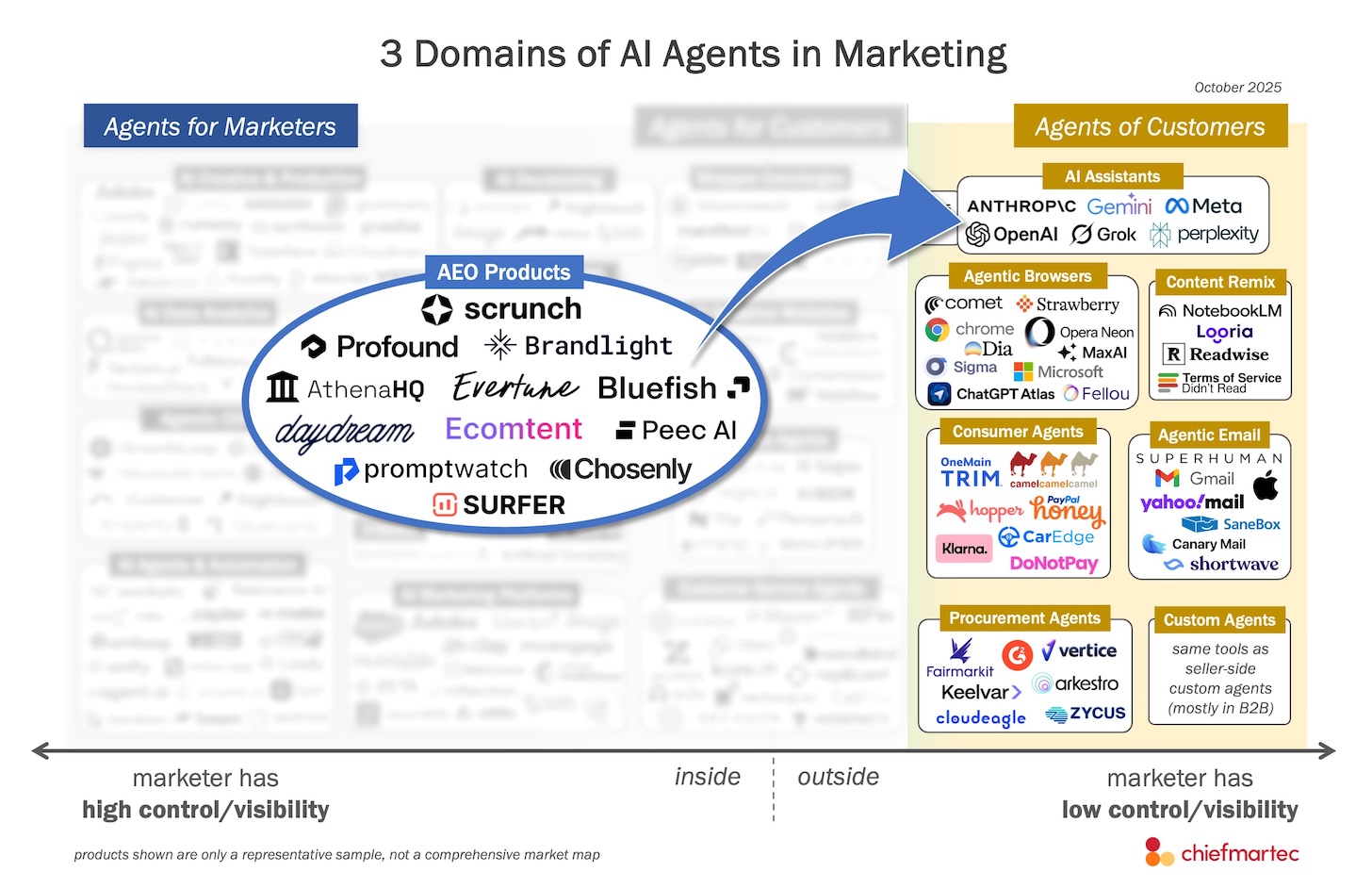
- 2026 (The Outlook): The Era of the Buyer-Side Agent: As we move into 2026, the focus shifts from the marketer’s side of the desk to the consumer’s side. The rise of autonomous buyer-side agents, such as advanced versions of ChatGPT, Gemini, and Claude, is beginning to fundamentally rewrite the traditional customer journey.
Supporting Data: The Disconnect Between Awareness and Action
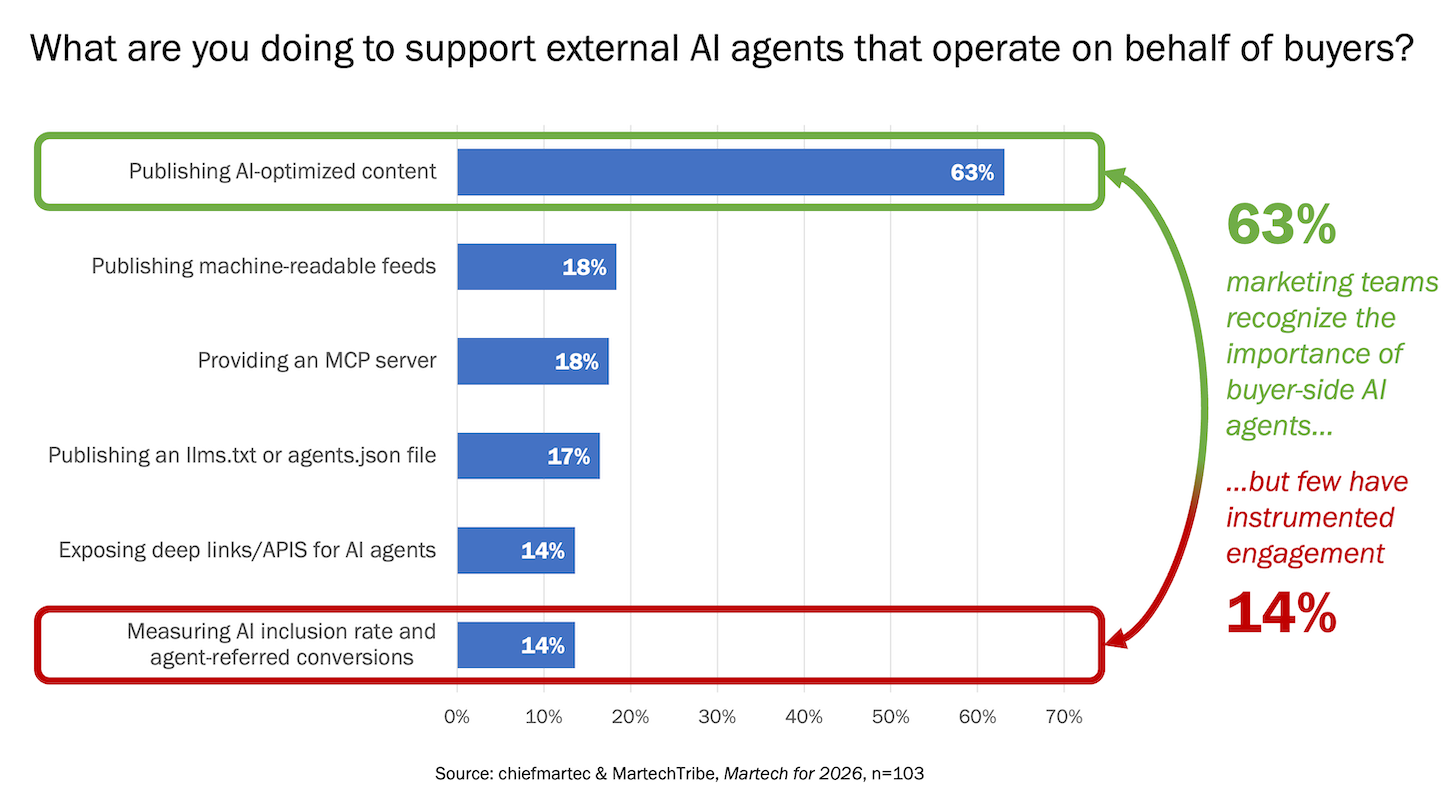
While the industry is acutely aware of the shift, implementation lags significantly behind recognition. According to the Martech for 2026 research:
- 63% of marketing teams acknowledge that buyer search behaviors are changing due to the rise of AI assistants.
- 14% of teams have successfully instrumented their strategy to account for these changes.
This "instrumentation gap" represents a significant vulnerability for brands that rely on traditional search engine optimization (SEO) and legacy lead-generation tactics. The data suggests that while organizations understand the storm is coming, few have built the metaphorical shelter required to survive it.
The Dual Nature of AI Agents: Improving vs. Disrupting
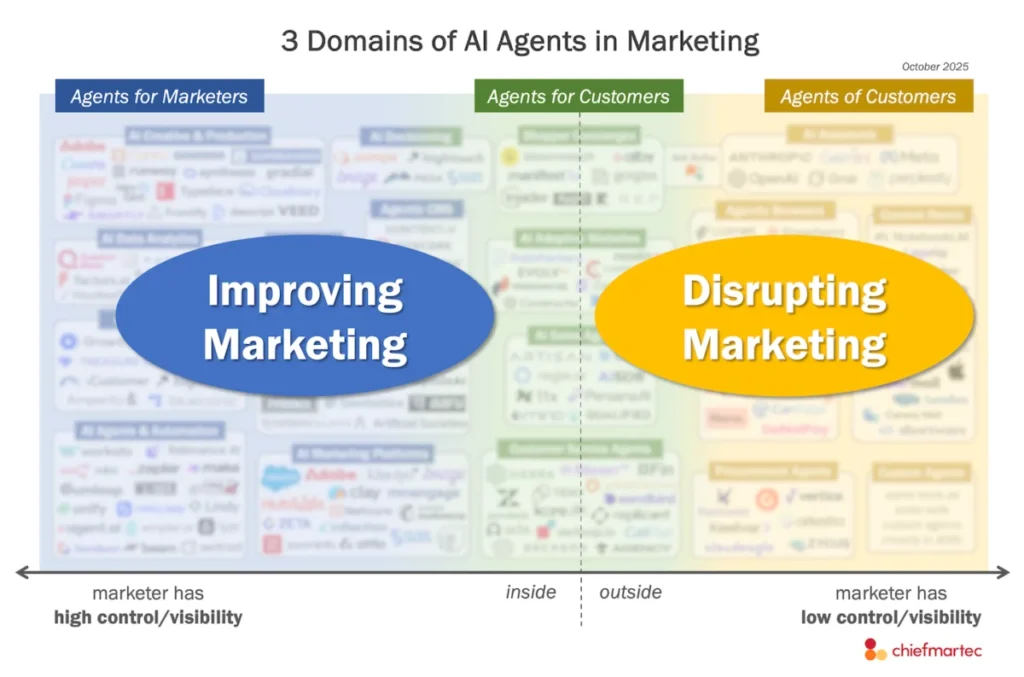
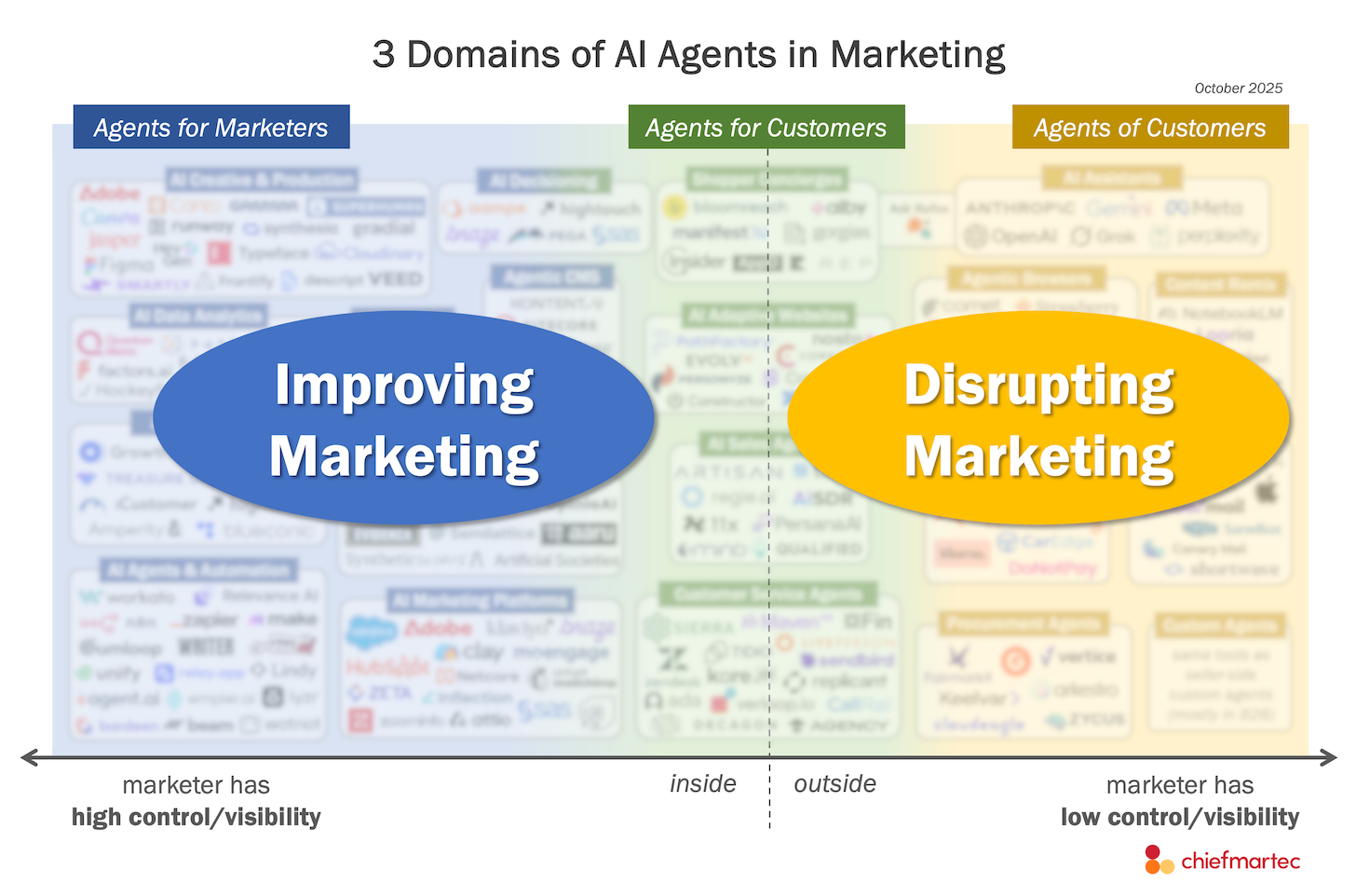
The Martech for 2026 report distinguishes between two primary spheres of AI agency:
1. Marketer-Side Agents: Incremental Improvement
These agents work for the brand. They help marketers brainstorm, produce, and distribute content. While these tools provide massive efficiency gains, their impact is largely incremental. They optimize existing processes rather than replacing them. They are designed to help the brand "do more with less," a mantra that, while popular in boardrooms, often fails to move the needle on true market effectiveness.
2. Buyer-Side Agents: Fundamental Disruption
This is where the true revolution lies. Buyer-side agents act on behalf of the consumer. They are the new gatekeepers of the buyer’s journey. When a consumer uses an AI assistant to evaluate products or compare prices, the brand’s traditional website experience is effectively bypassed.
The displacement of classic search engine results—and the SEO playbooks that have dominated the last 25 years—is not a distant threat; it is currently unfolding. Platforms like Perplexity and Google’s Gemini are transforming from informational search engines into "action engines."
Implications: The New Transactional Reality
The shift toward agentic commerce is accelerating at a rapid pace. Recent developments illustrate this transition:
- Instant Transactions: OpenAI’s "Instant Checkout" and similar integrations with Shopify and Etsy allow users to make purchases without ever leaving the ChatGPT interface.
- App-Based Ecosystems: ChatGPT’s ability to embed third-party services like Canva, Booking.com, and Zillow allows users to complete complex tasks—like booking a trip or creating a design—within a single conversational window.
- Agentic Shopping: Google’s recent launch of agentic checkout allows AI to monitor prices and execute purchases automatically, removing the human from the final stages of the buying process.
Perhaps most provocatively, Google’s Gemini can now perform real-world tasks, such as calling local businesses to check product availability on behalf of the user. This "turning of the tables" creates a fascinating dynamic: for years, marketers have used AI to flood inboxes with outbound sales emails. Now, the buyer can sit back while their AI agent "harasses" human salespeople, forcing a new level of friction into traditional sales funnels.
The Road Ahead: Towards Agent-to-Agent Interactions
We are currently in a "messy middle" phase where AI agents are calling human beings, creating a paradoxical scenario of inefficiency. However, the Martech for 2026 analysis suggests this will be short-lived. The inevitable conclusion is a transition to agent-to-agent interactions.
In the near future, your brand’s AI will need to communicate directly with your customer’s AI. This will necessitate a complete overhaul of how we approach digital marketing. "AEO" (Answer Engine Optimization) is only the first step. Marketing in 2026 will require brands to design for "machine readability" and "agent-accessible" interfaces.
Conclusion: Preparing for the 2026 Landscape
The findings of the upcoming report serve as a wake-up call. The competitive advantage in 2026 will not go to the company with the most "efficient" email automation; it will go to the company that can successfully navigate the "Great Rewiring" of the buyer’s journey.
Marketers must stop thinking about how to reach customers through screens and start thinking about how to provide value to the AI agents that represent those customers. As the industry faces this shift, the Martech for 2026 report provides the necessary roadmap to navigate the complexity of this new era.
Join the Conversation
To gain full access to the research, methodology, and the strategic framework for 2026, industry professionals are encouraged to attend the official Martech for 2026 webinar on December 2. Whether you join live or access the material on-demand, this report will be a foundational resource for anyone looking to stay ahead in the age of the autonomous agent.
For more insights, sign up for the Martech for 2026 Webinar.
(This research is made possible by the generous support of our sponsors: GrowthLoop, Hightouch, Intuit Mailchimp, MetaRouter, Progress, SAS, and Treasure Data.)
