
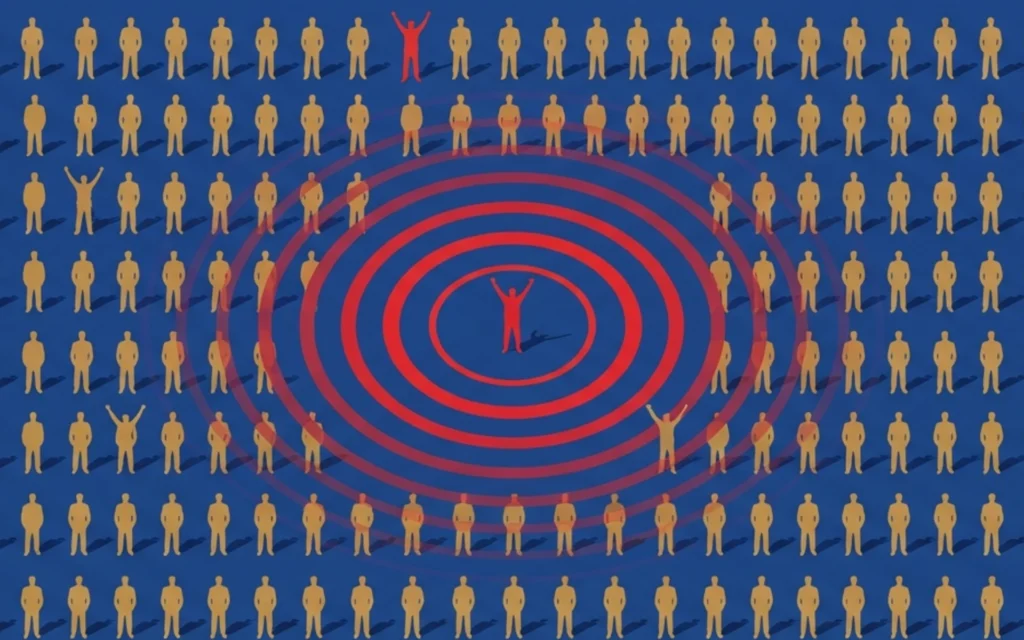
The Great Attention Deficit: Why Spanish Brands Must Pivot from Reach to Resonance
On June 30, 2026, IAB Spain, the nation’s leading digital advertising and marketing trade association, released a landmark report titled Marcas y Atención Social 2026: datos, tendencias y aprendizajes. The study, conducted in partnership with Publicis Groupe-owned data firm Epsilon Technologies, serves as a sobering reality check for the industry. By analyzing 18.9 billion views and 159 million interactions across 1,163 Spanish brands, the report identifies a defining tension for the second half of the decade: the widening chasm between passive visibility and active consumer engagement.
The findings suggest that the industry’s traditional obsession with "reach" is backfiring. While brands are pushing more content than ever before, consumers are increasingly tuning out, leading to a precipitous decline in interaction rates. This shift necessitates a fundamental change in how marketers plan their social strategies, moving away from high-frequency, "always-on" posting toward concentrated, high-impact cultural moments.
Chronology of a Disconnect
The report draws on the Panel SAI 1000 Marcas España, which tracked 3,777 social media profiles across Instagram, Facebook, TikTok, X, YouTube, and LinkedIn from January to May 2026. By comparing these figures to the same period in 2025, IAB Spain mapped a disturbing trend:
- January – May 2025: Baseline data established for 1,163 multi-category brands.
- January – May 2026: Monitoring period during which content saturation grew by a factor of 5.2 and channel fragmentation increased by 73 percent.
- June 30, 2026: Official publication of the findings, shifting the conversation from "how many saw it" to "who cared enough to respond."
The data paints a picture of a digital ecosystem nearing a saturation point. While total Consumer Digital Touch Points (CDTP) reached 19.16 billion—a 16.4 percent year-over-year increase—the quality of that attention is eroding. The industry is witnessing a "hollow reach" phenomenon where brands are hyper-visible but largely ignored.
Supporting Data: The Anatomy of the Attention Gap
The core of the report focuses on the diverging performance metrics that currently define the Spanish social landscape.
Reach vs. Response
The most startling revelation is the inverse relationship between views and interactions. While views climbed by 17 percent to 18.9 billion, total interactions—likes, comments, shares, and mentions—plummeted by 16 percent to 159 million. Even more concerning, interactions on external channels (hashtags and mentions) fell by 17.73 percent.
Audiences are growing their follower counts—up 59 percent to 18.4 million—but their behavioral engagement is retreating. This indicates that consumers are willing to "subscribe" to a brand for potential future relevance, but they are increasingly unwilling to participate in the ongoing conversation, likely due to the sheer volume of noise.
The New Measurement Framework: DAI and SAI
To address these flaws in traditional metrics, IAB Spain introduced two proprietary indices designed to prioritize "earned" attention over "bought" exposure:
- Digital Attention Index (DAI): A composite score measuring holistic brand presence across eight pillars: social media, social listening, search, influencers, web/app traffic, PR, and point-of-sale experience.
- Social Attention Index (SAI): A focused metric calculating a brand’s share of interactions, mentions, and social listening volume relative to competitors.
Using the SAI, the report ranked the top performers. KFC emerged as the leader with a 3.10 percent share, followed by Mahou (2.61 percent), Druni (2.26 percent), and Lidl (2.13 percent). The fact that the top twenty brands all hold less than 2 percent of the total interaction share highlights just how fragmented the attention economy has become.
Platform Dynamics and Interaction Quality
The report warns against a "one-size-fits-all" content strategy, as the data reveals that users engage with different platforms for fundamentally different reasons.
- Instagram (The Engagement Hub): Holding 69.6 percent of total interactions, Instagram remains the primary venue for brand affinity. Within this ecosystem, Reels have proven to be the most cost-effective format for scaling, though traditional photo posts still maintain higher raw interaction averages per post.
- TikTok (The Discovery Layer): With 39.93 percent of total views, TikTok serves as a top-of-funnel discovery tool rather than a conversation driver. KFC’s dominance here—holding a 14.31 percent interaction share—is attributed to a long-term strategy of cultural integration that started in 2021.
- X (The Extreme Concentration): The former Twitter shows the most volatility. KFC alone captured 60.50 percent of the interaction share among the panel, suggesting that for most brands, X is no longer a viable mass-engagement channel, but rather a space for a handful of hyper-vocal, culturally dominant players.
Official Responses and Strategic Implications
The overarching conclusion from IAB Spain is that the era of "Always On" marketing is dead. In its place, the report advocates for an "Always Drop" strategy.
"Audiences are not saturated; they are bored," the report notes. The sheer volume of content has led to a degradation of quality, where brands prioritize the algorithm over the consumer. To combat this, the report suggests five strategic pillars for future campaigns:
- Prescription through Collaboration: Partnering with creators who already command trust within their communities.
- Radical Realism: Moving away from polished, corporate advertising aesthetics toward raw, human-centered content.
- Omnichannel Integration: Ensuring that digital touchpoints translate into real-world experiences.
- Experiential Focus: Turning campaigns into events that are "lived" rather than just watched.
- Strategic Scarcity: Replacing daily, low-impact posts with two or three high-effort, high-impact "drops" per year.
The Power of Collaboration
Perhaps the most persuasive data point is that collaborative content—posts made with influencers, celebrities, or co-branding partners—accounted for only 15.4 percent of activity but generated 32 percent of all interactions. This confirms that brands can no longer manufacture relevance in a vacuum; they must borrow it from established communities.
Case studies like McDonald’s x EME Studios (a 2,600-unit limited hoodie drop in Madrid) and Samsung’s AI-powered Alexia Putellas campaign serve as blueprints for this new approach. By anchoring a digital campaign to a tangible, limited-time event, these brands were able to capture significant interaction shares with a fraction of the posting volume of their competitors.
Future Implications for Marketers
The Spanish market is currently a bellwether for a broader European trend. With recent data showing that users are actively abandoning platforms—42 percent of Spanish users quit at least one social network last year—the competition for attention is becoming a zero-sum game.
For CMOs and marketing agencies, the implications are clear: Measurement discipline is now a competitive advantage. The report proves that raw exposure metrics are increasingly deceptive. A campaign that generates 50 million views but negligible interaction is not a success; it is a symptom of a brand failing to resonate.
As we head into the second half of 2026, the brands that win will be those that accept the new reality: attention is a finite resource that must be earned through cultural relevance, not bought through algorithmic spamming. The "Always Drop" model is not just a tactical recommendation; it is a necessary evolution for a market where consumers have finally developed an immunity to the endless, uninspired scroll.
The task for Spanish marketers is now to strip away the vanity metrics of 2025 and build strategies that prioritize the only metric that truly reflects brand health in a saturated world: the willingness of a human being to stop, engage, and participate.
