
The End of the "NPS Trap": Why SaaS Review Strategies Must Evolve for the AI Era
For over a decade, the B2B SaaS playbook for building social proof has been remarkably consistent: run an NPS survey, identify the "promoters," and offer them a small financial incentive to leave a five-star review on platforms like G2 or Capterra. It was a reliable, albeit somewhat sanitized, engine for generating the "trust signals" needed to close deals.
However, the ground has shifted beneath our feet. As artificial intelligence becomes the primary interface for software research, the traditional review generation model is showing its age. Traffic to traditional review sites is declining as buyers bypass direct navigation in favor of LLM-based queries. Today’s buyers aren’t just reading star ratings; they are using AI to interrogate the entire web for honest, granular, and verified product evidence.
For SaaS companies, the challenge is no longer just about gathering more reviews; it is about building a comprehensive, honest, and high-quality body of evidence that can withstand the rigorous, nuanced synthesis of an AI agent.
The Old Guard: The Fall of the Incentivized Review
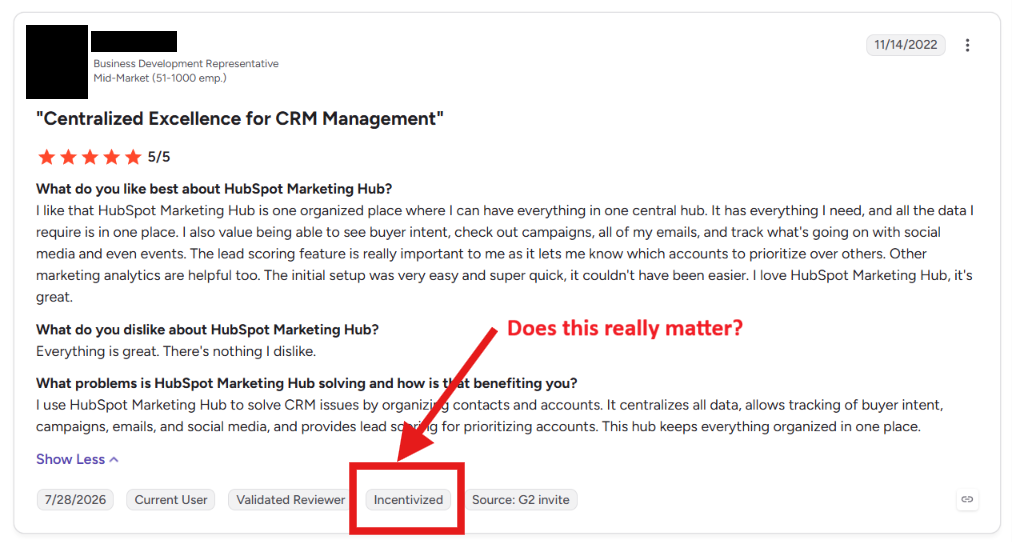
The legacy model of review solicitation was built on a foundation of "soft gating"—a practice that has increasingly drawn criticism for bias. Startups, in particular, have been guilty of timing review requests to coincide with peak customer satisfaction, such as immediately after a successful implementation or a contract renewal.
Toni Hoppen, founder of LandingRabbit, is among a growing cohort of founders who have abandoned the high-incentive model entirely. "On some platforms, reviews are marketing-generated," Hoppen notes. "On others, the reviews might not represent the whole customer base—just the loudest. For AI search, reviews are just one piece of data."
Industry experts argue that these platforms have been misidentified. Axel Lavergne, founder of the review management platform Reviewflowz, suggests that sites like G2 and Capterra have never been true "review" platforms. "They are testimonial platforms," Lavergne says. "Always have been." While testimonials are excellent for late-stage validation, they fail to provide the objective, data-rich landscape that AI models require to build an accurate profile of a software solution.
The Chronology of Change: From Search to Synthesis
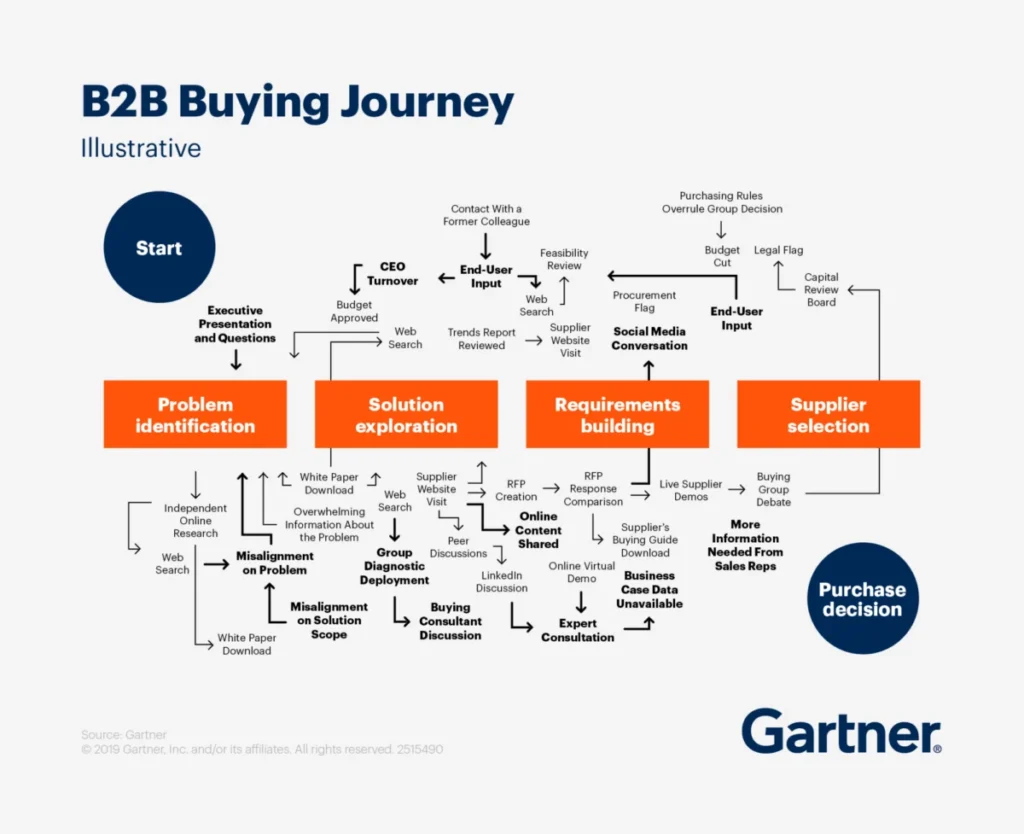
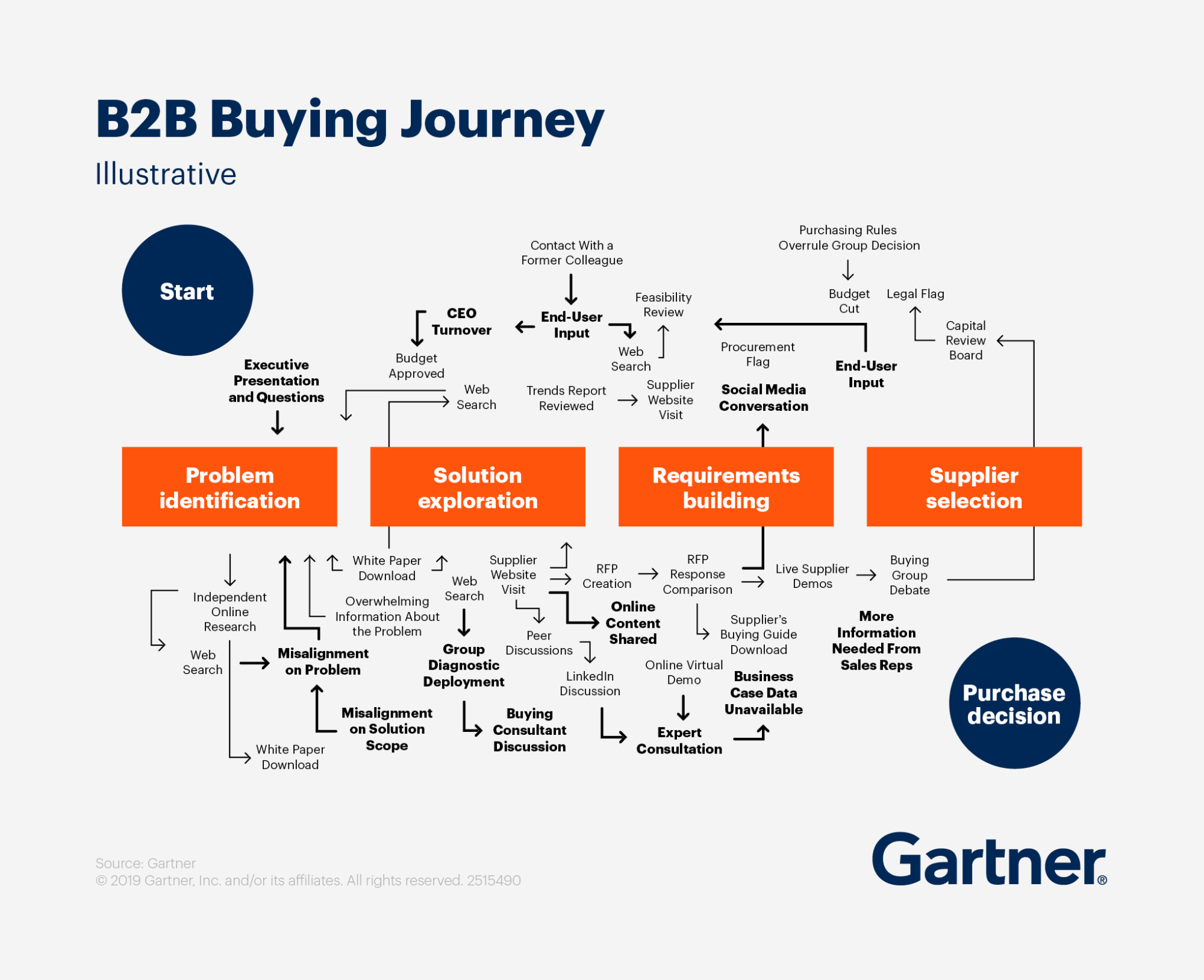
To understand why the old model is failing, we must look at how the buyer journey has evolved.
Pre-2020: The Direct Search Era
Buyers relied on organic search, navigating directly to aggregator sites to read reviews. The process was linear and time-consuming. Buyers would read three to five reviews, look for common themes, and accept the inherent bias of incentivized, high-scoring testimonials.
2020–2024: The Proliferation of Data
As software markets became crowded, the volume of reviews exploded. Buyers began to struggle with "information overload," leading to the rise of specialized review aggregators and the increased importance of badge-based social proof on pricing pages.
2025–Present: The AI-Assisted Synthesis Era
The current paradigm is defined by LLM-driven research. According to Forrester, 94% of buyers now use AI at some stage of the purchasing process. Research from Semrush indicates that 72% of buyers use AI for early-stage research, while 45% use it to make the final decision. In this new world, the AI acts as a mediator, scraping thousands of data points—reviews, forum discussions, white papers, and social media—to provide a synthesized answer.
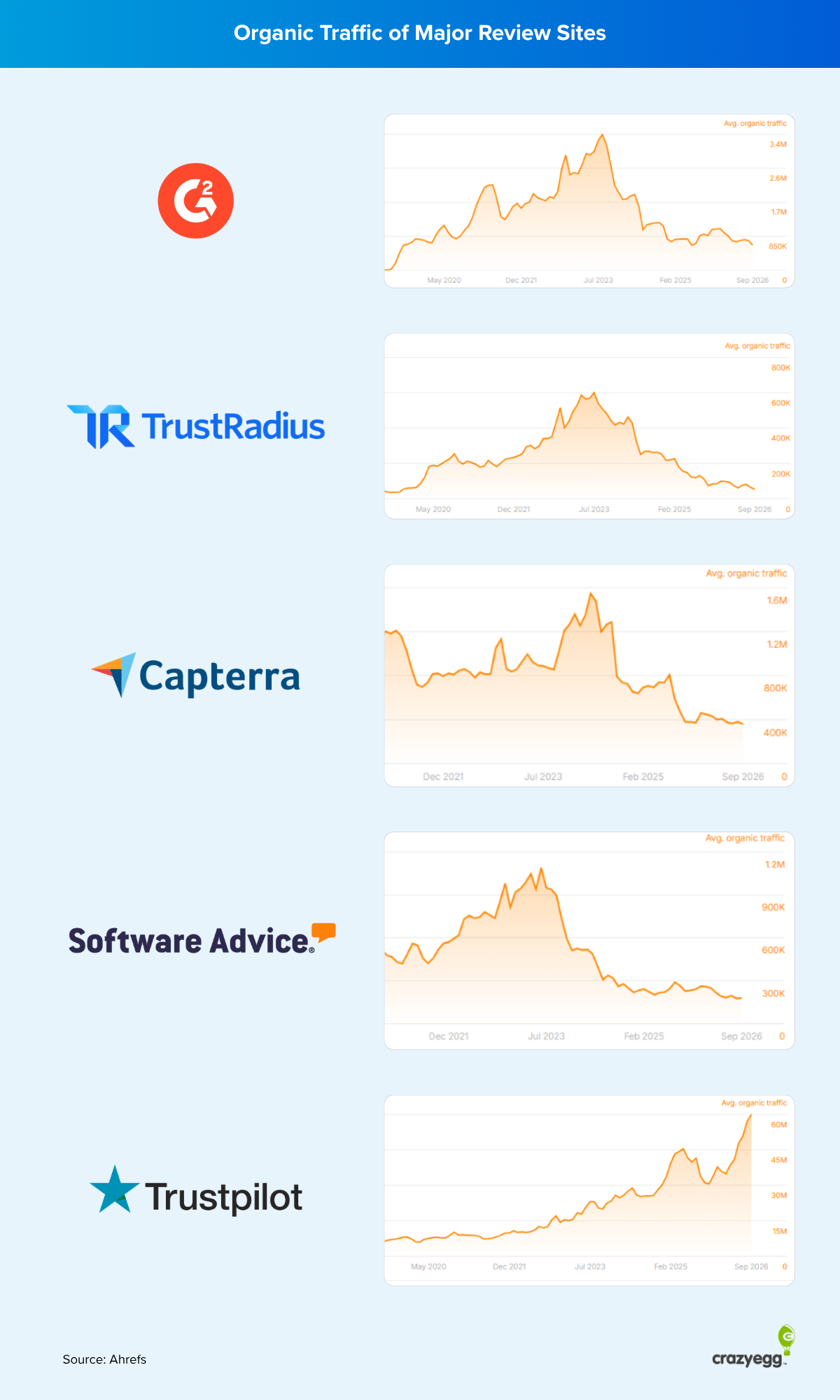
Supporting Data: Where the Traffic Went
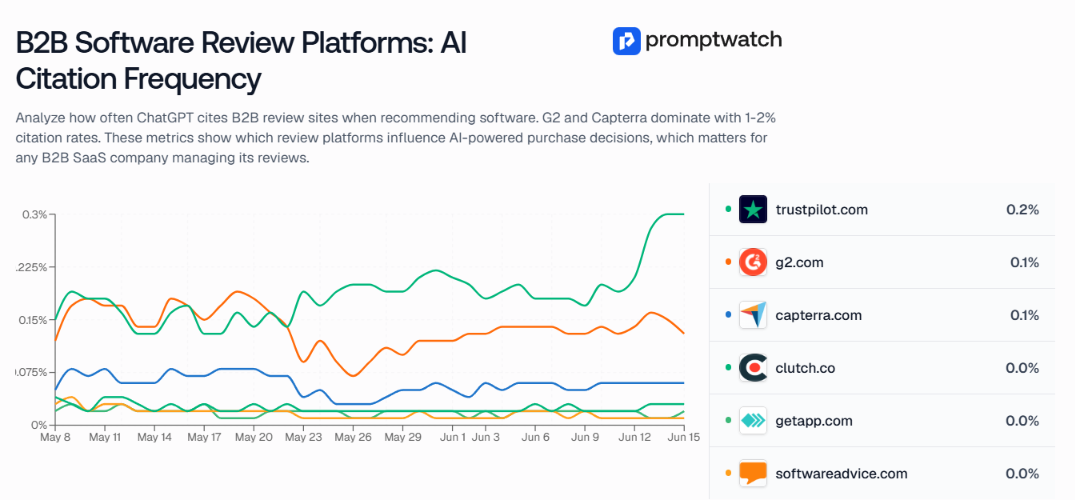
The shift is quantifiable. Ahrefs data reveals a sustained decline in organic traffic for major review platforms like Capterra and Software Advice, while Trustpilot has seen an uptick, likely due to its role as a cross-industry citation source for LLMs.
However, volume remains a factor. When an AI is asked, "What are the top-rated AI SDR platforms?", it pulls from a database of review counts and sentiment scores. If your company lacks the volume to register in that initial shortlist, you are effectively invisible to the AI. Yet, once the AI has generated a list, it turns to "deep-dive" analysis. It is here that the quality of your review content—the specific mentions of use cases, technical hurdles, and industry-specific outcomes—becomes the deciding factor in whether a buyer adds you to their shortlist.
Expert Perspectives: Modernizing the Strategy
We spoke with three industry veterans to synthesize a new approach to review management:
- Russell Rothstein (PeerSpot): Focuses on the "depth over breadth" philosophy. PeerSpot prioritizes verified enterprise insights over sheer volume, recognizing that for high-ticket SaaS, AI needs qualitative substance to provide meaningful summaries.
- Branca Ballot (Consultant/Ex-GoDaddy VP): Advocates for a more disciplined, non-incentivized approach to gathering feedback. She suggests that time-based campaigns (like prize draws) are more effective than direct payments for five-star ratings.
- Axel Lavergne (Reviewflowz): Emphasizes the necessity of soliciting reviews from all users, not just the happy ones. "In the B2B space, it is extremely rare to publicly shame a company," Lavergne notes. Including the "average" user provides the balance that AI systems need to see.
Implications for the Modern SaaS Vendor
The implications of this shift are profound. The "NPS Trap" of only surveying happy customers no longer builds trust; it builds a "sanitized" narrative that LLMs are increasingly adept at flagging as biased.
1. Shift to "Full-Spectrum" Solicitation
Stop filtering your NPS surveys for only the "promoters." When you ask for reviews, ask everyone. A mix of feedback provides a realistic picture of your product. If an AI sees only 5-star reviews, it may perceive the data as "low quality" or "marketing-led." A blend of high, medium, and constructive feedback feels more authentic to an AI model—and to the human buyer it is serving.

2. Prioritize Detail over Star Ratings
The era of the "one-line review" is over. Train your review solicitation process to prompt for specific use cases, industry verticals, and implementation challenges. If a reviewer can describe how they solved a specific problem with your tool, the AI will be able to map that review to the intent-based queries of future buyers.
3. Ensure "Narrative Congruence"
Your marketing website, your sales deck, and your review platform should tell the same story. If your website claims "Enterprise-grade security" but your reviews contain consistent mentions of "compliance friction," the AI will pick up on the discrepancy. Modernize your review generation by ensuring your product roadmap and messaging are reflected in the feedback you collect.
4. Diversify Your Platforms
While G2 remains a titan of the industry, the rise of cloud marketplaces (AWS, Google Cloud) as primary buying channels cannot be ignored. These platforms are increasingly becoming the source of truth for LLMs. If you are only present on one platform, you are allowing the AI to build your brand’s reputation based on a single, potentially limited data set.

The Goal: Building an AI-Proof Brand Narrative
In the age of AI, you cannot control the narrative—but you can provide the raw material from which that narrative is built.
The goal for any B2B SaaS company today should be to facilitate a consistent, detailed, and honest flow of information across all digital touchpoints. Reviews are no longer just "social proof" to be pasted onto a landing page; they are the training data for the agents that will decide whether your company makes the shortlist.
By moving away from the "NPS promoter" model and toward a strategy of deep, broad, and transparent evidence-gathering, you ensure that when a buyer asks an AI to find the best solution for their needs, your brand is not just present—it is the logical, evidence-backed choice. The companies that win tomorrow will be those that realize their customers’ voices are the most powerful training data they have.
