
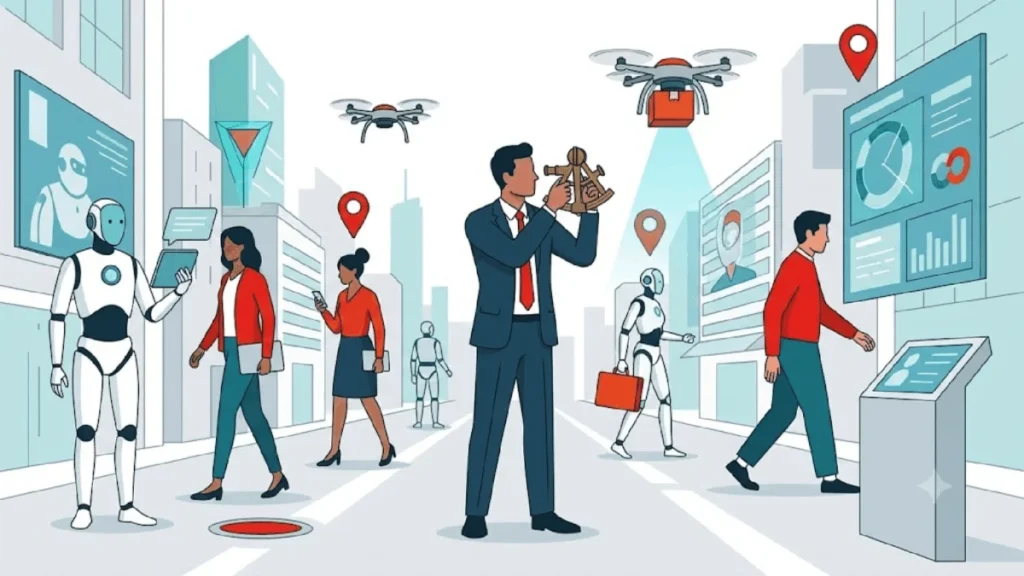
The Death of the Marketing Playbook: How AI-Driven "Knowledge Decay" is Forcing a Strategic Reset
The rapid integration of artificial intelligence is forcing marketing executives to confront an uncomfortable truth: the foundational playbooks that have guided the industry for decades are rapidly becoming obsolete. According to groundbreaking research from Texas A&M University, this shift is not merely a matter of upgrading software or adopting new tools; it is a fundamental realignment of how markets function, leading to a phenomenon known as "knowledge decay."
The research, authored by Dr. Rajan Varadarajan, University Distinguished Professor and Regents Professor at the Mays Business School, and published in the Marketing Strategy Journal, reveals that AI is simultaneously reshaping decision-making on both the supply and demand sides of the marketplace. As businesses delegate critical operational and analytical tasks to AI, buyers are concurrently outsourcing their research, comparison, and purchasing workflows to intelligent agents.
The result is a marketplace where human-to-human interactions are increasingly replaced by human-AI collaborations, rendering traditional marketing strategies ineffective.
1. Main Facts: The Reality of "Knowledge Decay"
At the heart of Dr. Varadarajan’s research is the concept of knowledge decay. In academic and strategic terms, knowledge decay occurs when once-valuable institutional expertise, strategies, and operational frameworks lose their utility because the environment they were built to navigate has fundamentally changed.
AI is accelerating this decay at an unprecedented rate. For generations, marketing knowledge was built on predictable human behaviors: how a person searches for information, how they evaluate competing brands, and how they progress through a buying journey. Today, those pathways are being disrupted.

       [ TRADITIONAL BUYER JOURNEY ]
  Human Search -> Website -> Content Download -> Sales Rep
                             │
                             ▼ (Disrupted by AI)
         [ AI-ASSISTED BUYER JOURNEY ]
  AI Agent -> Synthesis -> Shortlist -> Human Sign-off
The disruption is occurring on two distinct fronts:
- The Demand Side (The Buyer): Modern buyers—particularly in the B2B sector—increasingly rely on AI engines, large language models (LLMs), and autonomous agents to conduct market research, summarize product offerings, and compile vendor shortlists. By the time a human buyer visits a vendor’s website, the purchase decision may already be ninety percent complete, mediated entirely by an algorithm.
- The Supply Side (The Marketer): Marketing organizations are delegating complex tactical decisions to AI systems. Media buying, programmatic ad targeting, dynamic pricing, and content personalization are frequently managed by algorithms.
Consequently, marketing is no longer a purely human-to-human discipline. It has evolved into a complex web of human-AI collaborations, where the primary challenge for marketers is no longer just convincing a human buyer, but also ensuring their brand is accurately represented and recommended by the AI intermediaries that buyers trust.
2. Chronology: The Evolution of Marketing Paradigms
To understand the magnitude of the current AI transition, it is helpful to trace how technological shifts have historically compressed the lifespan of marketing knowledge.
┌─────────────────────────────────────────────────────────────────────────┐
│                      EVOLUTION OF MARKETING PLAYBOOKS                   │
├───────────────────┬──────────────────────────┬──────────────────────────┤
│ Era               │ Core Focus               │ Knowledge Lifespan       │
├───────────────────┼──────────────────────────┼──────────────────────────┤
│ Pre-Internet      │ Mass media, print, TV    │ Decades                  │
│ Web 1.0 & B2B     │ Websites, SEO, email     │ 10-15 Years              │
│ Social & Mobile   │ Algorithmic feeds, ads   │ 5-7 Years                │
│ Generative AI     │ AI agents, synthesis     │ Months to Years          │
└───────────────────┴──────────────────────────┴──────────────────────────┘
The Pre-Internet Era (Mid-to-Late 20th Century)
During this period, marketing principles and tactics were closely aligned. Media channels (print, television, radio, direct mail) changed slowly. A marketing playbook developed in the 1970s regarding reach, frequency, and brand positioning remained highly relevant and actionable well into the 1990s. The "knowledge relevance lifespan" was measured in decades.
The Dawn of E-Commerce and Search (Late 1990s to 2000s)
The rise of the commercial internet, search engines, and e-commerce websites introduced the first major wave of knowledge decay. Marketers had to learn the mechanics of Search Engine Optimization (SEO) and Pay-Per-Click (PPC) advertising. However, the buyer was still a human sitting in front of a desktop monitor, manually reading web pages. The strategic playbooks of this era enjoyed a relevance lifespan of roughly ten to fifteen years.

The Social Media and Mobile Revolution (2010s)
The explosion of smartphones and algorithmic social feeds accelerated the pace of change. Marketers had to adapt to real-time engagement, influencer marketing, and hyper-targeted programmatic advertising. This era shortened the relevance lifespan of tactical playbooks to about five to seven years, requiring continuous upskilling.
The Generative AI Era (Present Day)
The current era represents a structural departure from previous shifts. Unlike the internet or social media—which primarily served as new channels for human communication—AI acts as an active, autonomous participant in the transaction. Because AI changes both how marketers execute campaigns and how buyers search for information simultaneously, the knowledge relevance lifespan of tactical playbooks has shrunk to years, or in some cases, months.
3. Supporting Data: Distinguishing Strategic Principles from Tactical Playbooks
Dr. Varadarajan’s paper draws a critical distinction between two types of marketing assets: Conceptual Knowledge and Instrumental Knowledge. Understanding the difference is vital for modern marketing organizations seeking to survive the wave of AI-driven knowledge decay.
                          ┌─────────────────────────┐
                          │   MARKETING KNOWLEDGE   │
                          └────────────┬────────────┘
                                       │
                ┌──────────────────────┴──────────────────────┐
                ▼                                             ▼
  ┌───────────────────────────┐                 ┌───────────────────────────┐
  │   CONCEPTUAL KNOWLEDGE    │                 │   INSTRUMENTAL KNOWLEDGE  │
  ├───────────────────────────┤                 ├───────────────────────────┤
  │ • Rooted in human nature  │                 │ • Tactical playbooks      │
  │ • Trust, differentiation  │                 │ • SEO, funnel mechanics   │
  │ • Long-term stability     │                 │ • Short shelf life        │
  └───────────────────────────┘                 └───────────────────────────┘
Conceptual Knowledge (The "Why")
These are the enduring principles of marketing strategy that survive technological revolutions because they are rooted in human psychology and organizational economics. Examples include:
- The Necessity of Trust: Buyers will always seek to minimize risk by purchasing from entities they perceive as reliable and ethical.
- Value Differentiation: A business must offer a distinct, superior solution to a customer’s problem to command a premium.
- Brand Equity: The intangible reputation of a firm remains a powerful defensive moat.
Instrumental Knowledge (The "How")
These are the practical playbooks, tools, and tactical rules of thumb used to execute conceptual goals. Unlike conceptual knowledge, instrumental knowledge is highly dependent on the technological landscape and has a short shelf life.

Consider how traditional search engine optimization (SEO) is being disrupted. For nearly twenty-five years, SEO playbooks were built on a simple premise: optimize web pages so that Google’s crawler indexes them, prompting a human searcher to click through to the site.
In an AI-driven market, however, users frequently receive direct answers synthesized by AI search engines (such as Perplexity, Google Gemini, or Microsoft Copilot). The user never clicks through to the original source. The traditional instrumental knowledge of keyword density and click-through optimization is decaying, replaced by the need for "Generative Engine Optimization" (GEO)—ensuring that AI models cite your brand when answering user queries.
The Four Questions for Marketers: A Strategic Stress Test
To help marketing leaders identify where their instrumental knowledge is decaying, Dr. Varadarajan’s research suggests a four-question diagnostic framework. These questions serve as a stress test for existing marketing assumptions:
- Who is actually gathering and evaluating information in our target market? If your campaigns assume a human is reading your whitepapers, but an AI crawler is actually summarizing your site for a buyer, your targeting and content structure must change.
- How is our brand value proposition being translated and summarized by intermediate AI systems? If AI search engines synthesize your industry’s landscape, you must understand the criteria these algorithms use to categorize and recommend vendors.
- At what stage of the buyer’s journey does human-to-human contact actually begin? If AI agents manage the discovery, comparison, and shortlisting phases, traditional lead-scoring funnels are obsolete. Marketers must optimize for the "zero-click" and pre-funnel research phase.
- To what extent are our internal marketing decisions being automated versus collaborated on? Organizations must audit their creative, budgetary, and targeting workflows to ensure they are leveraging AI’s analytical speed without losing strategic oversight.
4. Official Responses and Industry Perspectives
The academic community and industry analysts have welcomed Dr. Varadarajan’s research, viewing it as a necessary course correction for an industry currently obsessed with short-term AI tools.
In commentary surrounding the publication, marketing executives emphasize that the challenge of AI is less about technical adoption and more about organizational readiness. Many Chief Marketing Officers (CMOs) report that their teams are eager to use generative AI for copy generation or image creation, but few have restructured their underlying strategies to account for changes in buyer behavior.

"Many companies try to fix their entire data infrastructure before deploying AI, which often leads to analysis paralysis," notes a recent industry analysis on AI-ready data infrastructure. "The research from Texas A&M highlights that the real bottleneck isn’t just data cleanliness—it’s strategic literacy. Marketers are applying highly advanced AI tools to outdated, decaying strategic models."
Furthermore, surveys on marketing’s AI challenges indicate that while marketing teams value the efficiency gains of generative AI, they remain deeply concerned about job displacement, organizational silos, and the loss of authentic brand voice. The paper suggests that these anxieties stem from a failure to separate tactical execution (which AI can handle) from strategic conceptualization (which requires human empathy, ethics, and long-term vision).
5. Implications: Navigating the Future of Marketing Strategy
The primary takeaway of Dr. Varadarajan’s research is not that marketers should abandon their hard-earned expertise, but rather that they must become deeply skeptical of assumptions that once seemed permanent. The next generation of competitive advantage will not belong to the company with the largest AI budget or the most complex tech stack. Instead, it will belong to the organizations that can identify when yesterday’s best practice no longer describes how customers actually buy.
┌─────────────────────────────────────────────────────────────────────────┐
│                     THE NEW STRATEGIC BALANCE                           │
├────────────────────────────────────┬────────────────────────────────────┤
│ What to Automate (AI)              │ What to Retain (Human)             │
├────────────────────────────────────┼────────────────────────────────────┤
│ • Dynamic pricing & optimization   │ • Ethical oversight & brand trust  │
│ • Large-scale data synthesis       │ • Deep empathetic understanding    │
│ • Programmatic ad targeting        │ • Creative direction & vision      │
│ • Initial vendor shortlisting      │ • Relationship & alliance building │
└────────────────────────────────────┴────────────────────────────────────┘
To survive this period of rapid knowledge decay, marketing leaders should focus on three strategic pillars:
Build AI Literacy Over Tool Proficiency
Instead of training teams on specific, fleeting software interfaces, organizations should focus on building systemic AI literacy. Marketers must understand how large language models retrieve information, how algorithms process data, and how automated agents make decisions. This conceptual understanding will remain valuable even as individual tools emerge and disappear.

Shift from Channel Optimization to Information Accessibility
As conversational AI engines become the primary gatekeepers of information, the traditional focus on channel-specific metrics (like page views and social media likes) must evolve. Marketers must ensure their brand’s data, product specifications, and customer reviews are structured in a way that AI agents can easily ingest, interpret, and accurately recommend.
Reclaim the Human Element of Brand Trust
As AI commoditizes content creation and tactical execution, the market will likely see an inflation of generic, algorithmically generated marketing assets. In this environment, authentic human connection, trusted relationships, and high-quality thought leadership will become more valuable than ever. When the transactional and research phases of buying are automated, the final decision will still rest on human trust.
Ultimately, the dawn of the AI era does not signal the end of marketing strategy. It marks the end of the static playbook. The marketers who thrive in this new landscape will be those who view AI not as a threat to their expertise, but as an invitation to focus on the enduring, human-centric principles of their craft.
The complete paper, "Dawn of the AI era in marketing strategy and twilight of the conglomerates era in corporate strategy: Knowledge decay, knowledge relevance lifespan and new knowledge creation" by Prof. Rajan Varadarajan, is available for download via the Marketing Strategy Journal / ScienceDirect.
