
The Dawn of Agentic Branding: Why the PRISM Model Is Replacing Archetypes in the Age of AI
Technology has undergone a profound metamorphosis. It is no longer a peripheral tool we operate; it has become an immersive, living environment in which we exist. In this new era, the transactional nature of digital interaction—clicking, scrolling, and searching—is being rapidly replaced by conversational, intelligent engagement. As AI systems move from passive data-retrieval engines to proactive, "agentic" participants, the fundamental rules of brand building are being rewritten.
For decades, marketers relied on the emotional resonance of "Lovemarks" and the structured guidance of brand archetypes. However, as the bridge between humans and companies becomes increasingly mediated by artificial intelligence, these legacy frameworks are showing their age. Enter the PRISM model: a sophisticated, data-driven evolution designed to ensure brands remain legible to machines and lovable to humans in the emerging agentic economy.
The Evolution of Connection: From Transaction to Conversation
Since the early 20th century, the intersection of psychology and marketing has been the cornerstone of brand strategy. The core premise was simple: emotional persuasion leads to long-term loyalty. By tapping into human psychological needs, brands could transcend their functional utility and become part of a consumer’s identity.
For twenty-five years, the industry standard for this emotional architecture was the 12-brand archetype model, popularized by Margaret Mark and Carol Pearson in The Hero and the Outlaw. These archetypes—the Sage, the Explorer, the Rebel, and others—provided a tangible, rational framework for the often irrational behavior of human consumers. By assigning a consistent "personality" to a brand, companies could create a holistic experience that invited deep emotional connection.
Yet, we have reached a technological inflection point. As Arjan Kapteijns, former CEO of Saatchi & Saatchi Netherlands, has argued, we are entering the era of "Agentic Lovemarks." In this landscape, emotional connection is no longer solely a human-to-human or human-to-corporate affair; it is now mediated, facilitated, and often orchestrated by digital agents.
The Limitations of Archetypes in an Agentic World
The traditional 12-archetype model is not "wrong," but it is insufficient for the demands of the agentic economy. Archetypes are broad, symbolic constructs that rely on human intuition to interpret nuance. When a human interacts with another human, they fill in the gaps of personality instinctively.

However, when an AI agent represents a brand, it lacks this innate human intuition. If a brand relies solely on a vague archetype, the AI may interpret the brand’s voice, tone, and behavior inconsistently. In a conversational UI, this inconsistency is catastrophic; it is akin to a brand changing its logo, tone, and values every time a user initiates a query. For an AI, "archetype" is a suggestion, not an instruction. To maintain brand equity, companies require a framework that is "legible" to machines.
The Legible-Lovable Law: Bridging the Technical Gap
Thomas Marzano, former brand leader at Philips and ASML, has championed the "Legible-Lovable Law" as a response to this shift. The concept is straightforward: to survive in the agentic economy, a brand must be:
- Legible to AI: The brand’s values, voice, and constraints must be structured in a way that machines can read, parse, and act upon.
- Lovable to Humans: The output generated by the AI must retain the emotional intelligence and personality that fosters genuine human connection.
This represents a pivot from "brand campaigns" to "brand language." As voice-driven technology and LLM-powered interfaces replace visual-heavy marketing, language becomes the primary touchpoint. Brands must move beyond visual identity to develop an "operational personality"—a digital soul that can be injected into the system prompts of an LLM.
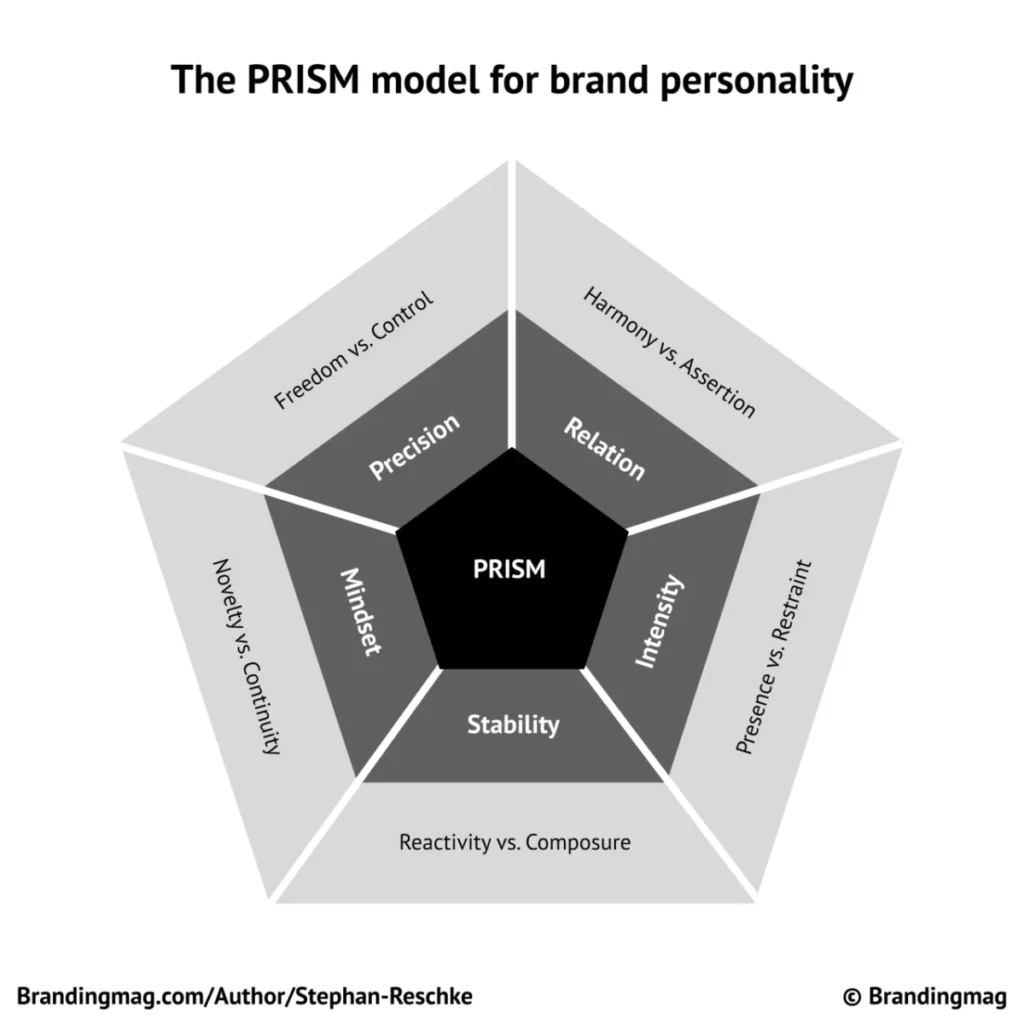
Introducing the PRISM Model: A New Framework
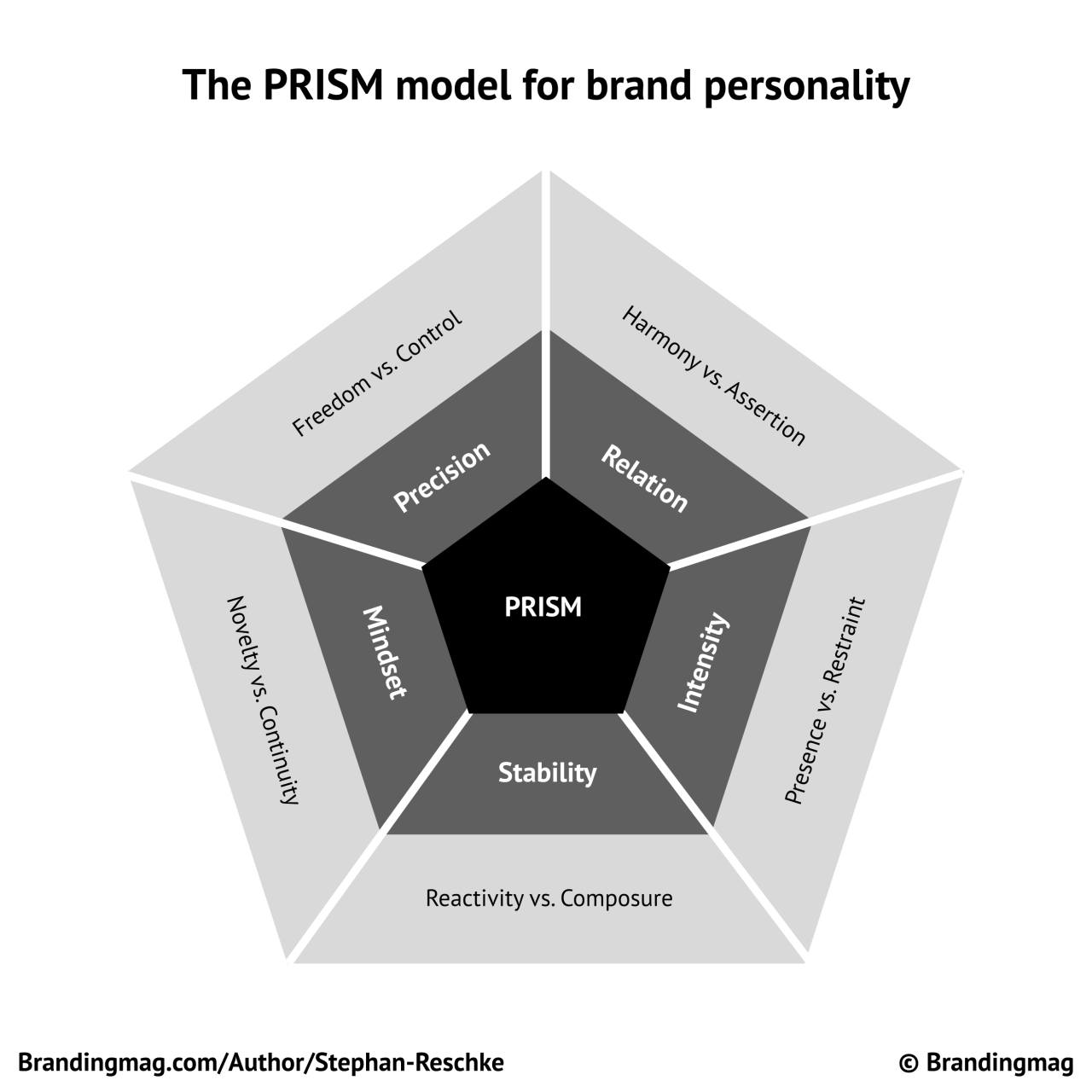
The PRISM model is designed to solve the interpretative ambiguity of archetypes. It is built upon the "Big Five" personality traits (OCEAN), which have long been the gold standard in human psychology. PRISM translates these traits into a specific, quantifiable language for brands.
The model classifies brand personality through five core domains:
- P – Personality Traits: Defining the core disposition of the brand, such as whether it is analytical or spontaneous, bold or cautious.
- R – Relational Style: How the brand interacts with users. Is it a mentor, a peer, a servant, or a provocateur?
- I – Intellectual Stance: The depth and complexity of the brand’s knowledge and its approach to problem-solving.
- S – Sensory & Verbal Grammar: The specific vocabulary, tone, rhythm, and linguistic constraints that define the brand’s "voice."
- M – Mindset & Values: The underlying belief system that guides the brand’s decision-making logic.
Unlike the archetypal approach, which assigns a brand to a single "box," the PRISM model evaluates these domains on a nuanced scale. This granularity allows for a high-fidelity representation of a brand’s digital personality, providing the necessary "code" for AI agents to render consistent, on-brand experiences in real-time.
Implications for the Future of Marketing
The implications of adopting a model like PRISM are far-reaching.
1. The Death of the "Static" Brand
Brands can no longer exist as static entities housed in a PDF brand book. Under the PRISM framework, a brand becomes an "Experience Engine"—a dynamic, real-time, on-demand persona that adjusts its behavior based on the specific context of a conversation while maintaining its core, immutable personality.
2. Operationalizing Brand Identity
The PRISM model bridges the gap between marketing and engineering. Because the parameters are structured, they can be directly implemented into the system prompts of LLMs. This ensures that when a user asks an AI agent about a brand, the agent doesn’t just recite facts; it communicates with the brand’s specific cadence, vocabulary, and emotional intelligence.
3. Creating the "Digital Soul"
By implementing PRISM, companies are essentially constructing a "digital soul." This is not just about writing better marketing copy; it is about building the architectural foundation of the brand into the web infrastructure. It ensures that the AI’s behavior is not a hallucination, but a faithful, algorithmic representation of the brand’s values.
Conclusion: Embracing the Uncertainty
The shift toward agentic branding is understandably met with a mixture of excitement and anxiety. Anxiety, however, is merely a byproduct of the unknown. The best way to mitigate this is through rigorous exploration and the adoption of new frameworks that acknowledge the complexity of the modern digital landscape.
The PRISM model offers a path forward—a lens through which marketers can engage with the profoundly complex, machine-mediated future. As we move away from an era of passive consumption and toward an era of active, agentic engagement, the brands that win will be those that successfully translate their human-centric values into the language of the machine. The conversation has already started; for brands, the challenge now is to ensure they have something meaningful to say, and the tools to say it, in every interaction.
