
The Culture of Innovation: How Global Giants Gamify Growth to Stay Ahead
In the modern business landscape, true growth is not merely a product of spreadsheets and quarterly projections; it is a manifestation of organizational culture. When a company successfully implements a growth-oriented operation, it effectively democratizes innovation. The base of the organizational pyramid becomes a wellspring of ideas, where every employee, regardless of their role, is empowered to propose hypotheses. The dedicated growth team then assumes the responsibility of operationalizing these concepts through rigorous testing and experimentation. The executive suite remains the final decision-maker—but in this model, they are armed with the empirical data and actionable insights necessary to steer the ship with unprecedented clarity.
However, bridging the gap between a standard business operation and a "growth-first" organization is a Herculean task. While most successful growth implementations start from the top down—where executives are educated on the methodology and middle management builds the strategic framework—there is a profound chasm between companies that merely "do" growth and those that have growth embedded in their DNA. To cross this chasm, companies must foster company-wide engagement. Increasingly, the world’s most successful corporations are turning to gamification, incentive structures, and radical autonomy to ensure that innovation is not just an executive directive, but a daily habit.
The Genesis of "Just Do It": The Amazon Blueprint
In 1998, the customer service department at Amazon found itself facing a bottleneck: a queue of 250 open, unresolved customer inquiries. A junior associate proposed an unconventional challenge: whoever could clear the entire backlog within 24 hours would receive a $200 bonus. The team accepted the challenge, and within the allotted timeframe, the queue was empty.
When Jeff Bezos learned of the outcome, he didn’t just see a resolved ticket queue; he saw a blueprint for corporate culture. He identified three key elements that made the experiment successful: a clear goal, a tangible incentive, and the removal of bureaucratic obstacles. This incident birthed the "Just Do It" Award.
The Mechanics of the Award
The "Just Do It" Award is designed to incentivize two core pillars of Amazon’s philosophy: Innovation and Bias for Action. Unlike typical employee-of-the-month programs, this honor is rare. It is bestowed only twice a year across an organization that now employs over 600,000 people. Crucially, Bezos (or his direct successors in the leadership circle) personally reviews and selects the recipients. This creates a powerful signal to the entire organization: bold, independent action that solves a genuine customer problem is the highest form of contribution at Amazon. It transforms the act of "breaking the rules to get the job done" from a risky endeavor into a celebrated career milestone.

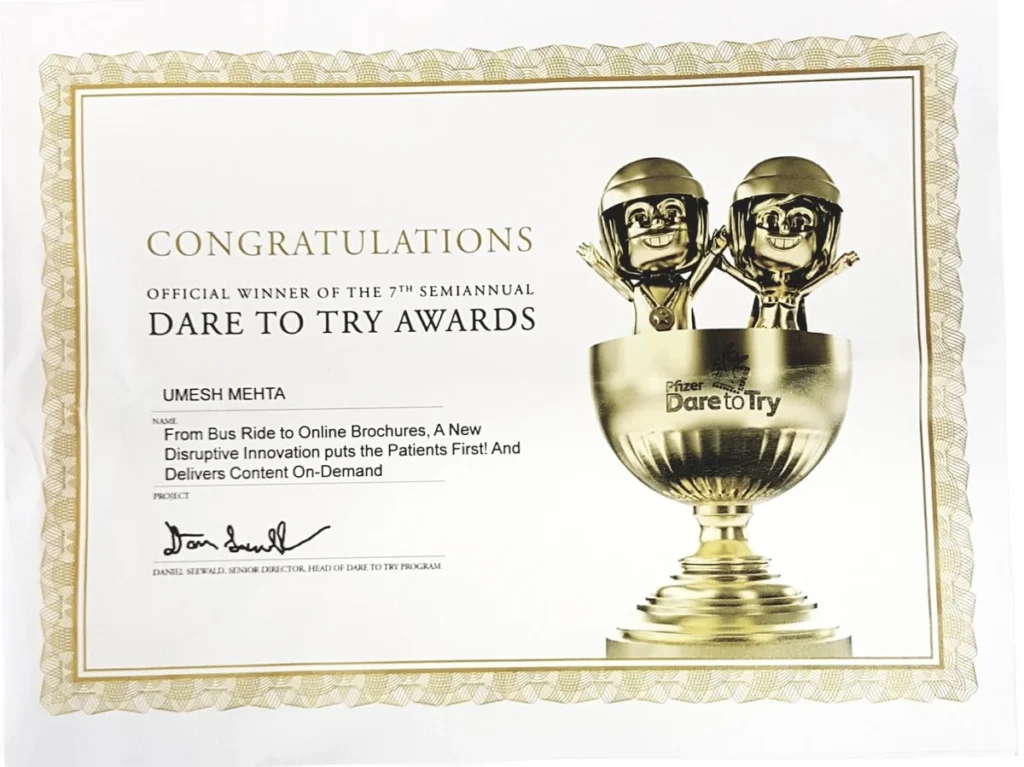
Pfizer’s "Dare to Try": Navigating the Pharma Risk Paradigm
Experimentation is difficult in any industry, but it is exceptionally challenging in the highly regulated pharmaceutical sector, where failure can carry immense financial and safety implications. Yet, Pfizer recognized that in the face of rapid market shifts, the "Dare to Try" approach was not a luxury, but a necessity.
Launched over a decade ago, "Dare to Try" is a company-wide initiative designed to shift the internal narrative from "avoiding failure" to "learning from failure."
The Infrastructure of Experimentation
The program utilizes a robust ecosystem of tools, training modules, and a network of self-nominated "champions." These champions act as internal evangelists who lead training sessions, teach methodology, and encourage teams to fail "freely but inexpensively." By creating a sandbox where low-cost failures are encouraged, Pfizer effectively de-risks the innovation process. Today, "Dare to Try" is less a program and more a corporate brand—a cultural shorthand that empowers employees to navigate complex R&D puzzles without the paralyzing fear of administrative retribution.
3M: The 30% Rule and the Mandate for Relevance
3M is a masterclass in longevity. From adhesives to high-tech coatings, the company remains a juggernaut of innovation despite operating in a commoditized manufacturing space. Their secret? A structural mandate for renewal.
The Innovation Mandate
3M operates on a rule similar to Amazon’s "Day 1" philosophy: 30% of every division’s revenue must be generated from products introduced within the last four years. This creates a permanent, non-negotiable pressure to innovate. If a division fails to refresh its portfolio, it fails its performance metrics.
To support this, 3M provides massive institutional support for its workforce. The company rewards innovators through:
- The Carlton Society: An elite group of top-tier scientists and engineers who are granted high levels of autonomy to pursue "pet projects."
- Genesis Grants: Internal funding mechanisms that allow employees to pitch their ideas directly to leadership for project backing, bypassing traditional hierarchical hurdles.
- Dual Career Ladders: Ensuring that technical experts can advance their careers without having to transition into management, keeping the best minds focused on product innovation.
Google’s 20% Project: The Architecture of Creativity
Google’s "20% Project" is perhaps the most famous example of institutionalized autonomy. Borrowing from 3M’s historical "15% rule," Google codified the expectation that engineers spend one-fifth of their paid time working on projects outside of their core responsibilities.
The Resulting Ecosystem
The goal was simple: to provide enough "slack" in the system to allow for spontaneous creativity. The results speak for themselves. Major products—including Gmail, Google News, and AdSense—all originated from the 20% project time. By giving employees the agency to explore, Google ensured that innovation was not a task assigned from above, but a natural byproduct of a workforce that was intellectually engaged and given the space to tinker.
Chronology of Institutional Innovation
| Era | Company | Initiative | Key Insight |
|---|---|---|---|
| 1940s-60s | 3M | 15% Rule | Providing time for "tinkering" leads to breakthroughs. |
| 1990s | Amazon | Just Do It Award | Small, high-stakes incentives drive rapid problem solving. |
| 2000s | 20% Project | Autonomy creates the most successful consumer products. | |
| 2010s | Pfizer | Dare to Try | Culture can overcome risk-aversion in regulated industries. |
Implications for Modern Organizations
The common thread among these giants is the deliberate design of the "innovation environment." They have moved beyond the "suggestion box" era and into an era of structural empowerment.
1. The Death of the "Innovation Department"
True innovation does not live in a single department. It lives in the incentive structures that reward people for taking risks. When innovation is confined to a "Lab" or a "Growth Team," the rest of the company views it as someone else’s job. When it is gamified—through awards, protected time, or revenue mandates—it becomes everyone’s job.

2. Psychological Safety as a KPI
Pfizer’s "Dare to Try" initiative proves that psychological safety is a measurable asset. Organizations that fail to create a "safe space" for low-cost failure will inevitably suffer from high-cost stagnation. Leaders must be willing to reward the process of experimentation, not just the output of success.
3. The Role of Executive Sponsorship
In every example provided—from Bezos personally selecting award winners to 3M’s executive support for Genesis Grants—leadership involvement is paramount. Innovation requires the "political air cover" that only the C-suite can provide. Without this visible support, employees will continue to prioritize their "day jobs" over the risky, uncertain work of building the future.
Conclusion: The Path Forward
The growth methodology is, in essence, a simple step-by-step process. However, the environment surrounding that process is where the true competitive advantage is found. Culture—specifically the behaviors we reward and the risks we allow—is the final frontier of corporate growth.
To successfully scale innovation, leaders must stop viewing "growth" as a strategy and start viewing it as a game. Whether it is through the celebration of bias for action, the mandate of the 30% rule, or the protected space of a 20% project, the goal remains the same: to create an organization where every employee feels empowered to look at a problem, propose a hypothesis, and—above all—dare to try.
In the final analysis, the difference between a company that survives and one that dominates is not found in the board room, but in the collective psyche of its workforce. By gamifying growth, the most successful companies ensure that they aren’t just reacting to the future—they are actively building it.
