
The Human Element: How to Inject Personality into Your Blog to Drive Engagement
In the saturated world of digital content, many creators fall into a common trap: they do everything “right.” They follow the latest SEO best practices, maintain a consistent publishing schedule, utilize perfectly formatted headers, and adhere to industry-standard blogging software. Yet, despite these mechanical successes, their traffic remains stagnant and their audience engagement is virtually non-existent.
The missing ingredient is almost always personality. In an era dominated by AI-generated content and mass-produced listicles, the human element has become the ultimate differentiator. Personality is the bridge between a visitor who happens upon your site and a reader who returns for years. It is the difference between being a forgotten link in a search result and becoming a trusted authority in your niche.
This report explores how ten of the web’s most successful bloggers have mastered the art of personalization to build loyal, thriving communities.
The Anatomy of a Personal Blog: A Chronology of Evolution
The evolution of blogging has shifted from simple, diary-style entries in the early 2000s to sophisticated, brand-driven media outlets today. Early bloggers wrote exclusively for themselves; today’s top influencers write for a global audience while maintaining the intimacy of a personal conversation.

- The Era of Anonymity (2000–2005): Blogs were largely static, text-heavy, and focused on personal journals. Branding was non-existent.
- The Rise of Niche Authority (2006–2012): Bloggers began monetizing their expertise. The "About" page became a critical component for building trust.
- The Visual & Brand-Centric Shift (2013–2018): Platforms like Pinterest and Instagram forced blogs to prioritize high-quality imagery, custom illustration, and cohesive color palettes.
- The Human-Connection Era (2019–Present): With the rise of AI, readers are now actively seeking the "imperfections" and distinct voices that only a real person can provide.
Supporting Strategies: Lessons from Top Creators
To understand how to move beyond generic content, we must examine the specific tactics employed by leaders in the blogging space.
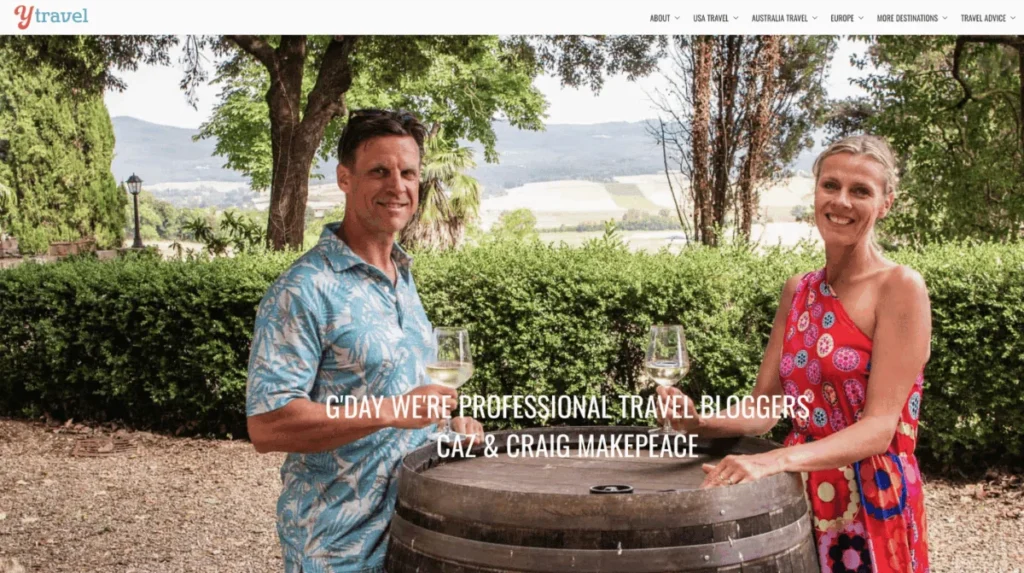
1. Visual Storytelling: The YTravel Approach
For niches like travel, food, or lifestyle, photos aren’t just decorative—they are the primary currency of trust. Caz and Craig of YTravel excel here. By sharing both high-quality, aspirational travel shots and candid, "real-life" family photos, they make their lifestyle feel attainable yet exciting.

- Key Lesson: Use photography to document the journey, not just the destination.
2. Branding Through Flair: Pat Flynn’s Transparency
Pat Flynn of Smart Passive Income uses his digital real estate to define his identity instantly. By explicitly stating his roles (father, husband, entrepreneur) and adding personal quirks (like being a "protector of Baby Yoda"), he humanizes a brand that could otherwise feel strictly corporate.
- Key Lesson: Your professional bio should include the "human" layers that make you relatable.
3. Voice and Tone: The Power of Authenticity
Shannon Kelly White demonstrates that having a strong, distinct voice—even one that includes "salty" language—is a powerful filter. It polarizes the audience, yes, but it builds a deeply loyal tribe of people who align with that specific, unfiltered tone.

- Key Lesson: It is better to be loved by a specific group than to be ignored by everyone because you are trying to be "neutral."
4. Custom Illustrations: The Blog Tyrant Strategy
Ramsey at Blog Tyrant uses a consistent, custom-illustrated superhero avatar across his site. This creates a recognizable brand mascot that sticks in the reader’s memory long after they have closed the tab.
- Key Lesson: Visual assets can act as a bridge between your content and your brand personality.
5. The "About" Page as a First Impression
Elsie and Emma of A Beautiful Mess understand that the "About" page is often the second page a new reader visits. They treat it with as much creative effort as their primary content, using bold photography and punchy, welcoming copy to turn a one-time visitor into a community member.

- Key Lesson: Don’t let your "About" page be an afterthought. It is your sales page for you.
6. Cross-Platform Consistency: The Chris Ducker Model
Chris Ducker maintains a unified look across his blog, Twitter, Facebook, and LinkedIn. By using the same high-quality headshots and color schemes, he ensures that when a reader moves from his blog to social media, they feel like they are visiting the same "person."
- Key Lesson: Cohesion across platforms builds professional trust.
7. Strategic Color Palettes: Jadah Sellner’s Aesthetic
Jadah Sellner uses color as an extension of her personality. By aligning her wardrobe, her site theme, and her graphic design with a specific, earthy color palette, she creates a subconscious feeling of harmony that puts readers at ease.

- Key Lesson: Color is not just decoration; it is an emotional signal.
8. The Brand Statement: James Schramko’s Clarity
On SuperFastBusiness, James Schramko uses a direct brand statement to filter his audience. Within seconds, a reader knows if they are the intended client. This is the ultimate form of personalization: speaking directly to your ideal reader’s pain points.
- Key Lesson: Clarity is more valuable than mystery.
9. The Direct Call to Action (CTA)
Kelly Exeter proves that you don’t need a complex funnel to convert readers. By keeping her CTAs simple, direct, and focused on helping the reader achieve a specific goal, she removes friction and builds a relationship based on utility.

- Key Lesson: If you want your readers to take action, make the path as clear as possible.
10. Defining the Reader: The Puttylike Quiz
Emily at Puttylike does something brilliant: she defines her readers as "Multipotentialites." By giving them a name, she gives them an identity. Her quiz acts as a conversion tool that makes the reader feel seen and understood.
- Key Lesson: When you give your audience a label, you give them a community to belong to.
Official Perspective: The Science of Personalization
Industry experts suggest that as algorithmic content becomes more prevalent, the value of "human signal" increases. Data from marketing firms indicates that posts featuring the author’s personal anecdotes receive, on average, 40% more comments and higher average session durations than generic, purely informative posts.

The consensus is clear: while SEO brings the visitor to the door, personality is what convinces them to stay, read, and eventually convert.
Implications: Building for the Long Term
If you are currently struggling to grow, look at your blog through the lens of a new reader. If you stripped away the logo and the name, would the content sound like you?

The implication of these findings is that blogging is no longer about information dissemination; it is about relationship management. To compete in the current digital landscape, you must be willing to:
- Be vulnerable: Share the struggles alongside the successes.
- Be selective: Curate your aesthetic and your voice to attract the right people.
- Be bold: Stop trying to appeal to everyone.
Moving Forward
Personalizing your blog is not a one-time task; it is an iterative process. Start by auditing your "About" page, then move to your visual assets, and finally, audit your writing voice. Ask yourself: Does this sound like a conversation between two people, or a lecture from a machine?

The bloggers listed above are successful not just because they write well, but because they are willing to be seen. By embracing these ten strategies, you can transition your blog from a generic information hub into a personal, high-converting brand that stands the test of time.
What will you change about your site today? The digital world is waiting for your specific voice.
