

The Art of the Headline: Why Your Blog Title Is the Most Powerful Asset You Own
In the digital landscape, where the average user’s attention span is measured in seconds, the title of your blog post is not merely a label—it is the primary catalyst for your content’s success. It serves as the bridge between a casual browser and an engaged reader. If that bridge is poorly constructed, your content, regardless of its depth or quality, will languish in the digital shadows of your archives.
Titles are the silent arbiters of a post’s destiny. They dictate click-through rates, social media virality, and search engine visibility. For content creators, understanding the psychology of the headline is the single most effective way to maximize the return on the time invested in writing.
The Anatomy of Impact: Why Headlines Dictate Traffic
When a potential reader encounters your content in an RSS feed, a Google search result, or a social media feed, the title is almost always the only piece of information they have to judge whether your work is worth their time. A boring, overly complex, or vague title acts as a deterrent.
Marketing legend David Ogilvy, in his seminal work Ogilvy on Advertising, famously asserted that "the purpose of a title is to get potential readers to read the first line of your content." This principle remains the gold standard for modern digital journalism and blogging. A headline is not meant to summarize the entire story; it is a lure designed to capture curiosity and demand further exploration.
A Strategic Approach to Crafting Titles
Mastering the headline requires a deliberate, iterative process. The most common mistake writers make is rushing the titling phase. If you spend hours crafting a profound, well-researched article but dedicate only seconds to the title, you are effectively sabotaging your reach.

1. Communicate Tangible Benefits
The most successful headlines are those that promise a clear, immediate solution to a reader’s problem. When users search for information, they are driven by intent. If your title explicitly promises to satisfy that intent—such as "How to Master Digital Photography in 10 Minutes"—you align your content with the reader’s needs. These functional titles are rarely "clever," but they are highly effective at converting search traffic into loyal readers.
2. Leverage the Power of Controversy and Debate
Controversy serves as a powerful magnet for engagement. By taking a strong, defensible stance on a topic, you invite discussion and challenge the reader’s existing assumptions. However, this strategy comes with a caveat: the content must deliver on the promise of the headline. If a title sets the stage for a debate but the body of the text is tepid or uninformative, you will quickly lose credibility with your audience.
3. The Art of the Question
Human beings are psychologically wired to respond to questions. A question-based headline functions as an open loop in the reader’s mind, which they feel compelled to close by reading the article. Furthermore, questions are exceptionally effective at soliciting comments. When you pose a question directly to the reader, you turn a passive reading experience into an active conversation.
4. Personalization Through Direct Address
Modern blogging thrives on intimacy. Even when you are writing for thousands, your goal is to make the reader feel as though you are speaking to them personally. Using the word "you" in your title transforms a generic topic into a direct address. It signals to the reader that the content is tailored to their specific situation, significantly increasing the likelihood of a click.
5. Optimizing for Search Engines (SEO)
Keywords are the currency of discovery. Including relevant search terms in your title serves two purposes: it tells search engines exactly what your post is about, and it tells users that your content is relevant to their query. To maximize impact, place your most important keywords near the beginning of the title. This not only aids search engine indexing but also ensures that the most vital information remains visible in truncated search results.

6. The Strategic Use of Power Words
Language carries emotional weight. "Power words"—such as essential, proven, surprising, breathtaking, or ultimate—can trigger an immediate psychological response. However, use these with caution. Overusing superlative language can lead to reader skepticism or, worse, "clickbait" fatigue. If your content does not live up to the intensity of your power words, you risk alienating your audience.
7. The Efficacy of Big Claims
Similar to communicating benefits, making a bold claim or a strong promise is a technique for high-engagement content. While it carries a risk of being perceived as sensationalist, it is highly effective at grabbing attention. The key to successfully using big claims is the "delivery" phase: the article must provide evidence, data, or a clear roadmap to support the promise made in the headline.
8. Infusing Humor and Wit
Humor is a sophisticated tool. When executed correctly, a witty or humorous title can distinguish your brand from the sea of dry, formulaic content. However, humor is subjective and notoriously difficult to optimize for search engines. It is a high-risk, high-reward strategy that works best for established audiences who already appreciate your brand’s voice.
Chronology of an Effective Workflow
To achieve consistent success, writers should treat the headline not as an afterthought, but as the final, crucial step of the writing process.
- Phase 1: Drafting the Content. Focus on the value and structure of your post.
- Phase 2: Identifying the Core Hook. Once the article is written, distill its value proposition into a single, punchy concept.
- Phase 3: The "Brainstorming" Session. Write at least ten variations of your title. Experiment with the different techniques outlined above.
- Phase 4: Refining and Selecting. Choose the title that balances SEO requirements with emotional resonance.
- Phase 5: The "No-Period" Rule. To maintain a fluid reading experience, avoid ending your titles with full stops. A title should be a prompt for action, not a finished statement.
Data and Implications: The Cost of Neglect
The implications of neglecting your headline strategy are measurable. Data consistently shows that headlines with high emotional resonance and clear benefit statements outperform neutral or vague titles by significant margins. In an environment where the "bounce rate"—the speed at which a reader leaves a site—is high, your title is the first line of defense against reader churn.
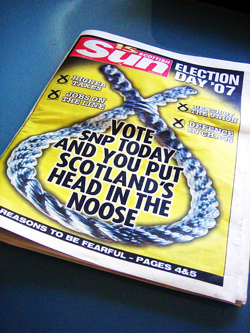
Furthermore, consider the "social proof" aspect of your headlines. On social media platforms, people often share articles based on the title alone. A compelling, well-crafted title essentially turns your readers into marketers for your content, spreading it like wildfire across their own networks.
Final Reflections on Content Craftsmanship
Writing a headline is an exercise in empathy. You must step outside of your own perspective as the writer and inhabit the mind of the reader. What do they need? What are they worried about? What is going to make them pause their scrolling to click your link?
The "8 Secrets" discussed here are not rigid rules to be followed blindly in every instance. Rather, they are tools in a professional writer’s kit. You may combine them—perhaps using a question combined with a power word—to create something truly unique.
As you continue your journey in content creation, remember that the "pause" is your greatest ally. Before hitting publish, take a moment to look at your title through the eyes of a stranger. Is it enticing? Is it honest? Does it offer genuine value? If you treat your headlines with the same rigor you apply to your prose, your work will not only be read—it will be remembered.
The destiny of your content begins with those few words at the top of the page. Choose them wisely, invest the necessary time, and watch as your influence grows.
