
The AI-Copywriting Paradox: Insights from the World’s Top Wordsmiths
The digital marketing landscape is currently undergoing its most significant transformation since the invention of the internet. The rapid proliferation of Large Language Models (LLMs) like ChatGPT, Claude, and Gemini has fundamentally altered how sales and marketing materials are produced. If you work in marketing, communications, or sales, it is almost certain that you have engaged with an AI-powered model in the last twenty-four hours to draft an email, refine a headline, or brainstorm a campaign angle.
But as the hype settles, a pragmatic question remains: What does "smart" use actually look like? To move beyond the buzzwords and explore the genuine possibilities and limitations of artificial intelligence, I spoke with five of the world’s most respected copywriters: Bob Bly, Kim Krause Schwalm, David Deutsch, Lorrie Morgan, and Anita Siek. These experts, each with a decades-long track record of delivering measurable client results, shared how they are navigating the integration of AI into their high-stakes workflows.
The Core Philosophy: AI as a Tool, Not a Replacement
Before delving into the specific strategies of these masters, a consensus emerged: AI is a powerful assistant, but it is a dangerous master. The recurring theme throughout these interviews was that while AI can accelerate the "grunt work" of drafting and research, it lacks the lived experience, emotional intelligence, and strategic intuition required to move the needle on high-revenue, direct-response projects.
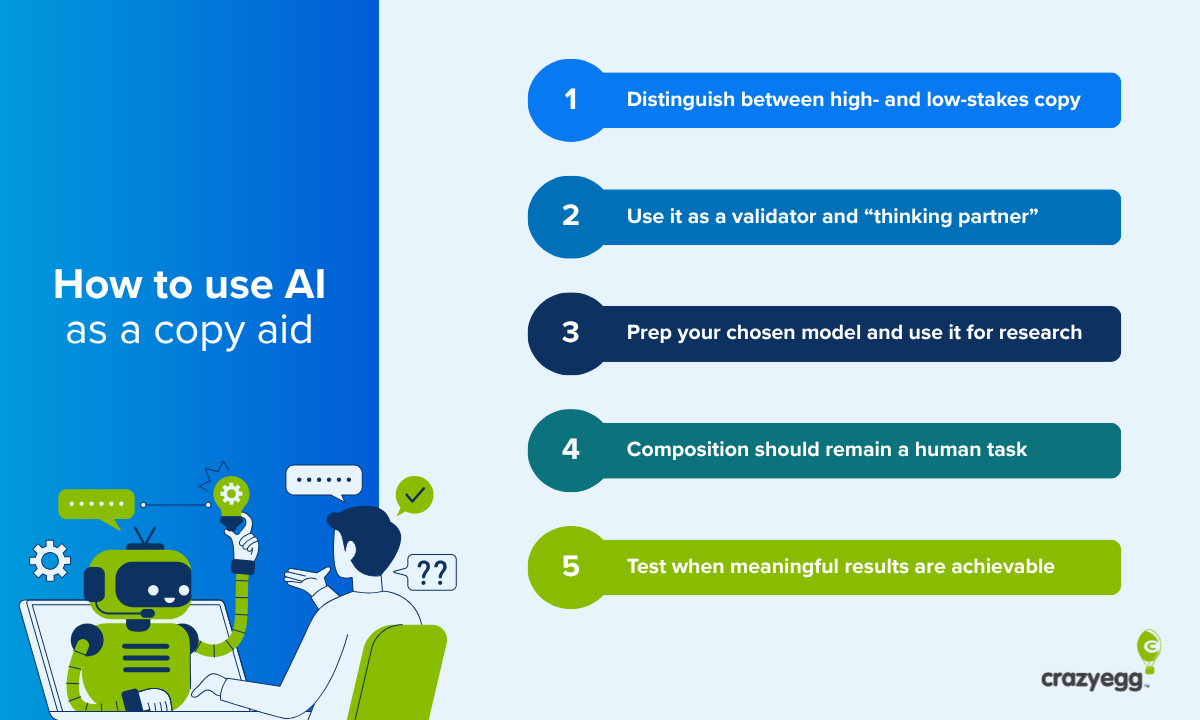
1. The High-Stakes vs. Low-Stakes Distinction
The experts agree that your approach to AI should be dictated by the objective of the copy. If you are creating a flyer for a local cafe, AI-generated content is often sufficient. However, if the copy is tied directly to significant revenue—such as a long-form sales letter or a high-ticket conversion funnel—deep human intervention is non-negotiable. Bob Bly notes that "A-list" copy requires the kind of nuanced storytelling that AI currently cannot replicate.
2. The Danger of "Algorithm Aversion"
There is a growing consumer sentiment known as "algorithm aversion." When readers sense that a piece of content has been synthesized by a machine, they often tune out. Whether it is the "clinical" tone of an AI-written article or the "frictionless optimism" of a bot that never experiences failure, the human element is becoming a premium competitive advantage in an era saturated with automated "slop."
Expert Perspectives: A Deep Dive
Bob Bly: The Case for Caution
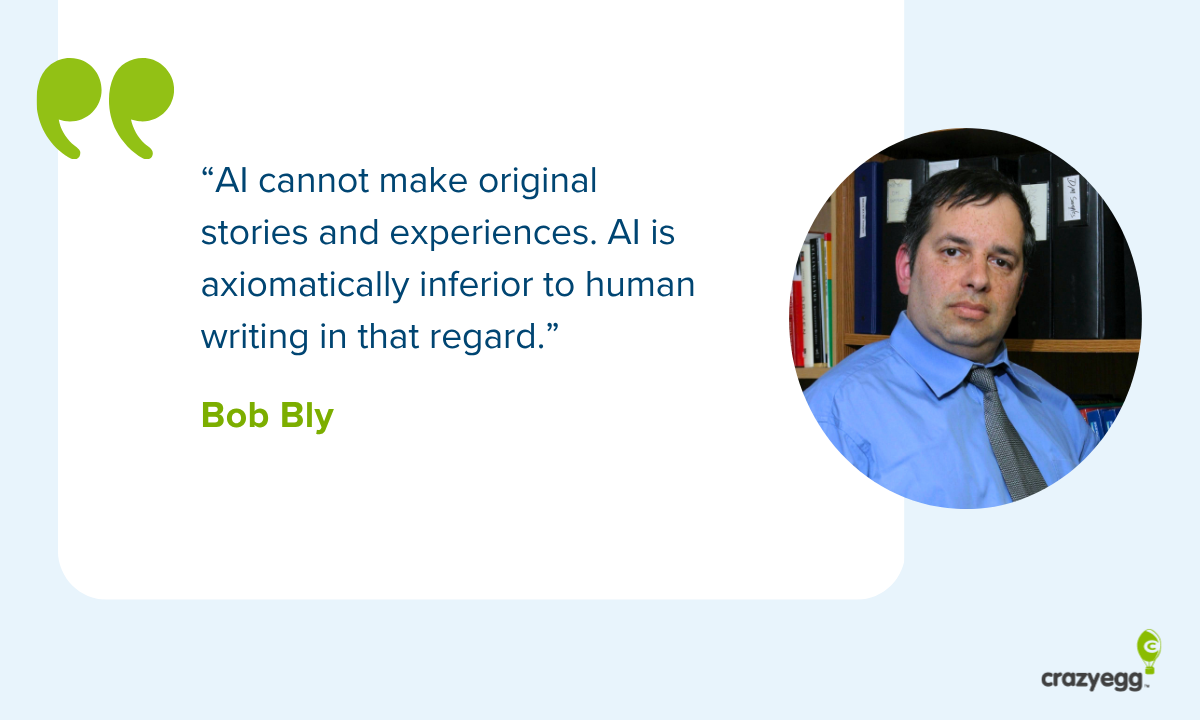
Bob Bly, author of The Copywriting Handbook and a legendary figure in direct response, remains a skeptic regarding AI’s creative potential. "AI cannot make original stories and experiences," he argues. "It can only regurgitate other stories that are not its own."
For Bly, the risk is that businesses may attempt to cut corners on high-impact projects. "Copy that sells directly from the page—that is the most difficult to write. It is the most measurable, and results are everything. In that case, AI generally underperforms a human writer."
His Strategy: Bly uses AI strictly as a validator. When developing a "big idea" package—such as a 30-minute video sales letter—he uses AI to check if his premise has sufficient substance. For example, when researching a financial package regarding the Strait of Hormuz, he asked the model for implications of a closure. It provided data-backed categories he hadn’t considered, effectively vetting the "meat on the legs" of his idea before he spent days writing.
Kim Krause Schwalm: The "Prism" Approach
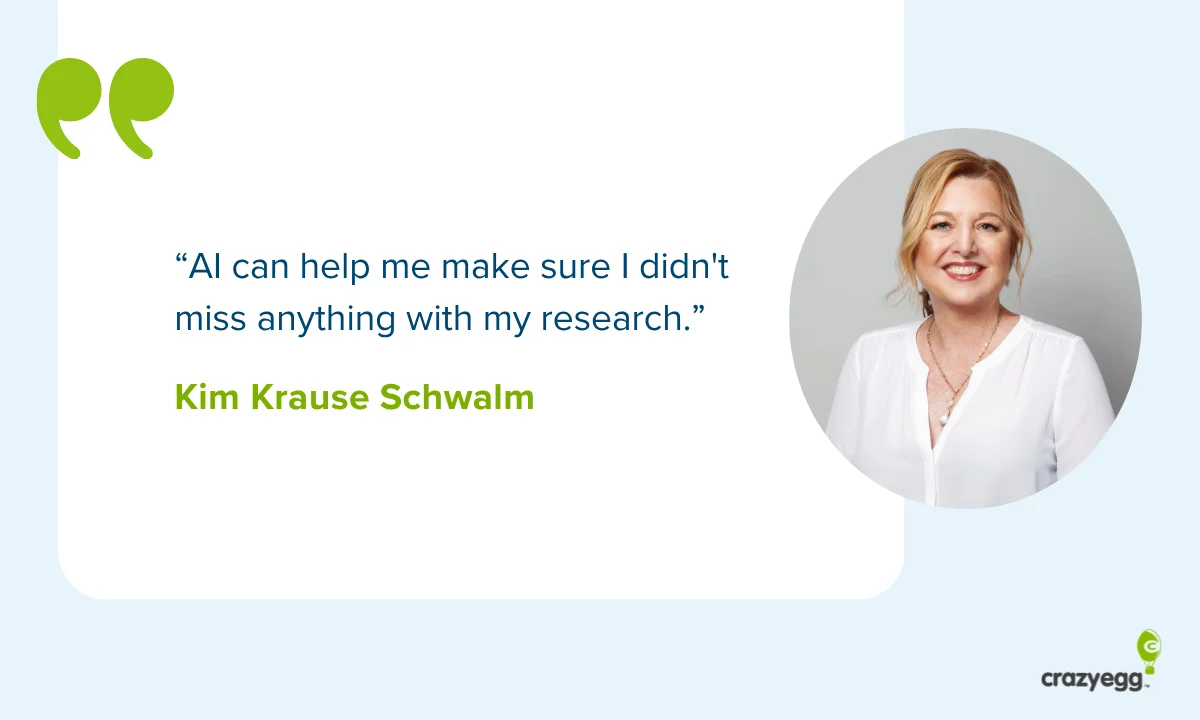
Kim Krause Schwalm, a master at outperforming industry benchmarks, views AI as a powerful tool for research and brainstorming. She warns against the "clinical" nature of AI copy but praises its ability to handle repetitive, time-consuming tasks.
Her Strategy: Schwalm utilizes a "Prism exercise" for avatar creation. She feeds her manual research (pulled from surveys and forums) into an AI to see if the model picks up on pain points she might have missed. Crucially, she does not let the AI write the final draft; she uses it as a mirror to ensure her own human-derived research is comprehensive.
David Deutsch: Protecting Human Cognition
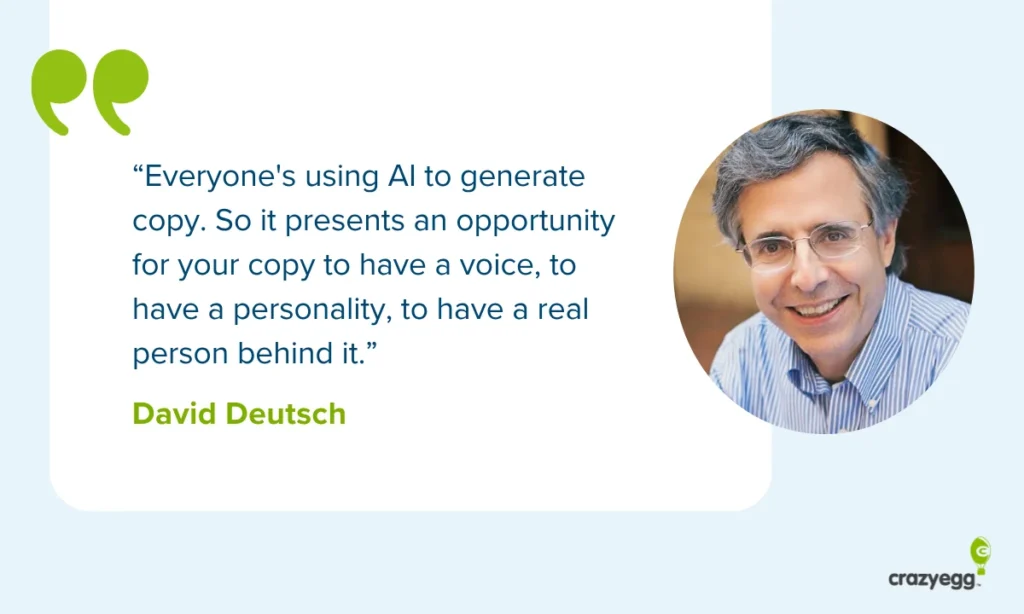
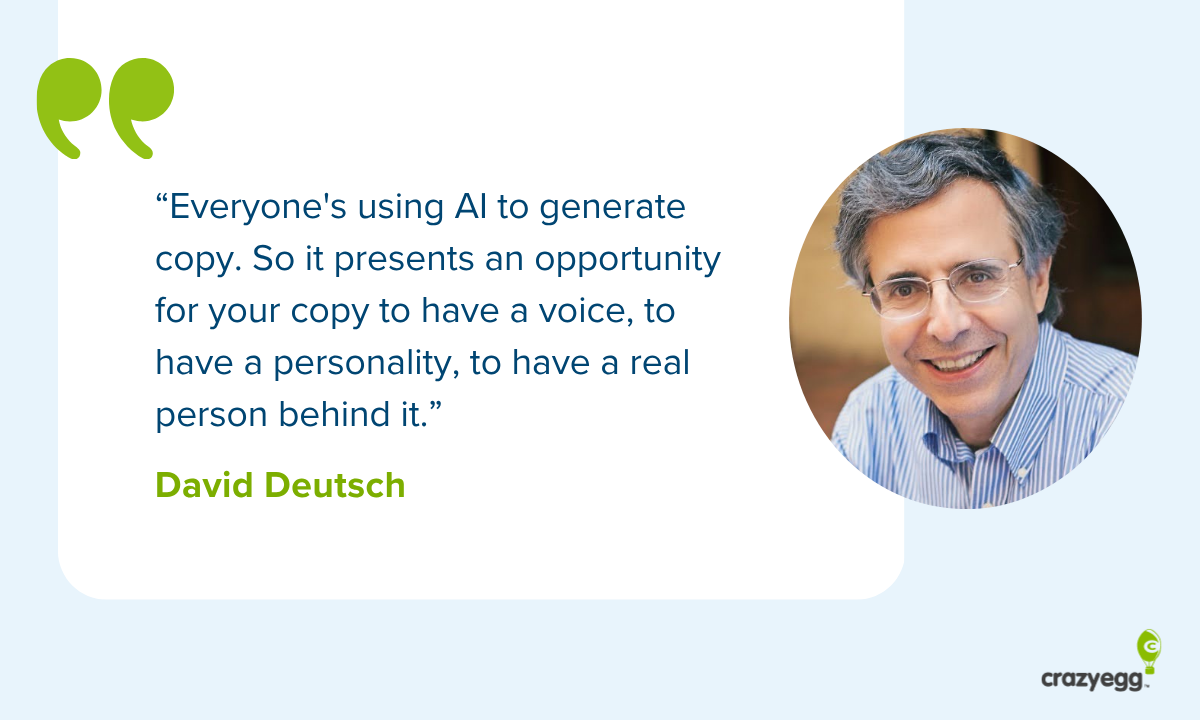
David Deutsch, who has generated over $1 billion in sales, warns that the greatest danger of AI is not the quality of the output, but the degradation of the writer’s own cognitive muscles.
His Strategy: Deutsch advocates for a "foil" approach. Instead of asking the AI to "write me a sales letter," he provides his own drafts and asks the AI to critique them. "Don’t just ask AI for ideas," he says. "Say, ‘Here are my ideas. Critique these and suggest ways to make them more interesting.’" He believes this active, skeptical engagement with the tool prevents the writer from becoming a mere "prompt engineer" and keeps their own creative faculties sharp.
Lorrie Morgan: Avoiding the "C-3PO" Effect
Lorrie Morgan, a protégé of the legendary Gary Halbert, is perhaps the most vocal about the "soullessness" of AI. She recalls a period where she saw copywriters replaced by AI, only for them to be rehired months later when clients realized the AI-written copy was failing to convert.
Her Strategy: Morgan treats AI as a brainstorming partner but maintains a strict "human-first" policy for the final output. She notes that AI’s tendency toward "frictionless optimism" is its greatest weakness. "AI never has a bad day, never gets frustrated, and never doubts itself. That is exactly what makes it feel inhuman. Readers trust writers who have actually been through something."
Anita Siek: The Power of Strategic Input
Anita Siek, founder of Wordfetti, views AI as an amplifier of the strategy already in place. She argues that the businesses winning in this era are those that teach their AI to follow a specific, human-centered strategy.
Her Strategy: Siek has built a proprietary AI tool, "FETTIBot," trained on nine years of her firm’s intellectual property. By feeding the AI her own proven frameworks, she ensures that the output is not generic, but rather a reflection of her specific brand voice and methodology. "AI is only as good as the input you write," she says. "Crappy input leads to crappy output."
Implications for the Future of Copywriting
The consensus among these experts is clear: the era of the "generic writer" is over. However, the era of the "AI-augmented human" is just beginning. As we look to the future, three key implications stand out:
- The Shift to Strategy over Syntax: Because AI can handle syntax, the value of a copywriter is shifting toward the ability to build, manage, and refine strategy. The "brief" is becoming the most important document in the creative process.
- The Premium on Human Experience: In a world where anyone can generate a blog post in seconds, true stories, unique experiences, and emotional vulnerability become the rarest—and most valuable—commodities.
- The Necessity of Rigorous Testing: As David Deutsch noted, AI is most effective when it can be used to generate massive amounts of variations for A/B testing. In low-stakes environments, the ability to "take 100 shots at the target" will allow companies to out-iterate competitors who rely on a single, human-written piece of copy.
Final Thoughts: A Hybrid Future
The cliché that "AI won’t replace writers, but writers who use AI will replace those who don’t" remains a functional truth. However, the nuance provided by these five experts suggests that the winning combination is not just "using AI," but maintaining a firm grip on the human psychology that drives buying decisions.
If you are a professional in this space, treat AI as a junior assistant: give it the research, let it suggest the outlines, and use it to poke holes in your arguments. But when it comes time to write the copy that builds trust, tells a story, and captures the human heart, put the AI aside and get your hands dirty. Your audience will know the difference—and your conversion rates will prove it.
