
The Age of the Algorithm: How "Vibe Coding" and "Vibe Marketing" are Redefining Professional Creativity
In the rapidly evolving landscape of 2025, a new, somewhat nebulous, yet undeniably potent lexicon has emerged to describe the intersection of human intent and generative artificial intelligence. The term is "Vibe." Having eclipsed the industry-standard fascination with "agentic" workflows, "vibe" has become the shorthand for a paradigm shift in how software is built and how markets are addressed. It is a philosophy that prioritizes the fluidity of creation over the rigidity of syntax, and the speed of experimentation over the slow march of traditional development.
The Genesis: What is "Vibe Coding"?
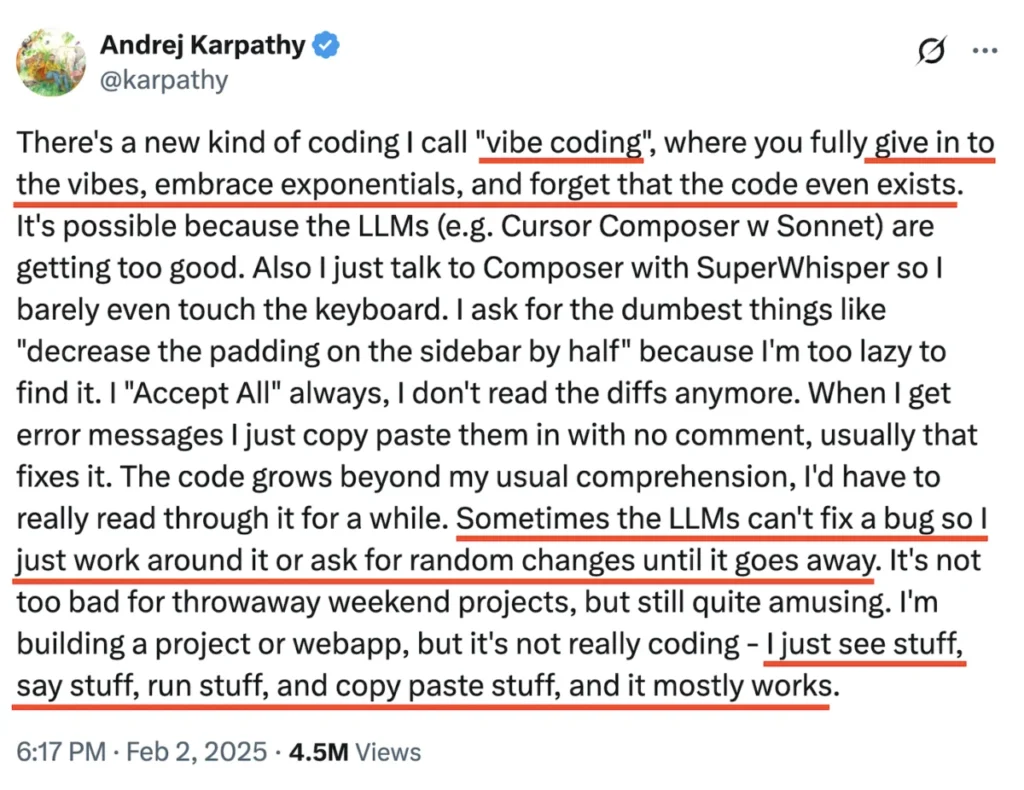
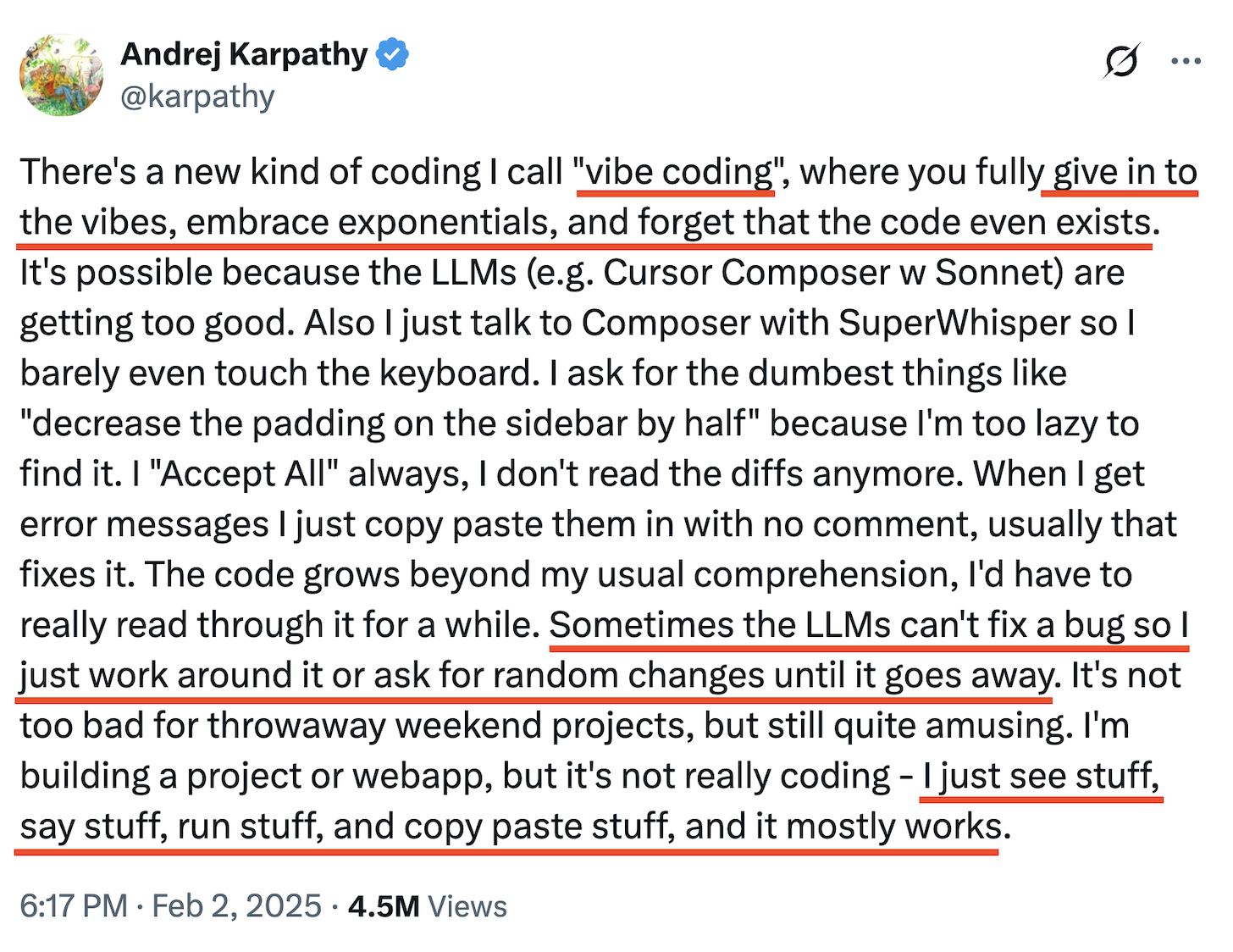
The concept of "vibe coding" was crystallized by Andrej Karpathy, a founding member of OpenAI and a luminary in the field of computer science. In early 2025, Karpathy took to social media to describe a radical shift in software development. He characterized it as a process where the barrier to entry for building complex digital tools is obliterated: one simply envisions a product, describes the requirements to an LLM-powered assistant, executes the output, and iterates.
"I just see stuff, say stuff, run stuff, and copy-paste stuff, and it mostly works," Karpathy noted.
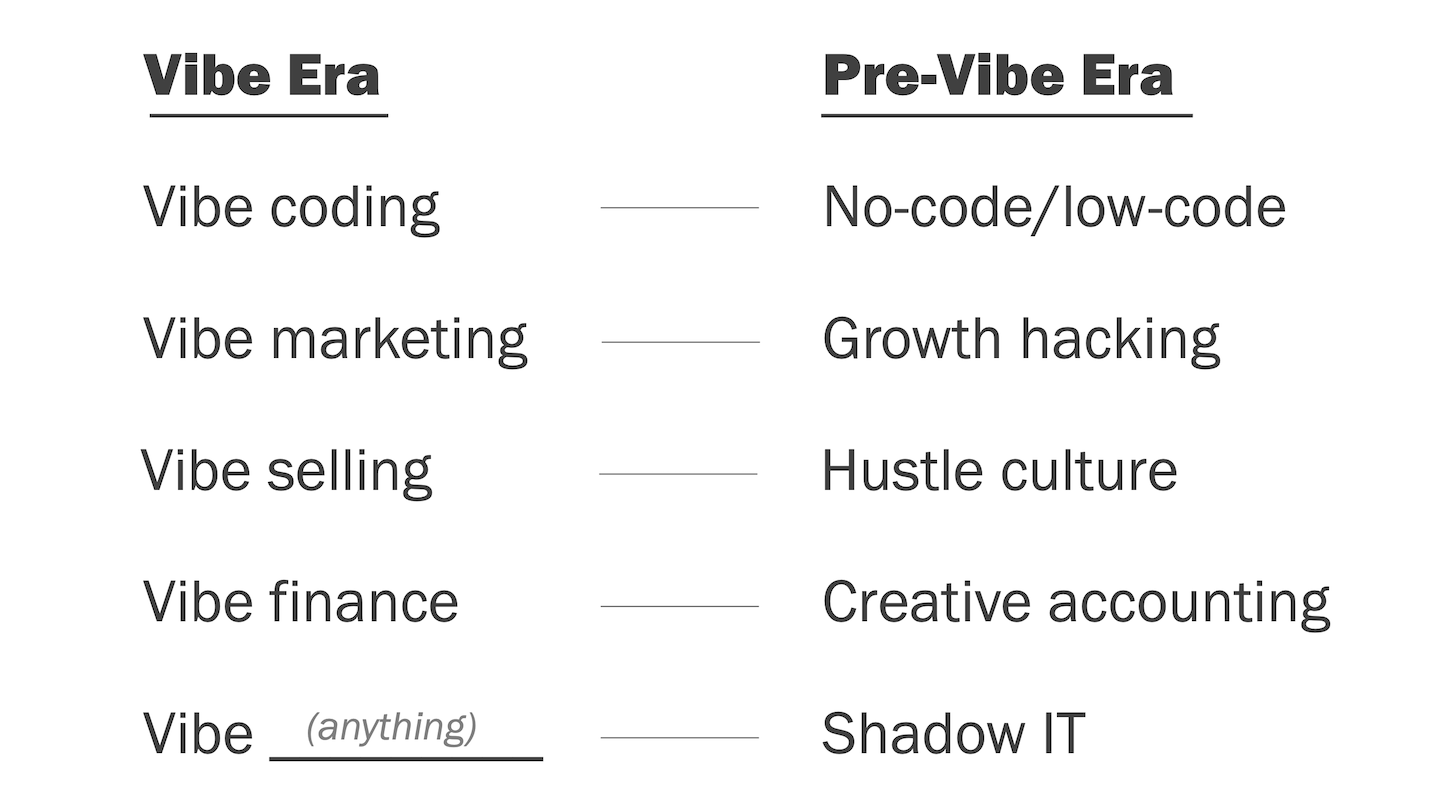
This is not merely a refinement of "no-code" or "low-code" movements; it is a turbo-charged evolution. Where traditional no-code platforms required users to navigate drag-and-drop interfaces and logical constraints, vibe coding replaces the interface with natural language. The developer becomes a conductor, and the AI becomes the orchestra. While purists might shudder at the "it mostly works" caveat—a sentiment that suggests a tolerance for technical debt and non-deterministic behavior—the efficiency gains are impossible to ignore.
The Chronology of the Vibe Movement
The rise of the "Vibe Era" can be traced through several key milestones in the first half of 2025:
- Early 2025: Andrej Karpathy introduces "vibe coding" to the public consciousness, framing it as the future of rapid software development.
- Spring 2025: Prominent voices in the tech and venture capital space, such as Jason Lemkin of SaaStr, begin publicly documenting their journeys as non-engineers building functional applications.
- Mid-2025: The market responds with explosive growth. Companies like Lovable achieve unprecedented financial velocity, reaching $100 million in Annual Recurring Revenue (ARR) in just eight months, proving that the demand for "vibe-based" tooling is not just hype—it is a commercial force.
- August 2025: The industry begins formalizing the concept of "vibe marketing," attempting to apply the same principles of rapid, iterative, and AI-assisted creation to the marketing function.
Supporting Data and the "Lemkin Scale"
To understand the feasibility of this new approach, industry analysts have sought to quantify where vibe coding succeeds and where it falters. Jason Lemkin’s experiments with Replit highlighted both the profound joys of building an app in hours and the frustrations of debugging AI-generated code.
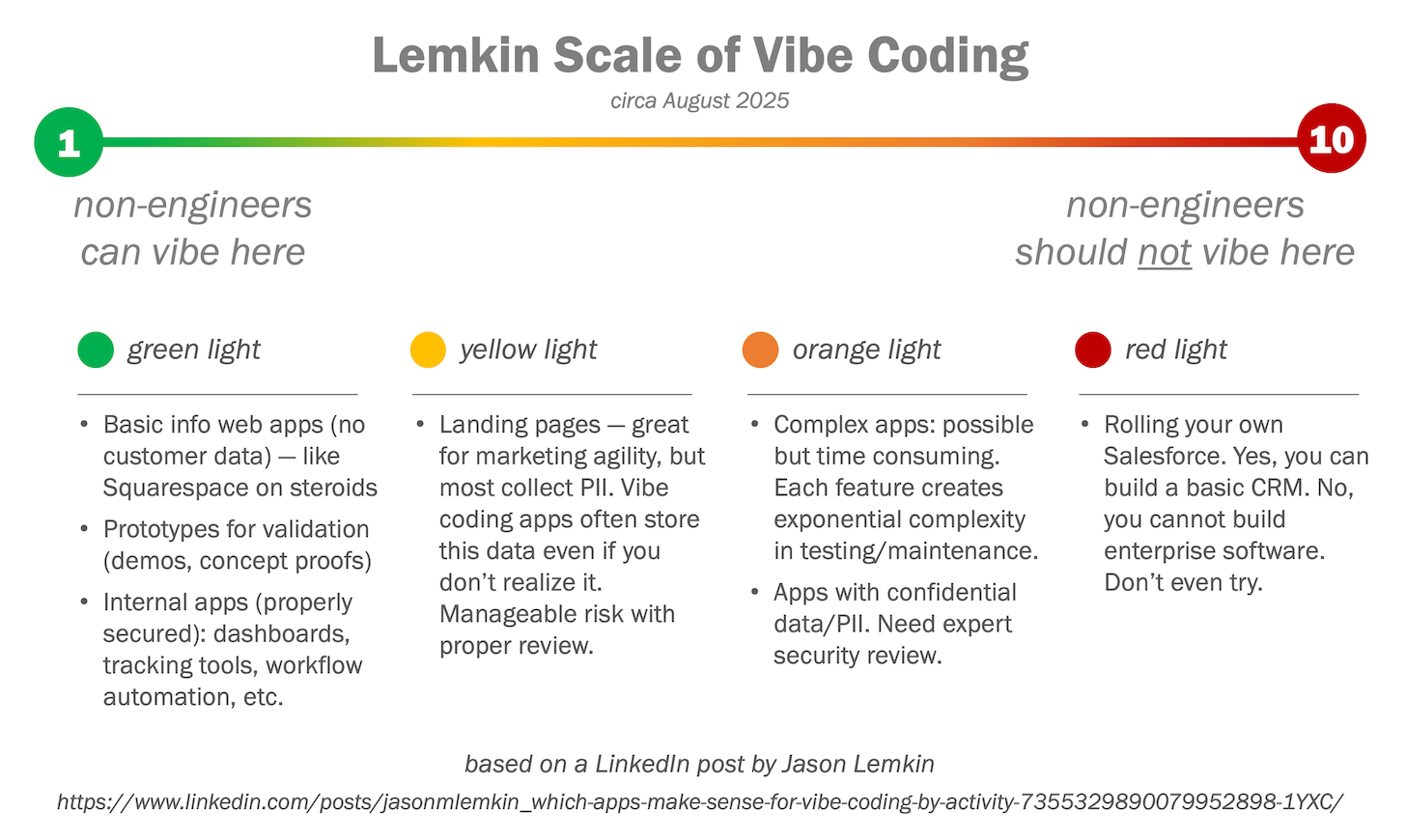
From these experiences, a heuristic known as the "Lemkin Scale of Vibe Coding" has emerged. This scale, ranging from 1 (highly viable) to 10 (unviable), categorizes applications based on their complexity and risk:
- Level 1-3 (The Green Light): These are internal dashboards, personal productivity tools, or simple CRUD (Create, Read, Update, Delete) apps. They are low-stakes and easily managed by current AI models.
- Level 4-7 (The Yellow Light): These represent moderate complexity—apps with specific integrations, custom databases, or nuanced user authentication.
- Level 8-10 (Here Be Dragons): These include mission-critical, enterprise-scale platforms—essentially, attempting to rebuild a behemoth like Salesforce from scratch.
The critical takeaway from this data is that the scale is not static. As AI models improve, the "green light" zone is expanding. What is considered a "7" in complexity today will likely shift toward a "3" by this time next year.
From Development to Deployment: The Rise of "Vibe Marketing"
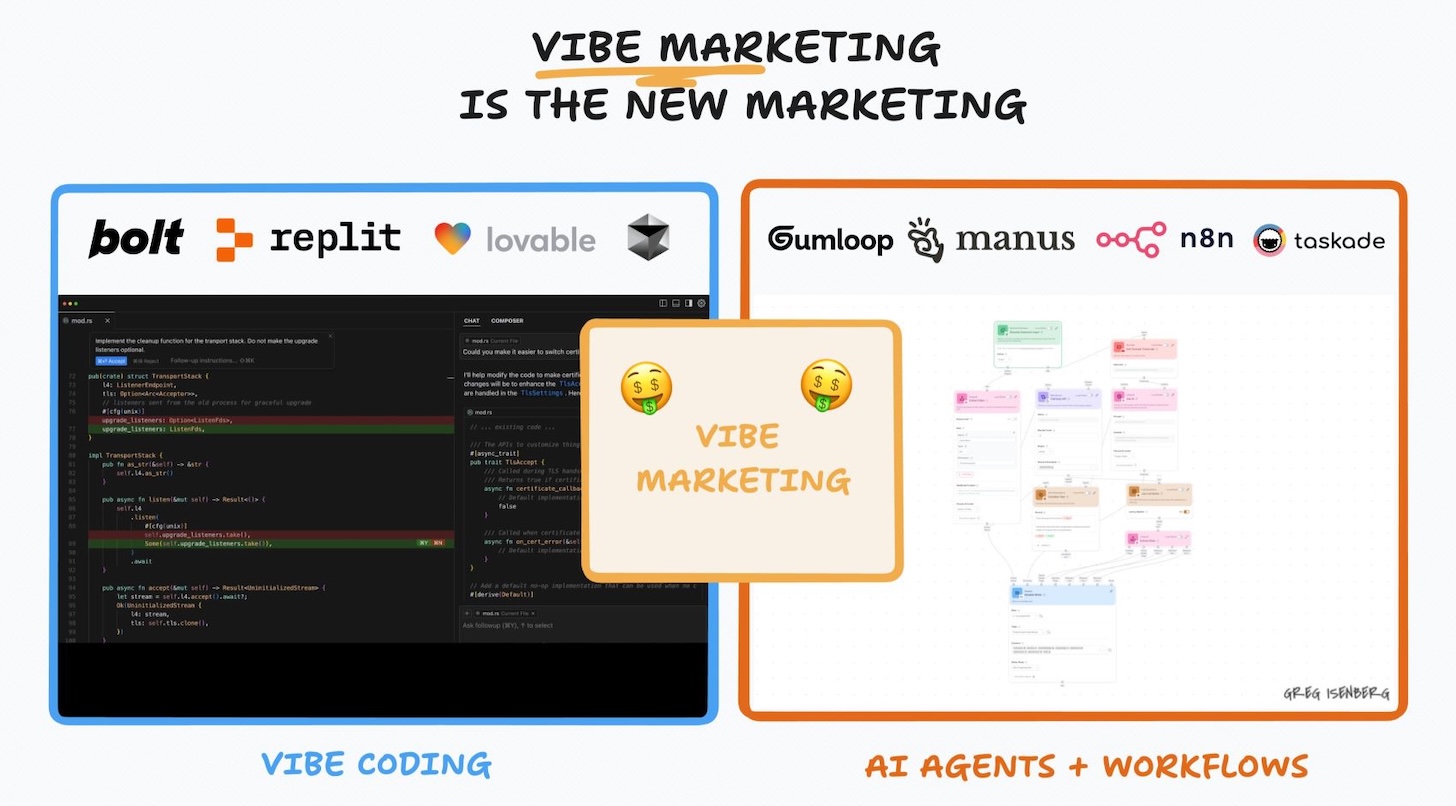
If vibe coding is the engine, "vibe marketing" is the vehicle. First coined by strategist Greg Isenberg, the term has been adopted by marketers looking to leverage AI to move at the speed of thought.
In its most practical interpretation, vibe marketing enables an individual marketer to function like a full-stack growth team. By utilizing AI agents to handle data scraping, content generation, and email sequencing, marketers can ship ideas faster than ever before. However, a debate persists regarding the true definition of the term. Is it just automation, or is it something more profound?
The "Market Whisperer" Perspective
While many equate vibe marketing with automated content factories, a more nuanced view suggests it should be about Big Experimentation.
True vibe marketing leverages AI to perform the kind of deep, exploratory data analysis that was previously reserved for dedicated data science teams. When a marketer has a "what if" moment, they no longer need to submit a ticket to an analyst; they can query the data lake themselves. This leads to a hypothesis, which is then tested via micro-campaigns.
In this model, the "vibe" is the agility of the feedback loop. If the experiment succeeds, it moves from the "vibe-land" of rapid prototyping to a "production plateau" of structured, governed, and scaled marketing activity.
Implications for the Future of Work
The emergence of the vibe-centric workplace carries significant implications for professional roles and organizational structures:
1. The Death of the "Permission Gap"
Historically, the barrier to executing an idea was technical knowledge or access to resources. By democratizing the ability to build software and analyze data, the vibe movement removes the "permission gap." Employees are empowered to build their own tools, leading to a flatter, more innovative organizational structure.
2. The Need for "Scaffolding"
As individual contributors begin to "vibe" their own solutions, the role of IT and Marketing Operations is fundamentally transformed. Their new mandate is not to build the tools for everyone, but to provide the scaffolding—the security guardrails, data governance, and brand standards—that allow the rest of the team to innovate safely.
3. The Customer Experience Paradox
There is a potential dark side to the vibe movement. If every company uses AI to hyper-automate their outreach and internal systems, the risk of a "Spam-pocalypse" increases. The ultimate success of vibe marketing will not be determined by how many emails or apps a company can ship, but by whether the end customer feels "good vibrations" or is simply overwhelmed by synthetic, automated noise.
Conclusion: Beyond the Buzzword
While "vibe" as a term may eventually fade, replaced by more formal industry nomenclature as the technology matures, the underlying shift is permanent. We have entered an era of Big Experimentation.
The ability to turn an abstract, "vibey" idea into a functional prototype in real-time is the defining characteristic of the modern digital worker. Whether in coding or marketing, those who learn to harmonize with these AI-driven tools will outpace those who wait for traditional, rigid development cycles to catch up.
The future belongs to the "market whisperers"—the individuals who can balance the raw, creative energy of AI-empowered experimentation with the governance and empathy required to build products and campaigns that truly resonate with human audiences. As we move forward, the goal remains the same: to stop worrying about the mechanics and start listening to the frequency of the market.
