
The 2025 Marketing Technology Landscape: Navigating the 15,384-Solution Ecosystem
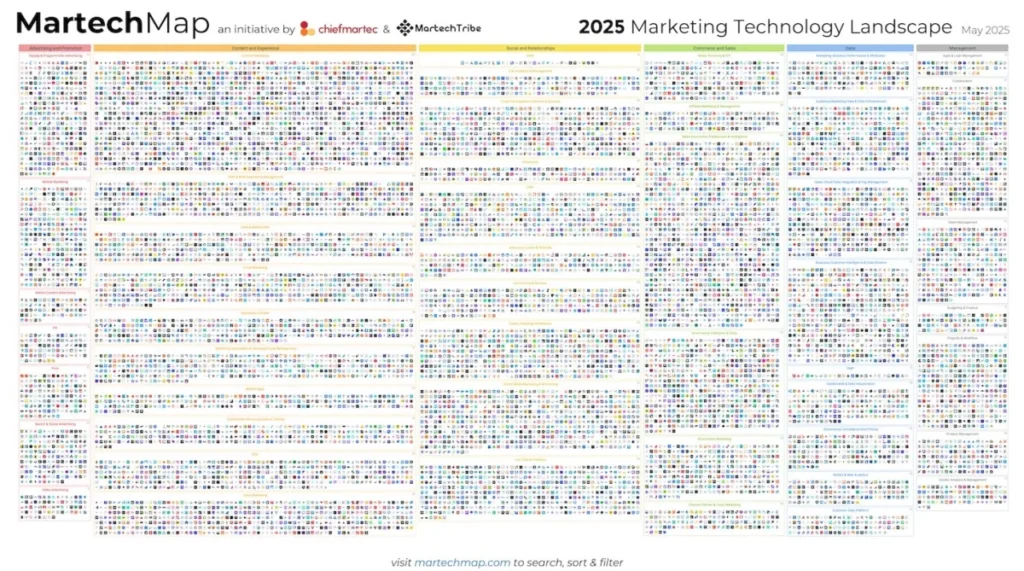
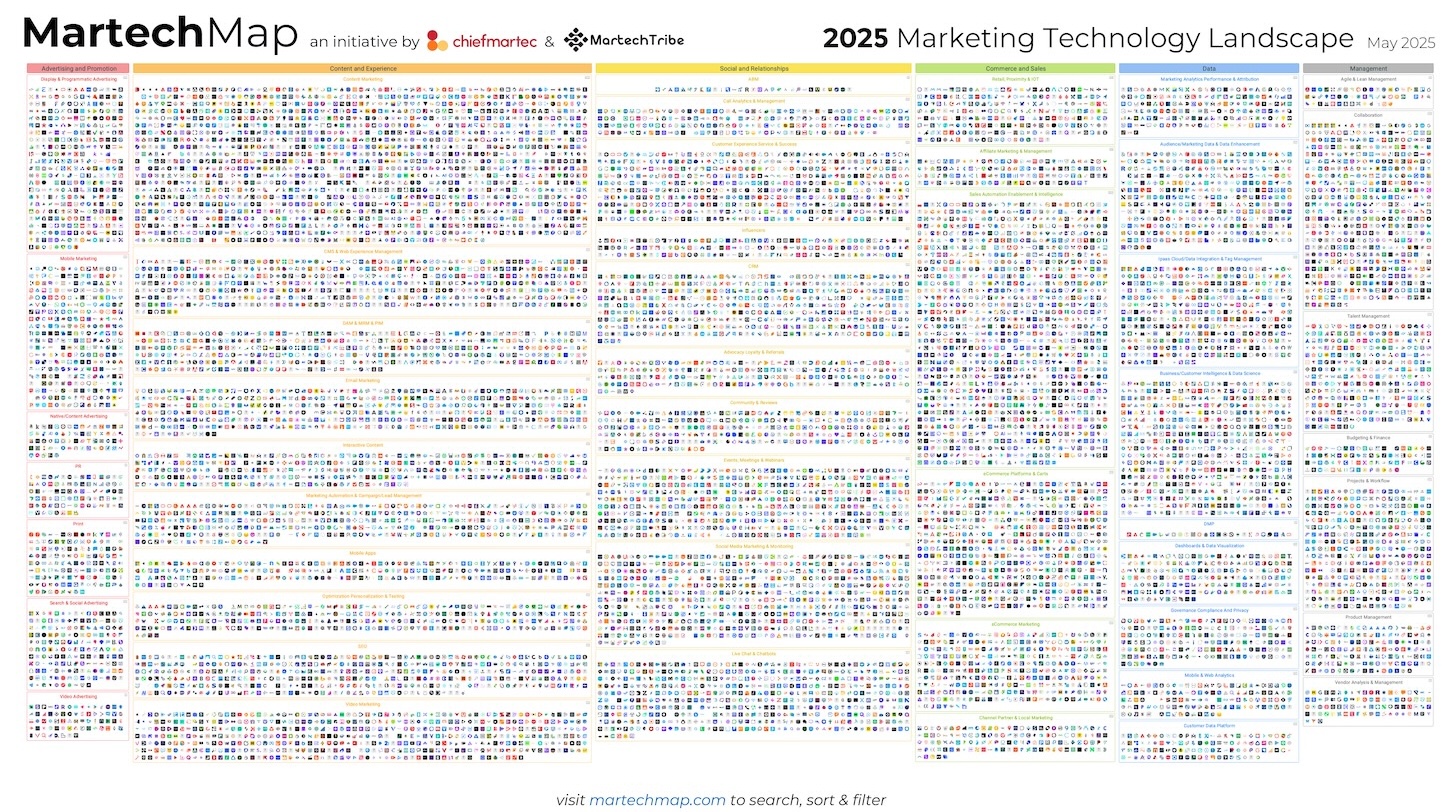
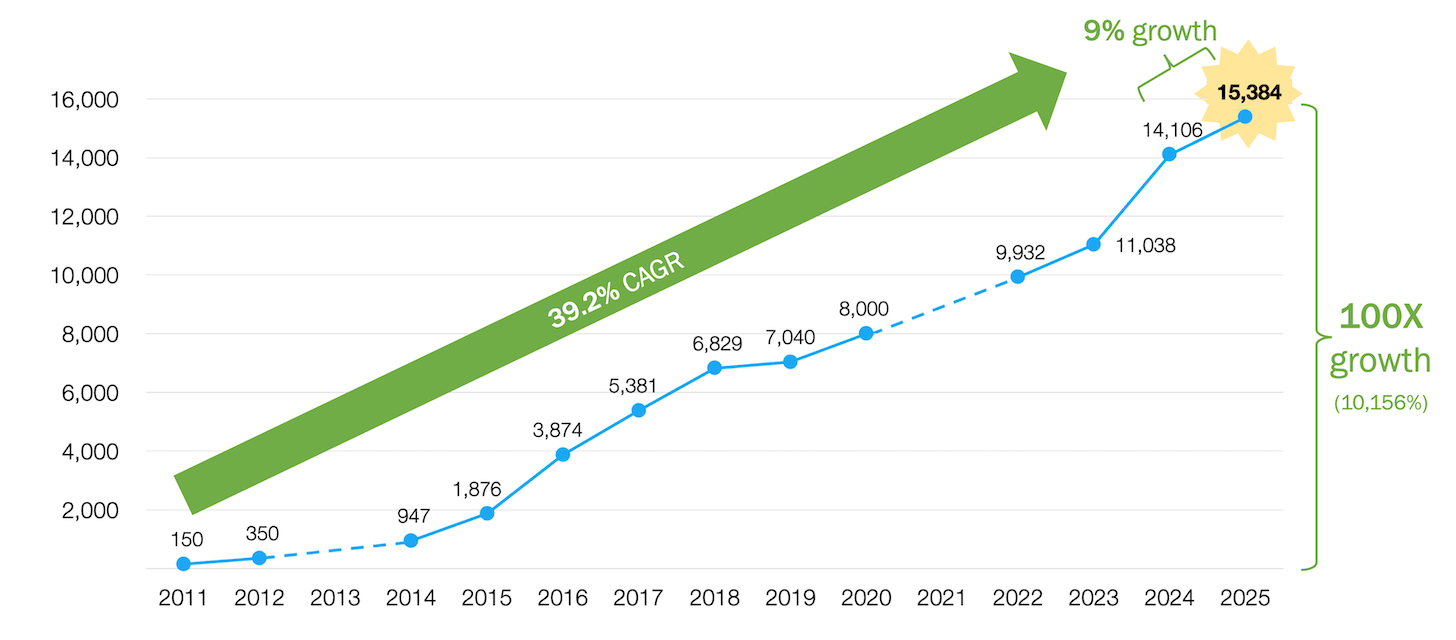
The marketing technology (martech) industry has reached a staggering milestone. According to the newly released State of Martech 2025 report, the global landscape of marketing technology solutions has expanded to a record 15,384 distinct products. This represents a 9% increase over the 14,106 solutions recorded in 2024, signaling that despite persistent rumors of market consolidation, the ecosystem continues to grow at a relentless pace.
Co-produced by Scott Brinker (ChiefMartec) and Frans Riemersma, this year’s analysis provides a definitive look at a sector that has grown 100-fold since the first landscape was published in 2011. While the headline figure is the total number of tools, the true story of 2025 lies in the tension between the "old guard" of enterprise software and a burgeoning "hypertail" of AI-driven, custom-built applications.
A Chronological Perspective: From 150 to 15,000+
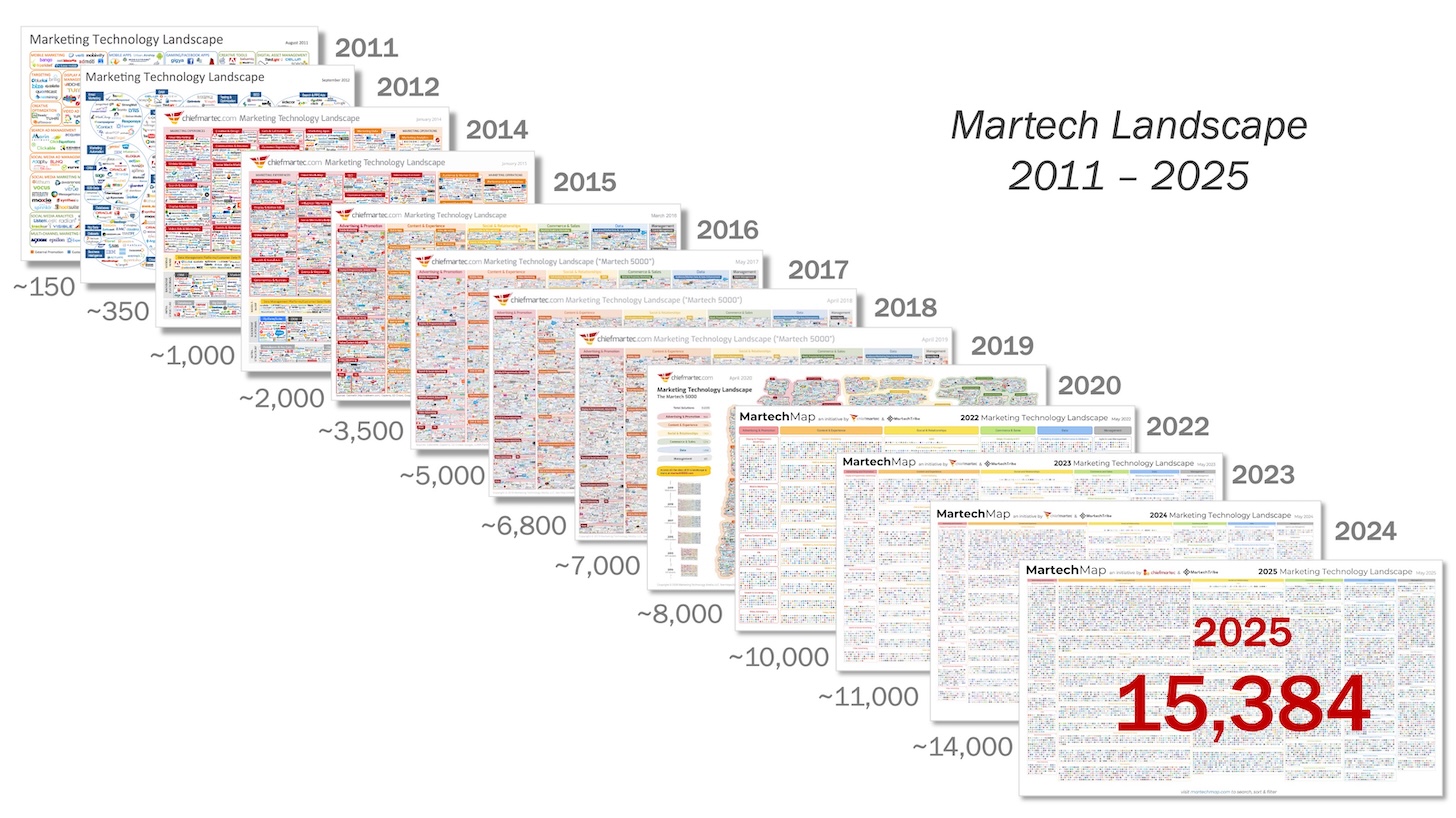
To understand the current state of martech, one must look at its origins. Over 15 years ago, the concept of the "marketing technologist"—a professional bridging the gap between creative strategy and software engineering—was nascent. When the first official landscape graphic was released in 2011, it featured just 150 solutions.
At the time, industry observers frequently predicted that the market would hit a ceiling and eventually collapse under the weight of its own complexity. Yet, every year, the data has defied those predictions. The growth has been exponential, shifting from a handful of categorical silos to a complex web of 49 distinct categories today. This 10,156% growth since 2011 highlights a fundamental transformation: marketing has shifted from a discipline supported by technology to one that is defined by it.
Supporting Data: Churn, Consolidation, and Innovation
The growth of the landscape is not merely an additive process; it is a dynamic cycle of creation and destruction. The 2025 report reveals a robust churn rate of 8.6%. This year, researchers evaluated 11,133 new candidates, of which only 2,489 met the criteria to be added to the landscape. Simultaneously, 1,211 products were removed—either due to corporate acquisition or total cessation of operations.
The "Death" of Legacy Products
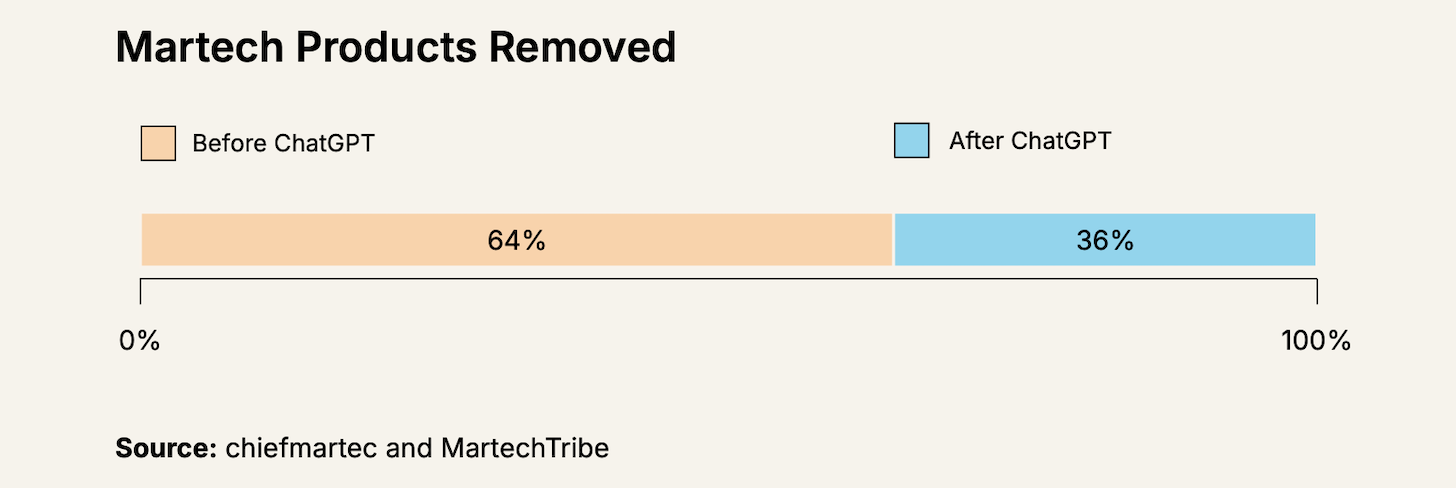
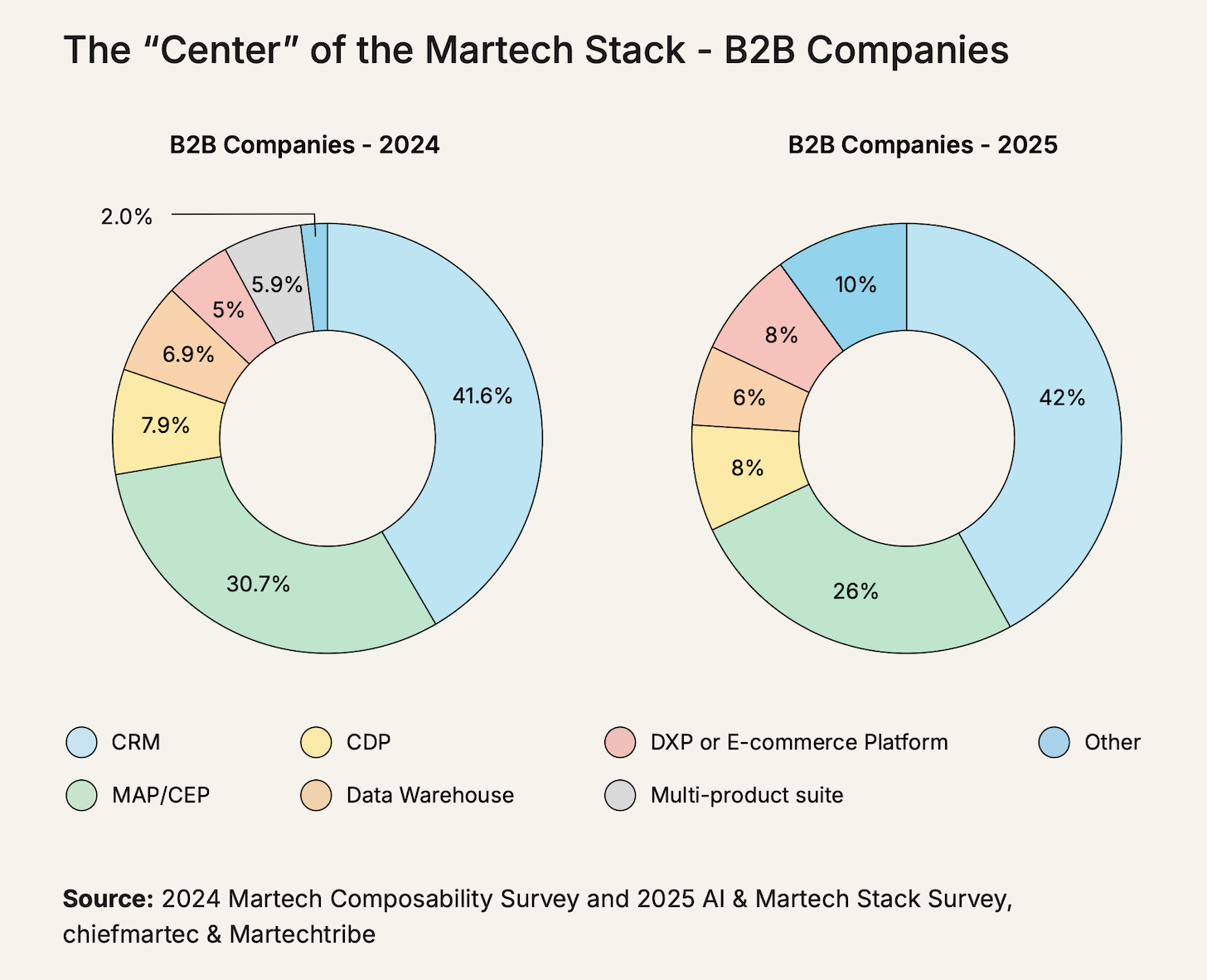
Perhaps the most notable trend in this year’s data is the consolidation of the "first generation" of martech. Two-thirds of the products removed from the list this year originated between 2010 and 2020. This suggests that the laws of gravity are finally catching up to earlier startups that were once venture-capital darlings. While many of these were smaller, bootstrapped entities, the exit of these firms underscores a maturing market where long-term viability now demands more than just a clever idea; it requires sustainable revenue and deep integration.
The Rise of AI-Native Innovation
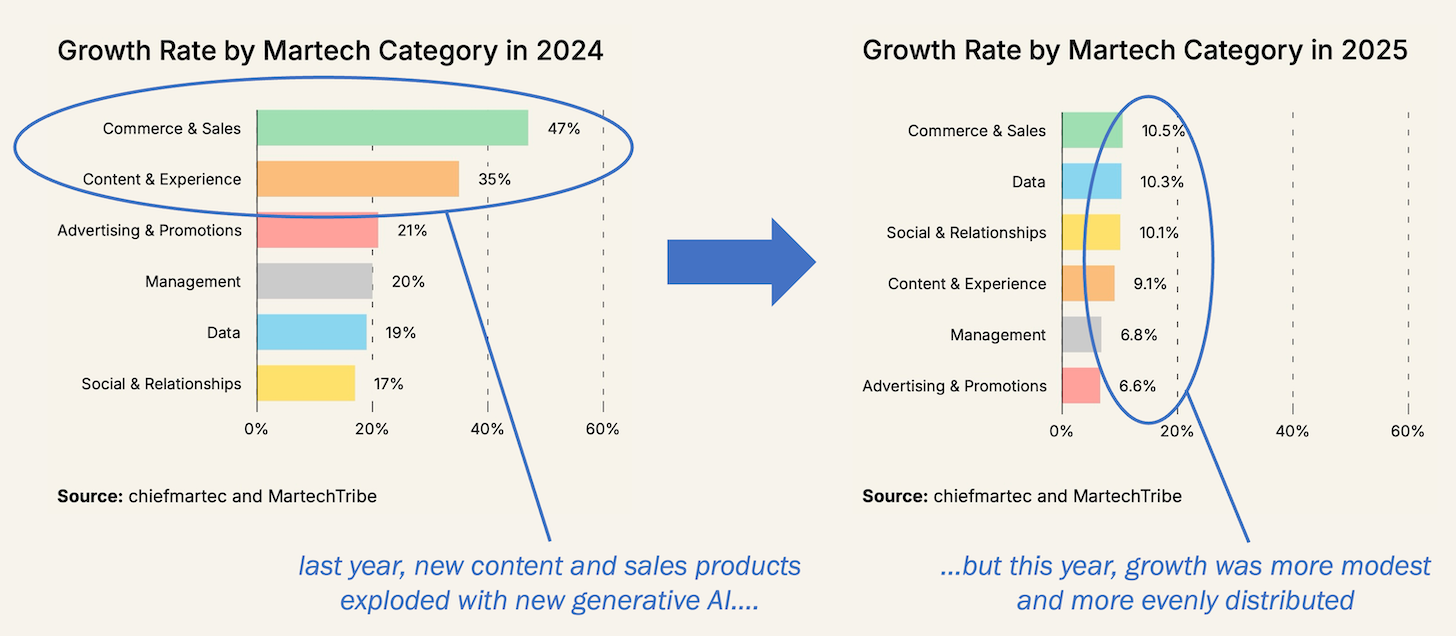
If the first wave of martech was about digitizing workflows, the current wave is about "AI-nativity." Following the explosion of generative AI, new startups continue to enter the market at an unrelenting rate. While 2024 saw massive growth in content and sales-focused AI tools (35% and 47% respectively), 2025 has seen a more balanced growth pattern of roughly 7–10% across all six major domains.
Notably, the SEO category saw a surprising 24% growth, expanding from 212 to 262 products. This flies in the face of the "SEO is dead" narrative. Instead, it confirms a pivot toward AI Optimization (AIO), as companies scramble for tools that help them tailor their content for LLM-based search engines and AI agents.
The Shifting Center of the Martech Stack
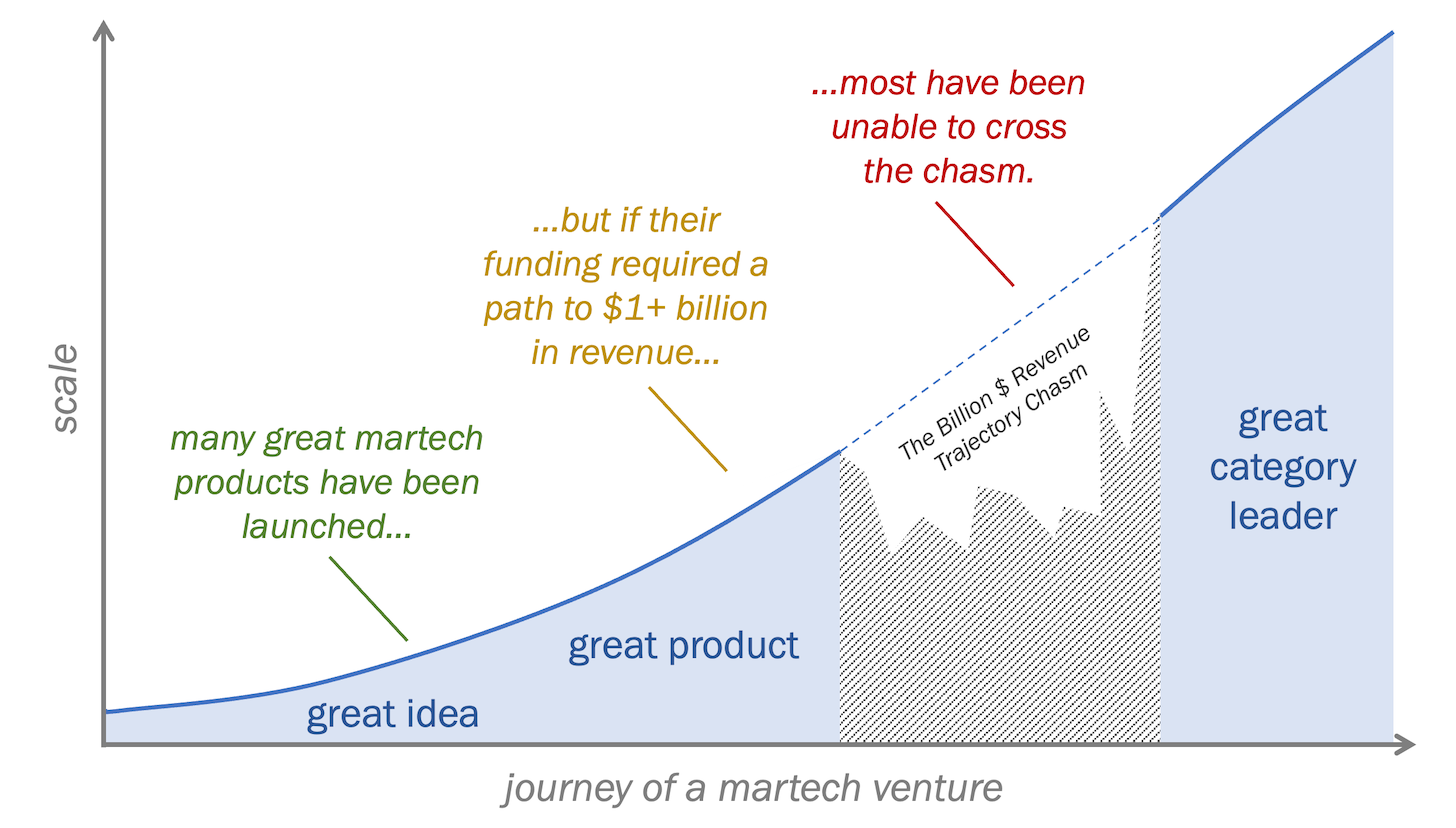
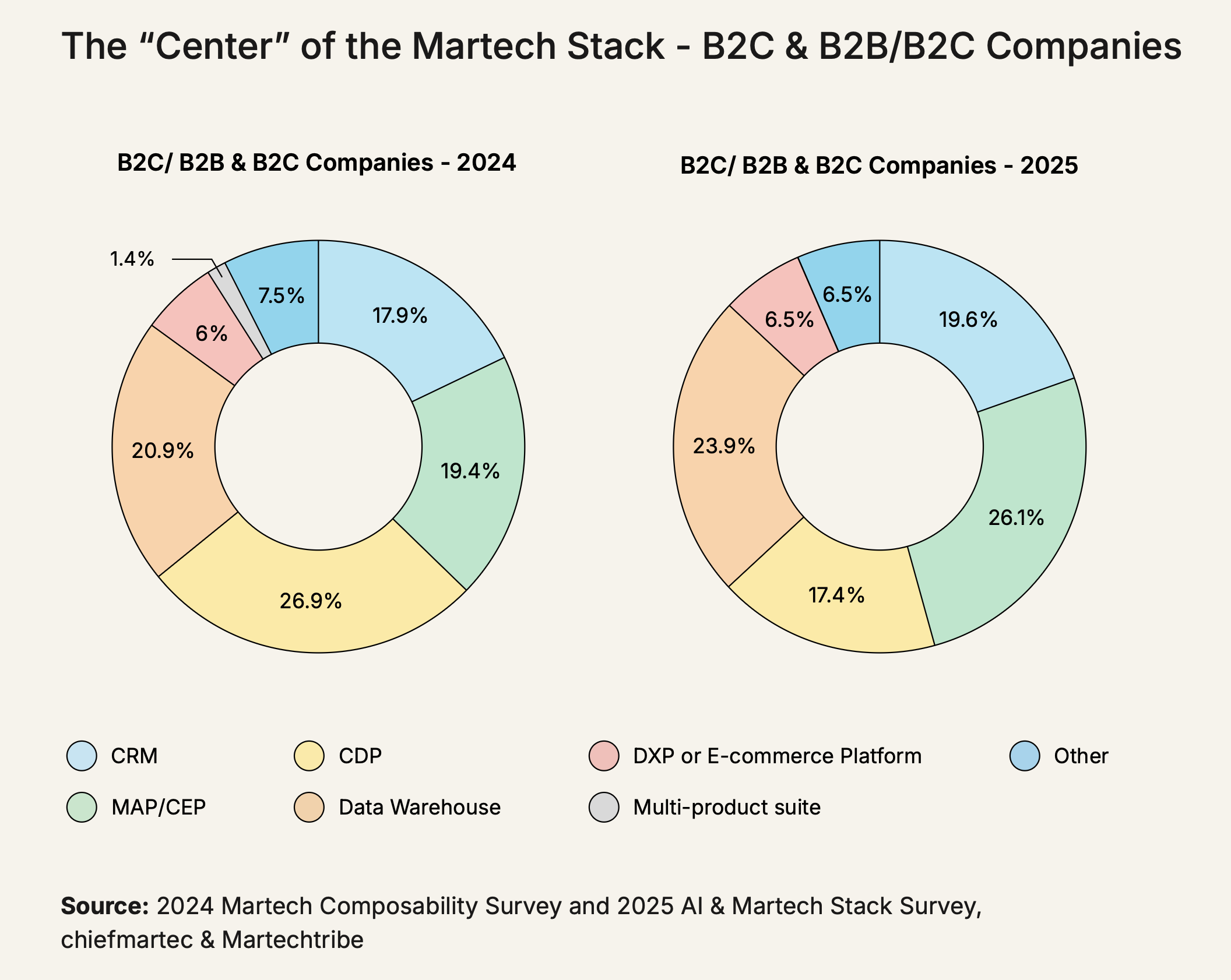
With thousands of tools available, how are organizations managing their stacks? The report suggests a period of stabilization for B2B firms, where the CRM or Marketing Automation Platform (MAP) remains the "center" of the ecosystem. However, a significant change has emerged in B2C and hybrid sectors.
The Customer Data Platform (CDP) has seen its prominence as the "center" of the stack decline from 26.9% to 17.4% in just one year. This appears to be a result of the "composable" movement. CDP capabilities are being absorbed into two layers:
- The Data Layer: Cloud data warehouses are increasingly serving as the primary source of truth, growing from 20.9% to 23.9%.
- The Engagement Layer: Marketing automation and customer engagement platforms are absorbing CDP functionality, growing from 19.4% to 26.1%.
This suggests that the industry is moving toward a model where data and engagement are decoupled, with the warehouse acting as the infrastructure and the engagement platform acting as the engine.
The Emergence of the "Hypertail"
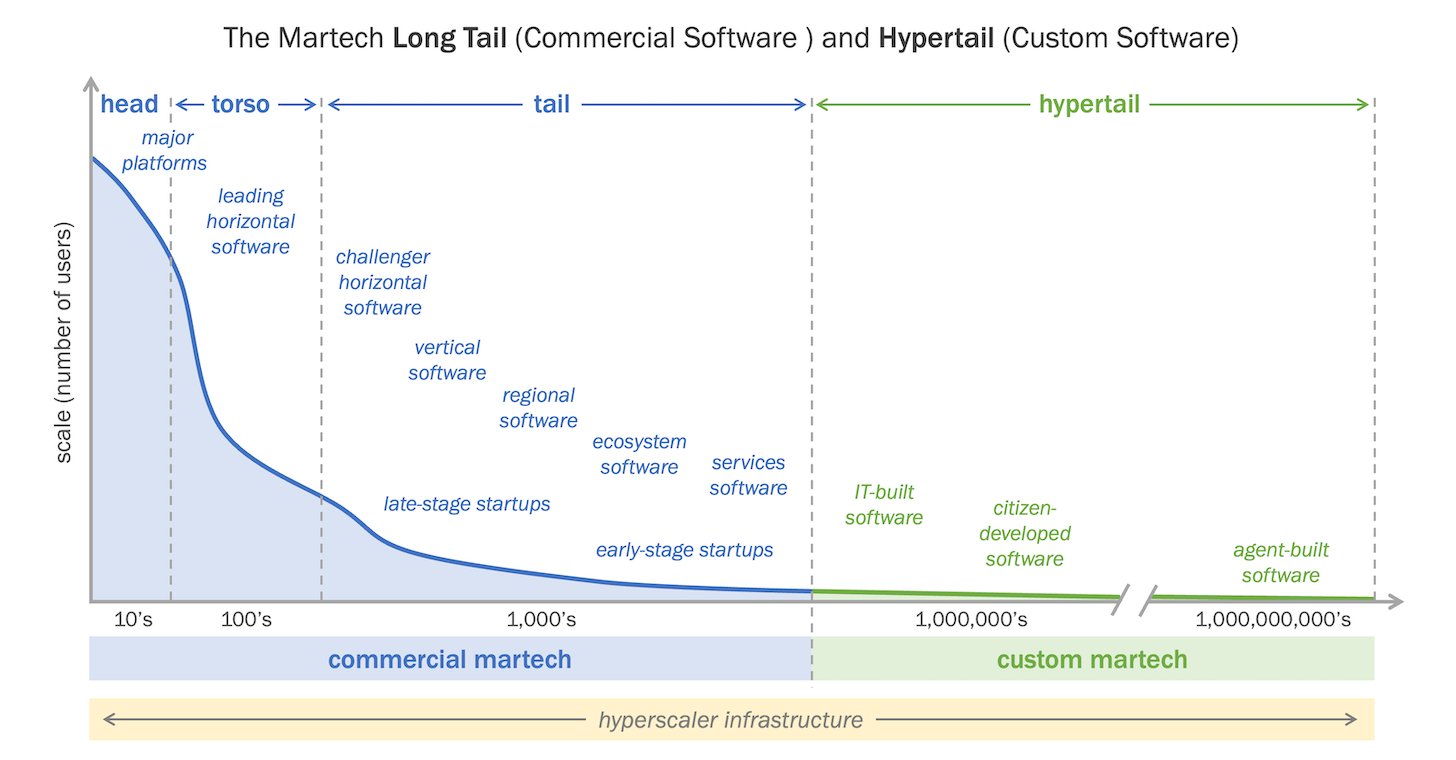
Perhaps the most disruptive finding in the 2025 report is the emergence of the "hypertail"—a vast, invisible layer of custom-built software that exists outside the commercial market.
Historically, building custom software was the domain of professional engineering teams, making it prohibitively expensive for most marketing departments. The rise of low-code and no-code platforms over the last decade began to democratize this process. Now, AI has acted as a "force multiplier."
Professional developers are utilizing "vibe coding"—using natural language prompts to generate functional code in hours rather than weeks. For non-technical "citizen developers" in marketing, the barrier to entry has effectively vanished. When a marketer can prompt an AI assistant like Claude or Gemini to build an automation or a lightweight app, they are effectively creating custom software on the fly.
The report posits that there are likely billions of these custom programs currently in operation, many of which are ephemeral, running only when needed to solve a specific, momentary business problem. This represents a massive shift: the "martech stack" is no longer just a collection of vendor-provided logos; it is an evolving, hybrid organism of commercial software and bespoke, AI-generated micro-services.
Implications for CMOs and Marketing Operations
The 2025 landscape carries several critical implications for leadership:
- Platform Strategy vs. Point Solutions: While the number of available tools is expanding, the reliance on a central, stable platform is crucial. Marketing leaders must ensure that their core CRM or MAP can act as a hub for the increasingly fluid periphery of "instant" AI apps.
- The "Build vs. Buy" Calculus: The proliferation of the hypertail changes the build-vs-buy decision. For simple, bespoke tasks, the cost of building a custom AI agent is rapidly dropping below the cost of vetting, purchasing, and integrating a third-party commercial tool.
- Operational Fluidity: The 2.2% growth in the average tech stack indicates that companies are continuing to adopt new tools despite economic pressures. However, the success of these stacks will depend on the ability to integrate these AI-native tools without creating "data silos" or technical debt.
Conclusion: A New Era of Marketing Technologists
The 2025 martech landscape is a testament to the resilience and volatility of the industry. It is no longer a list of static categories but a living, breathing ecosystem. As the industry moves forward, the focus will likely shift from the sheer number of logos on a slide to the efficiency with which organizations can stitch together a mixture of enterprise-grade platforms and hyper-local, custom-built AI solutions.
For those looking to navigate this landscape, the State of Martech 2025 report provides the roadmap. The era of simply "buying" the stack is over; the era of "architecting" it—using a combination of external vendors and internal AI-driven ingenuity—has begun.
For deeper insights, the full State of Martech 2025 report is available for free download at the official Martech Day website. The report includes granular data on all 49 categories and detailed analysis of the shift toward composable architectures.
