
Scoring Big on Social: What World Cup Video Data Teaches Brands About Capturing Global Attention
As the world’s most-watched sporting event, the FIFA World Cup is uniquely positioned at the intersection of international sports, national pride, and digital culture. Co-hosted across the sprawling markets of Canada, Mexico, and the United States, the tournament serves as a supreme test of digital agility. For media companies, independent creators, and global brands alike, the tournament floor is not just the green pitch inside the stadium, but the infinite scroll of social media feeds where billions of fans gather to react, celebrate, and debate.
When the entire globe’s attention focuses on a single event, the competition for eyeballs becomes fierce. How can a brand or content creator break through the noise when every competitor, publisher, and influencer is clamoring for attention online?
To answer this, data analysts recently examined comprehensive North American creator and publisher metrics during the tournament. The findings offer a masterclass in gold medal-worthy social video strategies, challenging long-held assumptions about volume, niche relevance, optimal video lengths, and publishing schedules.
Main Facts: The Digital Landscape of the Modern World Cup
The data reveals that capturing an audience during a mega-event like the World Cup requires more than just showing up and hitting "publish." It demands a strategic alignment of content type, cultural relevance, duration precision, and timing.
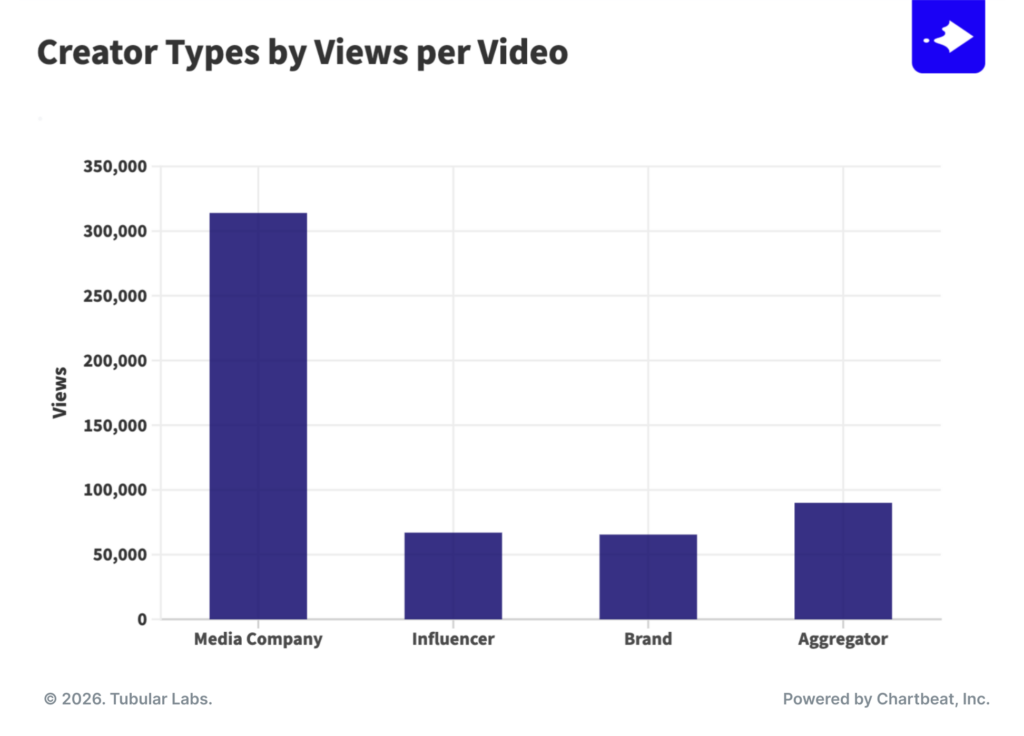
- The Power of Editorial Authority vs. Mega-Reach: While major sports broadcasters like ESPN hold traditional distribution advantages, independent influencers can command astonishing single-video numbers. For instance, influencer iShowSpeed generated a staggering 240 million views on a single Instagram reel capturing his raw reaction to the Argentina versus Cape Verde match—surpassing the peak view counts of many legacy sports networks for individual posts. However, data analytics show that editorial-led media operations achieve a more consistent baseline efficiency and reach across their portfolios.
- Beyond Sports: With 48 national teams vying for the trophy, the World Cup transcends athletics to become a massive global cultural phenomenon. Non-sports creators—particularly in categories like Food & Drink, Lifestyle, and Comedy—successfully captured millions of views by framing the tournament through their unique vertical lenses.
- The Science of Duration and Timing: Algorithmic success on platforms like TikTok and Instagram is heavily dictated by runtime and posting schedules. Creators who tailored their video lengths to match actual viewing habits—rather than arbitrary creative choices—and who posted during high-engagement windows (rather than blindly following traditional publishing hours) found significant whitespace opportunities.
Chronology: The Evolution of Mega-Event Social Strategy
To understand how social video strategies have transformed leading up to this tournament, it helps to look at the chronological evolution of digital sports marketing over the past decade.
Phase One: The Broadcast Monopoly (Pre-2018)
In earlier eras, major tournaments like the World Cup were strictly governed by broadcast rights holders. Social media content was largely restricted to official highlights, text updates, and static photos. Independent creators and non-sports brands had virtually no room to participate without facing copyright strikes or digital blackouts. Content strategies relied entirely on volume—publishing as many clips as possible immediately after the final whistle.
Phase Two: The Creator Boom and Highlight Culture (2018–2022)
As platforms like TikTok and Instagram Reels gained dominance, the ecosystem shifted. Influencers began inserting themselves into the cultural conversation through reaction videos, meme formats, and amateur analysis. Brands realized that traditional sponsorships were no longer enough; they needed native content. However, the prevailing strategy was still a "spray and pray" approach—publish frequently across every platform and hope something goes viral.
Phase Three: The Data-Driven Ecosystem (Present Day)
The modern paradigm, highlighted by recent North American creator data, represents a mature, highly analytical approach. Brands and creators no longer guess what works. Armed with granular social video intelligence, they analyze optimal video durations down to the second, map exact audience scrolling habits against time-zone discrepancies, and strategically position non-endemic content (such as cultural recipes or travel vlogs) to capture spillover attention from the main event.
Supporting Data: What the Metrics Reveal
A deep dive into platform data from TikTok and Instagram provides concrete evidence of what drives success in a saturated digital ecosystem.
Quality Over Quantity: The Efficiency of Editorial-Led Content
While viral anomalies like iShowSpeed’s 240-million-view reel grab headlines, platform data reveals a more nuanced story. Independent influencers often rely on high-variance viral spikes, whereas media companies and structured editorial teams leverage name recognition, established trust, and robust distribution infrastructure as force multipliers.
Volume alone can drive baseline reach, but editorial-led video operations prove that fewer, higher-quality touchpoints yield sustainable audience retention. In a feed cluttered with low-effort noise, authority and polish stand out.
The Non-Endemic Win: Tapping Into Cultural Spillover
Sports media naturally captures the lion’s share of total views during a soccer tournament. Yet, the data demonstrates that brands and creators outside the sports vertical can carve out massive audiences by finding natural overlaps.
Consider the Food & Drink category as a prime example. Creators in this space successfully adapted the World Cup into an engaging narrative by leaning into universally relatable themes:
- Matchday Tailgating Tips: Providing hosting guides, snack stadiums, and finger-food tutorials for viewing parties.
- Global Cuisines: Producing recipe videos highlighting the traditional dishes, street foods, and national cocktails of the 48 competing nations.
By pivoting their content to reflect the cultural heartbeat of the tournament without needing to analyze match tactics or player statistics, food creators unlocked high-engagement audiences that traditional sports channels could not reach.
Matching Video Duration to Viewer Attention Spans
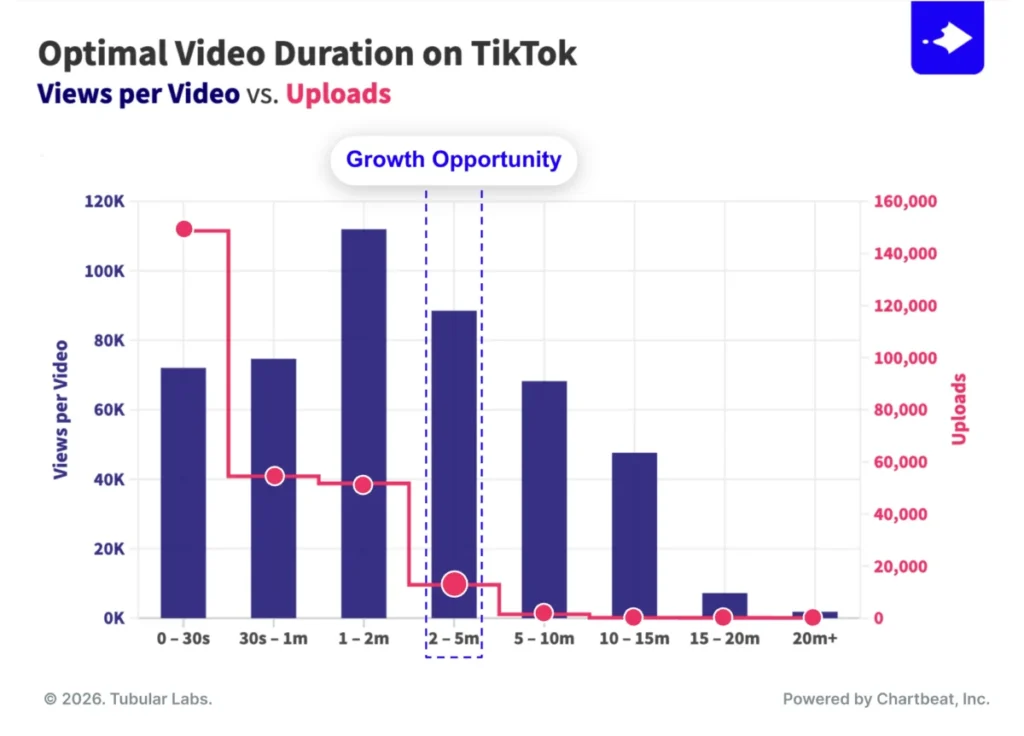
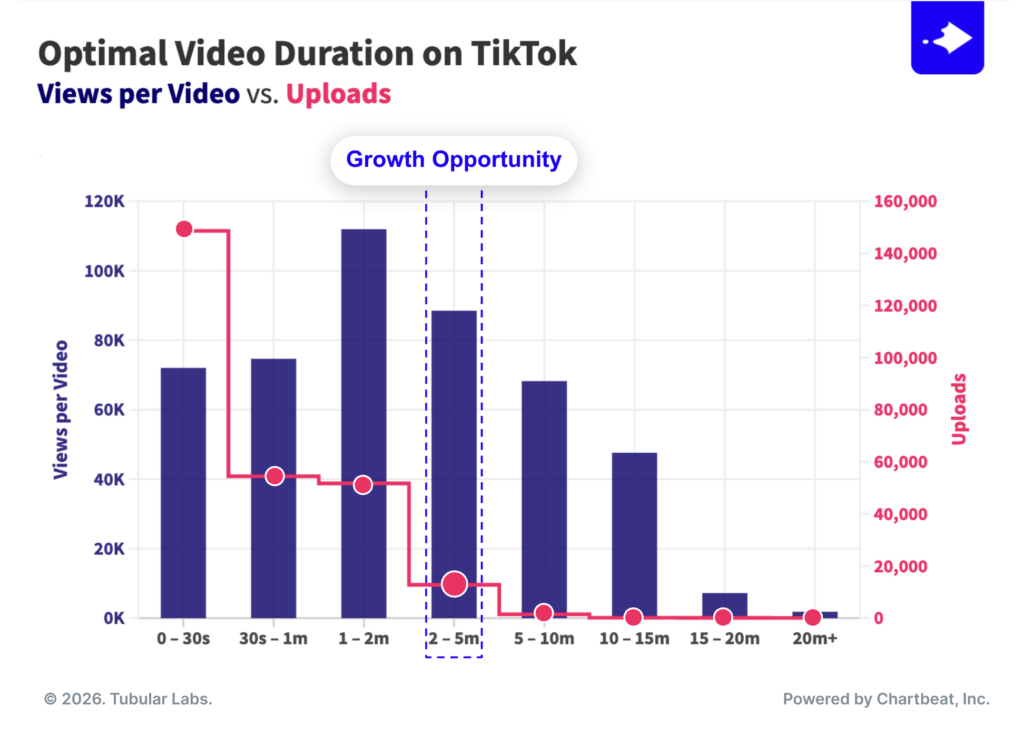
Creating great content is only half the battle; packaging it in the right format is equally critical. Analytics from TikTok regarding optimal video duration during the tournament show clear viewer preferences.
Audiences exhibit distinct drop-off points depending on the narrative structure of the video. Creators who ignored analytical data and produced overly long or arbitrarily truncated clips suffered from poor completion rates. Conversely, those who tailored their runtime to match real-time consumption habits enjoyed algorithmic favor, higher engagement rates, and extended viewer retention.
Decoding the Optimal Posting Schedule
The World Cup is a dynamic, multi-week event spanning multiple international time zones. Consequently, audience scrolling behavior does not always align with traditional 9-to-5 publishing schedules or even the exact kickoff times of matches.
A comparative analysis of Instagram data reveals a noticeable discrepancy between when creators think they should post and when audiences are actually active on the platform. Many creators fell into the trap of posting immediately after a match ended, missing the post-game commute or evening wind-down windows when scrolling spikes.
By auditing historical video performance, smart creators identified "whitespace opportunities"—periods characterized by high audience activity but low publisher competition—allowing their content to dominate feeds when user attention was highest and distraction was lowest.
Official Responses and Industry Perspectives
Digital strategists, platform analysts, and marketing executives have weighed in heavily on what these insights mean for the future of digital media and brand partnerships.
Industry analysts emphasize that major global events are no longer isolated spectacles; they are ongoing content engines. "The misconception is that you need a multi-million-dollar broadcast rights package to win during the World Cup," notes a senior digital media strategist. "In reality, the data shows that cultural relevance and audience alignment matter far more than official branding. If you understand your community’s relationship to the moment, you can win the feed without ever mentioning a score."
Creator economy experts also point out the shifting power dynamics between traditional media giants and independent talent. While legacy broadcasters still hold massive distribution advantages, their institutional rigidity often prevents them from moving at the speed of internet culture. Influencers, by contrast, possess the agility to capitalize on micro-moments within seconds, turning raw emotion into hundreds of millions of views.
Furthermore, marketing technologists stress the necessity of advanced data intelligence tools. In a saturated ecosystem where algorithms continually evolve, relying on intuition is a recipe for low visibility. Brands that integrate deep social video analytics into their campaign planning are consistently outperforming those that rely on guesswork.
Implications: How to Win the Next Cultural Moment
The insights gleaned from North American creator and publisher data during the World Cup extend far beyond soccer. They provide a blueprint for navigating any major cultural phenomenon—be it the Olympics, the Super Bowl, awards season, or global entertainment releases.
For brands, media companies, and independent creators looking to future-proof their social video strategies, several key implications emerge:
- Audit and Refine Your Publishing Cadence: Stop guessing when your audience is online. Use platform analytics to map actual viewing and scrolling behavior, identifying quiet hours where high engagement meets low competition.
- Embrace Adjacent Relevance: You do not need to be a vertical expert to join a global conversation. Find the natural bridge between your niche (whether it’s fashion, tech, food, or lifestyle) and the cultural event of the day. Authenticity and creativity will always resonate with audiences looking for a fresh perspective.
- Respect the Data on Video Length: Do not let creative ego dictate runtime. Let audience retention metrics guide how long your videos should be. Give viewers the exact pacing they crave to maximize completion rates and algorithmic distribution.
- Balance Scale with Editorial Authority: While viral influencer reactions can capture lightning in a bottle, long-term brand equity is built through consistent, high-quality, editorial-led content. Combine the agility of creator-style storytelling with the polish and trust of established media operations.
As global events continue to dominate digital feeds, the difference between getting lost in the noise and capturing the world’s attention comes down to precision, timing, and a deep, data-driven understanding of the audience. By applying these lessons, creators and brands can ensure they are always positioned to win the moment.
