
Scaling Excellence: How Agencies Can Master Multi-Client Email Management Without the Administrative Burnout
For digital agencies, the challenge of growth is often paradoxical: as you acquire more clients, the administrative burden of managing their disparate marketing ecosystems threatens to erode the very creative and strategic value you were hired to provide. When email marketing data is siloed across dozens of individual accounts, the "hidden cost" of agency operations—manual reporting, constant platform switching, and data consolidation—can stifle growth.
The reality of modern agency life is that most standard email platforms are built for the individual marketer, not the agency professional juggling multiple brands, audiences, and complex deployment schedules. To scale effectively, agencies must pivot toward a unified management framework.
The State of Agency Operations: The Cost of Siloed Data
The primary friction point for any growing agency is the "context-switching tax." When a team member must log in and out of multiple accounts to pull basic metrics, they lose precious time that could be spent on high-level strategy. This manual labor is not just inefficient; it is a direct inhibitor of proactive client service.
Historically, agencies managed this by creating spreadsheets, manually logging into individual platforms to extract performance metrics, and attempting to synthesize this into a coherent narrative. This approach is prone to human error and, more importantly, keeps the agency in a reactive state. Instead of analyzing data to drive future strategy, the team spends the majority of their time simply reporting on the past.
Chronology of the Shift: From Manual Reporting to Integrated Intelligence
Over the past decade, the evolution of agency-focused email software has moved through three distinct phases:
- The Manual Era: Agencies relied on individual logins for every client, using Excel or Google Sheets to manually aggregate performance data. The process was slow, prone to fragmentation, and made it nearly impossible to provide real-time updates.
- The Integration Era: The rise of third-party reporting tools and API-driven dashboards began to bridge the gap. While this improved visibility, it often created a "middleman" layer that added costs and complexity without solving the underlying issue of platform fragmentation.
- The Unified Management Era: Current best practices—exemplified by tools like Campaign Monitor—have shifted the focus toward "native" agency dashboards. This approach embeds the management layer directly into the email platform, allowing agencies to oversee their entire portfolio from a single, centralized command center.
The Four Pillars of Streamlined Agency Management
To maintain a high-level view without drowning in the weeds, agencies should prioritize four functional areas in their software stack.
1. Centralized Command: The Single-Login Dashboard
Agencies need a "mission control" that provides a bird’s-eye view of every client account upon login. By implementing a shared, configurable dashboard, agencies can eliminate the need for manual check-ins.
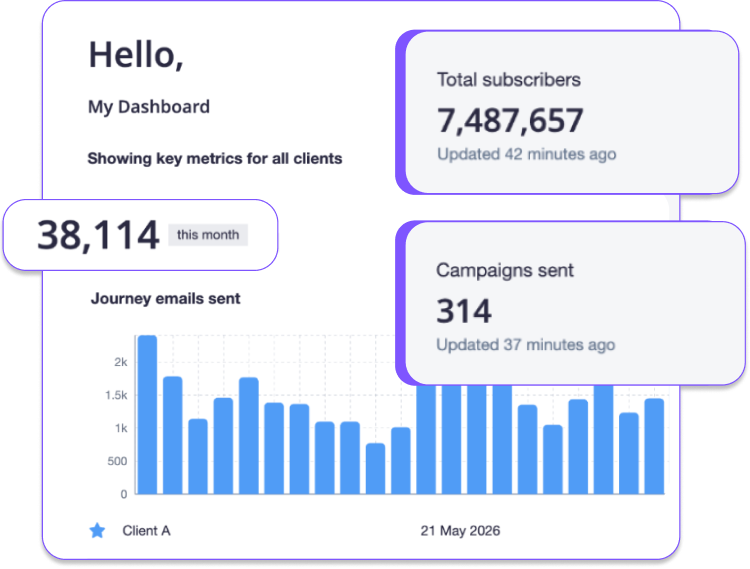
Campaign Monitor’s My Dashboard is a prime example of this evolution. By allowing team members to select specific performance widgets, agencies can create a customized environment where the most critical KPIs—such as campaign health or recent engagement spikes—are visible immediately. This transparency ensures that no client falls through the cracks, even as the portfolio expands into the hundreds.
2. Turning Data into Strategic Narratives
The goal of a report is not to display numbers, but to tell a story. If your team spends two days collecting metrics, they have no time left to interpret them. Modern reporting tools must move beyond static charts to interactive, real-time widgets.
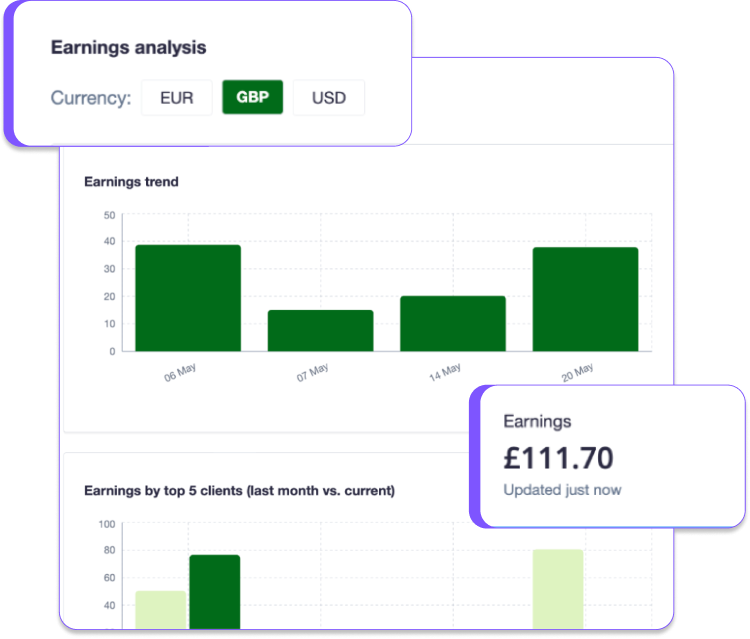
By visualizing earnings, subscriber growth, and send performance in one place, agencies can instantly spot trends. For example, if a client’s subscriber growth begins to plateau, the agency can identify the issue before the client even asks. This allows the conversation to shift from "Here is what happened last month" to "Here is why this happened, and here is our strategic recommendation for next month."
3. Tiered Visibility: The Art of Priority Management
Not all clients require the same level of daily oversight. Agencies must distinguish between "maintenance mode" accounts and those in the midst of high-intensity campaign cycles.
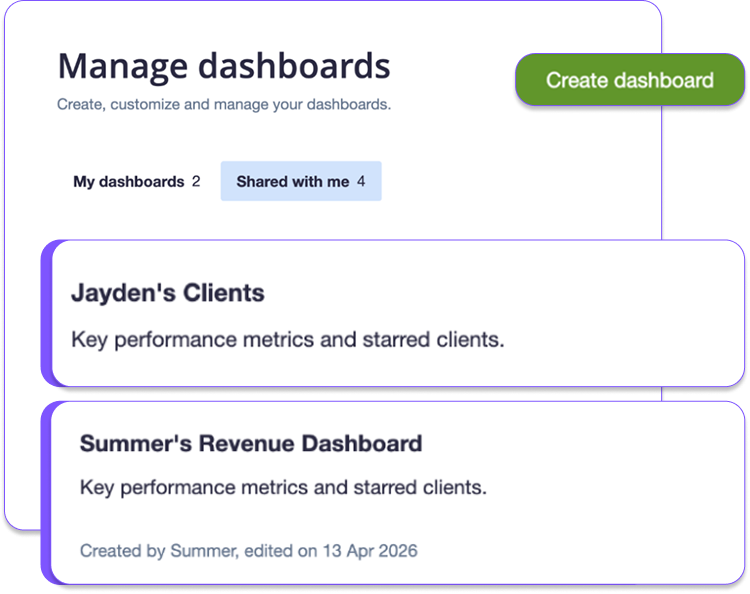
A sophisticated management system allows for "Starred Clients" or pinned accounts. This feature provides a focused, short-term view of priority work, such as an upcoming product launch or a seasonal email series, while keeping the rest of the portfolio within reach. When an agency can effectively tier their attention, they ensure that high-touch clients receive the necessary scrutiny while long-term, stable clients are not ignored.
4. Searchable Institutional Memory
The bane of any account manager is the client request for historical data from six months or a year ago. If retrieving this requires digging through archives or downloading old spreadsheets, the agency looks disorganized.
An "Activity Page" that offers unlimited history with robust search filters is essential. Whether a client asks for a specific send date, a draft status, or a historical performance metric, the agency should be able to retrieve the information in seconds. This speed reinforces client confidence and positions the agency as a reliable partner.
Implications for Agency-Client Relationships
The shift toward unified management has profound implications for how agencies charge for their services and how they demonstrate their worth.
- Elevating the Role of the Strategist: When administrative tasks are automated, the agency’s value proposition shifts from "labor provider" to "strategic partner." Clients are increasingly willing to pay a premium for agencies that bring data-backed insights to the table rather than simple execution.
- Scalability Without Headcount Inflation: Agencies that master their own internal tooling can handle a larger volume of clients without needing to hire an army of junior account managers to handle reporting. This increases the agency’s operating margin significantly.
- The "Expertise-First" Model: Clients hire agencies for their judgment—the ability to look at a trend and know exactly what move to make next. When the software handles the "what," the agency is free to focus entirely on the "so what."
Official Perspectives: Why Platforms are Investing in Agency-First Design
Leading industry platforms are recognizing that the agency market is no longer a niche—it is the backbone of the digital marketing economy. By investing in features that reduce the "administrative tax," platforms like Campaign Monitor are effectively becoming partners in agency growth.
Industry experts note that the most successful agencies are those that treat their software stack as an extension of their team. When a tool allows an agency to move faster, it directly correlates with higher client retention. A client who sees their agency providing proactive, data-driven recommendations every month is far less likely to churn than one who receives a generic, reactive report.
Conclusion: Choosing the Right Foundation
The choice of an email marketing platform should not be based on price alone, nor solely on the sophistication of its drag-and-drop editor. For an agency, the decision must be based on operational efficiency.
Does the platform help you scale, or does it hold you back? Does it allow you to see your entire portfolio at a glance, or does it force you into a cycle of manual, repetitive tasks?
As your agency looks to the future, the goal should be to minimize the time spent in the "engine room" of data collection and maximize the time spent in the "boardroom" of strategic planning. By adopting platforms that prioritize agency-specific workflows, you aren’t just updating your software—you are professionalizing your agency’s ability to deliver consistent, high-impact results for every client in your portfolio.
