
Scaling Disruptors: The Blueprint for Exponential Growth from Uber, Spotify, and Airbnb
In the volatile landscape of the 21st-century digital economy, a handful of companies have moved beyond mere success to become industry synonyms. Uber, Spotify, and Airbnb did not simply enter existing markets; they dismantled the status quo, rebuilt the infrastructure of their respective sectors, and scaled at a pace previously thought impossible.
For modern entrepreneurs and legacy businesses alike, the question remains: How did they do it? By dissecting the early growth strategies of these pioneers, we can uncover a replicable blueprint for accelerated development. This analysis delves into the core pillars—experimentation, data-driven agility, risk-taking, cross-functional collaboration, and user-centric design—that transformed these startups into global titans.
1. The Culture of Perpetual Experimentation
Growth is rarely the result of a single "eureka" moment. Instead, it is the product of an organizational commitment to constant, iterative testing. Uber, Spotify, and Airbnb have institutionalized a culture where hypotheses are treated as scientific experiments.
The Uber Model: Beyond the Black Car
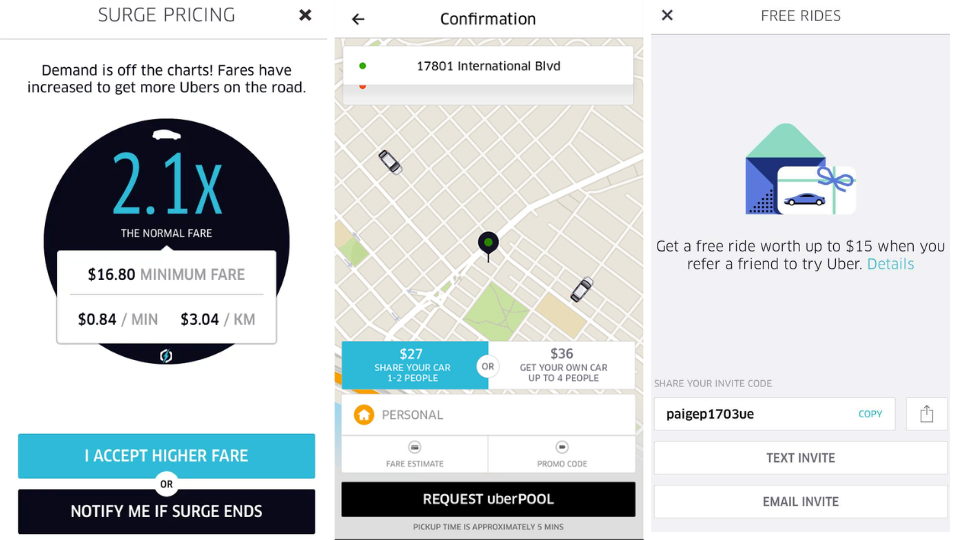
Uber’s evolution from a premium black-car service to a global mobility ecosystem serves as a masterclass in modular growth. By treating each market and service tier as a testbed, Uber proved that a business model is not a static entity. From the introduction of UberX—which democratized the service—to the efficiency-driven UberPOOL, the company used real-time rider feedback to iterate on its value proposition. The "Surge Pricing" model, while controversial, was a calculated experiment in supply-and-demand equilibrium that eventually stabilized the platform’s reliability.

Airbnb’s Professional Pivot
In its infancy, Airbnb faced a massive hurdle: low conversion rates due to poor-quality listings. Rather than assuming that better copy or marketing would solve the issue, the team conducted a targeted experiment. They manually photographed properties with high-end equipment to test if professional visuals influenced booking rates. The data was conclusive: professional photography skyrocketed conversions. This simple, data-validated experiment transformed Airbnb from a couch-surfing niche site into a premium travel platform, proving that sometimes the biggest growth levers are hidden in the quality of the user’s first impression.
2. Chronology of Scaling: From Garage to Global
The journey from a local disruption to a global entity follows a recognizable trajectory of scaling.
- The Problem-Solution Fit (Early Phase): Each company began by identifying a deep-seated inefficiency. Uber targeted the lack of transparency in traditional taxi services; Spotify addressed the illegal file-sharing epidemic by making legal access more convenient; Airbnb solved the issue of overpriced, uninspired hotel accommodations.
- The Traction Phase: Once the core product was validated, these companies focused on viral loops. Airbnb encouraged hosts to cross-post to Craigslist; Uber used local event-based marketing to create "density" in cities; Spotify integrated with social platforms like Facebook to turn music discovery into a social currency.
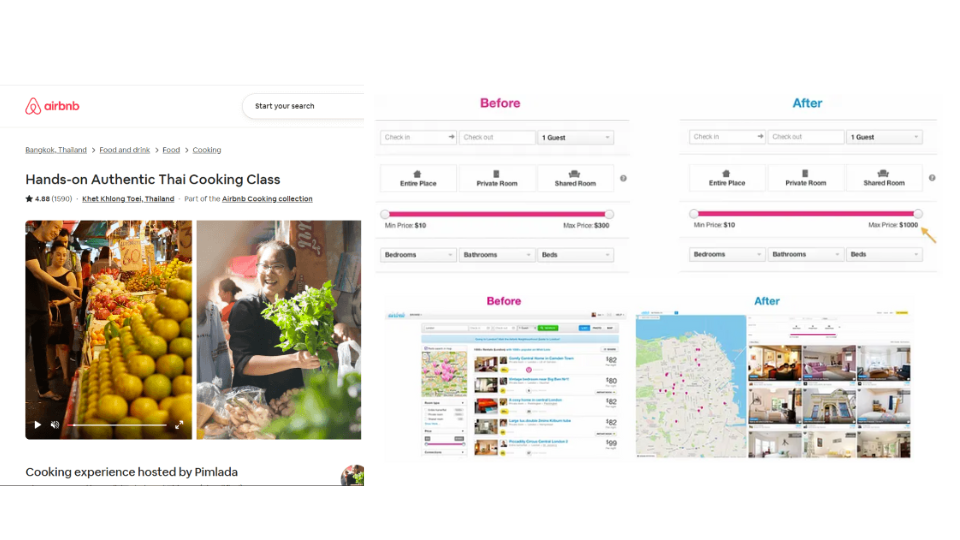
- The Expansion/Diversification Phase: Once the core service achieved product-market fit, these companies expanded their portfolios. Uber added food delivery (UberEats); Airbnb added "Experiences" (tours and classes); Spotify expanded into podcasts and audiobooks.
- The Ecosystem Phase (Scale): Today, these companies function as infrastructure layers, managing millions of transactions, data points, and complex regulatory environments simultaneously.
3. Data-Driven Decision Making: The Engine of Growth
Data is the lifeblood of modern scaling. For these disruptors, data does not just track history; it informs the future.
Spotify’s Algorithmic Personalization
Spotify’s "Discover Weekly" and personalized playlists are not just features; they are powerful retention engines. By leveraging machine learning to map the nuances of user listening behavior, Spotify provides a hyper-personalized experience that makes the cost of switching to a competitor (like Apple Music) prohibitively high. This is data-driven value creation: the more you use the product, the better it understands you, creating a "lock-in" effect that is the holy grail of SaaS growth.
Dynamic Optimization
Airbnb and Uber have both mastered the art of dynamic pricing. Airbnb’s "Smart Pricing" algorithm processes thousands of variables—seasonal demand, local events, property quality, and host responsiveness—to suggest optimal rates. Similarly, Uber’s dynamic routing uses traffic data to optimize driver efficiency. These are not guesses; they are mathematical optimizations that maximize revenue for the platform while minimizing friction for the user.
4. Embracing Risk and the "Fail Fast" Philosophy
Innovation is inherently risky. A culture that penalizes failure is a culture that kills innovation.
Uber, Airbnb, and Spotify have intentionally fostered "Fail Fast" environments. In these organizations, a failed experiment is not viewed as a career-ending event, but as a data point that saves the company from wasting resources on a losing strategy. When Airbnb launched "Experiences," it was a massive gamble on diversifying away from accommodation. When Uber launched UberEATS, it risked diluting its primary focus on transportation. Both companies were prepared to pull the plug if the data proved the ventures unsustainable. By failing fast, they ensure that the "wins" have the runway to scale while the "losses" are pruned before they become financial liabilities.
5. Fostering Cross-Functional Collaboration
Silos are the enemies of agility. In a traditional corporate structure, the marketing, engineering, and product teams often work in vacuums. The pioneers of the sharing economy and streaming era broke these silos by creating cross-functional "squads."
- Engineering-Design Symbiosis: At Airbnb, engineers work alongside designers from the inception of a feature to ensure that technical capabilities never compromise the user journey.
- Operations and Product: At Uber, the operations team—which understands the reality of local drivers and riders—directly informs the product team’s development roadmap. This ensures that features are not just theoretically sound but operationally viable.
- Transparency and Knowledge Sharing: Spotify’s famous "Squad" model organizes employees into small, autonomous units that own a specific feature or objective. This structure allows for rapid decision-making without the need for endless bureaucratic approvals, empowering teams to move at the speed of the market.
6. The User Experience (UX) Imperative
At the heart of every disruptive growth strategy is an obsession with the end-user. The "seamlessness" of these platforms is not accidental; it is the result of thousands of hours of user research and UI/UX refinement.
For Uber, the seamlessness is in the "zero-click" expectation: open the app, tap once, and the car arrives. The removal of payment friction (automatic, invisible billing) was arguably as important as the ride-hailing technology itself.
For Spotify, the seamlessness is in the transition: the ability to move from a desktop to a mobile device while maintaining the exact playback state, combined with an interface that prioritizes discovery over complexity.
For Airbnb, the seamlessness is in the trust architecture. By prioritizing high-quality photos, verified host profiles, and a robust review system, they lowered the psychological barrier to staying in a stranger’s home. They did not just build a website; they built a system of trust that allowed a global market to flourish.
Implications for Today’s Businesses
The lessons from Uber, Spotify, and Airbnb are clear: growth is a function of the speed at which an organization can learn, adapt, and iterate.
- Stop Guessing, Start Testing: Every major initiative should begin with a hypothesis that can be measured, tested, and validated in a small, controlled environment.
- Data is a Strategic Asset: Move beyond vanity metrics. Focus on the data that directly influences retention, conversion, and user lifetime value.
- Break Down Silos: If your marketing team doesn’t understand your product’s technical limitations, and your engineering team doesn’t understand your customer’s pain points, you are losing speed.
- Prioritize the User Journey: In an age of infinite choices, the product that is the easiest to use—not necessarily the one with the most features—will win the market.
The rapid rise of these digital giants was not due to luck or unlimited capital. It was due to a relentless, systematic approach to growth. By adopting these strategies, any company—regardless of industry—can move from surviving to thriving in an increasingly competitive global landscape.
The blueprint is there. The only question left is: how quickly can your organization learn to execute it?
