
Beyond the Silo: How Social Video Intelligence is Rewriting the Playbook for Cross-Category Brand Partnerships
In the modern digital economy, the traditional rules of audience segmentation are fracturing. For decades, brand marketers relied on tidy, predictable demographic assumptions: beauty enthusiasts only cared about cosmetics, gamers lived exclusively inside digital console ecosystems, and foodies were safely contained within recipe blogs and culinary channels. But as consumer attention shifts fluidly across digital platforms, audiences are proving to be remarkably multidimensional.
Today, the brands driving cultural conversations and record-breaking engagement are those that recognize a fundamental truth: people do not fit into neat, siloed boxes.
According to groundbreaking new research from Tubular Labs focused on cross-category partnerships, the key to identifying the most lucrative and impactful brand collaborations no longer lies in surface-level metrics like views and basic engagement rates. Instead, it comes down to social video intelligence—a data-driven approach that allows marketers to uncover deep, non-obvious audience interests, cross-pollinate industries, and engineer unexpected collaborations that capture the public imagination.
Main Facts: The Shift Toward Cross-Category Synergy
For years, strategic partnerships between brands were predominantly homogeneous. A makeup brand partnered with a skincare line; an athletic apparel company teamed up with a sneaker designer. While these predictable pairings often yielded stable returns, they rarely broke through the noise of an increasingly saturated digital marketplace.
The latest insights from Tubular Labs reveal that modern social video analytics give brands the x-ray vision needed to spot unexpected intersection points between vastly different industries. By mining billions of data points across social video platforms, analytics platforms can track what secondary and tertiary content distinct audience segments are consuming.
The primary takeaways of this paradigm shift include:

- The Death of Traditional Targeting: Consumers regularly bridge disparate interest verticals, meaning niche audiences hold high-affinity overlap with entirely unrelated sectors.
- Data Over Intuition: Successful partnerships are no longer built on gut feelings or creative brainstorming sessions alone; they are engineered using concrete behavioral data from video consumption habits.
- Unprecedented ROI: Cross-category collaborations frequently unlock entirely new consumer segments, generating viral reach and driving higher cultural resonance than standard, single-industry campaigns.
Chronology: The Evolution from Vanity Metrics to Deep Video Intelligence
To understand how the industry arrived at this data-driven renaissance, one must look at how digital marketing measurement has evolved over the past decade.
Phase 1: The Era of Impressions and Reach (Early 2010s)
In the infancy of social media marketing, success was defined by top-of-funnel metrics. Brands chased raw follower counts, broad impressions, and basic video views. Partnerships during this era were frequently transactional, paired together based on broad category alignment without deep audience overlap analysis.
Phase 2: The Micro-Influencer and Engagement Boom (Late 2010s)
As audiences grew fatigued by broad celebrity endorsements, the industry pivoted toward micro-influencers and engagement rates. Brands began analyzing comments, likes, and shares. However, targeting remained largely confined to strict verticals. A beauty brand would exclusively partner with beauty vloggers, ignoring the reality that their target demographic spent equal amounts of time watching gaming streams or automotive content.
Phase 3: The Age of Social Video Intelligence (Present Day)
With the explosion of short-form video platforms and fragmented digital consumption, marketers are facing a paradox of choice. Enter social video intelligence. Platforms like Tubular Labs began mapping granular audience overlap across categories. Marketers could finally answer questions like: "What else does our core demographic watch when they leave our ecosystem?" This chronological leap transformed partnerships from safe, predictable alignments into bold, high-impact cross-industry crossover events.
Supporting Data: When Worlds Collide
The proof of this methodology lies in the data. Tubular Labs’ research highlights two major cross-category case studies that demonstrate how identifying non-obvious audience overlaps can yield historic results.
Case Study 1: Beauty Meets Motorsports (Charlotte Tilbury x Formula 1 Academy)
At first glance, high-end cosmetics and high-speed auto racing appear to occupy entirely different cultural universes. Traditional demographic models would suggest little to no correlation between beauty buyers and motorsport fans.
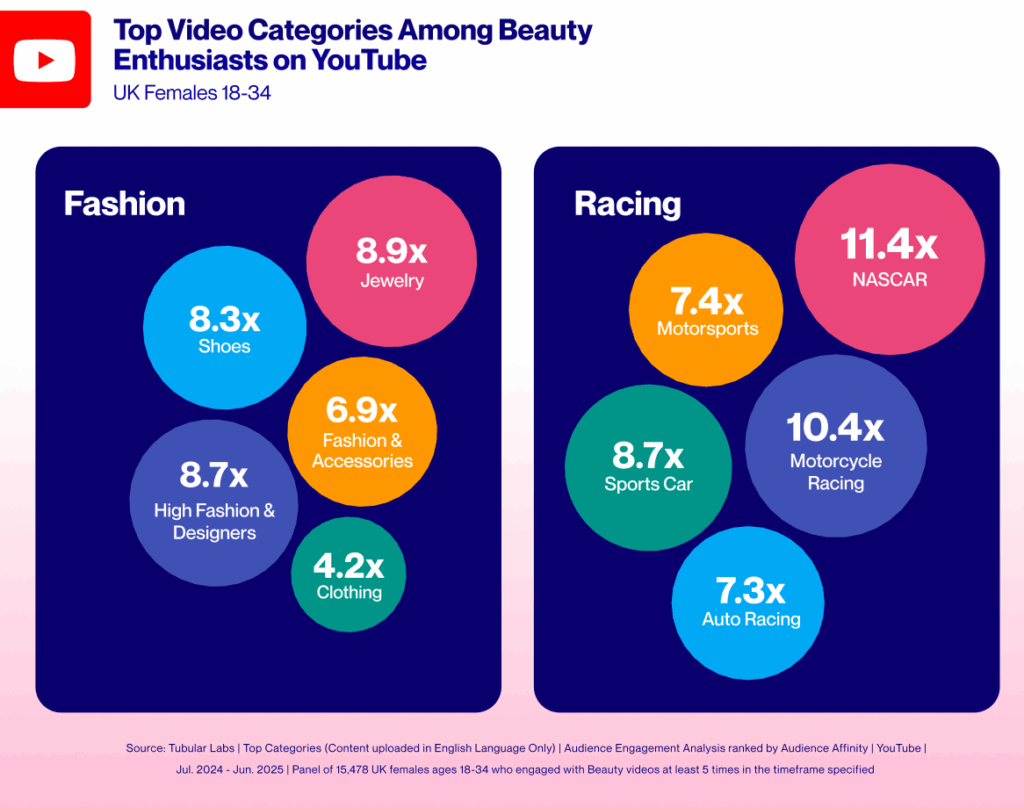
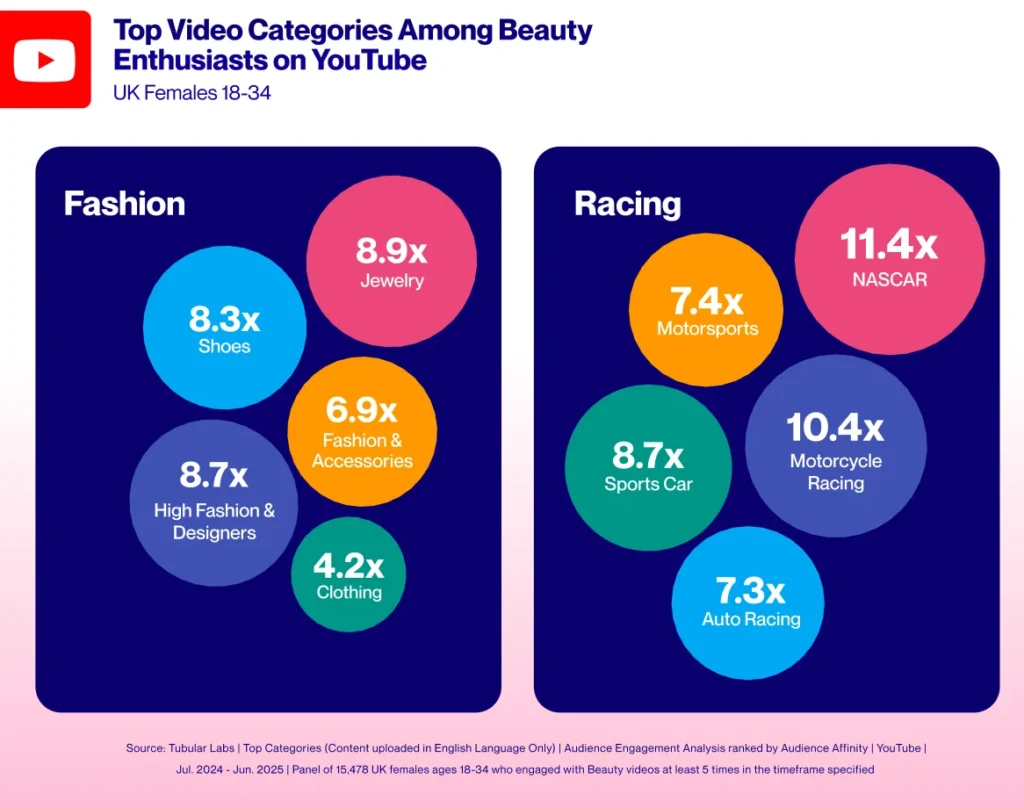
However, when Tubular Labs analyzed the content consumption habits of UK female beauty viewers on YouTube, a striking anomaly emerged: UK female beauty viewers are 11.4x more likely to watch motorsports content than the average digital consumer.
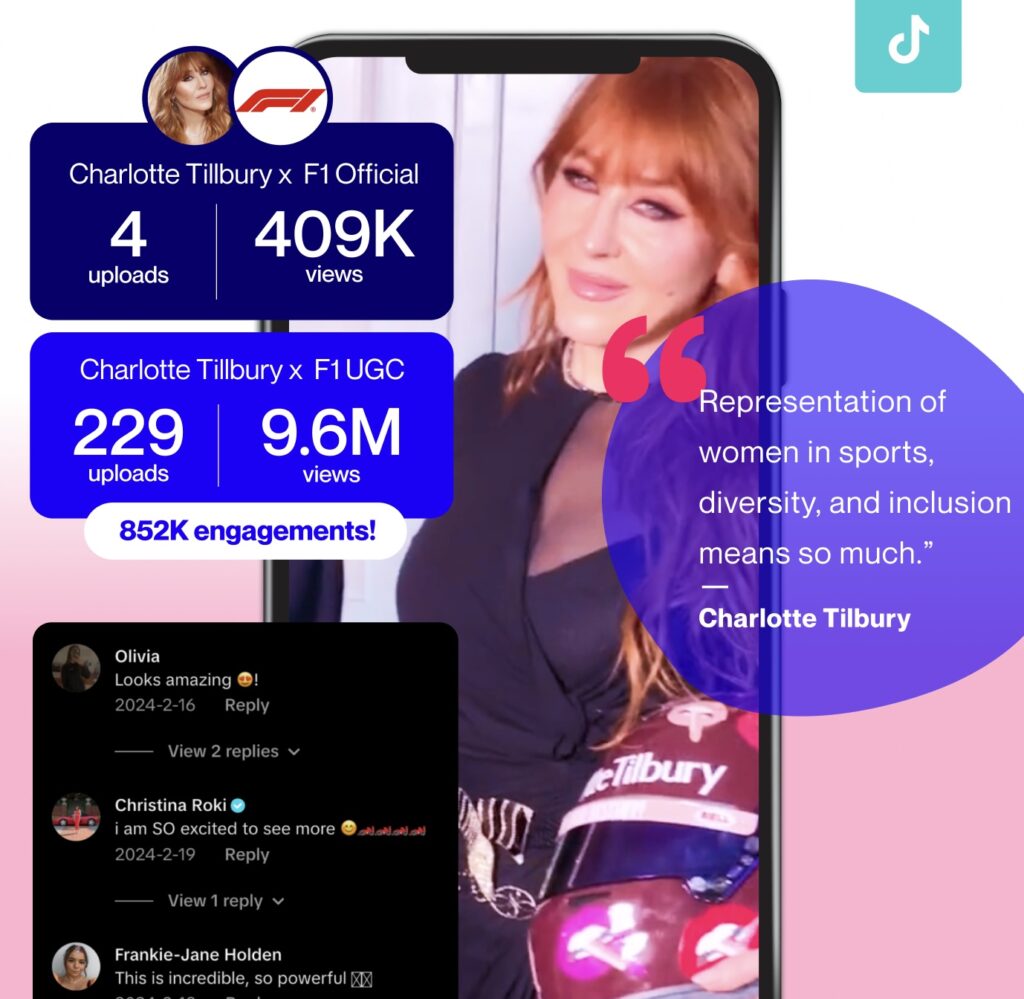
Armed with this deep data insight, luxury cosmetics brand Charlotte Tilbury made a bold, historic move, becoming the first beauty brand to partner with the Formula 1 Academy. The collaboration bridged the gap between glamour and adrenaline, challenging old stereotypes about women in sports and expanding the footprint of both brands into untapped demographic territories.
Case Study 2: Gaming Meets Glamour (Riot Games x Fenty Beauty)
The intersection of gaming and beauty is another prime example of data-driven matchmaking. For years, the gaming industry was incorrectly stereotyped as overwhelmingly male, leaving female gamers as a rapidly growing yet underserved audience sector.
Social video analytics told a different story. Data revealed strong, undeniable affinities between women actively engaged in gaming content and major luxury beauty brands like YSL, NYX, and L’Oréal.
Capitalizing on this insight, entertainment giant Riot Games partnered with Fenty Beauty for a limited-edition makeup collection inspired by Arcane, the critically acclaimed animated series based on League of Legends. The collection went viral almost instantly, proving that when brands use data to validate the multidimensional interests of their consumers, they can create physical and digital products that resonate on a profound level.
Official Responses and Industry Implications
Industry leaders and marketing strategists are taking note of these trends, shifting their budgetary allocations toward multi-vertical analytics tools.
"When marketers ask, ‘How do I identify the best partnerships to reach our brand goals?’ the answer increasingly comes down to data-driven audience intelligence," notes consumer behavior analysts tracking the shift. "Brands that cling to outdated, single-vertical assumptions are leaving millions of impressions and cultural relevance on the table."
Key Implications for Brand Marketers
- Expanding the Creative Sandbox: By looking beyond direct competitors and adjacent brands within the same industry, creative teams can pitch concepts that capture media attention through sheer novelty and cultural surprise.
- Optimizing Media Spend: Relying on data eliminates the guesswork of influencer and brand partnerships. Instead of betting a marketing budget on a hunch, brands can verify audience affinity scores beforehand.
- Fostering Consumer Participation: As seen in the gaming and beauty crossovers, successful modern campaigns do not just ask audiences to passively consume an advertisement; they invite them to participate in a shared cultural moment.
How to Identify the Best Brand Partnerships: A Step-by-Step Framework
For brands looking to replicate the success of Charlotte Tilbury or Riot Games, leveraging social video intelligence requires a systematic approach. Industry experts recommend the following framework:
- Step 1: Audit Audience Behavior Beyond Your Vertical. Stop looking solely at direct competitors. Use video analytics tools to map out what secondary and tertiary topics your core consumer base engages with on social platforms.
- Step 2: Look for High-Affinity Anomalies. Identify statistical outliers—such as beauty fans watching motorsports or gamers consuming luxury lifestyle content—that reveal hidden consumer passions.
- Step 3: Vet Cultural and Value Alignment. Once an unexpected intersection is identified, ensure that the potential partner brand shares core brand values and that the collaboration feels authentic to the end consumer.
- Step 4: Design for Participation. Build campaigns that encourage co-creation, user-generated content, or limited-edition product drops that engage both distinct audience communities simultaneously.
- Step 5: Measure Multi-Dimensional Impact. Track performance metrics that go beyond simple vanity views, measuring cross-pollination effects, new audience acquisition, and long-term brand lift.
Conclusion
The era of guessing which brand collaborations will work is officially over. As consumer behaviors continue to fragment and evolve, marketers must abandon rigid, traditional targeting methods in favor of dynamic social video intelligence. By embracing the data behind cross-category partnerships, brands can unlock unexpected opportunities, transcend industry silos, and create campaigns that not only drive measurable business results but define culture.
