

Rewriting the Playbook: How Data-Driven Insights Are Transforming CPG Social Video Strategies
Global Fast-Moving Consumer Goods (FMCG) giants are abandoning traditional marketing assumptions, turning instead to granular audience data to rewrite the rules of social video engagement.
Main Facts
In the modern digital ecosystem, some of the world’s most recognizable Consumer Packaged Goods (CPG) brands are no longer relying on creative intuition alone. From cross-platform content distribution and video duration optimization to post timing and creator partnerships, every strategic decision is increasingly informed by robust audience intelligence.
Recent industry analysis highlights four major global brands—Red Bull, Heineken, Charlotte Tilbury, and Old Spice—that achieved massive social video success by taking distinct, unconventional paths. Despite their varying product lines, a common denominator unites them: bold, counterintuitive decision-making backed by hard data.
Rather than succumbing to standard marketing playbooks, these category leaders are leveraging metrics covering search affinity, shopping behavior, and cross-demographic audience overlaps. The result is a fundamental shift in how enterprise brands allocate digital video budgets, identify influencer partners, and scale their global reach across platforms like YouTube, TikTok, and Instagram.
Chronology and Strategic Evolution
The transformation of CPG social video strategies did not happen overnight; it represents a multi-year evolution catalyzed by shifting consumer habits and the maturation of social video analytics.
- Early 2020s: CPG brands primarily treated social video as an extension of traditional television advertising. Upload volumes were low, and strategies were largely tethered to category-specific assumptions (e.g., beer brands only partnering with sports or lifestyle influencers).
- 2024–2025: Short-form video formats exploded globally. Industry data revealed that by 2025, approximately 77% of all global YouTube views stemmed from videos under one minute in length. This milestone forced brands to reevaluate their content production workflows.
- Mid-2025: Forward-thinking brands began noticing anomalies in platform performance. Red Bull’s data, for instance, exposed a massive disconnect between upload volume and actual audience engagement across TikTok and YouTube, proving that high-volume posting does not automatically guarantee high impact.
- Late 2025–2026: Brands like Heineken and Charlotte Tilbury pioneered "cross-category" influencer and brand partnerships. By prioritizing cultural fit over traditional category alignment, they tapped into entirely new consumer segments—such as pairing a major beer brand with a niche men’s fashion creator, or aligning a luxury beauty label with motorsport’s F1 Academy.
Supporting Data and Platform Insights
An analytical breakdown of how these enterprise brands leverage data reveals clear operational blueprints for maximizing social video return on investment (ROI).
1. Platform-Specific Optimization (The Red Bull Case Study)
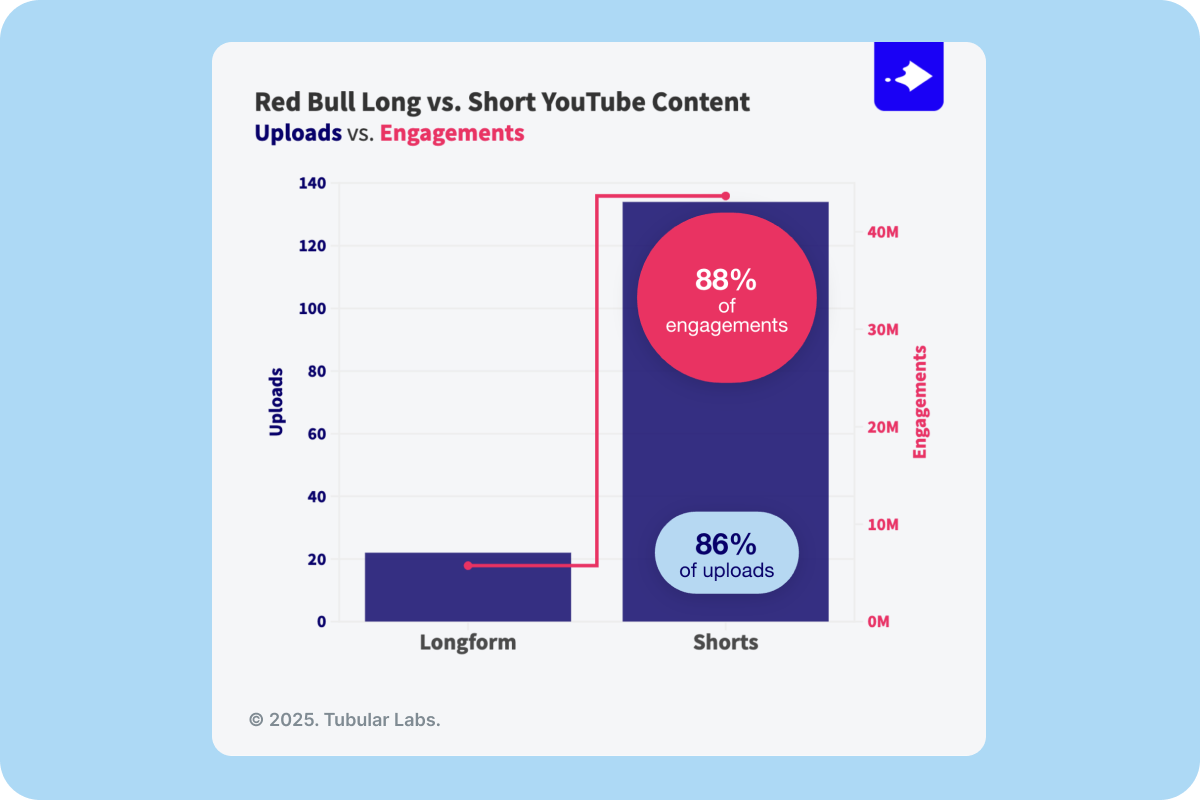
When facing the short-form video boom, Red Bull deployed a high-volume short-form strategy to capture attention. However, a deep dive into cross-platform metrics exposed critical nuances:
- YouTube: Engagement on both short- and long-form videos aligned closely with their baseline upload strategy.
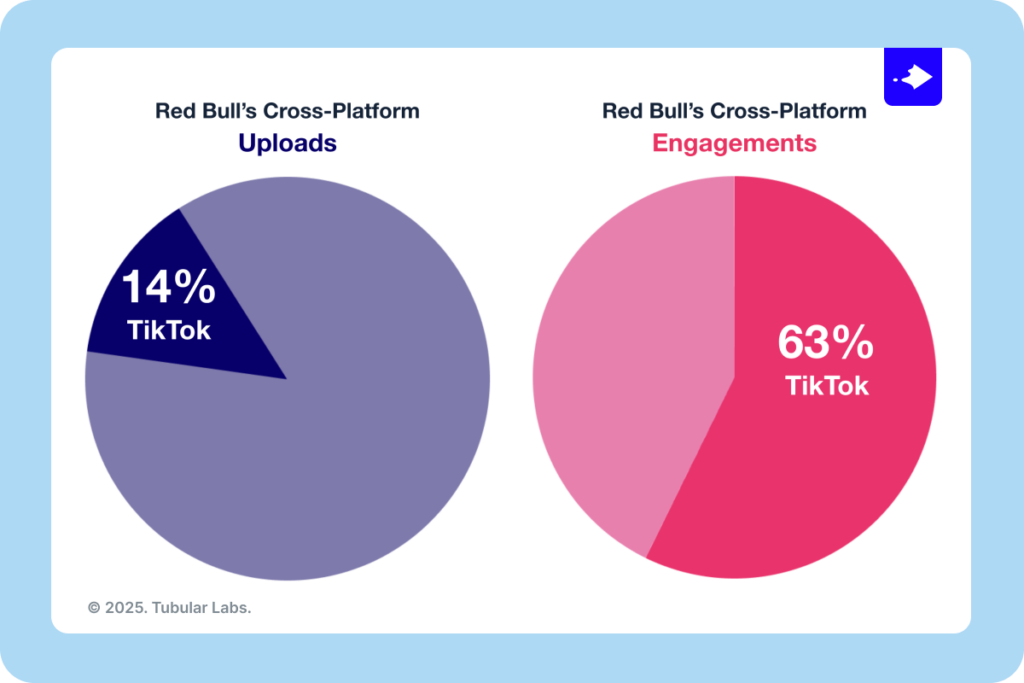
- TikTok: Despite accounting for a modest 14% of their total cross-platform uploads, TikTok videos generated a staggering 63% of Red Bull’s total cross-platform engagement.
The Lesson: CPG brands must never assume their highest-volume platform is their highest-impact one. Video duration and content performance vary wildly by platform, requiring bespoke strategies tailored to individual audience consumption habits.
2. Cultural Fit Over Category Fit (The Heineken Campaign)
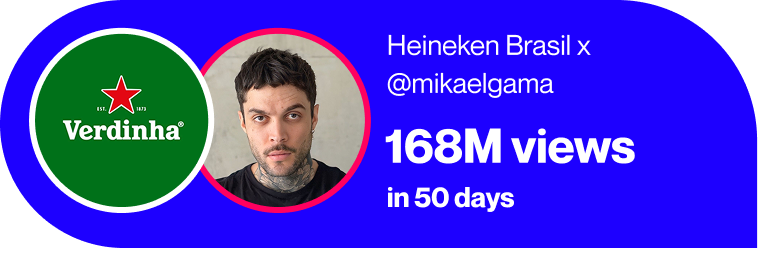
Heineken’s partnership with Brazilian men’s fashion creator @mikaelgama defied traditional beverage marketing conventions.
- Mikael Gama possessed an initial follower count of roughly 136,000.
- Despite being outside the typical "beer" or "beverage" category, the campaign generated 168 million views and 1 million engagements in just 50 days.
- This performance propelled Mikael to become the #1 most-viewed Brazilian influencer in the first half of 2025.
The Lesson: Traditional metrics like vanity follower counts and surface-level views leave room for error. By layering in search affinity and audience overlap, brands can unearth unexpected creators whose visual aesthetics and audience trust deliver exponential returns.
3. Expanding into Adjacent Segments (Charlotte Tilbury & F1 Academy)
Charlotte Tilbury made history as the first female-founded beauty brand to partner with Formula 1’s F1 Academy. By betting on the intersection of motorsports and cosmetics, the brand unlocked a massive, untapped demographic crossover, resulting in a surge of user-generated content (UGC) and mutual audience growth on TikTok.
4. Strategic Publishing vs. Content Flooding (Old Spice on YouTube)
Old Spice solidified its standing as one of YouTube’s leading CPG brands not by overwhelming the platform with endless uploads, but through calculated, high-impact publishing. By focusing on high-performing formats like YouTube Shorts and targeting adjacent demographic groups, Old Spice scaled its global reach efficiently.
Official Perspectives and Industry Insights
Industry analysts and brand strategists emphasize that the old ways of measuring influencer and video success are obsolete.
"A good CPG social video strategy follows best practices. A great one uses audience data to question them."
According to digital marketing researchers, predicting campaign ROI based solely on follower counts or simple engagement rates introduces severe blind spots. Enterprise brands are increasingly turning to advanced audience intelligence platforms—such as Tubular Labs—to decode hidden consumer behaviors.

Experts note that successful modern campaigns rely on:
- Audience Overlap Insights: Identifying shared interests between seemingly unrelated industries (e.g., beauty and motorsports).
- Search and Shopping Affinities: Understanding what target audiences look for and buy outside of the brand’s immediate product vertical.
- Cultural Relevance: Ensuring creator partnerships resonate on a personal, cultural level rather than merely ticking a demographic box.
Implications for the Future of CPG Marketing
The data-driven transformation of social video carries profound implications for marketing executives, media planners, and content creators across the fast-moving consumer goods sector.
- Budget Reallocation: Brands will likely shift capital away from blanket, high-volume content distribution toward precision-targeted, high-impact formats determined by platform-specific engagement data.
- The Death of Siloed Marketing: The success of cross-category partnerships (Heineken x Fashion, Charlotte Tilbury x F1) proves that modern consumers do not live in neat, predictable category boxes. CPG marketing teams must break down internal silos to pursue unexpected, culturally resonant alliances.
- Advanced Analytics as a Competitive Advantage: Companies that continue to rely on assumptions and historical averages risk losing market share to agile competitors who let real-time audience data dictate their next move.
As social video platforms continue to evolve at a breakneck pace, the message for CPG brands is clear: data-backed insights are no longer a luxury—they are the foundational baseline for survival and growth in the digital economy.
