
Precision Marketing Reimagined: Crazy Egg Unveils 11 New Audience Filters for Advanced A/B Testing
In an era where digital consumers demand hyper-personalized experiences, the ability to tailor web content in real-time has transitioned from a competitive advantage to a fundamental necessity. Today, Crazy Egg, a leader in website optimization and user behavior analytics, announced a significant expansion of its A/B testing suite. By introducing 11 new audience targeting filters, the company is empowering marketers and product managers to move beyond broad demographic segments and into the realm of behavioral, intent-based, and data-driven personalization.
This update represents a strategic pivot toward granular control, allowing brands to treat visitors not as a monolith, but as distinct cohorts with unique motivations, entry points, and historical relationships with the brand.
The Core Update: Granular Targeting at Scale
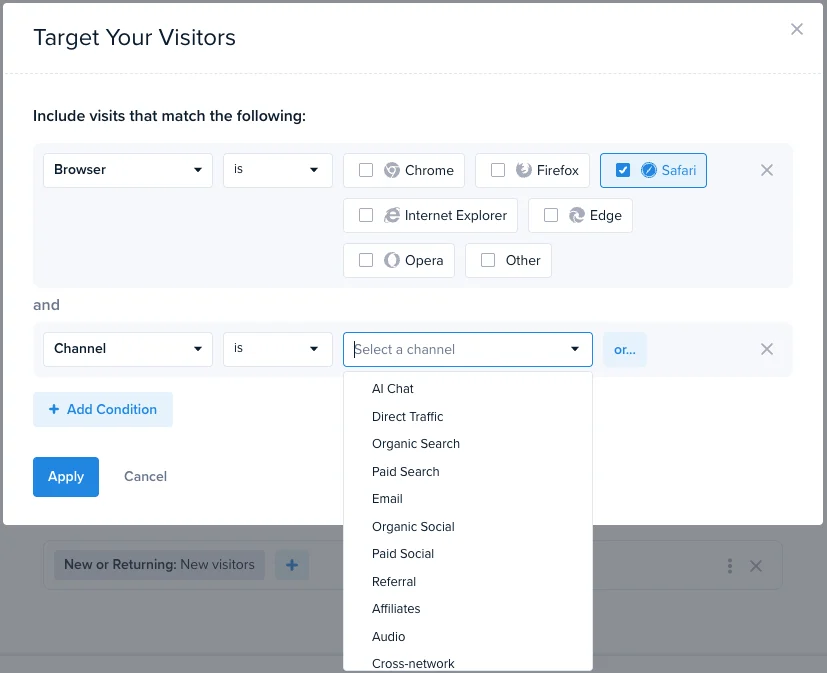
The newly released filters are designed to integrate seamlessly into existing A/B testing workflows. According to the official release, these filters allow users to serve different page content based on three primary pillars: acquisition source, behavioral engagement, and proprietary site data.
The 11 new filters effectively act as a surgical tool for conversion rate optimization (CRO) teams. By layering these new options on top of the platform’s legacy filters—such as device type, geographic location, UTM parameters, and customer value—users can now construct highly complex audience segments.
Why This Matters for Marketers
Previously, A/B testing was often confined to broad "all-traffic" experiments. While useful, these experiments often failed to account for the nuance of the user journey. For instance, a user arriving via a high-intent search query requires a different value proposition than a user arriving from a social media curiosity click. With the new filters, Crazy Egg users can isolate these segments and test specific messaging that resonates with their unique context.
Chronology of Development: A Journey Toward Personalization
The path to this release reflects the broader evolution of the digital marketing landscape over the last several years.
- Phase 1: Foundational Analytics: In its early iterations, Crazy Egg focused on heatmaps and scroll maps, providing the "what" and "where" of user interaction.
- Phase 2: The A/B Shift: Recognizing that data without action is stagnant, the platform integrated robust A/B testing capabilities, allowing brands to experiment with page elements.
- Phase 3: The Contextual Era: The latest development marks the transition into contextual intelligence. The engineering team spent the last several months refining the logic engines that process user metadata, ensuring that these 11 new filters can be applied in real-time without latency.
By allowing "AND/OR" logic to be applied to these filters, the company has removed the artificial ceilings that previously restricted complex segmenting. As of August 2026, users can now combine an infinite number of filters, such as targeting "new visitors from paid social who have remained on the page for longer than 30 seconds," allowing for a level of precision that was once the exclusive domain of enterprise-level custom development.
Supporting Data and Technical Implications
The technical architecture behind these filters is designed for high-performance environments. Because these tests execute on the client side, the concern of page load speed is paramount. Crazy Egg’s update ensures that the evaluation of these filters happens in milliseconds, preventing the "flicker" effect that often plagues poorly implemented A/B testing tools.
The Power of "Mix and Match"
The true strength of this update lies in the combinatory potential. When a marketer combines the new "Channel" filter with existing "Previous Pages Viewed" metrics, they can construct a narrative-driven experience.
- Example A: A visitor returns to the site after viewing a pricing page but failing to convert. The system recognizes this "High-Intent/Returning" state and serves a variant containing a limited-time incentive or social proof, such as a customer testimonial.
- Example B: A user arriving from a specific LinkedIn ad campaign is shown a variant that directly addresses the pain points outlined in that specific ad copy, maintaining message match and increasing the likelihood of conversion.
Official Guidance: Targeting vs. Personalization
A critical distinction highlighted in the official release is the difference between A/B testing and true personalization. While A/B testing is designed to identify the most effective element among several variations, personalization is about delivering a tailored experience to a specific audience segment.
Crazy Egg has provided a clear roadmap for users looking to pivot from testing to personalization:
- Define the Segment: Use the new filters to isolate the desired audience (e.g., users from a specific region who have interacted with a product category).
- Assign the Variant: Instead of splitting traffic 50/50, the user can route 100% of that specific segment to the personalized page variant.
- Monitor Performance: Since the variant is live for 100% of that audience, the "test" becomes a permanent, personalized feature of the site until the team chooses to deactivate it or route traffic elsewhere.
Implications for the Industry
The democratization of these tools has profound implications for digital agencies and in-house marketing teams alike.
1. The Death of the "One-Size-Fits-All" Homepage
The most immediate implication is the shift away from static landing pages. As personalization becomes easier to implement via tools like Crazy Egg, brands that persist with a "one-size-fits-all" approach will likely see their conversion rates lag behind competitors who leverage behavior-based segmentation.
2. Heightened Demand for Data Hygiene
To utilize these filters effectively, companies must have a firm grasp on their own data. The ability to pass data from a site into the targeting interface means that organizations must ensure their tracking pixels and data layers are accurate. If the data being passed is faulty, the personalization efforts will be misdirected.
3. ROI on Enterprise Plans
Crazy Egg has structured access to these features strategically. While all new filters are available to Enterprise customers and those with the Audience Targeting add-on, Pro-tier users retain access to essential filters like Language and Variant testing. This tiered approach incentivizes companies to grow their optimization strategy alongside their revenue.
Conclusion: The Future of User-Centric Web Design
The introduction of these 11 audience filters is more than just a software update; it is an acknowledgment of where the internet is heading. The "Wild West" era of the web—where every visitor saw the exact same content regardless of their background or intent—is drawing to a close.
In its place is a more sophisticated, nuanced ecosystem where user experience is curated by data. By providing the tools to act on this data, Crazy Egg is positioning itself as a vital component of the modern marketing stack. For the teams that master these new capabilities, the result will be more than just higher conversion rates; it will be a deeper, more meaningful connection with their customer base.
As we move through the latter half of 2026, it is clear that the brands that win will be the ones that listen to their data, understand their audience’s unique context, and have the tools to deliver the right message, to the right person, at exactly the right time.
