
Navigating the Shift: How Latin American News Publishers Can Master Social Video in 2026
By The Media Insights Desk
Published February 2026
Main Facts: The Digital Transformation of News in Latin America
The way Latin Americans consume news has fundamentally transformed. No longer confined to morning print editions, evening television broadcasts, or static desktop homepages, audiences across the region are discovering, debating, and sharing current events primarily through social media platforms.

Recent data from the Reuters Institute Digital News Report highlights this monumental behavioral shift: roughly 58% to 64% of surveyed respondents in major Latin American markets—including Argentina, Chile, Colombia, Mexico, and Peru—now rely on social media as a primary source for news.
This reality has forced a reckoning across the media landscape. While some legacy publishers have successfully modernized their digital workflows, others are being rapidly outpaced by agile, social-first creators. To remain competitive, traditional media companies must understand the anatomy of audience engagement on platforms like YouTube and TikTok.
Drawing from performance insights compiled by video intelligence platform Tubular Labs and analytics partner Chartbeat, a comprehensive new dataset reveals the state of News and Politics content across Latin America. These findings point to critical strategic adjustments that newsrooms must implement to capture market share, build loyalty, and thrive in an increasingly fragmented digital ecosystem.
Chronology: The Evolution of Social News Consumption (2025–2026)
To understand where Latin American news publishers are headed in 2026, it is essential to review the trajectory of digital video consumption over the preceding year.
- Early 2025: Throughout the first quarter, social video across all categories in Latin America exploded, ultimately accumulating a staggering 4.05 trillion views by July. Despite this vast ocean of content, the News & Politics category accounted for a surprisingly modest fraction of overall platform uploads, signaling an untapped market for legacy outlets.
- Mid-2025 (January 1 to July 31 Analysis Window): Data captured during this seven-month period revealed stark operational inefficiencies among traditional publishers. Many news organizations continued to pump resources into mid-length, landscape videos (1 to 5 minutes), even as audience metrics demonstrated that shorter, mobile-optimized formats generated significantly higher per-video engagement.
- Late 2025: Forward-thinking publishers began adjusting their distribution models. Outlets like Mexico’s Milenio and N+ began experimenting more aggressively with short-form video formats, discovering that a small fraction of Shorts could drive disproportionately high cross-platform engagement. Meanwhile, TikTok cemented its status as an undeniable regional growth engine.
- 2026 and Beyond: As publishers enter 2026, the mandate is clear: intuition-based publishing is obsolete. Success now requires aligning content strategies with granular, data-driven insights regarding device usage, optimal posting schedules, and platform-specific audience preferences.
Supporting Data: 15 Insights Driving the LATAM Media Landscape
An exhaustive analysis of News & Politics content across social video platforms from January 1 to July 31, 2025, provides empirical backing for these strategic shifts.
Macro-Level Metrics
- Massive Video Consumption: Social video content across all categories and platforms in Latin America generated an astonishing 4.05 trillion views during the analysis period.
- The Media Company Footprint: News & Politics content posted specifically by media organizations accounted for 27.1 billion views across 293,000 uploads. This indicates a vast whitespace opportunity for publishers to expand their footprint to meet surging consumer demand.
YouTube Trends for LATAM News Publishers
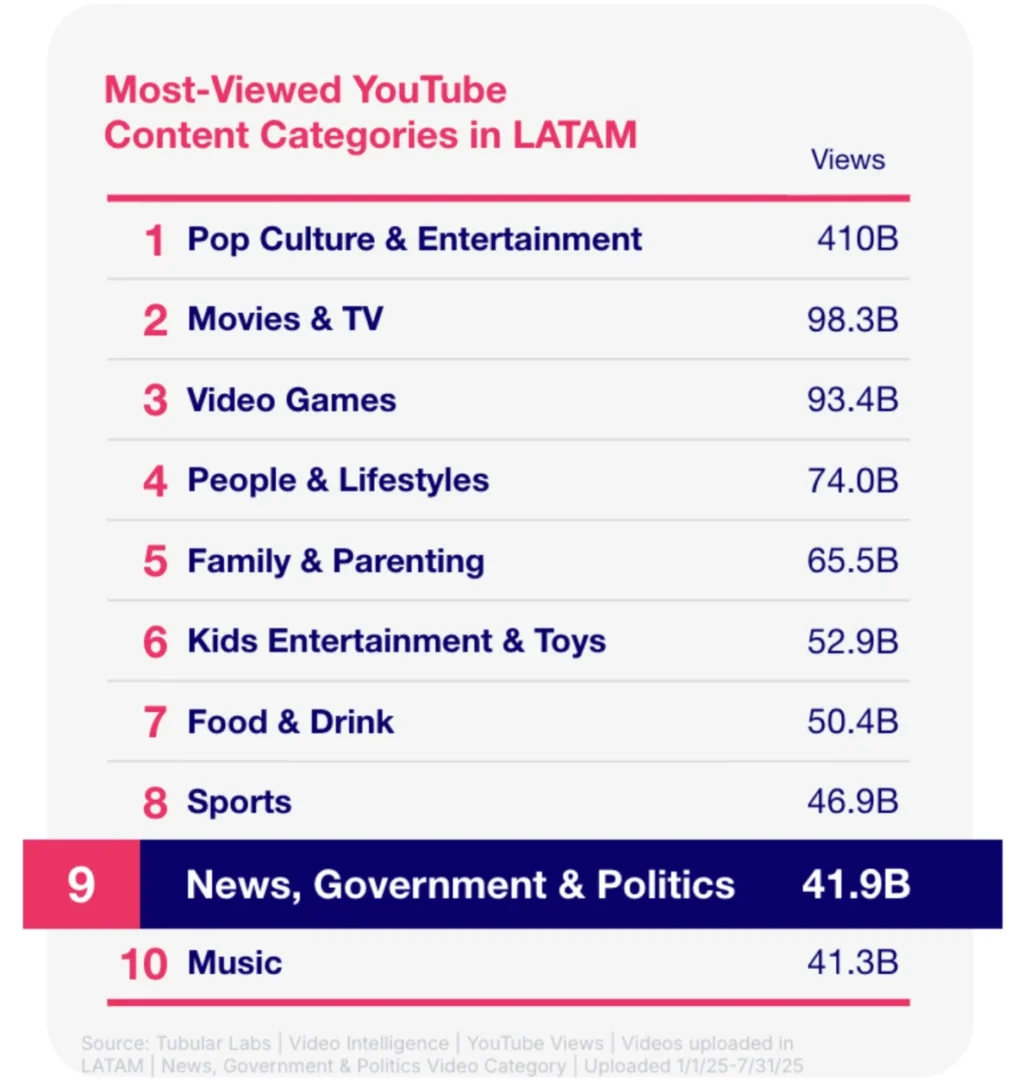
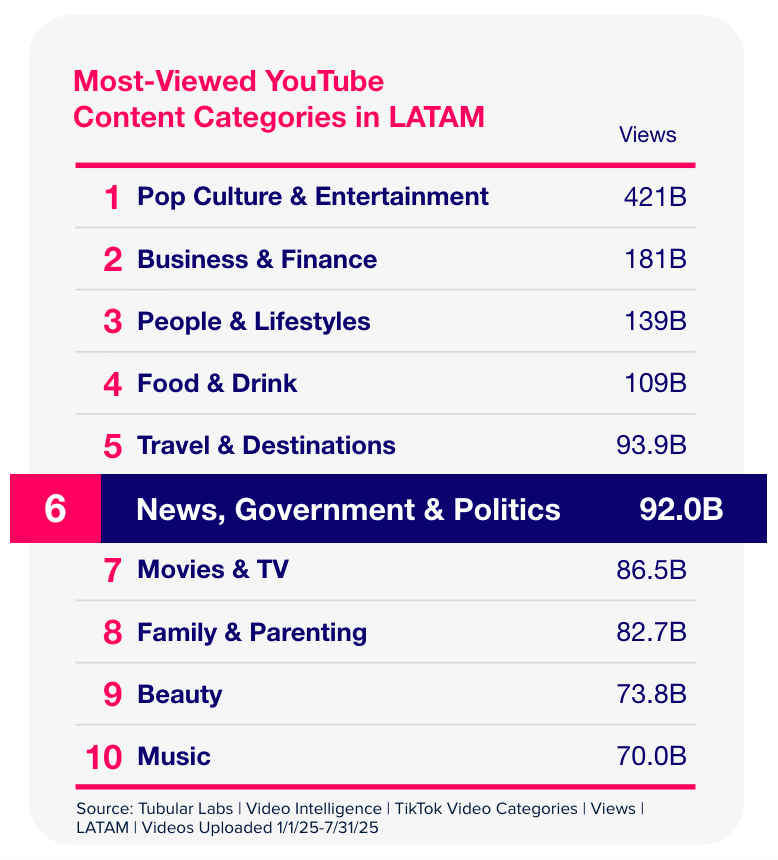
- High Category Ranking: News, Government & Politics ranked as the #9 most-viewed category on YouTube in LATAM, pulling in 41.9 billion views from publishers, influencers, and brands combined. Notably, this placed the category ahead of Music, despite significantly fewer total uploads.
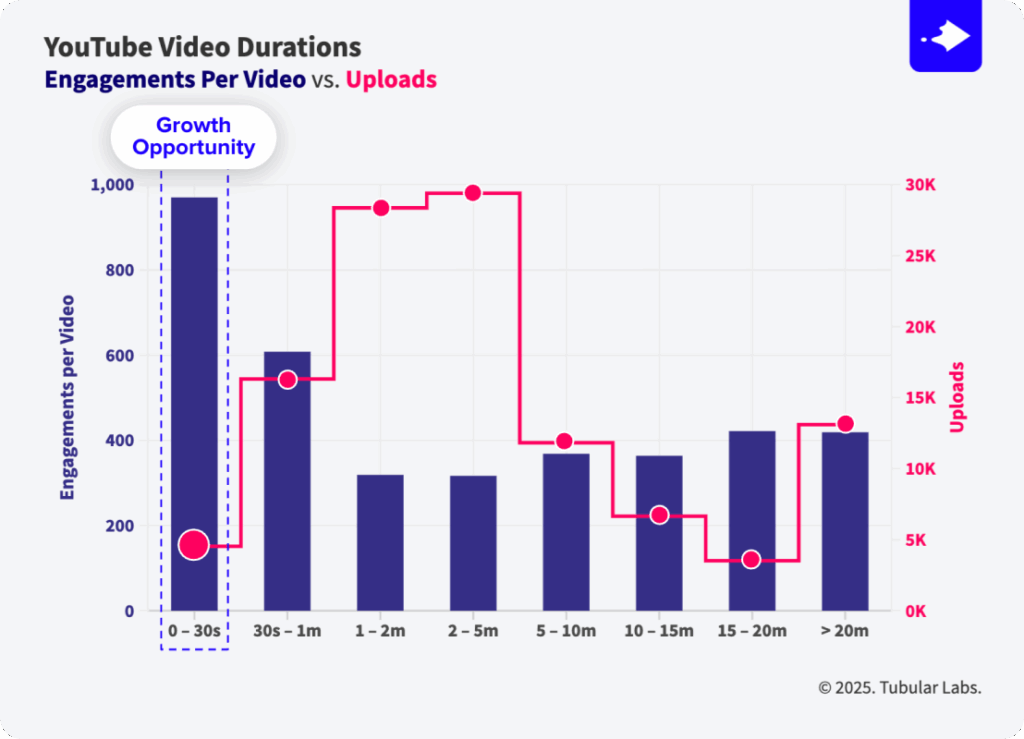
- The Duration Disconnect: YouTube videos under 30 seconds delivered the highest engagement per video for News, Government & Politics content. Conversely, the most common upload length—videos between 1 and 5 minutes—actually delivered the lowest engagement per video. This proves that many legacy publishers are failing to utilize data-backed duration strategies.
- The Sunday Effect: Videos uploaded on Sundays consistently earned the highest overall engagement. Publishers are advised to schedule critical content in advance to catch weekend news cycles, even if publishing falls outside standard business hours.
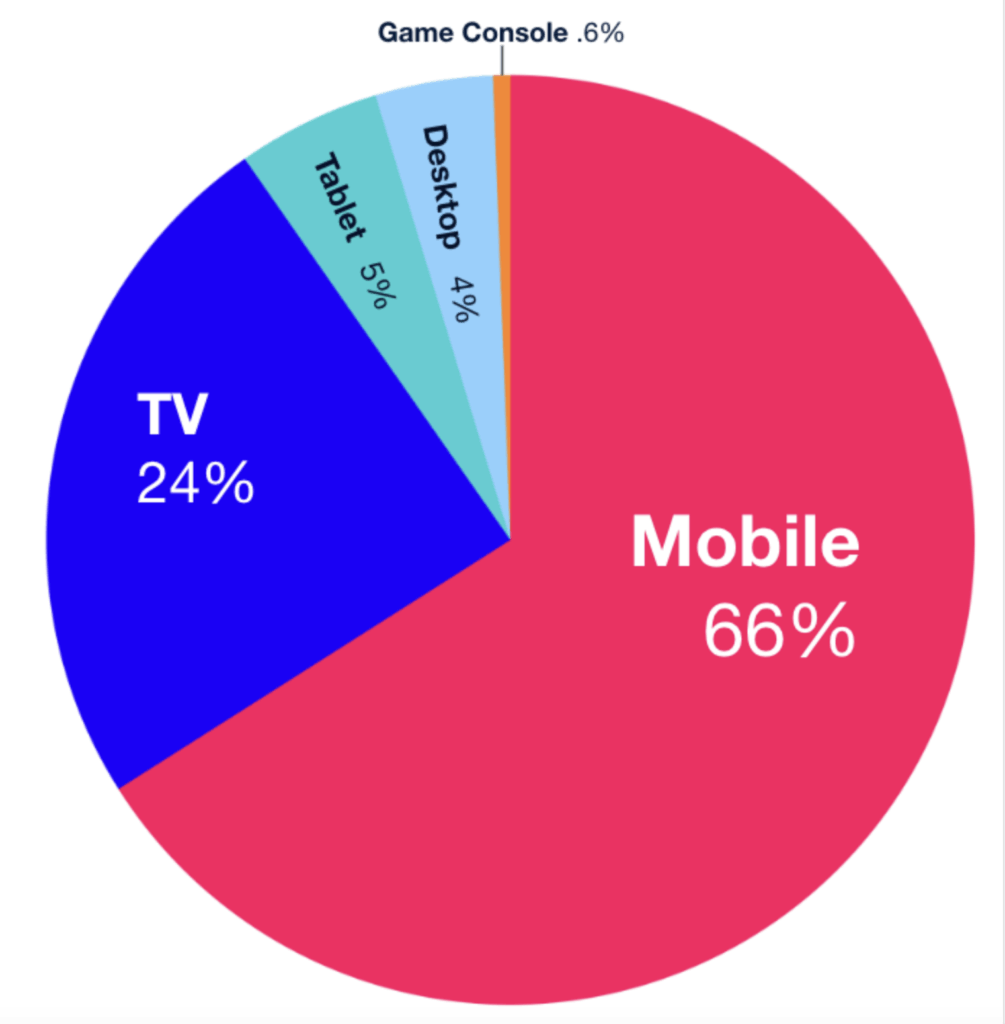
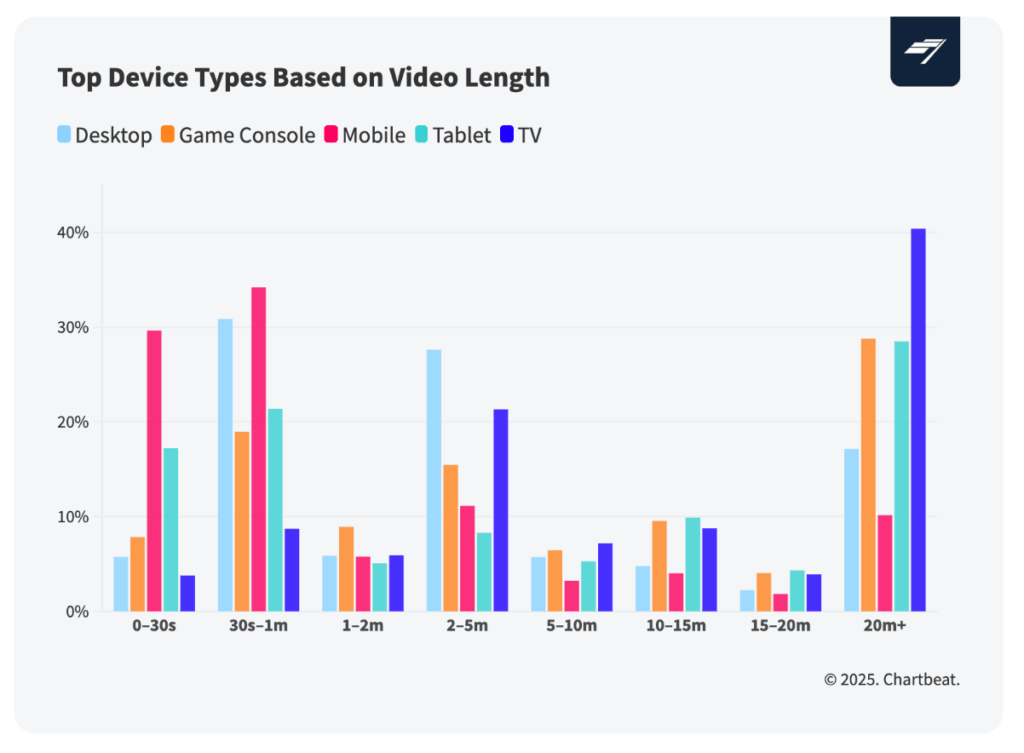
- Mobile Dominance: Mobile devices accounted for 66% of YouTube views for LATAM News & Politics publishers, compared to just 24% of views on TV. This calls for an immediate pivot toward vertical, mobile-friendly formats rather than traditional landscape layouts.
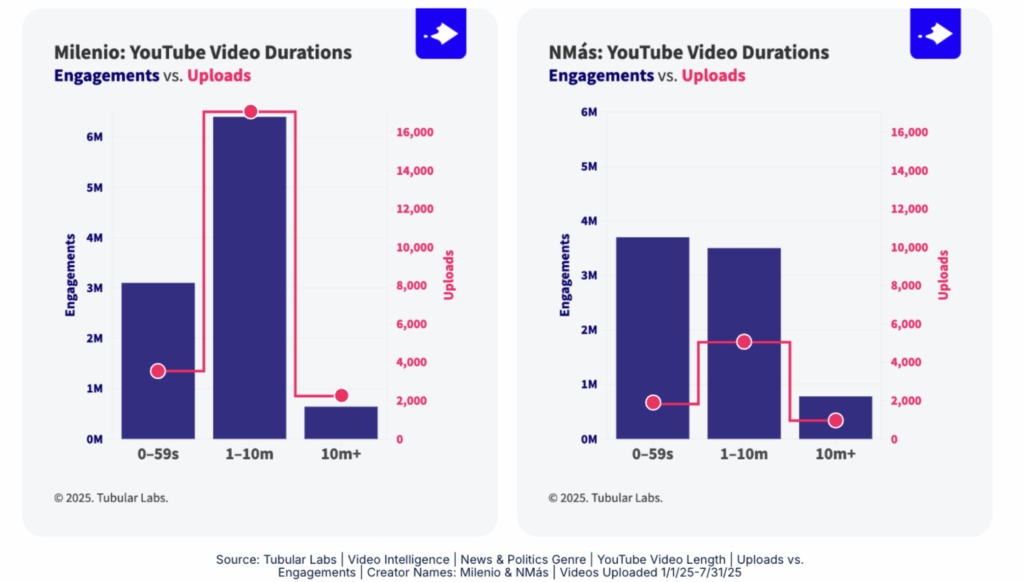
- The Milenio Case Study: Milenio’s YouTube Shorts made up just 15% of their total uploads but drove a massive 31% of their total cross-platform engagements.
- The N+ Strategy Shift: N+ posted 2.8 times more mid-length videos than short-form clips, yet earned nearly half of all their engagement directly from Shorts, underscoring the high return on investment of short-form content.
- Device Preferences by Length: Analytics shared by Chartbeat illustrate a clear division in viewing habits: audiences watching on TVs, tablets, and game consoles prefer long-form videos exceeding 20 minutes, whereas mobile and desktop users overwhelmingly favor content under one minute.
TikTok’s Dominance in Regional Engagement
- Cross-Platform Pull: TikTok drove 71% of all cross-platform social interactions with Latin American news media, despite representing a smaller share of overall uploads compared to older platforms.
- Top-Tier Ranking: News, Government & Politics content posted by media companies, brands, and influencers ranked as the #6 most-viewed category on TikTok, accumulating 92.0 billion views.
- Explosive Growth: Among the top 10 LATAM news publishers on TikTok, viewership surged by 55% year-over-year, proving that platform audiences actively seek out breaking news and daily updates.
- The C5N Multiplier: For leading LATAM news publisher C5N, TikTok content accounted for only 25% of cross-platform uploads but generated a staggering 71% of total engagements, cementing the platform as a vital growth engine.
- Topic-Specific Platform Preferences: LATAM audiences turn to different platforms for different subjects. For instance, topics like immigration or women’s rights perform exceptionally well when cross-posted on Instagram and TikTok, whereas law enforcement stories find a more receptive audience on Facebook.
Official Responses and Industry Perspectives
Media strategists, digital directors, and publishing executives across Latin America are increasingly vocal about the necessity of operational agility.
Speaking on condition of anonymity, the digital operations director of a major Colombian daily noted, "For years, our newsroom treated social media as a mere distribution funnel—a digital billboard to point readers back to our paywalled website. The data from 2025 proves that this mindset is fatal. Our audiences live inside these platforms. If our reporting doesn’t natively engage them where they spend their time, we cease to exist in their information ecosystem."
Data analytics partners echo this sentiment. Representatives from Tubular Labs emphasize that the traditional publishing playbook—relying on gut feelings and legacy habits—is no longer viable. By dissecting metrics such as audience retention curves, drop-off points in the first three seconds, and platform-specific algorithmic preferences, progressive newsrooms are transforming how they produce journalism.
Furthermore, insights from Chartbeat underscore the technical imperative of multi-platform adaptation. Content must no longer be treated as a monolithic asset; a single investigative piece must be deconstructed into a 30-second vertical YouTube Short, a dynamic TikTok explainer, a Facebook text-and-video summary, and a deep-dive long-form YouTube documentary for living-room television viewers.
Implications for 2026 and Beyond
The implications of these data-backed insights for Latin American news publishers in 2026 are profound.
First, the scarcity of News & Politics content relative to other social video genres—accounting for a mere 0.67% of total regional uploads—reveals an immense opportunity for market capture. Consumers are actively searching for credible, verified journalism on social networks to cut through the noise of unverified misinformation. Publishers who fail to occupy this digital whitespace risk ceding public discourse entirely to independent, unverified creators.
Second, operational workflows must evolve. Newsrooms can no longer afford to treat short-form video as an afterthought or an internship project. Integrating vertical video production into the core reporting process is now an existential requirement. When reporters file a breaking story, multimedia teams must simultaneously consider how to distill that narrative into a high-impact, 30-second vertical clip optimized for mobile consumption.
Finally, strategic timing and platform diversification will separate market leaders from legacy outlets in decline. As the data proves, audiences engage differently depending on the day of the week, the device in their hands, and the specific social platform they are browsing. Publishers who harness these granular insights will not only secure their financial sustainability but also fortify their journalistic legacy for the digital generation.
