
Navigating the Future: Scott Brinker and Frans Riemersma Unveil the "Martech for 2026" Roadmap
As the marketing industry approaches the end of a pivotal year, the perennial deluge of "end-of-year predictions" has begun. However, for those seeking signal amidst the noise, the annual collaboration between Scott Brinker—the industry-renowned "Chiefmartec"—and Frans Riemersma stands apart. Eschewing the speculative, hyperbolic "fever-dreams" that often define year-end industry commentary, the pair has once again compiled a rigorous, data-backed assessment of the marketing technology landscape.
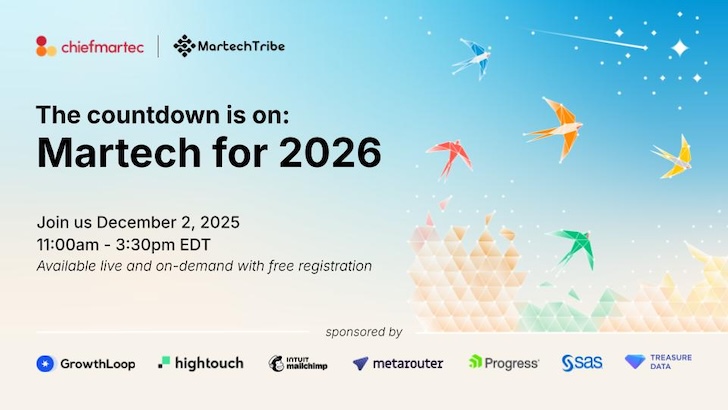
Their latest project, titled Martech for 2026, serves as a pragmatic, evidence-based guide for marketing operations professionals and CMOs preparing for the next 6 to 12 months. With an official release date set for Tuesday, December 2, this year’s report promises to be one of the most consequential yet, focusing on the inevitable integration of AI agents into the existing infrastructure of marketing.
Main Facts: A Data-Driven Approach to 2026
The Martech for 2026 initiative is more than a simple whitepaper; it is a comprehensive research project designed to bridge the gap between emerging technology and operational reality. Brinker and Riemersma have structured the report to address the fundamental question facing every enterprise: How do we move from AI experimentation to scalable, production-grade marketing operations?
The report, which exceeds 100 pages, will be unveiled during a high-profile, free virtual event. The release strategy is designed for accessibility, allowing participants to attend the live presentation or access the content on-demand throughout December. Key pillars of the report include:
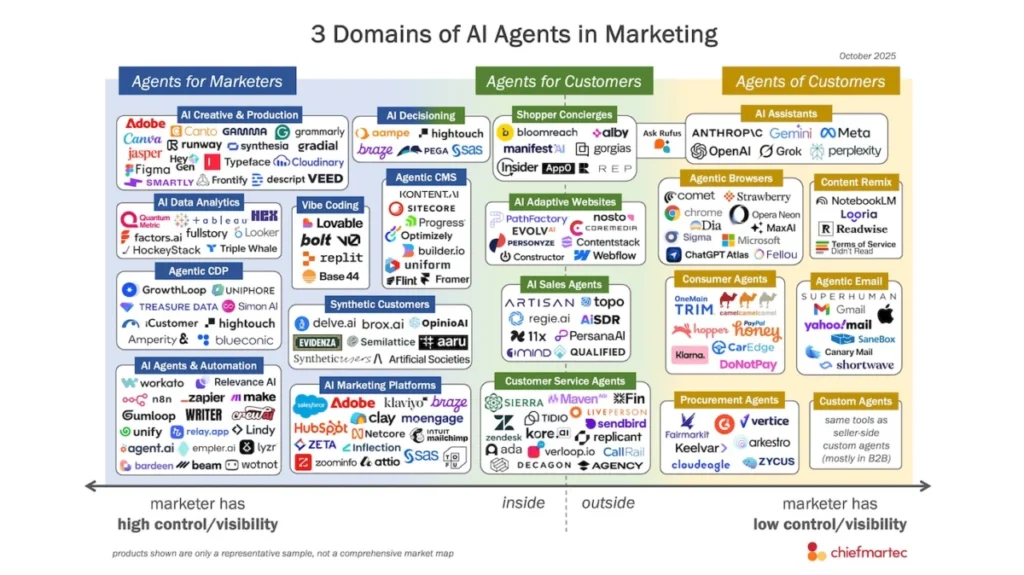
- The AI Agent Taxonomy: An analytical framework for categorizing the disparate types of AI agents currently flooding the market.
- Production vs. Science Fair: Empirical results from the AI & Data in Marketing survey, highlighting which technologies are currently generating ROI and which remain in the experimental phase.
- SaaS Ecosystem Evolution: A critical assessment of how AI is fundamentally altering the role of existing SaaS platforms—whether through augmentation, total replacement, or the opening of entirely new use cases.
The Chronology: A Multi-Phase Rollout
The Martech for 2026 program is structured as a phased educational experience, designed to provide value both immediately upon release and throughout the final month of the year.
- Pre-Launch (October–November): The registration window is currently open, allowing industry professionals to secure their access to the report and the accompanying virtual seminar.
- The Big Reveal (December 2): The official launch date features a live keynote presentation by Brinker and Riemersma. This session will walk through the most surprising findings of the report, offering a "no-holds-barred" analysis of current industry trends.
- The Leadership Dialogue (Post-Keynote): Immediately following the primary presentation, the program transitions into a series of candid, interview-style segments with senior product and marketing leaders from industry-leading organizations.
- On-Demand Engagement (December 2–31): All materials, including the report and session recordings, will remain accessible to registered participants for the duration of the month, facilitating team training and strategic planning ahead of the holiday break.
Supporting Data: The Anatomy of Modern Martech
The Martech for 2026 report is rooted in extensive research, most notably the AI & Data in Marketing survey. This dataset provides the backbone for the report’s conclusions regarding the current state of "context engineering"—the art of aligning AI models with specific, proprietary enterprise data.
Brinker notes that the report does not just present statistics; it interprets them within the context of the modern tech stack. For instance, the research explores the spectrum of data sources currently being connected to AI agents. By analyzing the "connective tissue" between these agents and existing platforms, the report provides a clearer picture of how businesses are—or are not—successfully integrating AI into their workflows.
The inclusion of insights from sponsors like GrowthLoop, Hightouch, Intuit Mailchimp, MetaRouter, Progress, SAS, and Treasure Data ensures that the data is corroborated by the real-world experiences of companies building the infrastructure that powers today’s marketing organizations.
Official Perspectives: The "No-Sales-Pitch" Commitment
One of the most distinct features of the Martech for 2026 virtual event is the explicit commitment to editorial independence. In an era where many industry webinars function as thinly veiled sales pitches, Brinker and Riemersma have set a strict agenda for the post-keynote interviews.
The participating executives have been tasked with engaging in "candid discussions" rather than product demonstrations. The objective is to extract genuine, high-level perspectives on what they are observing within their own organizations and among their customer bases. By removing the pressure of a sales pitch, the event creates a rare space for leaders from diverse corners of the tech industry to discuss the systemic challenges of AI adoption.
The diversity of the sponsor list—ranging from customer data platforms (CDPs) and analytics firms to email marketing powerhouses—ensures that the insights provided cover the full breadth of the martech ecosystem, from data ingestion to customer engagement.
Implications: The New Era of AI Agents
The central thesis of the report is the transition of AI from a "chat-based" novelty to an "agent-based" operational force. For the past two years, the industry has been obsessed with Large Language Models (LLMs) that can write copy or draft emails. As we look toward 2026, the focus has shifted toward agents that can execute tasks, manage workflows, and interface directly with SaaS applications.
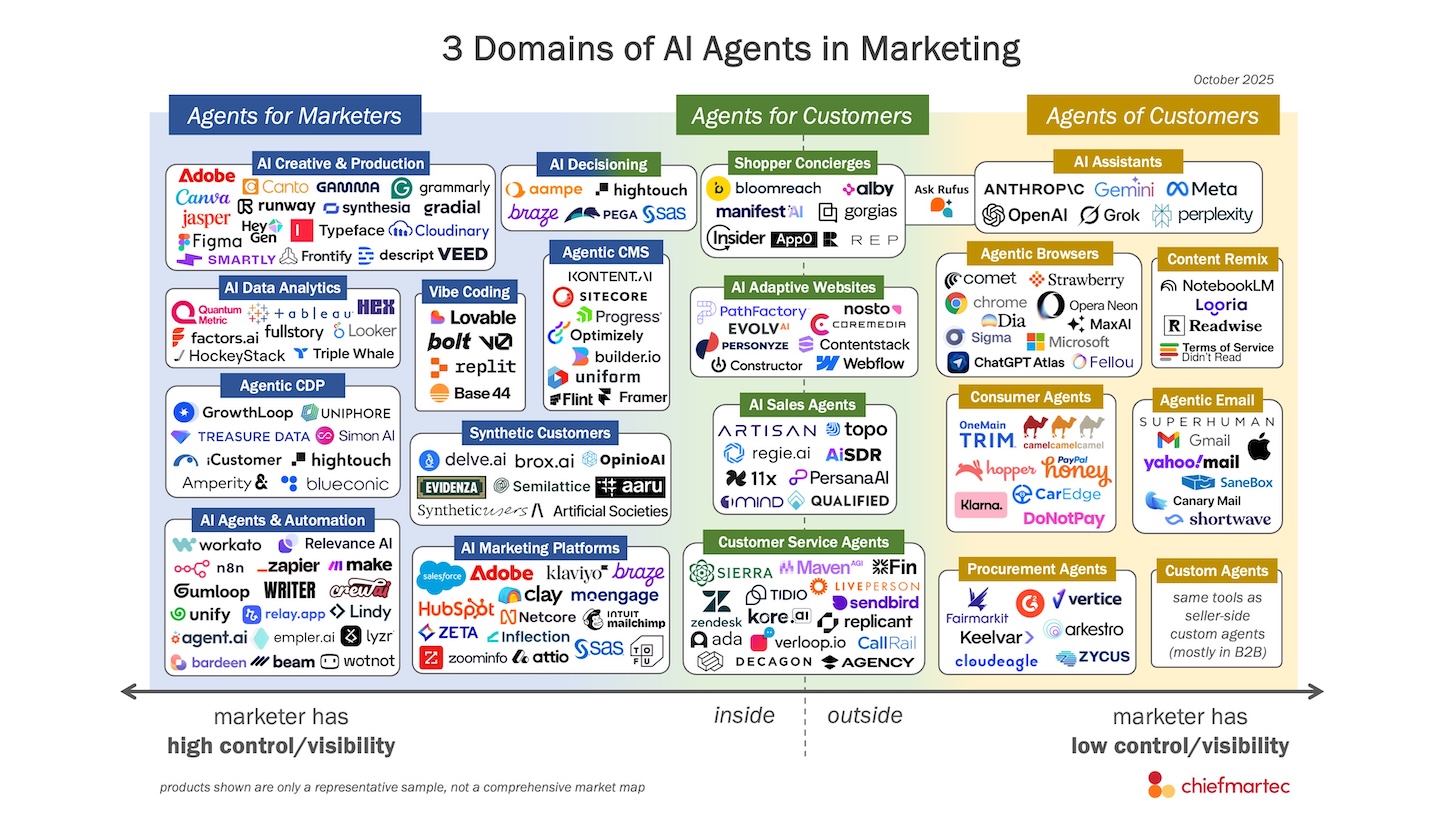
The Three Domains of AI Agents
The report categorizes the current AI landscape into three distinct domains. While the full analysis is reserved for the report release, the implications are profound:
- Workflow Automation: AI agents that act as a bridge between disparate platforms, automating complex, multi-step processes that previously required manual intervention.
- Analytical Intelligence: Agents that provide real-time, actionable insights from vast, unstructured datasets, effectively acting as an automated data scientist.
- Creative Execution: The evolution of generative AI from simple content creation to autonomous campaign management, where agents handle the testing, optimization, and deployment of creative assets.
The Impact on SaaS Stacks
Perhaps the most critical implication for 2026 is the changing nature of the "Martech Stack" itself. Are we moving toward a future where a few powerful AI agents act as a layer over our existing tools? Or will the tools themselves become "agentic"? The Martech for 2026 report suggests that the relationship between these new agents and existing platforms will define the next decade of marketing operations.
For the professional, the challenge is clear: it is no longer just about choosing the right software; it is about "context engineering." Success in 2026 will be determined by how well an organization can feed its unique data, brand voice, and business logic into these AI agents to create a competitive advantage that cannot be replicated by off-the-shelf solutions.
Conclusion: Preparing for the 2026 Landscape
As the marketing industry stares down the barrel of another year of rapid transformation, the Martech for 2026 report offers a vital anchor. By focusing on what is actually happening in the trenches—rather than what might happen in a theoretical future—Brinker and Riemersma provide the roadmap necessary for navigating the complexities of the modern marketing department.
For those looking to gain an edge before the year concludes, registration is now open. By participating in this program, professionals gain more than just a 100-page document; they gain a lens through which to view the coming year, armed with the data, insights, and expert perspectives needed to turn AI from a buzzword into a scalable, high-performance tool.
In the words of the organizers, the goal is to make the complex digestible, the trends actionable, and the future a little less intimidating. Registration for the event—and the resulting access to the Martech for 2026 report—is available via the official registration portal. For those committed to staying at the forefront of the industry, this is a non-negotiable date on the calendar.
