
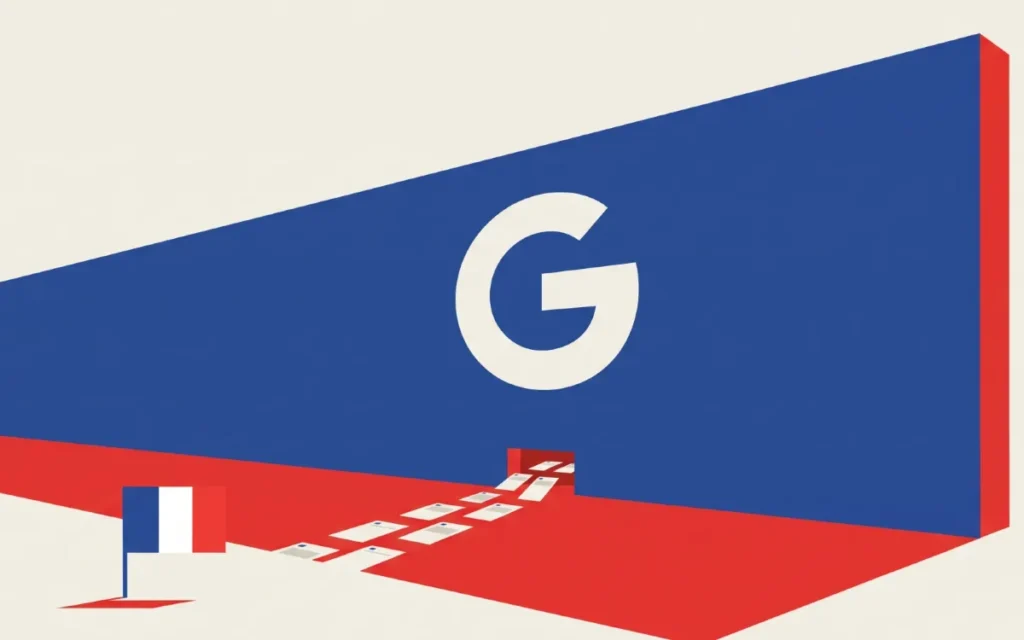
Google’s AI Overviews Finally Reach France: A Watershed Moment for European Search
In a move that effectively closes the last major frontier of its European expansion, Google officially activated AI Overviews and AI Mode in France today. The announcement, delivered by Elizabeth Reid, Vice President of Search, via LinkedIn, marks the end of a prolonged period of digital isolation for French users. For over sixteen months, while neighboring nations integrated generative AI into their daily search routines, France remained a conspicuous "black hole" on Google’s AI map.
The rollout is not merely a feature update; it is a significant shift in the competitive and regulatory landscape of the French web. By introducing these tools, Google is forcing a confrontation between its new generative paradigm and France’s robust, historically contentious "neighbouring rights" framework.
The Chronology of an Exclusion
The absence of AI-generated search in France was not merely a technical delay; it was a policy stance that persisted despite growing user demand. For months, the status of these features was shrouded in uncertainty.
The "Help Forum" Disconnect
The tension between user experience and corporate silence reached a boiling point in May 2026. On May 21, a user named Viktoria Gerner initiated a thread in the Google Search Help community, questioning the sudden disappearance—or, more accurately, the total lack—of AI Overviews while traveling in France.
The response from the community was telling. A Product Expert Alumni confirmed on May 22 that the features were intentionally disabled due to "regional restrictions." A Platinum Product Expert echoed this, confirming that Google’s systems were geofencing the technology based on physical location rather than account settings. The thread, which was eventually locked, garnered 68 "me too" reports, serving as a rare, quantifiable metric of public frustration regarding a policy Google had never formally justified.
A Pattern of Asymmetry
The delay in France stands in stark contrast to the rest of the continent. On March 26, 2025, Google expanded AI Overviews to nine European countries, including Germany, Belgium, and Spain. France, however, remained on the sidelines. Industry analysts point to France’s aggressive enforcement of the 2019 EU Copyright Directive and the French Competition Authority’s consistent history of fining tech giants—most notably the €250 million penalty issued to Google in March 2024 regarding publisher licensing—as the primary deterrents.
Supporting Data: The Cost of the "AI Shift"
As France enters this new era, it does so with the benefit of hindsight—or, more accurately, with the warning signs left by its neighbors. Extensive data from European markets that adopted AI Overviews early provides a sobering look at what French publishers should expect.
The Erosion of Organic Traffic
The impact of AI-generated summaries on traditional website traffic is not theoretical; it is well-documented. In Germany, which shares many structural similarities with the French digital landscape, SISTRIX data covering over 100 million keywords revealed that AI Overviews appear on approximately 20% of searches. The result? A catastrophic drop in click-through rates (CTR) for the first organic position, falling from 27% to 11%.
This is not a isolated phenomenon. A randomized field experiment conducted on 1,065 desktop Chrome users demonstrated a 39.8% reduction in outbound organic clicks when AI Overviews were present. Furthermore, case studies—such as the German travel site All About Berlin, which reported a 70% loss in search traffic after the rollout—illustrate the existential threat these features pose to niche, informational content creators.
The Reporting Gap
While Google has introduced generative AI performance reports in Search Console, the data remains obfuscated. Impressions and clicks from AI surfaces are folded into aggregate totals, making it difficult for French publishers to isolate exactly how much traffic is being "cannibalized" by the AI interface. As one B2B consultant noted, true transparency will only come when Google provides granular reporting on cited URLs and the specific referral quality of AI-driven traffic.
Official Responses and the "Control" Mechanism
Elizabeth Reid’s announcement emphasized Google’s commitment to a "thriving open web." Central to her message was the assertion that publishers possess the tools to manage their presence in the new AI landscape. Specifically, she pointed to a domain-level toggle, introduced in July 2026, which allows site owners to opt out of appearing in generative AI results.
The Regulatory Origin of "Control"
However, industry observers are quick to note that this "control" was not a spontaneous act of corporate altruism. The toggle was born out of a binding requirement imposed by the UK’s Competition and Markets Authority (CMA). The current mechanism is binary and domain-wide—a blunt instrument that forces publishers to choose between full inclusion or total exclusion.
For many, this is insufficient. The ability to control content at the page level—allowing for nuanced decisions about which articles appear in summaries—is not expected to arrive until March 3, 2027. This eight-month lag leaves French publishers in a vulnerable position, forced to wait for regulatory pressure to deliver the granular control they need to protect their most valuable content.
Implications for the French Market
The introduction of AI Overviews in France is unfolding under a heavy "regulatory overhang."
Antitrust and Competition Concerns
The European Commission is currently deep in an antitrust investigation regarding whether Google’s use of publisher content for AI purposes constitutes an unfair trade practice. Simultaneously, the French competition authority has recently warned about the "concentration risk" posed by a handful of companies—Google, OpenAI, and Anthropic—controlling over 84% of the AI agent market.
The Neighboring Rights Battle
The most critical question remains: Does generative summarization fall under the purview of "neighbouring rights"? The French legal system has historically been the most protective of publisher content in Europe. While Google’s summaries synthesize information rather than simply republishing snippets, the economic outcome—the loss of clicks and revenue—is identical to the issues that triggered the 2024 antitrust fines. If a French court eventually rules that AI summarization infringes on these rights, the legal consequences could be far more expensive than any product adjustment Google has made thus far.
Advertising and Monetization
For French advertisers, the landscape is equally fluid. While Google has begun testing shopping ads within AI Mode in other markets, today’s announcement was silent on the French monetization roadmap. Agencies are now facing a "measurement discontinuity"—a structural break in year-over-year reporting that will make it nearly impossible to attribute performance fluctuations to either organic algorithmic shifts or the introduction of AI-driven surfaces.
Conclusion: A New Equilibrium
France is now officially part of the global AI-augmented search ecosystem, but the entry comes with heavy baggage. The launch provides a powerful new tool for users seeking rapid information, but it does so at the cost of the traditional link-based economy that has supported the French web for decades.
As French publishers, regulators, and search marketers navigate the coming months, the focus will inevitably shift from the excitement of the "AI Mode" interface to the cold reality of traffic metrics. With page-level controls still on the horizon and legal battles looming over the very nature of AI content consumption, the integration of AI Overviews in France is less of a final destination and more the beginning of a complex, high-stakes negotiation over the future of the digital commons.
The "last major gap" in Europe has been closed, but the friction between Google’s ambition and the European commitment to publisher rights is only just beginning to escalate.
