

Decoding Digital Resonance: The Imperative of Customer Engagement Analytics in the Modern Era
In an increasingly saturated digital landscape, the distinction between fleeting attention and genuine customer engagement has become a critical challenge for businesses. It is no longer sufficient to merely attract visitors; the true measure of digital success lies in understanding who interacts meaningfully with a brand, what drives those interactions, and how they translate into sustained loyalty and tangible conversions. This intricate dance of digital resonance is precisely where Customer Engagement Analytics emerges as an indispensable strategic tool.
This analysis delves into the fundamental principles of customer engagement analytics, exploring its operational mechanisms, its profound importance in fostering lasting customer relationships, and the practical methodologies for its effective implementation. By meticulously tracking and interpreting customer interactions across myriad touchpoints, businesses can transcend superficial metrics, identify critical junctures in the customer journey, and proactively optimize strategies to cultivate deeper connections.
What Is Customer Engagement Analytics?
At its core, customer engagement analytics is the systematic process of collecting, tracking, and interpreting data related to how customers interact with a brand, its products, or services. These interactions span a vast digital ecosystem, encompassing activities on websites, mobile applications, social media platforms, email campaigns, paid advertising channels, and even specific product features. Unlike conversion metrics, which measure decisive actions (e.g., a purchase or sign-up), engagement analytics focuses on the preceding interactions – the clicks, views, scrolls, likes, comments, and time spent that indicate varying levels of interest and involvement.
These digital footprints provide a granular view of user behavior, revealing patterns of interest, friction points, and preferences. While the principles of engagement analytics can extend to offline interactions, its primary application and most profound impact are observed within the digital marketing sphere. Within this context, customer engagement analytics is often segmented into distinct categories reflecting the various digital channels through which interactions occur, such as website/app engagement, social media engagement, paid ads/email engagement, and product engagement.
The Strategic Imperative: Why Customer Engagement Analytics Matters
The significance of customer engagement analytics cannot be overstated in today’s competitive environment. It serves as the bridge between initial awareness and ultimate conversion, illuminating the journey a prospect undertakes and providing actionable insights for optimization.
1. Measuring Audience Connection and Conversion Propensity: Engagement analytics offers a precise measure of how effectively an audience connects with a brand’s solutions. Higher engagement levels are directly correlated with an increased likelihood of conversion, whether that desired action is a purchase, a newsletter subscription, a demo request, or any other critical business objective. By understanding engagement, businesses can predict conversion potential and intervene strategically.
2. Bridging the Marketing Funnel Gap: Positioned strategically between the top (awareness) and bottom (conversion) of the marketing funnel, engagement analytics provides crucial insights into the transition phase. It helps businesses comprehend the dynamics that move users from initial interaction to sustained interest, ultimately leading to retention and conversion. Without robust engagement, the journey often stalls, resulting in high bounce rates and missed opportunities.

3. Identifying Friction Points and Optimizing User Journeys: A detailed analysis of engagement metrics allows companies to pinpoint specific moments or touchpoints in the user journey where friction occurs. This could be a confusing navigation path, a slow-loading page, irrelevant content, or an unengaging social media post. By identifying these bottlenecks, businesses can optimize user experiences, streamline processes, and remove obstacles that hinder progress toward conversions. Improved engagement metrics directly translate into prospects and existing customers being more likely to stay connected and advance towards committed actions.
4. Fostering Sustainable Growth and Loyalty: In the absence of engagement, sustainable growth is virtually impossible. Most users require multiple interactions with a brand before taking a decisive action. They may visit, leave, and return, gradually building familiarity and trust. Engagement analytics ensures that these repeated interactions are meaningful, helping to cultivate affinity and loyalty over time. This iterative process is vital for long-term customer retention and significantly higher conversion rates, moving beyond one-off transactions to enduring relationships.
5. Enhancing ROI and Resource Allocation: By understanding which content, campaigns, or features drive the most engagement, businesses can optimize their marketing spend and resource allocation. Investing more in strategies that resonate with the target audience and less in those that don’t can dramatically improve return on investment (ROI) and overall operational efficiency.
Best Practices for Harnessing Customer Engagement Analytics
While many analytics tools offer pre-built engagement metrics, the concept of "engagement" itself is flexible and must be defined in alignment with specific business objectives. What constitutes meaningful engagement for a content publisher (e.g., scroll depth, time on page) might differ significantly from an e-commerce platform (e.g., product views, add-to-wishlist actions).
1. Strategic Alignment: Defining Engagement with Purpose:
Decision-makers must collaboratively define what truly constitutes "engagement" for their unique business context. For instance, while a tool might offer "Average Engagement Time," the threshold for what signifies meaningful interaction (e.g., 10 seconds vs. 30 seconds) needs to be established based on content type, user intent, and desired outcomes. Furthermore, certain bespoke engagement metrics (e.g., points earned in a gamified application) often require custom configurations within analytics platforms, highlighting the need for a tailored approach.
2. Stakeholder Collaboration: Determining Analysis Needs:
The initial step in implementing a robust engagement analytics framework involves extensive consultation with various stakeholders, including clients, product managers, marketing teams, sales departments, and customer service. Each department may have a distinct perspective on what constitutes valuable engagement:
- Marketing: May focus on website visits, social media interactions, email open rates, and click-through rates.
- Product Development: Might prioritize feature adoption, in-app interactions, and user session duration within the product itself.
- Sales: Could be interested in content downloads, demo requests, and interactions with sales enablement materials.
- Customer Service: May track engagement with help articles, chatbot interactions, or forum participation.
Educating stakeholders on the full spectrum of available tracking options is crucial to ensure a comprehensive and insightful analysis. While custom metrics are valuable, it is advisable to begin by leveraging default engagement metrics provided by standard analytics tools. These often include:
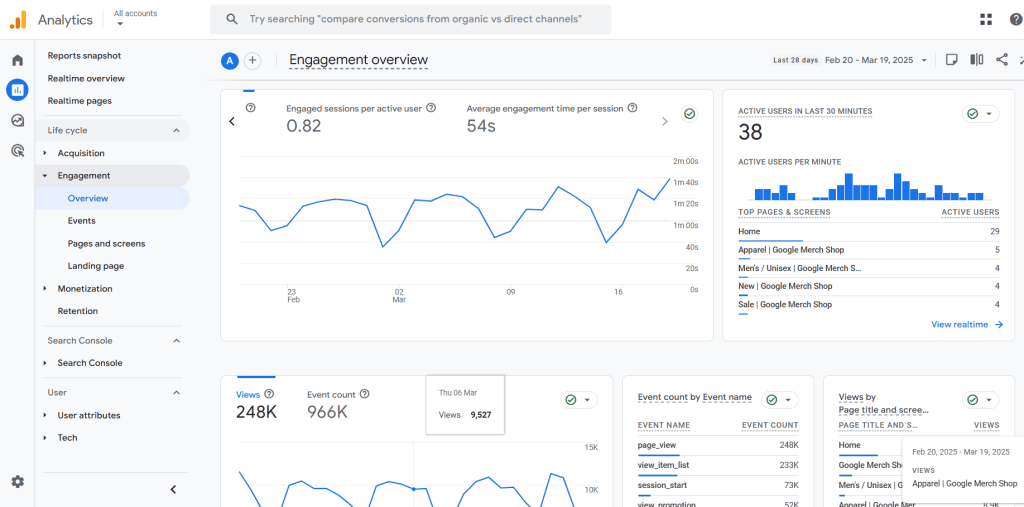
- Page Views
- Sessions
- Engagement Time
- Pages per Session
- Engaged Sessions (specifically in GA4)
- Bounce Rate (an inverse indicator of engagement)
- Scroll Depth
- Video Play/Completion Rate
- Clicks on specific elements (buttons, links)
- Form submissions (micro-conversions)
3. Leveraging In-Built Analytics & Custom Tracking:
Most modern analytics platforms (e.g., Google Analytics 4, Adobe Analytics, Mixpanel, Amplitude) offer a suite of standard engagement metrics out-of-the-box. However, these default settings may not always capture all critical interactions. Micro-interactions such as specific button clicks, downloads of a whitepaper, or interactions with an interactive element often require additional, custom tracking configurations to provide a complete picture of user engagement.
4. Developing a Comprehensive Implementation Guide:
Once key engagement metrics are identified and prioritized, a crucial best practice is the creation of a detailed Implementation Guide. This document serves as a blueprint, providing clear, step-by-step instructions for all implementation teams – web analysts, digital marketers, developers, and data engineers – on precisely how to track, measure, and report on engagement effectively. The guide should detail:
- The definition of each metric.
- The specific tracking code or event configurations required.
- Data layer specifications.
- Testing and validation procedures.
- Reporting requirements and dashboard layouts.
- Ownership and maintenance protocols.
5. Continuous Optimization and A/B Testing:
Engagement analytics is not a static exercise. It requires continuous monitoring, analysis, and optimization. Businesses should regularly review engagement reports, identify trends, hypothesize improvements, and implement A/B tests to validate changes. This iterative process of measurement, learning, and adaptation ensures that strategies remain agile and effective in driving desired customer behaviors.
Key Customer Engagement Metrics to Track Across Channels
It is important to reiterate that "conversions" are distinct from engagement metrics. While conversions represent a deep level of engagement, they signify decisive, bottom-of-funnel actions. Engagement metrics, conversely, illuminate the mid-funnel activities that lead up to these ultimate commitments.
Metrics marked with an asterisk (*) are typically specific to Google Analytics 4 (GA4) and may have different nomenclature or definitions on other platforms.
1. Website & App Engagement Metrics
These metrics provide insights into how users interact with a brand’s digital properties.
- Page Views: The fundamental count of times a webpage or app screen is accessed. While essential for understanding content reach, it offers limited insight into engagement depth on its own.
- Sessions: A period of continuous active engagement by a user on a website or app. GA4 typically defines a session as 30 minutes of user activity, though this can be configured.
- Engagement Time: Measures the duration users actively interact with content. In GA4, this metric includes:
- Time spent with the app in the foreground.
- Time spent with the website in focus.
- Time spent watching a video or engaging with other interactive elements.
- This can be found in GA4 under
Reports > Engagement > Overview. A pro tip: utilize thePages and Screensreport within GA4 to compare engagement time on specific pieces of content, allowing for effective performance analysis.
- Pages per Session: The average number of pages a user visits within a single session. A higher number generally indicates active exploration and deeper interest. A benchmark of at least two pages per session is considered good, with three or more indicating strong engagement.
- Engaged Sessions*: A GA4-specific metric defining sessions that meet at least one of the following criteria:
- Lasted longer than 10 seconds.
- Had one or more conversion events.
- Had two or more page or screen views.
Engaged sessions offer a more accurate representation of actual user interest compared to total sessions, filtering out accidental or very short visits.
- Bounce Rate: The percentage of single-page sessions (sessions where the user leaves the site from the entrance page without interacting further). A high bounce rate often signals a lack of engagement, irrelevant content, or poor user experience.
- Scroll Depth: Measures how far down a page users scroll. This is particularly valuable for long-form content, indicating whether users are consuming the entire article or just skimming the top.
- Video Play/Completion Rate: For content with embedded videos, this tracks the percentage of users who start playing a video and, more importantly, the percentage who watch it to completion.
2. Social Media Engagement Metrics
Integral to a comprehensive digital marketing strategy, these metrics gauge audience interaction on social platforms.
- Likes/Reactions: Basic indicators of approval or emotional response to content.
- Comments: Demonstrates a higher level of engagement, indicating users are compelled to share their thoughts or ask questions.
- Shares/Retweets: The strongest indicator of content resonance, as users deem the content valuable enough to disseminate to their own networks.
- Clicks (on posts, links): Measures direct interaction with calls to action within social posts.
- Mentions/Tags: Indicates brand visibility and organic conversation around the brand.
- Reach vs. Engagement Rate: While reach measures potential audience exposure, engagement rate (total engagements divided by reach or followers) provides a more accurate picture of how captivating the content truly is to those who see it.
- Sentiment Analysis: Advanced tools can analyze the sentiment of comments and mentions, providing qualitative insights into how the audience perceives the brand.
3. Paid Ads & Email Engagement Metrics
These metrics are crucial for evaluating the effectiveness of direct marketing efforts.
- Click-Through Rate (CTR): The percentage of users who click a link after viewing an ad, search result, email, or social media post. A higher CTR signifies stronger initial engagement with the ad creative or email subject line. Benchmarks vary widely by industry and platform (e.g., 0.5-2% for display ads, 2-5% for search ads, 2-5% for email). Note that some platforms (e.g., Facebook/Meta) may include a mix of click types (likes, shares, comments) in their "CTR (All)" metrics, requiring careful interpretation.
- Open Rate: The percentage of recipients who open an email or SMS message. While not a guarantee of deeper engagement, it indicates the effectiveness of the subject line and preview text in capturing attention.
- Time Spent on Email: For HTML emails, some tools can track how long an email is open, indicating the depth of content consumption.
- Forward Rate: The percentage of recipients who forward an email, indicating high value and shareability.
- Reply Rate: For specific campaigns, the percentage of recipients who reply to an email, signifying direct interaction.
4. Product Engagement Metrics
For SaaS, e-commerce, and digital products, these metrics focus on interactions that occur before a final purchase or subscription, or within the product experience itself.
- Product Page Views: The number of times specific product pages are viewed.
- Product Detail Views: Similar to page views, but specifically for detailed product descriptions or feature pages.
- Zoom/Image Gallery Interactions: Users engaging with product visuals indicates closer inspection.
- Add-to-Wishlist/Save for Later: A strong signal of intent and interest, even if not an immediate purchase.
- Reviews Read/Written: Engagement with user-generated content demonstrates active consideration.
- Feature Adoption Rate: For SaaS products, this tracks how many users actively use specific features within the application.
- Time-to-Value (TTV): The time it takes for a new user to experience the core benefit of a product. Shorter TTV often correlates with higher engagement and retention.
- Session Duration (in-app): How long users spend actively using the product.
- Usage Frequency: How often users return to the product (daily, weekly, monthly active users).
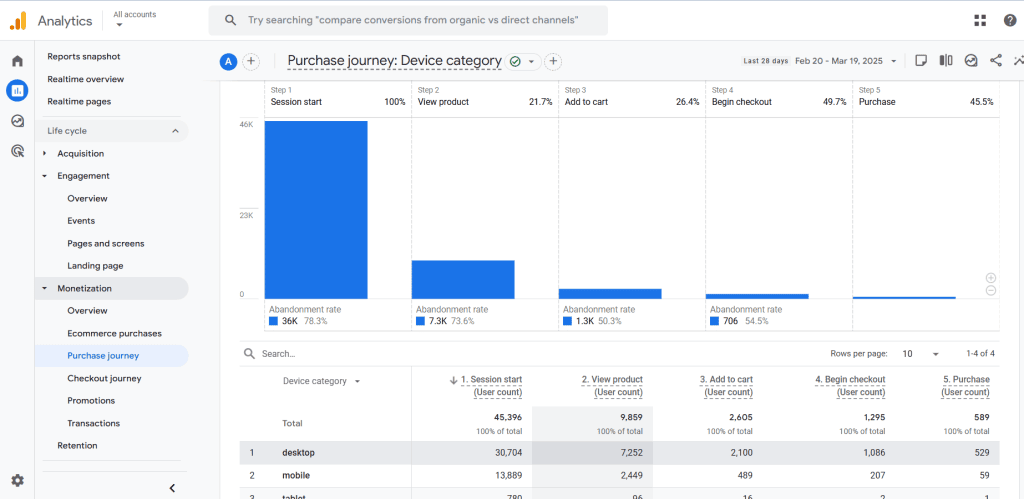
- Interaction with Promotion Funnels: Analyzing engagement at each stage of a promotional funnel (e.g., viewing an offer, clicking for details, applying a coupon) helps identify drop-off points. If a conversion funnel shows issues, analyzing these preceding engagement metrics helps pinpoint precisely where users disengage and allows for targeted optimization.
Challenges and Future Trends in Engagement Analytics
Despite its immense value, implementing and leveraging customer engagement analytics presents several challenges:
- Data Silos: Data often resides in disparate systems (CRM, marketing automation, website analytics, social media platforms), making a unified view of the customer journey difficult.
- Data Overload: The sheer volume of data can be overwhelming, making it challenging to identify meaningful patterns without advanced tools and skilled analysts.
- Privacy Concerns: Evolving data privacy regulations (e.g., GDPR, CCPA) necessitate careful handling of customer data and transparent consent mechanisms.
- Skill Gap: There is a growing demand for data scientists and analysts who can not only collect data but also interpret it strategically and translate insights into actionable recommendations.
- Attribution Complexity: Attributing engagement to specific marketing efforts across multiple touchpoints remains a complex challenge.
Looking ahead, the field of customer engagement analytics is poised for significant evolution, driven by:
- Artificial Intelligence (AI) and Machine Learning (ML): AI and ML will increasingly automate data analysis, identify complex patterns, predict future behavior, and enable hyper-personalization of user experiences.
- Predictive Analytics: Moving beyond descriptive analytics, predictive models will forecast churn risk, identify high-value customers, and recommend optimal engagement strategies.
- Real-Time Analytics: The ability to analyze and react to customer behavior in real-time will enable dynamic content delivery, personalized offers, and immediate problem resolution.
- Unified Customer Profiles: Advanced Customer Data Platforms (CDPs) will become central to aggregating data from all sources into a single, comprehensive customer profile, enabling a truly holistic view of engagement.
- Ethical AI and Privacy-Preserving Analytics: As AI becomes more prevalent, ethical considerations and privacy-preserving techniques will be paramount to building and maintaining customer trust.
Conclusion: The Cornerstone of Enduring Customer Relationships
Customer engagement analytics is more than just a collection of metrics; it is a strategic discipline that provides profound insights into the intricate tapestry of user behavior preceding conversions. By diligently tracking and interpreting these key engagement indicators across all digital channels, businesses gain the power to refine their strategies, significantly improve customer retention, and consistently drive sustainable conversions.
In an era where customer attention is the ultimate currency, understanding the deepest motivations and behaviors of your audience is paramount for long-term success. As explored in comprehensive guides like "How to Collect and Utilize Customer Insights and Analytics," true success stems from moving beyond transactional interactions to building enduring, value-driven relationships. The proactive application of customer engagement analytics is not merely an option but a critical necessity for any organization aspiring to thrive in the dynamic digital economy. It transforms the often-ambiguous question of audience engagement into a clear, data-driven narrative, empowering businesses to connect, convert, and cultivate lasting loyalty.
