
Beyond the Vanity Metric: Why Audience Intelligence is the New Currency of Influencer Marketing
The era of “spray and pray” influencer marketing is officially drawing to a close. For years, the industry standard for success was defined by top-line metrics: follower counts, aggregate views, and the sheer scale of potential impressions. However, as the digital landscape matures and consumers become increasingly sophisticated in their online behaviors, these traditional benchmarks are proving to be increasingly hollow.
The organizations winning in the current market are not necessarily those with the deepest pockets or the widest nets. Instead, they are the ones pivoting toward deep audience intelligence—asking smarter, more granular questions to distinguish between creators who generate fleeting attention and those who drive genuine, measurable business outcomes.
This shift serves as the cornerstone of a new research initiative, Redefining Influencer Value: How Audience Intelligence Transforms Reach into Revenue. By analyzing data across the healthcare, gaming, and consumer packaged goods (CPG) sectors, the findings are clear: the influencers commanding the most views are rarely the ones providing the highest return on investment (ROI).
The Strategic Imperative: Redefining Value in 2025
For modern marketers, the challenge is no longer identifying who has the most reach, but understanding why that reach exists and what it signifies. The industry is moving away from a transactional model—paying for a shoutout—toward an intelligence-led model where creators are selected based on their specific alignment with consumer intent, search behaviors, and cultural relevance.
In 2025, data reveals a stark disconnect between volume and value. While a creator might boast millions of views, if their audience’s search affinity does not align with the product’s core value proposition, the partnership is essentially a wasted effort. This is particularly true in highly regulated or specialized industries like healthcare, where consumer trust is the primary currency.
A Deep Dive into Healthcare: Navigating the Instagram Narrative
The healthcare sector provides a masterclass in why raw reach is a dangerous metric. On platforms like Instagram, the conversation is far from linear. Patients and consumers are not merely seeking clinical validation; they are navigating a complex ecosystem where traditional medicine and alternative health narratives frequently overlap.
The Duality of Consumer Interest
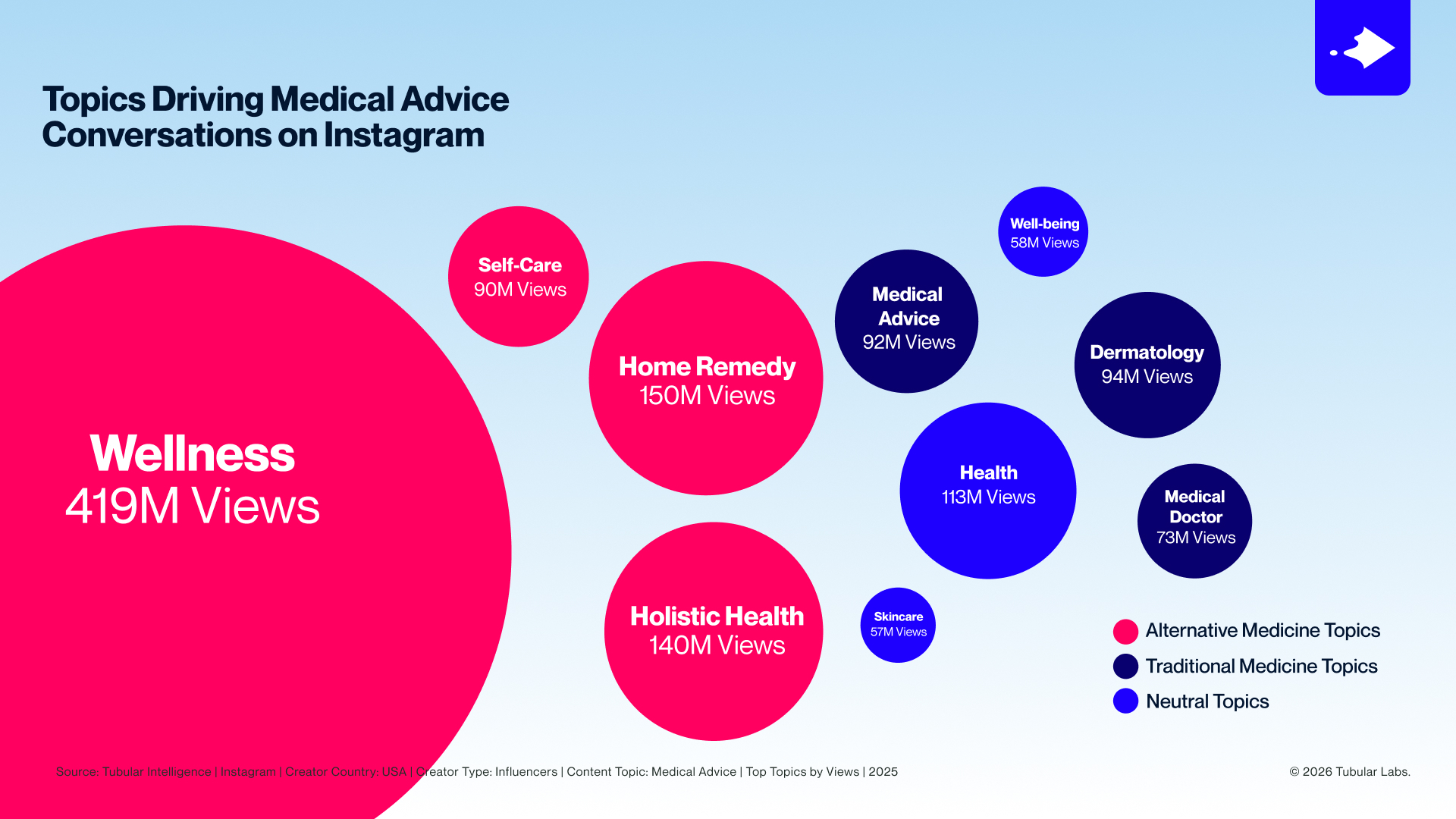
Data analyzed from U.S. influencer content in 2025 reveals that healthcare audiences are increasingly non-binary in their consumption habits. They are not choosing between clinical expertise and alternative wellness; they are consuming both simultaneously. For pharmaceutical, supplement, and skincare brands, this creates a significant strategic opening.
The danger for brands is to show up only in the "clinical" silo. By ignoring the broader, curiosity-driven conversations, these brands miss a significant share of the audience that is actively forming intent. To truly capture this market, brands must meet consumers at the intersection of clinical credibility and holistic curiosity.
The Anatomy of an Influencer: A Case Study in Dermatology
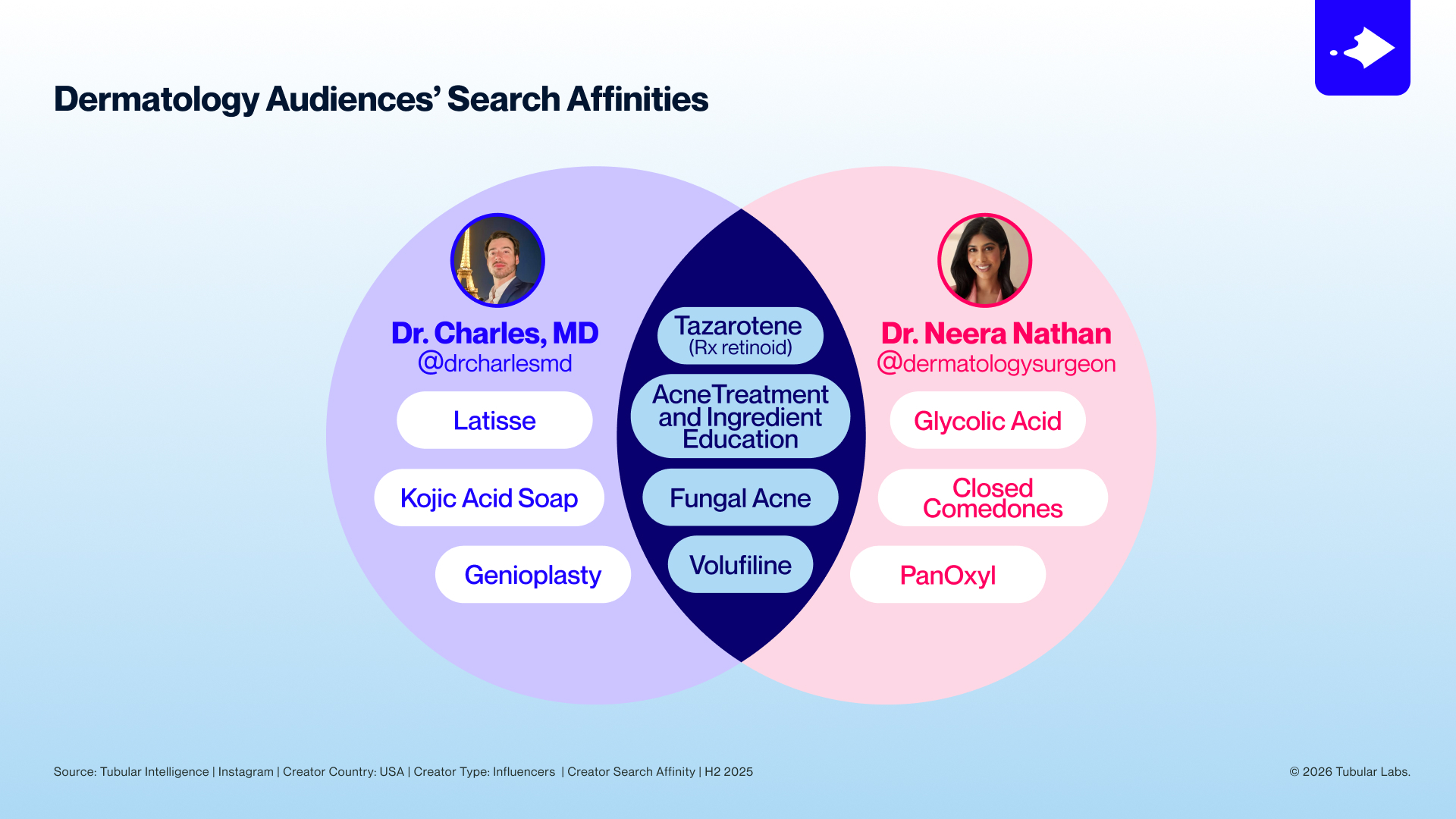
To illustrate the power of audience intelligence over surface-level metrics, consider the dermatology space. If a brand were looking to promote a product like Latisse, a traditional approach might lead them exclusively to a creator with the largest follower base.
However, a closer look at two leading figures—Dr. Charles, MD, and Dr. Neera Nathan—reveals the necessity of mapping audience overlaps:
- The Broad Appeal: Dr. Neera Nathan commands an audience of 1.8 million, known for translating complex dermatological topics into accessible, shareable education.
- The Clinical Specialist: Dr. Charles, MD, focuses on challenging trends and dissecting ingredient science through a rigorous, clinical lens.
When we layer in audience intelligence, the strategic choice becomes clear. Data shows that 17% of Dr. Charles’s audience follows Dr. Neera Nathan, whereas only 2% of her audience follows him. This asymmetry is a goldmine for a brand. Partnering with Dr. Charles offers a "bridge" effect: his audience is highly engaged and niche, but through the overlap, he provides a direct conduit into the broader, mainstream audience held by Dr. Nathan.
This is not just about reach; it is about precision targeting through the psychological and behavioral pathways of the consumer.
Beyond Healthcare: Lessons from Gaming and CPG
The principles of audience intelligence—search affinity, cultural alignment, and behavioral movement—are proving to be universally applicable.
Gaming: The Myth of the "Anime Influence"
In the gaming and anime sectors, particularly across East and Southeast Asia, the numbers are staggering. In 2025, YouTube anime influencers generated 18 billion views. For a brand looking to enter this space, that number is tempting, yet deceptive.
The report highlights that the creators who are actually shifting fan behavior and driving purchase intent represent a tiny, specialized segment of that 18-billion-view landscape. Brands that fail to distinguish the "casual viewer" from the "engaged participant" risk spending their budget on visibility that never translates to action.
CPG: Cultural Fit vs. Category Fit
Perhaps the most surprising findings come from the CPG sector in Brazil, which ranked as the second-largest market globally for influencer engagement on TikTok in 2025.
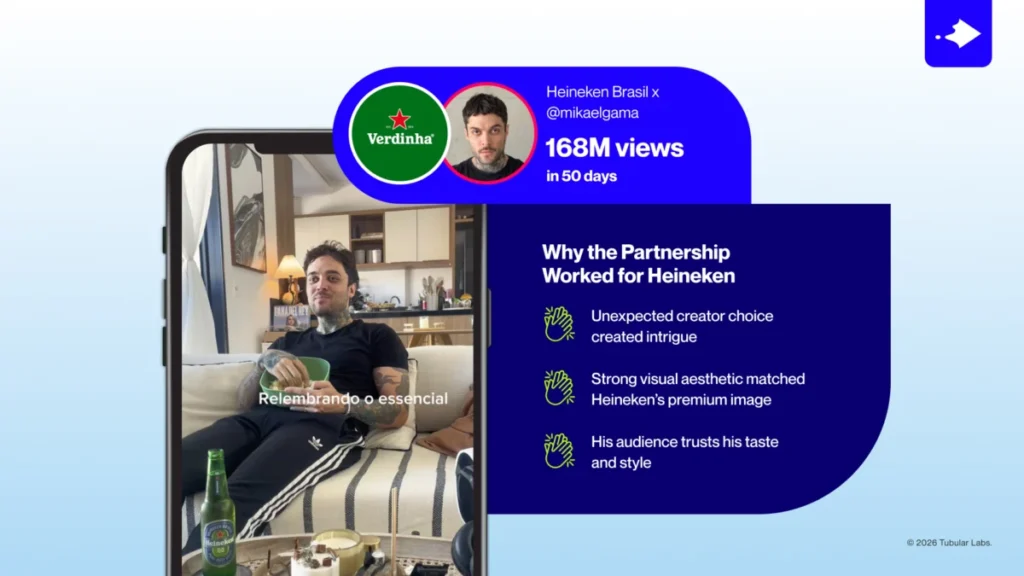
A standout case study involves Heineken. Rather than partnering with a traditional "beer influencer" or a standard lifestyle vlogger, the brand collaborated with a men’s fashion creator with a modest following of 136,000. The result? 168 million views and 1 million engagements in just 50 days. The lesson is profound: cultural alignment—finding the creator who embodies the brand’s "vibe" or aesthetic—often outperforms a creator who merely fits the product category.
Implications for Modern Marketing Strategies
The shift toward intelligence-led influencer marketing has significant implications for how agencies and internal teams must operate.
1. The Death of the Vanity Metric
The industry must move away from evaluating success based solely on follower counts. While reach is a necessary starting point for brand awareness, it is an insufficient strategy for conversion. Marketers must now prioritize "search affinity" and "audience overlap" as their primary KPIs.
2. Strategic Layering
The "Dr. Charles and Dr. Neera" example underscores the power of layering. Brands should not be looking for one "hero" influencer. Instead, they should be building a portfolio of creators whose audiences complement each other, creating a ripple effect that covers both niche authority and mass-market reach.
3. Moving at the Speed of Culture
As seen in the Brazilian CPG example, the most effective partnerships are those that feel native to the culture of the platform. Brands must use data to identify creators who are already shaping the specific cultural conversations their target audience is having, rather than forcing a brand message into a conversation that feels out of place.
The Path Forward: A Framework for Success
So, how can brands operationalize these findings? It requires a shift from a reactive, "who’s popular right now" mindset to a proactive, "who moves our audience" strategy.
- Step One: Audience Mapping. Use data tools to map the cross-pollination of audiences between creators. Who does your target consumer follow? Where do they go for information?
- Step Two: Behavioral Analysis. Look beyond engagement rates. Examine search affinities—what are these audiences googling after they watch an influencer’s content? Are they looking for reviews, ingredients, or clinical research?
- Step Three: The "Bridge" Strategy. Identify smaller, high-authority influencers who serve as gateways to larger, broader audiences.
- Step Four: Continuous Evaluation. Influencer value is not static. An influencer who is relevant today may lose their audience’s trust tomorrow. Consistent, real-time data monitoring is essential to ensure that partnerships continue to deliver value throughout the life of a campaign.
Conclusion: Reach is Only the Beginning
The data from Redefining Influencer Value suggests that the industry is at a crossroads. We have reached the limits of what scale alone can achieve. The future of marketing lies in the ability to interpret the complex, often messy, digital footprints of consumers.
By leveraging audience intelligence, marketers no longer need to rely on guesswork or gut feelings. They can identify the precise creators who influence the purchase decisions of their core customers, allowing for more confident investment and, ultimately, a much higher return on every dollar spent.
As the digital ecosystem continues to evolve, those who treat reach as a starting point rather than a final destination will be the ones who command the loyalty—and the wallets—of the next generation of consumers.
