

Data-Driven Disruption: How Iconic CPG Brands Are Rewriting the Rules of Social Video
By Global Brand & Media Insights
Published: June 2026
Main Facts: The New Data-First Playbook for Consumer Packaged Goods
In the high-stakes world of Consumer Packaged Goods (CPG), traditional marketing playbooks are gathering dust. The industry’s most recognizable and legacy-laden brands are no longer relying on gut instinct, demographic broad strokes, or endless content flooding to capture consumer attention. Instead, they are completely overhauling their social video strategies through the lens of hyper-granular, data-backed audience insights.
A rigorous look at cross-platform performance reveals a unified trend across disparate sectors: Red Bull, Heineken, Charlotte Tilbury, and Old Spice have each achieved massive cultural and financial returns by making bold, unconventional decisions rooted entirely in behavioral data.
Rather than chasing vanity metrics—such as raw follower counts or sheer upload volume—these market leaders are leveraging audience intelligence tools (like Tubular Labs) to decode cross-platform consumption habits, optimize video duration down to the second, identify high-affinity cultural intersections, and forge shocking cross-category partnerships. The result is a masterclass in modern digital storytelling, proving that data-backed precision consistently outperforms legacy assumptions.
Chronology: The Evolution of CPG Social Video from Volume to Precision
To understand where CPG social video stands today, it is essential to trace how the digital media landscape evolved over the past several years, culminating in the data-obsessed strategies of 2025 and 2026.
Phase 1: The Era of "Always-On" Flooding (Pre-2024)
For years, CPG brands viewed social video through a volume-first lens. The prevailing industry wisdom dictated that staying top-of-mind required a relentless upload schedule. Brands would churn out endless iterations of commercials, product demos, and generic brand clips across every available platform—often recycling the exact same assets on YouTube, TikTok, and Instagram without tailoring the content to platform-specific consumption habits. Engagement was low, and budgets were frequently strained by diminishing returns.
Phase 2: The Short-Form Revolution & The Rise of TikTok (2024–2025)
As platforms like TikTok, Instagram Reels, and YouTube Shorts captured the global zeitgeist, the definition of digital video fundamentally shifted. By 2025, data showed that 77% of global YouTube views originated from videos under a minute long. CPG brands scrambled to pivot, but many fell into the trap of assuming that high-volume short-form content would automatically translate to uniform success across all channels.
Phase 3: The Audience Intelligence Era (2026 and Beyond)
Today, leading CPG giants have moved past the initial panic of the short-form pivot. Armed with advanced audience intelligence platforms, brands like Red Bull, Heineken, Charlotte Tilbury, and Old Spice are no longer asking, "How much content should we post?" Instead, they are asking, "What do behavioral metrics, cross-platform consumption overlaps, and search affinities reveal about where our audience actually lives and what they want to see?" This data-first evolution has transformed social video from an experimental branding afterthought into a precision revenue driver.
Supporting Data: Breaking Down the Metrics Behind the Giants
The success of modern CPG social video is not up for debate; it is quantified by hard data. A closer examination of how individual brands leverage these metrics exposes the blueprint for modern digital dominance.
Red Bull: Platform Nuance and the Short-Form Myth
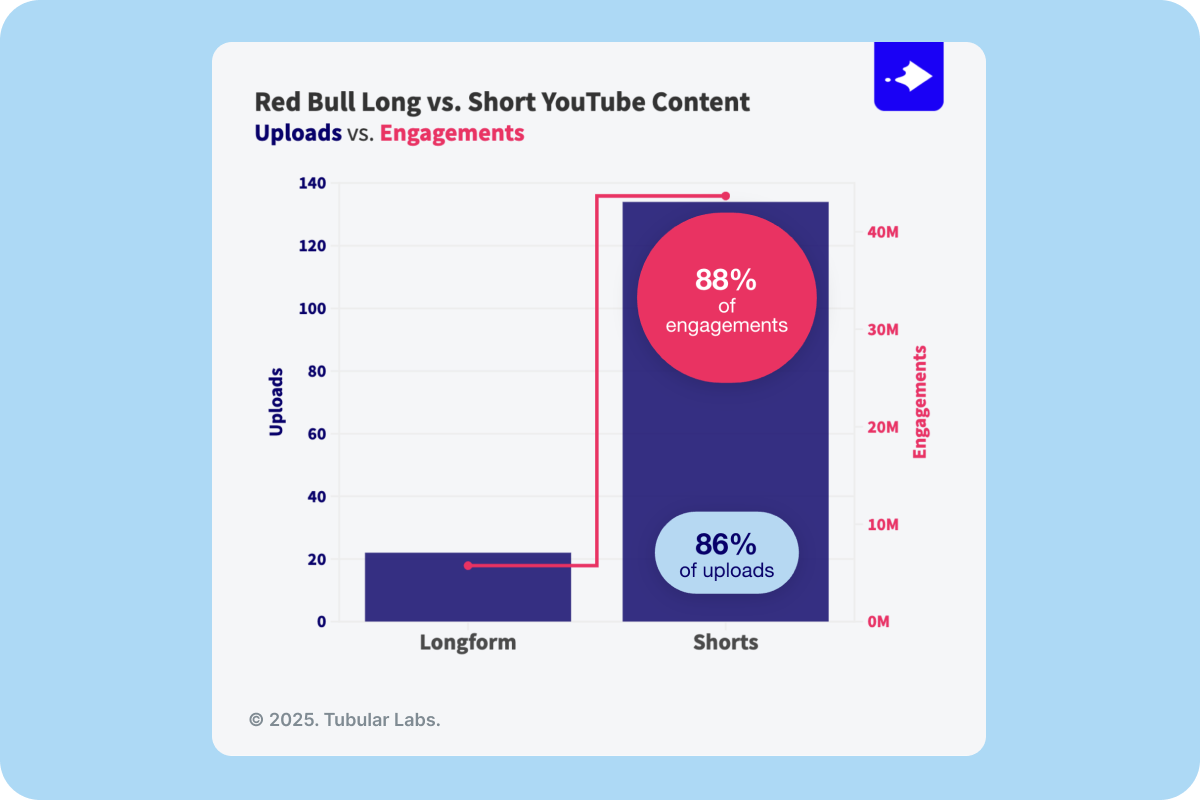
Red Bull has long been a pioneer in branded content, treating itself as much as a media company as an energy drink manufacturer. When confronting the 2025 reality that 77% of global YouTube views were driven by short-form video, Red Bull met the trend head-on with a high-volume short-form strategy. However, performance data quickly proved a vital lesson: short-form content does not drive uniform results across platforms.
- The YouTube Equation: Red Bull’s engagement on YouTube—spanning both short- and long-form formats—aligned predictably with its structured upload strategy.
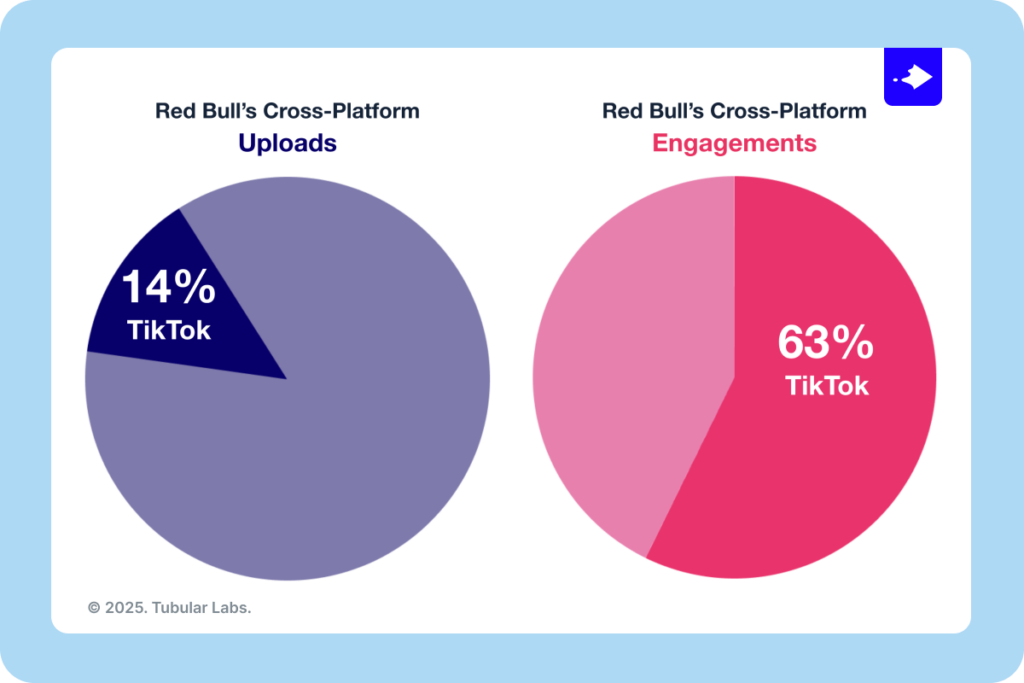
- The TikTok Phenomenon: Conversely, TikTok delivered staggering asymmetry. Despite accounting for a modest 14% of Red Bull’s total cross-platform uploads, TikTok videos generated an incredible 63% of their total engagement.
The Insight: High-volume platforms are not automatically high-impact platforms. CPG brands must separate overall content volume from actual audience ROI, tailoring video duration and distribution channels to platform-specific behavioral nuances.
Heineken: Cultural Fit Over Category Fit
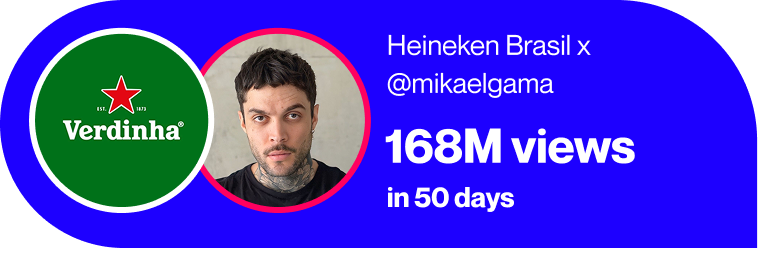
Beverage giant Heineken challenged conventional marketing wisdom by stepping entirely outside its product category for a landmark campaign. Teaming up with Brazilian men’s fashion creator @mikaelgama—who commanded an initial following of just 136,000—Heineken embarked on an unconventional partnership.
- The Impact: Despite his relatively modest follower count, the campaign generated 168 million views and 1 million engagements in just 50 days.
- The Accolade: Driven by the partnership’s viral resonance, Mikael Gama secured the title of the #1 most-viewed Brazilian influencer in the first half of 2025.
The Insight: Traditional category alignment (e.g., partnering exclusively with gaming, sports, or food creators) is secondary to cultural fit. Mikael’s visual aesthetic mirrored Heineken’s premium branding, and his audience’s deep trust in his tastemaking abilities drove exponential reach that vanity metrics could never have predicted.
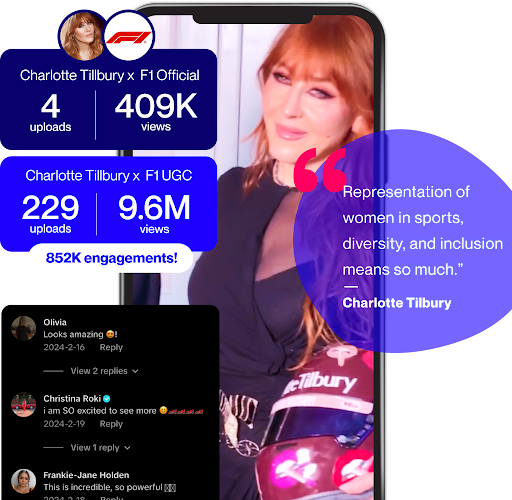
Charlotte Tilbury: Bridging Beauty and Motorsports
Luxury beauty brand Charlotte Tilbury made history by becoming the first female-founded beauty brand to partner with Formula 1’s F1 Academy. This cross-category leap merged the traditionally distinct worlds of high-performance motorsports and prestige cosmetics.
- The Results: The partnership sparked an immediate, measurable surge in user-generated content (UGC) on TikTok.
- Audience Expansion: By targeting mutual audience overlaps, Charlotte Tilbury successfully captured previously untapped consumer segments, proving that unexpected collaborations create powerful cross-pollination between disparate fanbases.
Old Spice: Strategic Publishing vs. Content Flooding
Old Spice remains a titan of YouTube views and global reach within the CPG sector. However, this dominance was achieved without resorting to content flooding.
- The Strategy: Rather than overwhelming subscribers with daily uploads, Old Spice focused on high-impact formats (such as YouTube Shorts) combined with highly targeted, purposeful publishing.
- The Outcome: By prioritizing strategic timing and demographic expansion over raw upload frequency, Old Spice sustained massive viewership metrics and continuously captured adjacent consumer demographics.
Official Responses and Industry Perspectives
As data analytics reshape digital marketing departments worldwide, industry leaders and analysts are emphasizing a structural shift in how brand partnerships and media spends are evaluated.
"The creator economy no longer rewards brands that rely strictly on vanity metrics like follower count and broad-stroke views," notes a senior digital media strategist. "Predicting return on investment based solely on surface-level metrics leaves too much room for error. Modern CPG brands must layer in search affinity, shopping behavior, and audience overlap data to accurately forecast campaign success."
According to insights published in leading digital marketing research guides, the divide between a "good" social video strategy and a "great" one lies entirely in a brand’s willingness to question legacy best practices using empirical data.
- "Stop guessing how long your videos should be," urges industry analysts. "Let behavioral data dictate your editing room decisions. When you understand how distinct audiences consume content across YouTube, TikTok, and Instagram, your creative output becomes inherently more efficient."
Furthermore, executive stakeholders within major CPG firms point out that risk-taking is no longer a gamble when backed by audience intelligence. Venturing outside traditional category boundaries—as Heineken and Charlotte Tilbury demonstrated—is calculated entirely through overlap insights that reveal hidden consumer interests long before a contract is signed.
Implications: What This Means for the Future of CPG Marketing
The lessons drawn from Red Bull, Heineken, Charlotte Tilbury, and Old Spice carry profound implications for the broader marketing landscape. As we look deeper into the digital media ecosystem, several critical takeaways emerge for brands aiming to scale their social video presence:

1. Ditch the "One-Size-Fits-All" Distribution Model
Publishing the exact same video asset across YouTube, TikTok, and Instagram with zero structural modifications is an outdated practice. Brands must audit their platform metrics to identify where true engagement lives, tailoring video lengths, pacing, and calls-to-action to match individual platform cultures.
2. Prioritize Cultural Relevance Over Category Boundaries
The success of cross-category partnerships proves that modern consumers are multifaceted. A beer brand doesn’t need to sponsor a bartender; a makeup brand doesn’t strictly need a beauty vlogger. By utilizing audience intelligence to map cultural touchpoints and shared consumer behaviors, brands can unlock massive, unexpected audience segments.
3. Quality, Intentional Publishing Trumps Content Flooding
The era of overwhelming algorithms with high-frequency, low-intent uploads is fading. As Old Spice demonstrates, disciplined and targeted publishing—supported by high-impact formats like short-form video—sustains global reach far more effectively than exhausting internal creative pipelines with endless content volume.
4. Let Audience Intelligence Guide Every Decision
Ultimately, social video moves too quickly for intuition alone to drive strategy. The CPG brands winning market share today are those that treat audience data not as an afterthought, but as the foundational compass guiding every creative brief, media spend, creator partnership, and publishing schedule.
For brands looking to stay competitive, the mandate is clear: stop following assumptions, start analyzing the data, and prepare to rewrite the rules of social video.
