In the high-stakes arena of modern media and advertising sales, pitching raw impressions and surface-level engagement metrics is no longer enough to close deals. Today’s media sales executives are not merely selling ad space; they are selling verified, highly contextualized audiences. Proving the true value of that audience to brand partners demands a sophisticated, data-driven approach that blends first-party insights with comprehensive third-party intelligence.
As media fragmentation accelerates and digital ecosystems span dozens of platforms—from owned-and-operated (O&O) websites to social video giants like YouTube, TikTok, Instagram, and Facebook—publishers face immense pressure to differentiate themselves. To stand out in competitive pitch meetings, sales teams are increasingly turning to advanced social video intelligence platforms like Tubular Labs. By transforming vanity metrics into undeniable proof of value, publishers are creating powerful leverage in negotiations and accelerating the deal-making lifecycle.
The Anatomy of the Modern Media Pitch: First-Party Meets Third-Party Data
For decades, publishers relied primarily on internal analytics tools—such as Chartbeat—to monitor real-time audience behavior, page views, and editorial performance on their own domains. This first-party data remains a cornerstone of any effective media pitch. It provides a reliable, direct view of user activity on a publisher’s owned properties, establishing baseline credibility.
However, in an era where digital consumption happens everywhere except traditional publisher homepages, first-party data alone tells only half the story.
To build a truly bulletproof pitch, modern ad sales teams are pairing their internal metrics with third-party data enrichment. By capturing information independently across outside channels—particularly social video ecosystems—sellers can illuminate the broader context of consumer behaviors, preferences, and cross-platform affinities. This multi-layered approach allows publishers to demonstrate not just the sheer scale of their footprint, but the genuine quality, loyalty, and context of their audience.
Decoding the Chronology: The Evolution of Digital Ad Sales Verification
Understanding how the industry arrived at this data-dependent juncture requires looking at the historical trajectory of digital media sales:
The Era of Impressions (Late 1990s – 2000s): Ad sales were predominantly transactional. Success was measured by banner ad clicks and raw page views—metrics that quickly proved susceptible to inflation and bot traffic.
The Rise of Social and O&O Analytics (2010s): As media consumption shifted to social networks, publishers began building massive followings on YouTube and Facebook. Tools like Chartbeat helped publishers optimize editorial content in real-time, but ad sales teams struggled to connect social engagement directly to advertiser ROI.
The Fragmentation Crisis (Late 2010s – 2020s): Audiences fractured across TikTok, Instagram Reels, and niche streaming apps. Advertisers grew skeptical of generic reach numbers, demanding deep demographic transparency and behavioral proof.
The Data-Enrichment Revolution (Present Day): Platforms providing global social video analytics bridge the gap. Sales teams now ingest cross-platform metrics to deliver hyper-targeted, behavior-based pitches that align directly with a brand’s specific campaign goals.
Leveraging Tubular Data: Three Pillars of a Winning Sales Strategy
Gathering audience data is only the initial step; the true art lies in weaponizing that data to win and retain premium sponsorships. Tubular Labs provides ad sales teams with visibility across the entire global social video landscape, giving them the specific ammunition needed to outperform rival publishers targeting the same client budgets.
Here is how media sales teams are integrating social video data into their day-to-day pitches across three distinct pillars:
1. Granular Demographic Segmentation
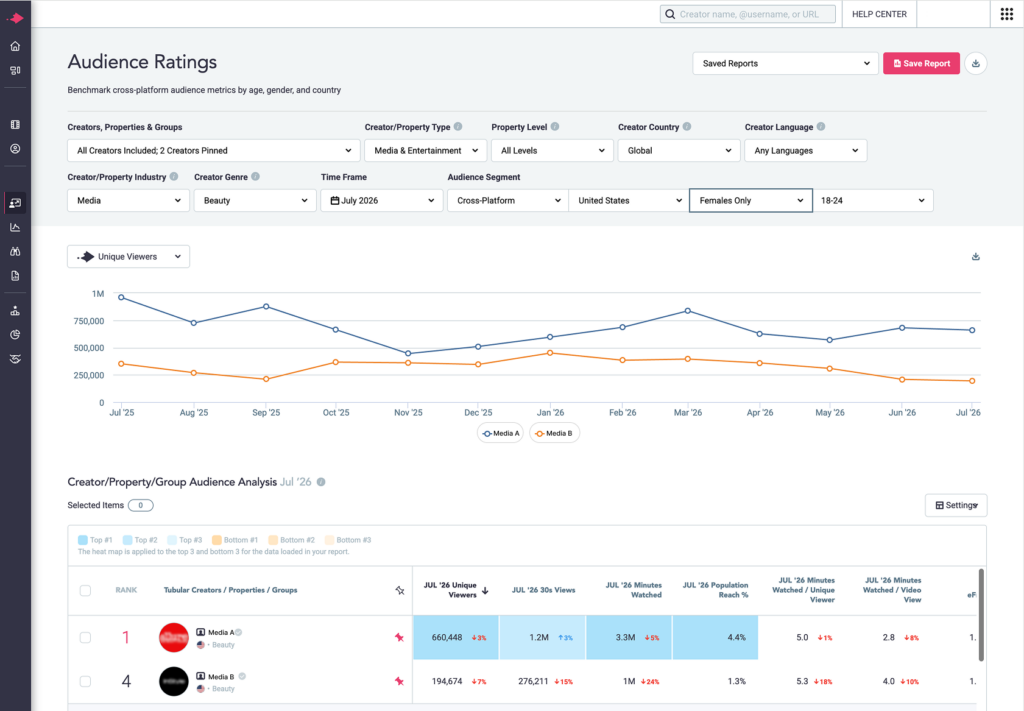
Different brands target wildly different consumer cohorts. A luxury beauty brand targeting Gen Z women requires vastly different proof points than a financial services firm targeting millennials. Tubular allows sales teams to segment audiences by location, age, and gender across creator networks and genres.
The Competitive Edge: Imagine two comparable media companies pitching a major beauty brand. Without advanced analytics, their pitches might look identical. However, by utilizing platform segmentation tools, Media Company A can pinpoint its dominant audience overlap with women aged 18–24, decisively outmaneuvering Media Company B by proving an immediate, verified advantage where it matters most to the buyer.
2. Unlocking Hidden Audience Overlap Data
Standard demographic breakdowns—such as age, gender, and geography—are foundational, but they fail to capture the nuances of consumer passion points. Ad sales teams are increasingly utilizing audience affinity data to discover unexpected intersections between content categories.
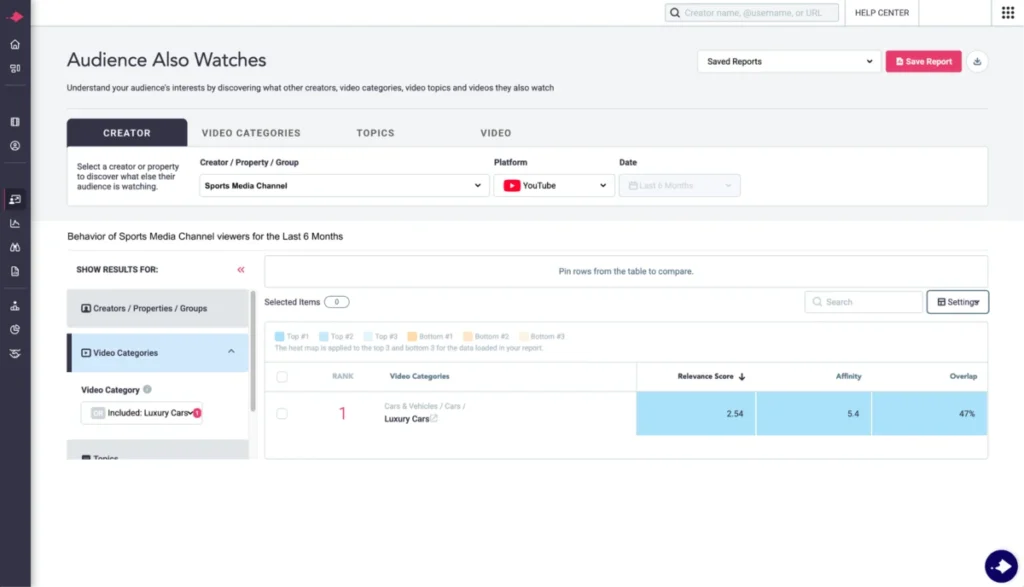
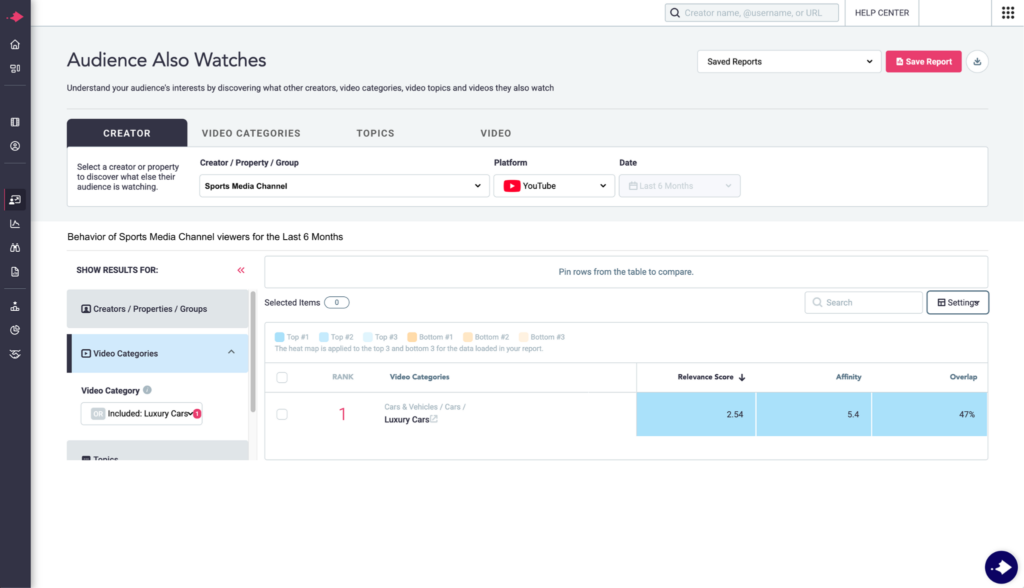
The Competitive Edge: A prominent sports media company might initially seem irrelevant to an automotive brand focusing on luxury vehicles. However, by pulling audience overlap data, the sales team can demonstrate that 47% of its sports viewers also actively consume luxury car content on YouTube. This concrete insight completely reframes the conversation, proving that the sports audience possesses a pre-existing affinity for high-end automotive products.
3. Content Performance and Growth Momentum
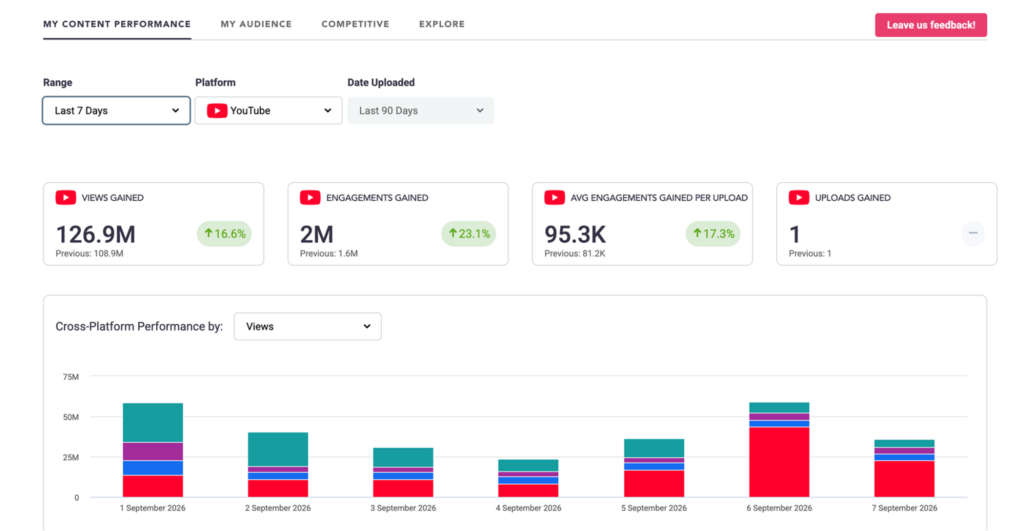
Advertisers want to invest in rising tides, not stagnant properties. Sellers use cross-platform performance metrics to highlight platform gains, view velocity, and engagement trends, layering them directly with desired demographic growth.
The Competitive Edge: Rather than simply stating, "Our channel is growing," a data-empowered seller can assert, "We have experienced a 55% year-over-year growth rate among viewers aged 25–34 on YouTube." This specific momentum metric directly addresses the advertiser’s core demographic objective, replacing vague promises with undeniable momentum.
Real-World Application: Anatomy of a Winning Branded Content Pitch
To understand how these data points coalesce in practice, examine this anonymized case study from a global news publisher pitching a major travel booking platform:
The Advertiser’s Goal: A global travel booking platform wants to increase unaided brand awareness among UK millennials aged 25–34.
The Data Extraction: Using social video intelligence tools, the publisher’s ad sales team pulls two critical proof points: first, that their digital properties outperform competing publications in cross-platform views, comments, and shares among UK millennials; second, that their audience displays a high affinity for specific lifestyle subcultures.
The Pitch Narrative:
"Our content consistently outperforms competing publications on views, comments, and shares, proving our audience is genuinely engaged. Furthermore, our audience overlap data gives your upcoming campaign a distinct edge.
We’ve identified a notable crossover between travel intent and our audience’s engagement with ‘foodie’ subcultures—specifically around minimalist packing tutorials and aesthetic café content. Rather than running generic travel ads, you can partner with us to build creative assets tailored directly to these micro-niches, capturing the attention of consumers who are already primed to engage."
By shifting the conversation from broad reach to hyper-targeted behavioral overlap, the publisher transforms a standard media buy into a sophisticated, performance-backed partnership.
Industry Perspectives: Official Responses and Expert Insights
Media executives and publishing leaders increasingly emphasize that data transparency is reshaping publisher-advertiser relationships.
"The days of selling purely on brand reputation and estimated reach are over," notes a senior digital media strategist. "Brand marketing budgets are scrutinized tighter than ever before. If a sales team cannot provide verifiable, cross-platform audience behavior proof within the first ten minutes of a pitch, they risk losing the deal to competitors who can."
Advertising buyers echo this sentiment. Brand partnership directors frequently report that proposals backed by deep audience affinity data—such as content overlap and niche demographic growth—accelerate the negotiation cycle significantly. When an advertiser sees that a publisher truly understands their target consumer’s habits across the digital ecosystem, trust is established immediately, drastically reducing the friction typically associated with contract approvals.
Strategic Implications for the Future of Media Sales
As the digital advertising landscape continues to evolve, the methodologies deployed by ad sales teams will determine the financial viability of modern publishing. The shift toward data-driven storytelling carries several profound implications for the media industry:
The Death of Vanity Metrics: Impressions and follower counts are rapidly becoming baseline table stakes rather than closing arguments. Publishers must invest in robust data enrichment tools to remain competitive.
Elevated Sales Enablement: Ad sales professionals are evolving into data analysts and strategists. Sales training programs must increasingly focus on data literacy, teaching teams how to extract meaningful narratives from complex social video analytics.
Stronger Agency-Publisher Partnerships: Media agencies reward publishers who simplify their jobs. By providing ready-made, defensible audience insights, publishers minimize the analytical burden on media buyers, securing preferred vendor status and higher CPMs.
Ultimately, the publishers who thrive will be those who recognize that ad sales is an exercise in evidence. By replacing assumptions with verified, granular social video intelligence, media sellers can turn raw numbers into compelling narratives, accelerate deal velocity, and secure long-term brand partnerships in an increasingly competitive marketplace.