
Beyond the Vanity Metric: How Audience Intelligence is Rewriting the Rules of Influencer Marketing
By Global Marketing Desk
Published: April 2026
Main Facts: The Shift From Reach to Revenue
In the modern digital economy, the traditional metrics of influencer marketing—follower counts, raw impressions, and vanity view tallies—are increasingly taking a back seat to hard business outcomes. According to a landmark industry analysis released this April, titled Redefining Influencer Value: How Audience Intelligence Transforms Reach into Revenue, the organizations winning the digital space are no longer necessarily those with the deepest pockets. Instead, they are the brands deploying advanced audience intelligence to isolate which creators actively drive consumer behavior versus those merely accumulating passive digital noise.
The report, spearheaded by audience analytics firm Tubular Labs, spans critical consumer sectors—including healthcare, gaming, and consumer packaged goods (CPG)—and arrives at a singular, disruptive conclusion: the creators generating the highest view counts are frequently not the ones driving the most economic value.
For brand marketers, CMOs, and agency leads, this data signals the end of an era. The practice of writing high-value checks based purely on macro-influencer follower sizes is giving way to a more sophisticated, data-driven approach. By mapping search affinities, cross-audience overlap, shopping behavior, and cultural alignment, modern brands are discovering hidden network effects that turn raw reach into measurable revenue.
Chronology: The Evolution of Creator Partnerships
To understand how the influencer ecosystem arrived at this inflection point, one must look at the rapid maturation of the creator economy over the past decade:
- Phase 1: The Wild West (Early 2010s): Influencer marketing began as a barter system. Brands sent free products to bloggers and early Instagram personalities in exchange for casual mentions. Value was measured primarily in terms of platform presence and brand awareness.
- Phase 2: The Macro-Influencer Gold Rush (Mid-to-Late 2010s): As social platforms professionalized, marketing budgets flooded the space. Brands chased raw numbers, prioritizing creators with millions of followers. Agencies emerged solely to broker deals based on cost-per-thousand (CPM) impressions and surface-level engagement rates.
- Phase 3: The Engagement Correction (2020–2023): Brands began noticing diminishing returns from mega-celebrity endorsements. Micro- and nano-influencers gained traction due to higher trust and perceived authenticity, forcing marketers to look past sheer follower counts toward community engagement.
- Phase 4: The Audience Intelligence Era (2024–Present): Today, advanced data modeling allows companies to look past the individual creator entirely. Marketers now examine the behavioral patterns, cross-watching habits, and real-time search intent of the audience itself. This allows brands to engineer partnerships that tap into multi-layered consumer journeys rather than siloed follower bases.
Supporting Data: Deep Dive into Healthcare, Gaming, and CPG
To illustrate how audience intelligence transforms strategy into ROI, the new report breaks down empirical case studies across three distinct verticals.
1. Healthcare on Instagram: Clinical vs. Alternative Narratives
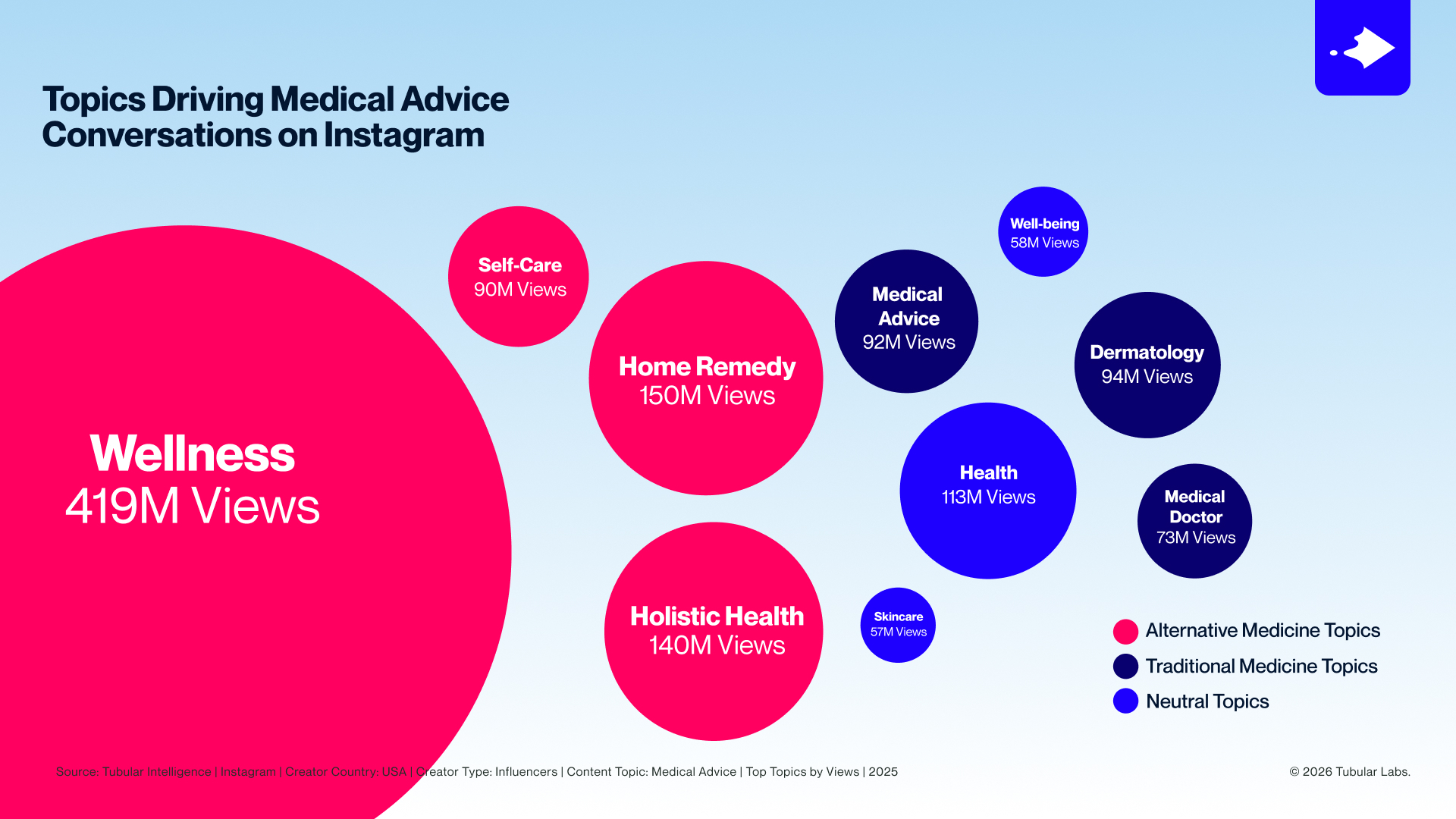
Healthcare marketing has historically walked a fine line between strict regulatory compliance and consumer education. To map how medical topics actually trend on Instagram, researchers analyzed leading topic views across U.S. influencer content in 2025.
The data revealed a surprising dynamic: clinical, evidence-based medical content and alternative wellness narratives are no longer competing forces. Consumers are actively consuming both simultaneously. For pharmaceutical companies, supplement manufacturers, and skincare brands, this creates a strategic imperative. Brands that restrict their influencer strategy solely to clinical content risk missing out on a massive share of the audience whose curiosity is already primed by alternative wellness discussions.
2. Dermatology Case Study: Decoding Asymmetrical Overlap
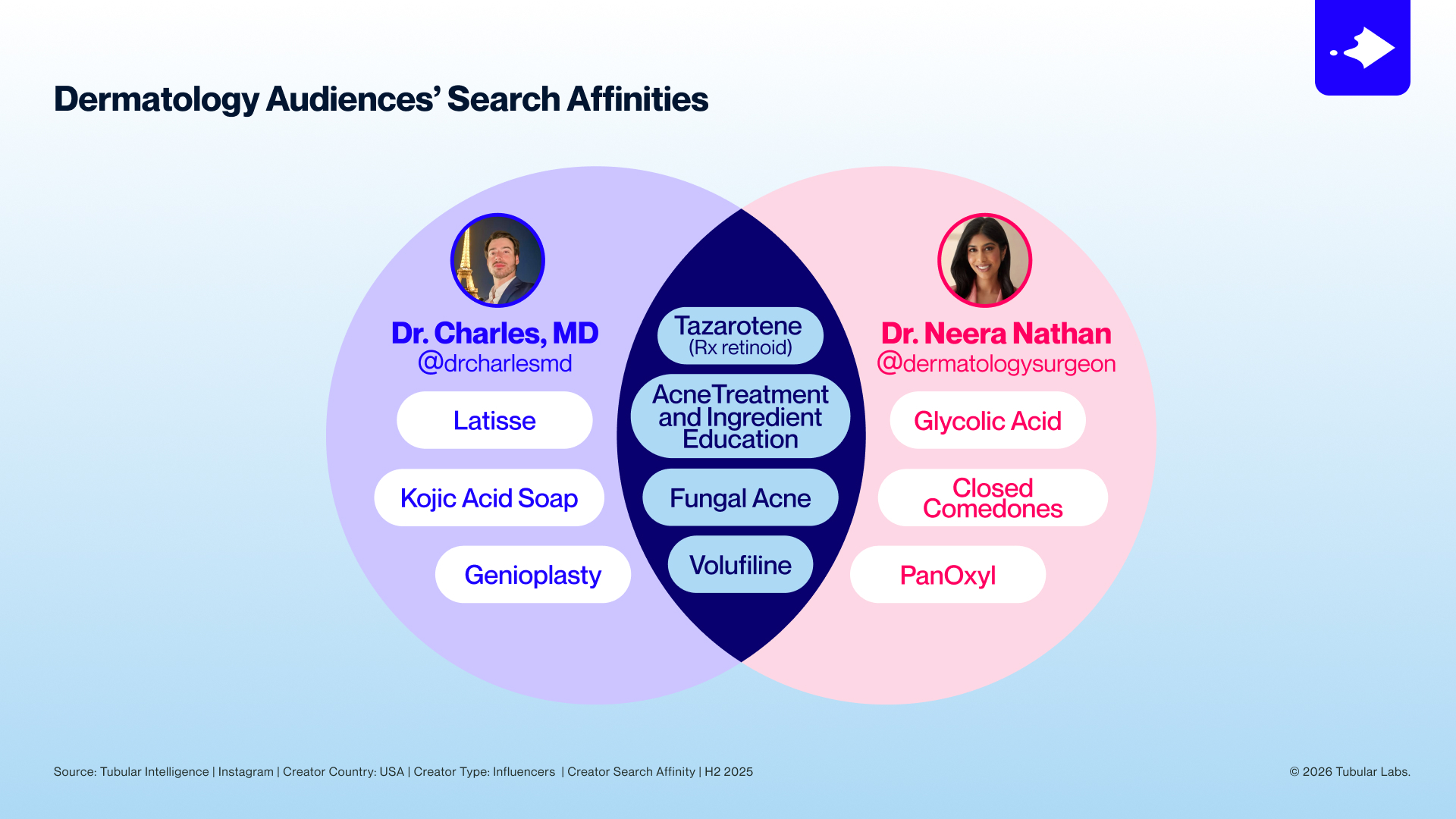
Consider a real-world application: marketing a prescription skincare or aesthetic product like Latisse. A brand evaluating the dermatology landscape on Instagram might naturally gravitate toward high-profile figures like Dr. Neera Nathan, whose audience commands roughly 1.8 million followers—a broad, medically relevant demographic focused on specific skin conditions.
However, layering audience intelligence onto the search affinities and cross-watching behaviors of two prominent creators—Dr. Neera Nathan and Dr. Charles, MD—reveals a more nuanced strategic opportunity.
- Dr. Charles, MD approaches skincare by challenging overhyped beauty trends and breaking down ingredient science through a rigorous clinical lens.
- Dr. Neera Nathan focuses on accessible, shareable dermatology education.
When analyzing audience crossover, data shows that 17% of Dr. Charles, MD’s audience also watches Dr. Neera Nathan, but only 2% of her audience watches him.
This asymmetrical overlap changes the playbook entirely. Partnering with Dr. Charles does not just capture a niche scientific crowd; it provides a direct bridge into Dr. Neera’s broader mainstream reach. Brands utilizing this data can achieve upstream clinical credibility before mainstream consumer understanding solidifies, maximizing marketing efficiency.
3. Gaming and CPG: Beyond Category Boundaries
The principles of audience intelligence extend far beyond medicine:
- Anime & Gaming (East & Southeast Asia): On YouTube, anime influencers generated an astounding 18 billion views in 2025. However, raw volume is misleading. Advanced data filters show that the specific creators actually influencing fan behavior and long-term purchase intent represent a tiny, highly targeted fraction of that total landscape.
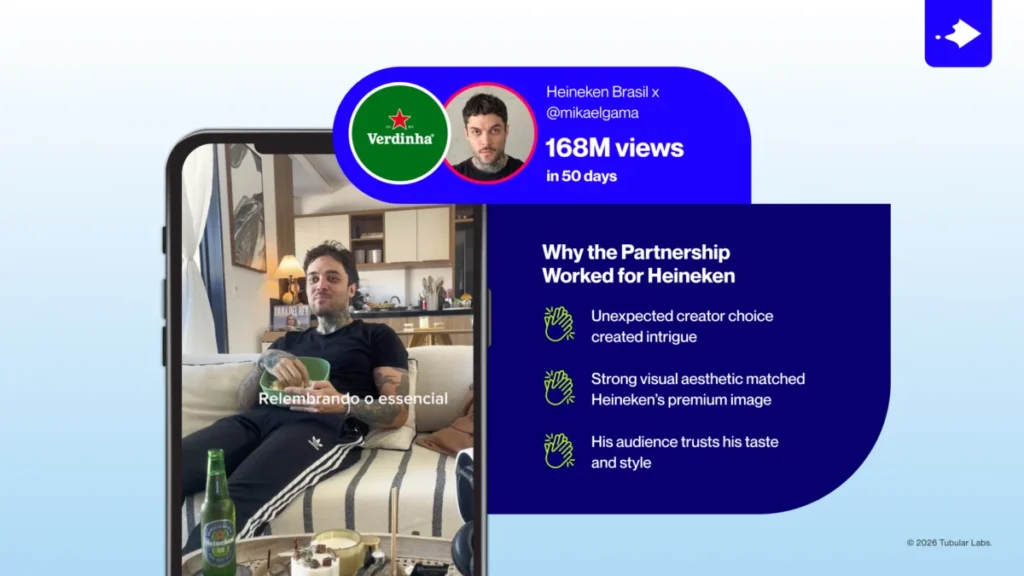
- Brazilian Beverage Partnerships: In 2025, Brazil ranked second globally in TikTok influencer views and engagement rates. Demonstrating the power of cultural fit over strict category alignment, Heineken partnered with a men’s fashion creator who had just 136,000 followers. Despite the relatively modest follower count, the campaign yielded 168 million views and 1 million engagements over 50 days, proving that cultural resonance beats literal product alignment every time.
Official Industry Responses and Expert Perspectives
As brands restructure their marketing playbooks around audience intelligence, industry leaders are weighing in on the paradigm shift.
"For too long, the industry has operated on the assumption that visibility equals viability," notes a lead analyst from the Tubular Labs research collective. "When you interrogate the data—whether you are looking at skincare, anime, or global beverage brands—you realize that visibility is merely a megaphone. Audience intelligence gives you the switchboard."
Agency executives emphasize that clients are increasingly demanding accountability that ties social media spend directly to conversion metrics.
"Clients are no longer asking us how many eyeballs we bought; they are asking us whose minds we changed," says Sarah Jenkins, Vice President of Strategic Growth at a top-tier digital media agency. "When we can walk into a board meeting and show that a creator with 150,000 followers shares a 30% audience overlap with our target buyers—and actively searches for our product category—the budget approval becomes a formality. Data removes the guesswork from creativity."
Regulatory experts in the pharmaceutical and healthcare spaces also point out that smarter audience identification helps brands remain compliant. By understanding precisely what information consumers are consuming across adjacent wellness spaces, brands can craft educational campaigns that answer real consumer questions rather than pushing disruptive, untargeted advertisements.
Implications: Building a Modern Influencer Strategy
The shift from reach-based metrics to audience intelligence carries profound strategic implications for marketing departments worldwide. Moving forward, CMOs must dismantle legacy campaign structures and adopt a more rigorous framework.
The New Framework for Influencer Success:
- Audit the Audience, Not Just the Creator: Stop evaluating influencers solely by their follower counts and past view averages. Utilize behavioral data platforms to examine who else the creator’s audience watches, what they search for, and what they buy.
- Leverage Asymmetrical Overlap: Look for niche authorities who feed into mainstream communities. As demonstrated in the dermatology space, secondary audience overlaps can provide a high-leverage bridge to broader consumer bases at a fraction of the cost of macro-influencers.
- Prioritize Cultural Alignment Over Category Fit: Do not restrict brand partnerships to creators who talk exclusively about your product category. As Heineken’s success in Brazil illustrates, aligning with a creator who embodies the cultural identity of your target demographic can unlock exponential engagement.
- Treat Reach as a Starting Point: Use raw impressions to identify potential partners, but reserve budget allocation for creators who demonstrate genuine search affinity and intent-driven audience behavior.
Conclusion
As digital landscapes become increasingly saturated, the organizations that succeed will be those that look beneath the surface of social media metrics. Reach is no longer a strategy; it is merely the entry ticket. By harnessing audience intelligence, modern brands can stop guessing where their consumers are and start investing with absolute confidence in the partnerships that drive real business outcomes.
To explore the complete dataset, methodological breakdowns, and cross-industry frameworks, marketers can access the full report, Redefining Influencer Value: How Audience Intelligence Transforms Reach into Revenue, via Tubular Labs’ research portal.
