
Beyond the Spreadsheet: How Python is Transforming the Modern Growth Marketer’s Toolkit
In the fast-paced world of digital growth, the line between marketing and data science is blurring. For years, the professional growth marketer has lived within the rigid confines of Excel spreadsheets, pivot tables, and manual data exports. However, as data sets grow exponentially in volume and complexity, these traditional tools are reaching their breaking point. Enter Python: a versatile, high-level programming language that is rapidly becoming the "secret weapon" for marketers aiming to automate processes, sharpen their analytical edge, and make data-driven decisions at scale.
The Shift Toward Programmable Marketing
Growth is fundamentally the intersection of data, analytics, and rapid experimentation. Traditionally, marketers have relied on intuitive hunches backed by fragmented reporting. Today, however, the ability to manipulate data, connect disparate systems, and execute complex experiments without manual intervention is what separates industry leaders from the rest of the pack.
Python provides the infrastructure for this evolution. Unlike proprietary software or drag-and-drop dashboards, Python is a general-purpose language. This means the scripts a marketer writes today to pull ad performance data can tomorrow be integrated into a larger, automated machine-learning pipeline. It is not merely a tool for reporting; it is a framework for operational efficiency.
Why Python Reigns Supreme in the Marketing Stack
While other languages exist, Python has emerged as the clear winner for marketing teams for several key reasons:
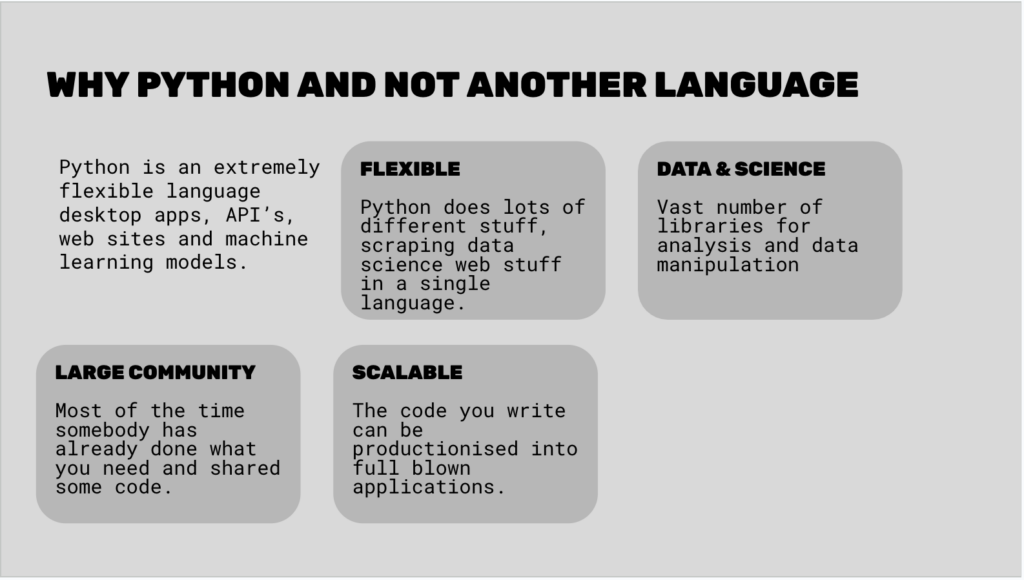
1. Unmatched Flexibility and Scalability
Python is the "Swiss Army Knife" of the digital world. Whether you are building a simple web scraper, automating email campaigns, or developing complex predictive models, Python can handle it. Crucially, the work is scalable. A script that functions on a laptop today can be deployed to a cloud environment (like AWS or Google Cloud) tomorrow to handle millions of data points without needing a total rewrite.
2. A Thriving Ecosystem of Support
One of Python’s greatest assets is its massive global community. If a marketer encounters a hurdle—such as connecting a specific API or performing a complex regression analysis—it is almost certain that another developer has solved that exact problem before. This repository of shared knowledge, combined with extensive documentation, drastically lowers the barrier to entry for non-programmers.
3. Bridging the Gap with Data Science Teams
In many organizations, marketing and data science teams operate in silos. By adopting Python, marketers speak the same "language" as their data science counterparts. This facilitates seamless collaboration, allowing marketers to leverage the models and insights created by data scientists without the friction of platform incompatibility.
The Core Competencies: What Marketers Can Achieve
Alistair Allan, a prominent voice in the growth space, emphasizes that Python is the bridge between human decision-making and automated execution. "Growth is that crossover of data, analytics, and testing," Allan notes. "You can do all of that stuff manually, or you can try and figure out how to automate it, how to make decisions without having a human in the loop. Python is a way to save time, it’s a way to connect the dots between disparate systems, it’s a way to get out of Excel spreadsheets and huge formulas."
Automation and API Integration
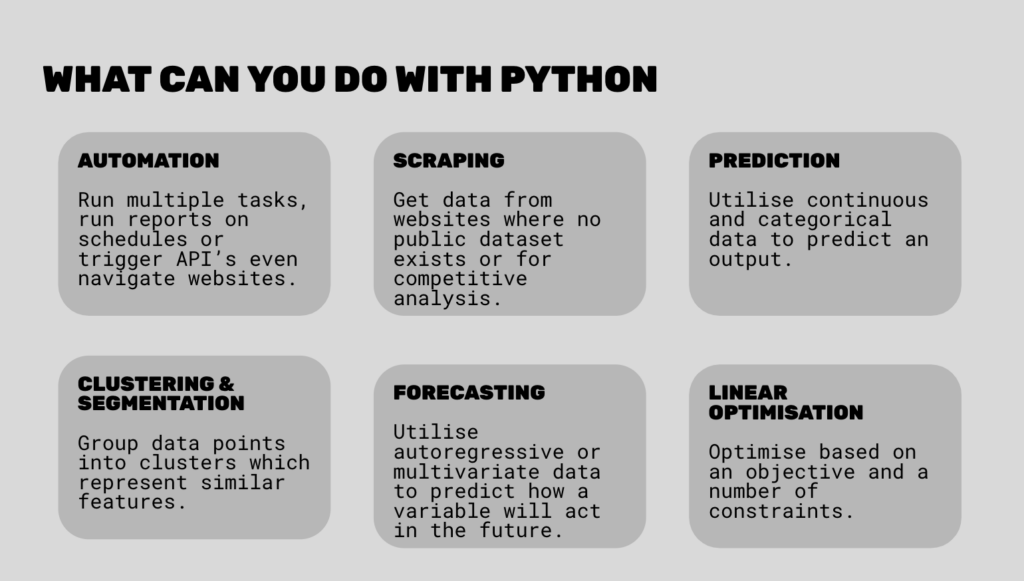
The primary bottleneck for many marketers is data retrieval. Python allows for the seamless use of APIs to pull data from Google Analytics, Facebook Ads, Google Search Trends, and CRM platforms into a centralized repository. Beyond just gathering data, Python can "push" instructions back to these platforms—automatically toggling ad campaigns on or off based on real-time performance or adjusting bidding strategies to maximize ROAS (Return on Ad Spend).
Advanced Web Scraping
Competitor analysis is no longer limited to what you can see on a front-end website. With Python, marketers can build scrapers that monitor competitor pricing, content updates, and keyword strategies in real-time. This provides a continuous feed of intelligence that can inform strategy adjustments before a competitor even realizes they are being tracked.
Predictive Modeling and Forecasting
Using libraries like Prophet (developed by Meta), marketers can move beyond simple historical reporting. By training models on historical sales and lead data, growth teams can forecast future performance, identify seasonal trends, and predict potential churn. This allows for proactive rather than reactive budget allocation.
Clustering and Segmentation
The "one-size-fits-all" approach to marketing is obsolete. Python’s clustering algorithms enable marketers to process thousands of customer data points—demographics, purchase history, and behavioral interactions—to identify high-value segments. By targeting these specific cohorts with tailored messaging, marketers can significantly increase conversion rates and reduce wasted ad spend.
Linear Optimization and Budget Allocation
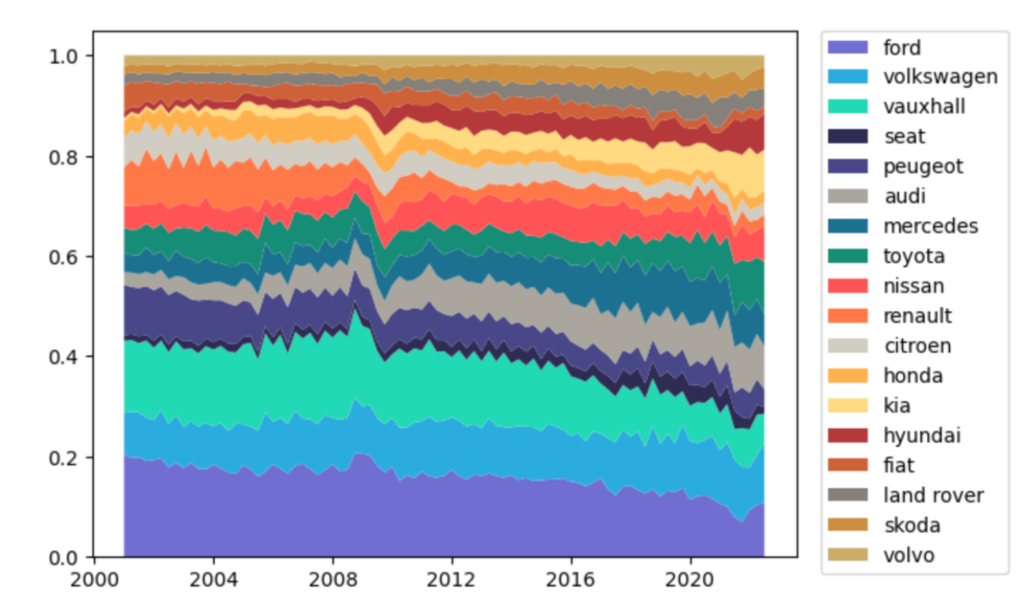
Perhaps the most sophisticated application of Python is linear optimization. Instead of guessing how to distribute a budget across multiple channels, marketers can define their objectives (e.g., maximize leads) and constraints (e.g., max CPA, budget caps). Python algorithms then mathematically determine the optimal distribution of funds, ensuring every dollar is allocated to the most efficient channel.
Getting Started: A Low-Barrier Path to Coding
For the uninitiated, the prospect of learning to code can be daunting. Fortunately, the barrier to entry has never been lower, thanks to modern tools that allow marketers to experiment without the headache of software installation.
Google Colab: The Browser-Based Sandbox
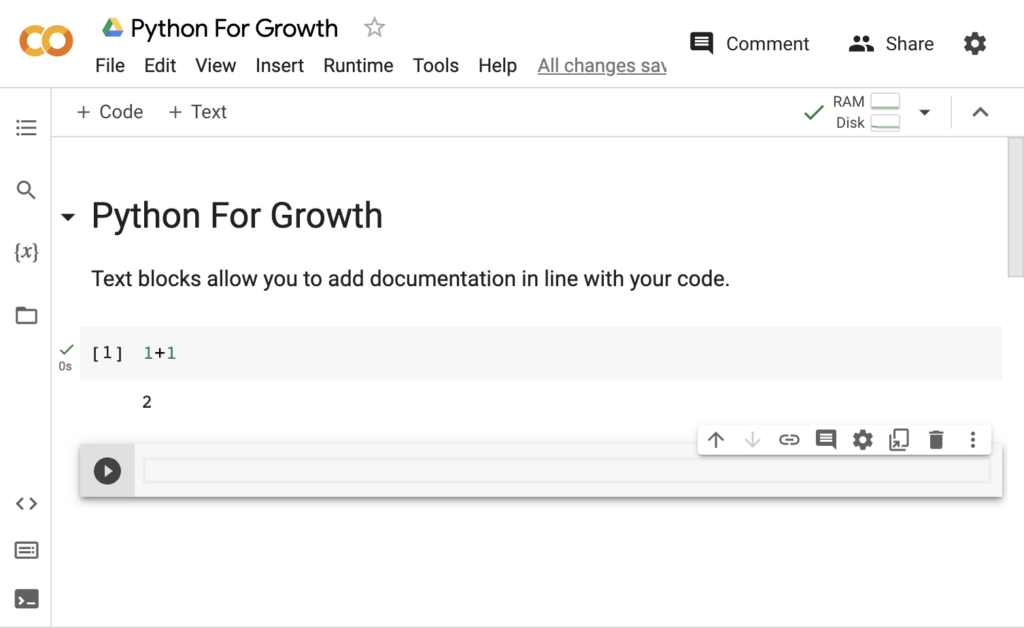
Google Colab is perhaps the most vital tool for the aspiring "Growth Coder." It functions like a Google Doc but for Python code. Users can combine text, images, and executable code blocks in a single document. Because it runs in the cloud, there is no need to install local environments or worry about version control.
Leveraging AI Assistance
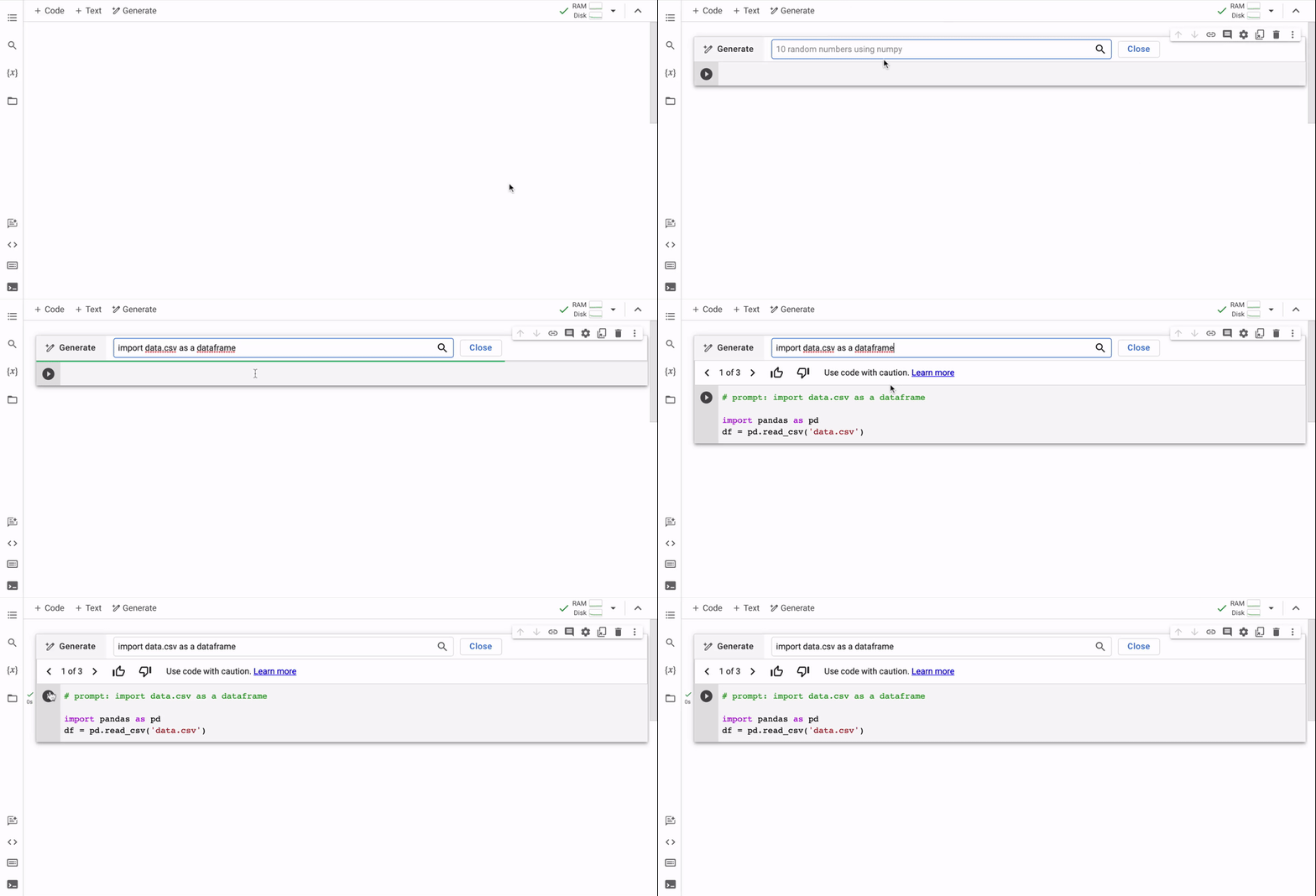
The rise of Large Language Models (LLMs) has changed the game. Tools like the AI coding features in Google Colab allow marketers to generate code snippets using natural language prompts. If you need to "create a bar chart comparing ad spend across three platforms," the AI can write the necessary Python code, significantly shortening the learning curve.
Visual Python and Mito
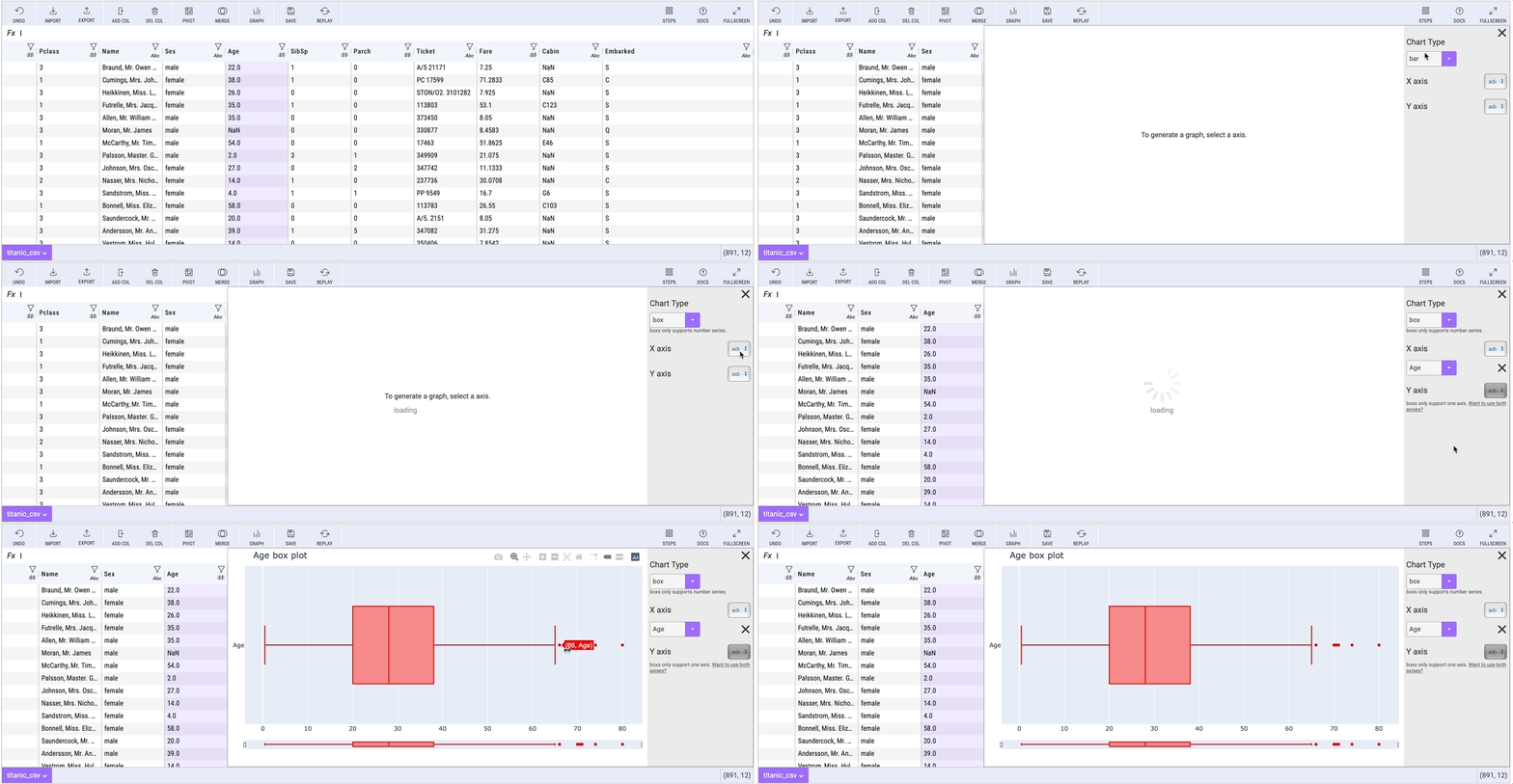
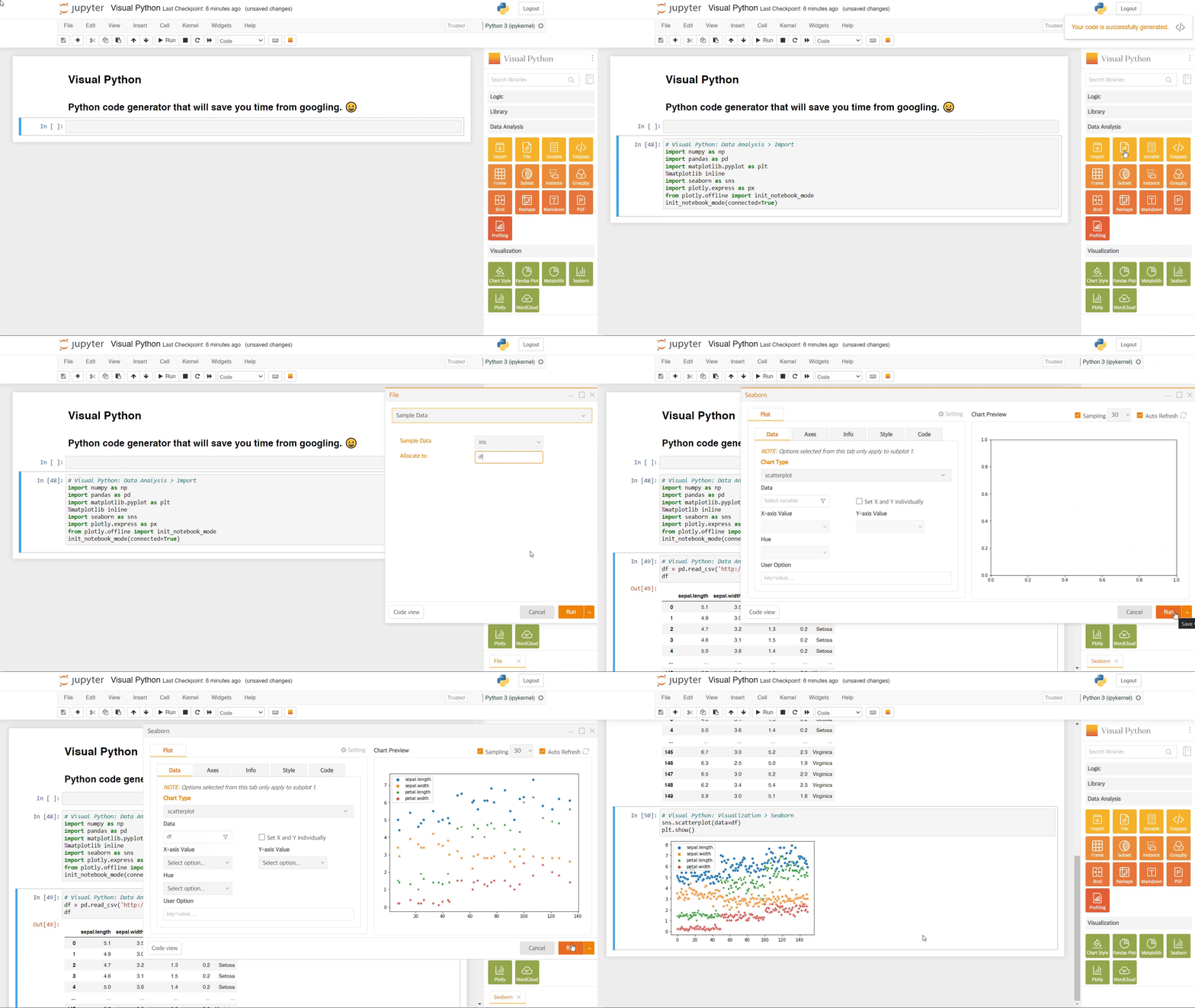
For those who prefer a more visual interface, tools like Visual Python (a Google Colab extension) allow users to drag and drop code blocks, helping them learn syntax by example. Similarly, Mito provides an interface similar to a spreadsheet (like Excel) but acts as a wrapper for Python code. As the user performs transformations on the data within the spreadsheet-like interface, Mito generates the underlying Python code, allowing the user to learn the syntax as they work.
Implications: The Future of Growth
The shift toward Python-enabled marketing has profound implications for the industry. First, it marks the end of the "spreadsheet-only" era. Growth marketers who fail to pick up basic coding skills will find themselves increasingly at a disadvantage, unable to match the speed and analytical depth of their competitors.
Second, the role of the marketing agency is changing. Clients now expect more than just campaign management; they expect proprietary data infrastructure and sophisticated, automated optimization. Agencies that can build custom automation tools for their clients will command higher value than those that simply manage ad accounts.
Finally, the democratization of data science means that the "growth hacker" of tomorrow is not necessarily a software engineer, but a marketer who knows how to ask the right questions and use Python to find the answers.
Conclusion
Python is not just a programming language; it is a mindset. It is the realization that if a task is repetitive, it should be automated. If data is hidden in a silo, it should be connected. And if a decision is based on a hunch, it should be validated through a model.
For the modern growth marketer, the journey with Python begins not with a computer science degree, but with a single, small script. Whether it is automating a weekly report or building a basic forecasting model, the ability to write code is the key to unlocking a new level of efficiency, precision, and growth in an increasingly competitive digital landscape. The tools are available, the community is supportive, and the data is waiting. The only question left is: are you ready to stop calculating and start coding?
