
Beyond the Silo: Why Data-Driven Insights are Redefining the Future of Brand Partnerships
For decades, the playbook for brand partnerships was defined by proximity. A sneaker brand partnered with an athlete; a kitchenware brand aligned with a celebrity chef; a beauty company sponsored a fashion show. It was a strategy built on the assumption of “linear interests”—the belief that consumers live in neat, predictable silos.
However, the digital landscape has undergone a radical transformation. Today’s consumers are not static archetypes; they are multidimensional, multifaceted individuals whose digital footprints reveal a complex tapestry of passions that rarely adhere to traditional marketing categorizations. For modern marketers, the question is no longer just "who is my customer?" but rather, "what else is my customer watching, and how can we meet them there?"
The answer lies in social video intelligence. By moving beyond vanity metrics—likes, views, and surface-level engagement—brands are now leveraging granular audience data to identify "unexpected" partnerships that drive record-breaking ROI.
The Death of Traditional Targeting
Traditional audience targeting is, for all intents and purposes, a relic of the past. It assumes that a beauty enthusiast has no interest in gaming, or that a motorsports fan exists in a vacuum separate from lifestyle content. This rigid view of consumer behavior creates "echo chamber" marketing, where brands compete for the same narrow audience segments, driving up acquisition costs while hitting a ceiling on reach.
Social video analytics have shattered these illusions. By analyzing cross-category viewership data, platforms like Tubular Labs have mapped the hidden connections between seemingly disparate industries. When brands analyze what their core audience watches outside of their primary interest area, they unlock a goldmine of white-space opportunities.

Chronology of a Paradigm Shift: When Beauty Met the Track
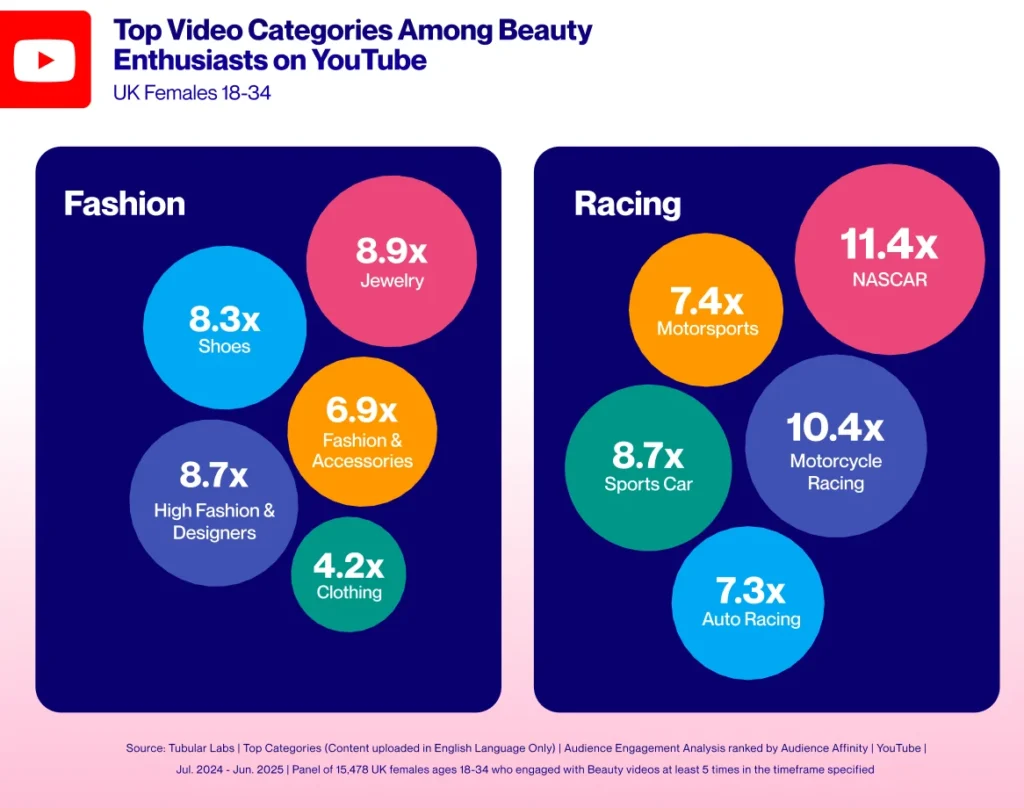
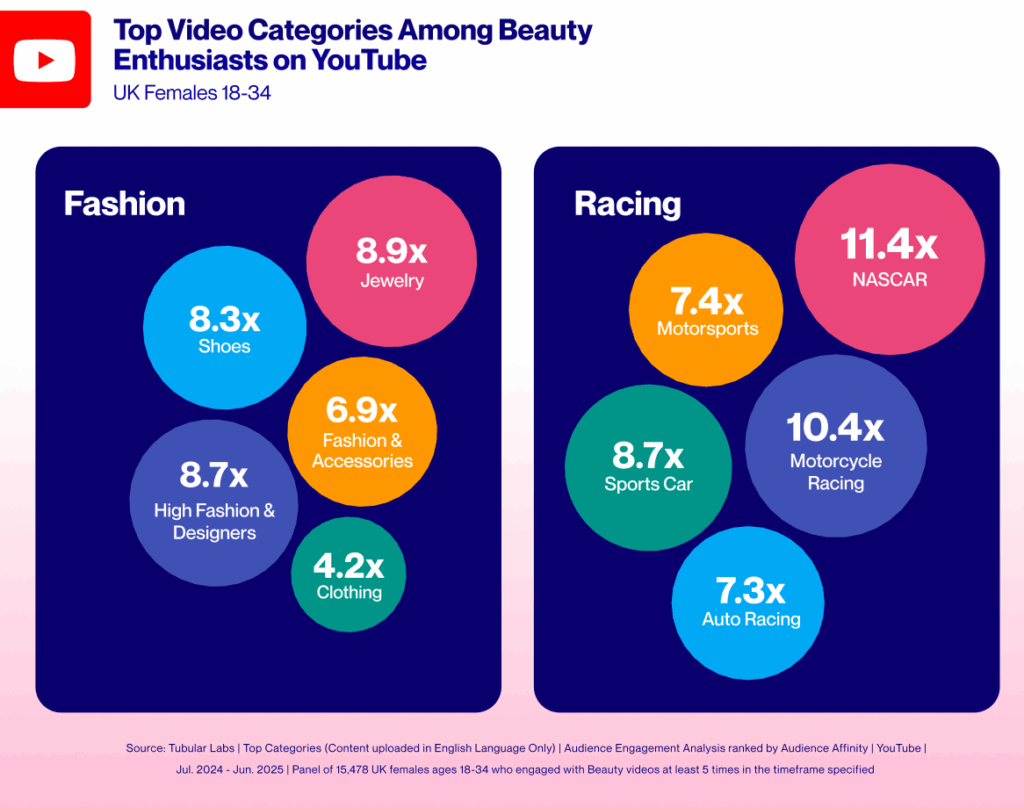
One of the most profound examples of this data-driven evolution occurred when the beauty industry identified a surprising correlation with the high-octane world of motorsports.
In a study of UK-based female Beauty viewers, data revealed a startling statistic: these viewers were 11.4 times more likely to consume Motorsports content than the average viewer. This was not a fluke; it was a behavioral pattern that indicated a significant, untapped crossover segment.
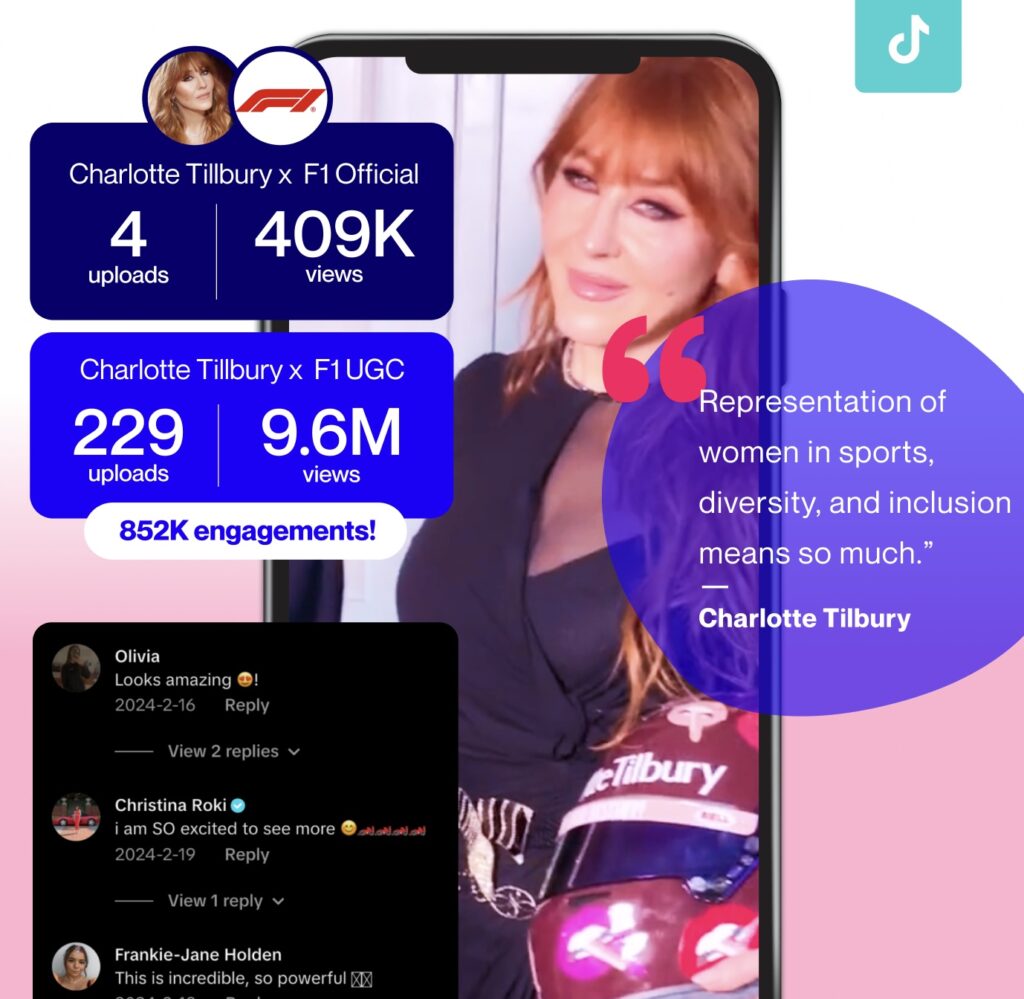
Recognizing this, Charlotte Tilbury made a historic move, becoming the first beauty brand to partner with the Formula 1 Academy. The campaign was not merely a branding exercise; it was a strategic alignment based on empirical evidence. By meeting their audience in a space where they were already highly engaged—yet historically ignored by beauty advertisers—Charlotte Tilbury achieved:
- Massive Brand Awareness: Breaking out of the "beauty bubble" to reach a global sports audience.
- High-Value Conversion: Leveraging the prestige and adrenaline of F1 to elevate brand equity.
- Cultural Relevance: Positioning the brand as a pioneer in gender-inclusive marketing within sports.
Gaming and Glamour: The Arcane Revolution
If the Charlotte Tilbury/F1 partnership was a revelation in sports, the collaboration between Riot Games and Fenty Beauty was a masterclass in modern digital engagement.
For years, the gaming industry struggled to shake the antiquated notion that it was a male-dominated space. However, social video intelligence provided the counter-narrative: female gamers are a massive, underserved, and highly influential demographic. Tubular’s analytics pinpointed a strong affinity between this cohort and major beauty houses like YSL, NYX, and L’Oréal.
When Riot Games launched a limited-edition makeup collection inspired by their hit series Arcane in partnership with Fenty Beauty, the results were viral. By bridging the gap between digital fandom and physical beauty products, the collaboration achieved:
- Participation Over Consumption: Fans weren’t just watching the game; they were physically interacting with the lore through makeup, turning a passive viewing experience into an active lifestyle statement.
- Cross-Pollination of Communities: The campaign effectively funneled beauty enthusiasts into the gaming ecosystem and vice versa.
- Viral Velocity: The social sentiment surrounding the collaboration set a new benchmark for how intellectual property (IP) can be monetized through unexpected retail partnerships.
Supporting Data: The Anatomy of Success
The success of these campaigns is not coincidental. It is the result of rigorous data interrogation. When we look at the mechanics of these partnerships, three common threads emerge:
- Audience Overlap (The ‘Why’): The data identifies where the target demographic spends their "hidden" time. If an audience has a 10x higher propensity to watch a specific, non-obvious content category, that is a green light for a partnership.
- Cultural Synchronicity (The ‘How’): It is not enough to just show up; the brand must add value to the secondary category. Whether it’s through product integration or sponsored content, the partnership must feel additive, not disruptive.
- Measurable Impact (The ‘What’): Unlike traditional celebrity endorsements, which are often difficult to track, these digital-first partnerships allow for real-time tracking of engagement, sentiment shifts, and direct attribution.
Official Perspectives: The Marketer’s Framework
Industry experts emphasize that the era of "gut-feeling" marketing is ending. To succeed in this landscape, brands must adopt a structured, analytical framework for partnership development.
A Step-by-Step Guide to Identifying High-Value Partnerships:
- Map Your Audience DNA: Utilize social video intelligence to look beyond your primary category. Where else does your audience spend their time? What are the "adjacent" interests that are currently underserved?
- Evaluate Cultural Alignment: Once a potential partner category is identified, assess the cultural compatibility. Will a partnership with this sector enhance your brand’s prestige, or is there a risk of brand dilution?
- Test and Learn with Content: Before committing to a massive sponsorship, test the waters with collaborative content. Use social video analytics to monitor how your audience reacts to the initial crossover material.
- Incentivize Participation: The most successful partnerships are those that encourage the audience to act. Whether it’s a challenge, a limited-edition drop, or a co-created series, provide the consumer with a way to participate in the partnership.
- Scale Based on Real-Time Data: Once a partnership proves its worth, use the engagement metrics to refine the strategy for the next phase of the campaign.
Implications for the Future
The implications for brands are clear: the future of marketing is not about owning a category; it’s about navigating the intersections between them.
As the digital landscape becomes increasingly crowded, the cost of competing for attention in "obvious" spaces will continue to rise. Brands that embrace the power of cross-category intelligence will find themselves at a distinct advantage. They will not only reach their customers more efficiently but will also define the cultural conversations of tomorrow by showing up where their audiences least expect—but most desire—them to be.
A Bonus Case Study: Food and Nostalgia
The power of these insights extends beyond beauty and gaming. Consider the recent rise of "nostalgic entertainment" in the food and beverage sector. By analyzing data on which pop culture franchises evoke the strongest emotional responses among food-conscious viewers, brands have successfully launched cookware and recipe collaborations that tap into deep-seated consumer memories. These campaigns aren’t just selling products; they are selling an experience, driving millions of engagements by simply recognizing that the modern foodie is also an entertainment enthusiast.
Conclusion: The Path Forward
In the final analysis, data is the key to unlocking creativity. By using social video intelligence to remove the guesswork, marketers can move with confidence, forging bold partnerships that capture the imagination of a fragmented, distracted, and highly sophisticated audience.
The question remains: Are you ready to see where your audience is truly spending their time?
To discover the unexpected partnership opportunities waiting for your brand, request a demo with Tubular Labs today.
