
Beyond the Silo: How Social Video Intelligence is Revolutionizing Cross-Category Brand Partnerships
In the modern marketing landscape, the question that keeps CMOs awake at night is rarely about how to buy media, but rather who to align with. For years, the playbook for brand collaborations and influencer partnerships has relied on safe, predictable equations: fashion brands partner with models, tech companies align with gadget reviewers, and fitness apparel brands sponsor marathon runners.
However, a paradigm shift is underway. Driven by advanced audience data and social video intelligence, forward-thinking brands are abandoning traditional marketing silos. They are discovering that today’s consumers do not fit into rigid demographic boxes. A makeup enthusiast is just as likely to be an avid gamer or a motorsports fanatic, and a dedicated esports fan may hold a deep, active interest in luxury cosmetics.
According to groundbreaking research from Tubular Labs on cross-category partnerships, the key to unlocking viral success and building unprecedented brand affinity no longer lies in surface-level metrics like basic view counts or raw engagement rates. Instead, it relies on deep behavioral analytics that reveal hidden consumer crossovers. By examining how audiences interact with content across seemingly unrelated industries, brands are engineering unexpected, high-impact collaborations that shatter industry norms and capture lightning in a bottle.
Main Facts: The Death of Traditional Demographic Silos
At the core of this marketing evolution is a fundamental truth: audiences are multidimensional. Traditional audience targeting operates on the assumption of mutual exclusivity—that beauty lovers care exclusively about cosmetics, gamers care only about consoles, and food enthusiasts restrict their digital consumption to culinary recipes.
Social video analytics completely dismantle this outdated premise. By tracking viewing habits across entire digital ecosystems, analytics platforms can map out what secondary and tertiary content distinct audience segments consume.
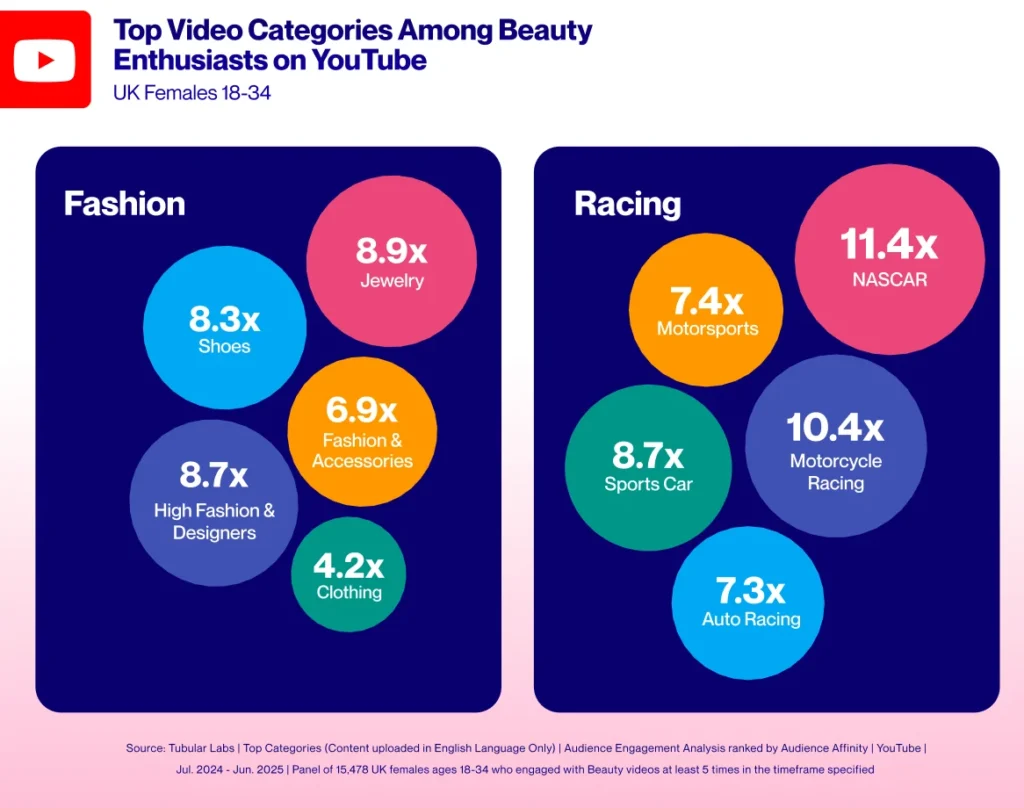
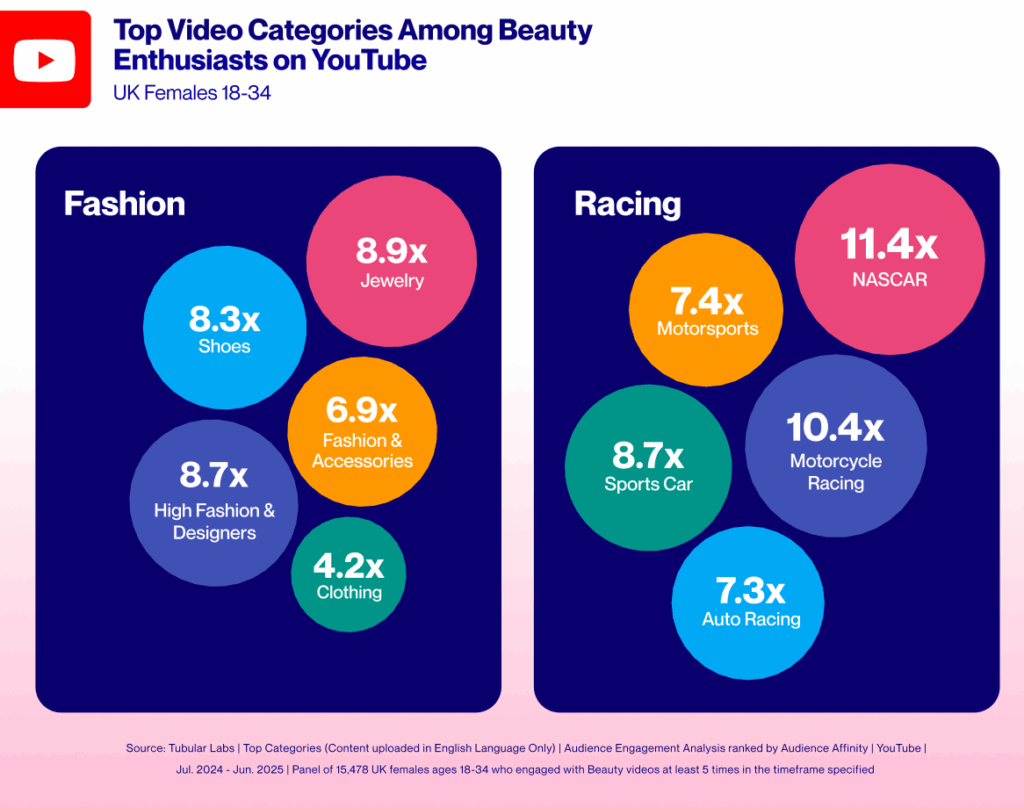
The implications are profound. When Tubular Labs researchers analyzed the media consumption habits of UK-based YouTube beauty viewers, they discovered an expected, high-density overlap with fashion and jewelry content. But buried deeper within the data was a startling, non-obvious intersection: a massive affinity for racing and motorsports.
This singular data point—uncoverable only through granular social video intelligence—proved that the intersection of high glamour and high-speed octane sports was not a mismatch, but an untapped goldmine waiting for the right visionary brand to bridge the gap.
Chronology: How Cross-Category Collaboration Went Mainstream
The journey toward modern cross-category partnerships did not happen overnight. It is the result of a multi-year maturation in how brands interpret social data, moving from gut-feeling sponsorships to rigorous, data-backed integrations.

Phase 1: The Era of Surface-Level Metrics (Early 2010s–Late 2010s)
For over a decade, influencer marketing and brand collaborations were dictated by follower counts and category proximity. If a beauty brand wanted to launch a product, they sent PR packages exclusively to beauty vloggers. If a gaming company promoted a title, they partnered strictly with Let’s Play streamers. While this approach lowered initial planning friction, it quickly led to audience fatigue and diminishing returns as feeds became saturated with identical, predictable endorsements.
Phase 2: The Rise of Behavioral Analytics (2020–2023)
As social video consumption exploded globally—dominated by YouTube, TikTok, and Instagram Reels—marketers gained access to massive troves of behavioral data. Brands began realizing that consumers’ digital footprints spanned multiple content verticals. Companies started experimenting with loose cross-promotions, though many relied on trial and error rather than predictive intelligence.
Phase 3: The Data-Driven Revolution (2024–Present)
Today, platforms equipped with advanced social video intelligence allow brands to proactively mine data for cross-category opportunities before spending a dime on production. Rather than guessing which partnerships might work, marketers can now calculate precise audience overlap indexes. As demonstrated by recent high-profile campaigns from Charlotte Tilbury and Riot Games, modern cross-category collaborations are meticulously planned, data-verified, and executed with blockbuster scale.
Supporting Data & Case Studies: When Worlds Collide
To understand the tangible power of social video intelligence, one needs to examine the real-world campaigns that have successfully broken the mold. The numbers speak for themselves, proving that bold, data-backed pairings yield extraordinary returns.
Case Study 1: Beauty Meets Motorsports — Charlotte Tilbury x Formula 1 Academy
At first glance, the luxury cosmetics world and professional motorsports appear to occupy entirely different universes. Yet, Tubular Labs’ data revealed that female beauty viewers in the UK are 11.4x more likely to watch motorsports content than the average digital consumer.
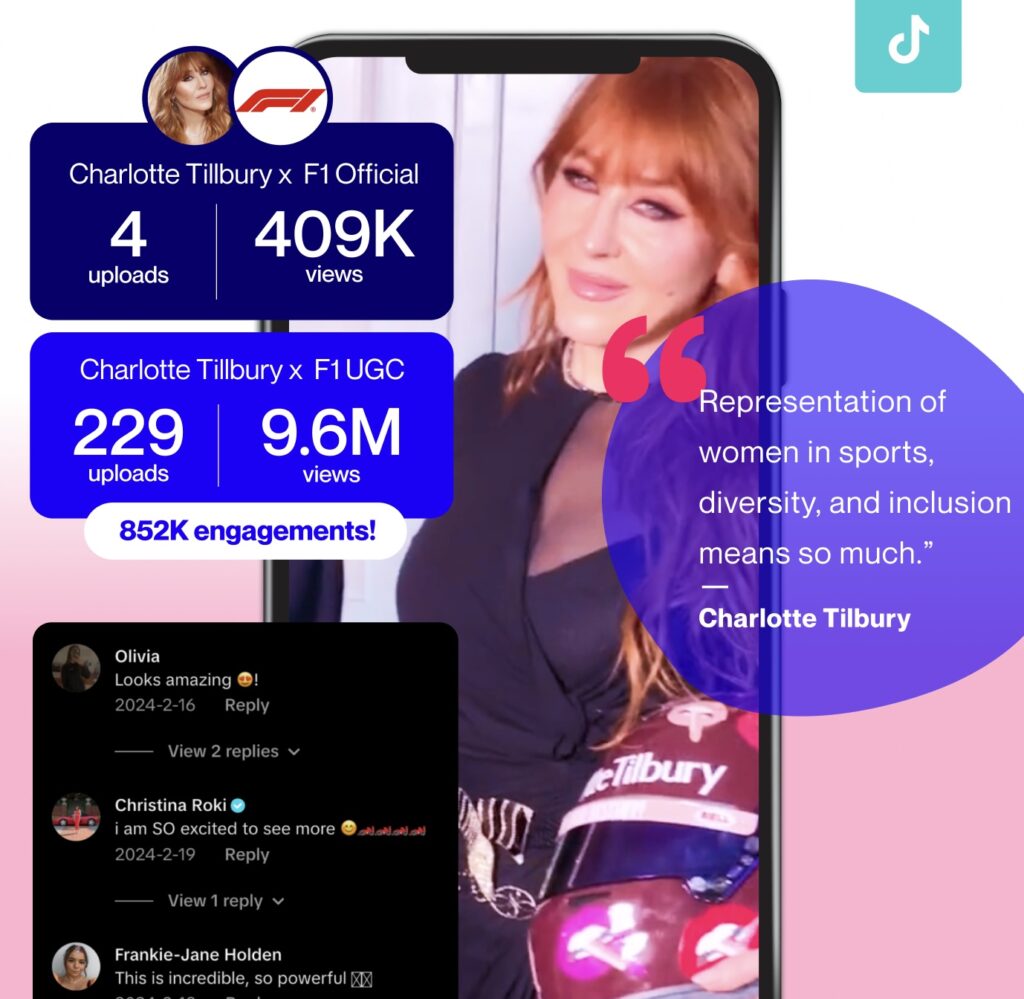
Armed with this powerful insight, luxury cosmetic giant Charlotte Tilbury made history by becoming the first major beauty brand to partner with the Formula 1 Academy. The collaboration was designed to champion women in a traditionally male-dominated sport while introducing high-performance cosmetics to an audience hungry for representation and empowerment.
The resulting campaign did not merely make headlines; it achieved runaway financial and digital success:
- Massive Digital Reach: Generated millions of cross-platform impressions that transcended traditional beauty verticals.
- Brand Equity Elevation: Positioned Charlotte Tilbury as a progressive, culturally relevant pioneer willing to break traditional corporate boundaries.
- Audience Expansion: Successfully captured a demographic segment previously untouched by traditional beauty advertising budgets.
Case Study 2: Gaming Meets Glamour — Riot Games x Fenty Beauty
The intersection of gaming and lifestyle has historically been plagued by under-representation, particularly regarding female gamers. However, advanced analytics paint a different picture: female gamers represent a massive, highly engaged demographic with strong consumer affinities for major beauty powerhouses like YSL, NYX, and L’Oréal.
Recognizing this hidden alignment, gaming juggernaut Riot Games partnered with Rihanna’s Fenty Beauty to create a limited-edition makeup collection inspired by the critically acclaimed animated series Arcane.
The collaboration went viral across social video channels, proving that modern consumers want to live inside the universes of the stories they love:
- Interactive Engagement: Instead of passive consumption, fans were invited to physically wear and embody the aesthetics of their favorite gaming universe.
- Viral Amplification: Generated explosive organic conversation across TikTok and YouTube, with beauty and gaming influencers alike unboxing and reviewing the collection.
- Community Loyalty: Deepened the emotional connection between the gaming franchise and its player base by validating their multifaceted lifestyle interests.
Case Study 3: Food Meets Nostalgic Entertainment
Beyond beauty and gaming, cross-category experimentation has taken over the culinary world. By pairing premium cookware with pop-culture entertainment nostalgia, brands have discovered recipes for viral dominance. Recent market data highlights how leveraging a beloved entertainment franchise within cookware marketing can drive millions of unexpected views and engagements, proving that emotional nostalgia is a universal currency that transcends utility-based product categories.
Official Responses and Industry Perspectives
Marketing leaders and data scientists are increasingly vocal about the necessity of moving past traditional demographic targeting.
"When brands rely solely on surface-level metrics like basic engagement or follower counts, they trap themselves in an echo chamber," notes digital marketing strategist Elena Vance. "Social video intelligence allows us to look past what a consumer is watching today and understand the intricate web of their secondary passions. That is where true brand innovation lives."
Industry analysts point out that as consumer acquisition costs rise across digital channels, brands can no longer afford to fish in crowded ponds.
"The era of spraying and praying with generic influencer partnerships is over," states brand partnership director Marcus Chen. "When you use data to find organic whitespace between two entirely different industries—like cosmetics and motorsport, or gaming and luxury fashion—you aren’t just buying ad space. You are creating a cultural moment that audiences actually want to engage with."
Implications for the Future of Marketing
The shift toward data-driven cross-category partnerships carries profound implications for brands, agencies, and creators alike.
1. The Redefinition of Competitor Analysis
Brands must expand their definition of competitors and collaborators. Your next great marketing partner may not be a company within your own vertical, but a brand operating in an entirely different sector whose audience shares your underlying psychological profile.
2. The Rise of Experiential and Interactive Campaigns
As the Fenty Beauty x Riot Games collaboration demonstrated, modern audiences demand participation over passive observation. Cross-category partnerships thrive when they invite consumers to engage with a brand narrative in unexpected, tactile ways—whether through limited-edition physical products, co-branded digital experiences, or integrated content campaigns.
3. Investment in Advanced Social Video Intelligence
To capitalize on these trends, marketing departments must shift their technology stacks toward sophisticated video intelligence platforms. Relying on intuition or historical convention is no longer viable in an environment where audience preferences shift at the speed of a viral video.
Conclusion: How to Identify Your Brand’s Next Big Partnership
For marketers looking to replicate these success stories, the path forward requires a structured, data-led framework rather than speculative brainstorming:
- Audit Your Audience’s True Digital Footprint: Use social video analytics to map out the secondary and tertiary content categories your existing consumers engage with outside of your core product vertical.
- Identify Unexpected Overlaps: Look for statistical anomalies—such as an audience index that is significantly higher than average in an unexpected industry (e.g., beauty lovers watching motorsports).
- Bridge the Narrative Gap: Find the common emotional or cultural thread that connects both worlds. Whether it is empowerment, speed, artistry, or nostalgia, the partnership must feel authentic to the consumer.
- Co-Create, Don’t Just Co-Branding: Design campaigns that invite active participation from both communities, turning viewers into active participants and brand advocates.
With the right social video intelligence, marketers no longer have to navigate the partnership landscape in the dark. By letting hard data illuminate the paths where unexpected collaborations naturally thrive, brands can confidently invest in partnerships that not only expand their reach, but redefine their cultural relevance for years to come.
Ready to discover unexpected, high-impact partnership opportunities for your brand? Request a demo with Tubular Labs today.
