
Beyond the Silo: How Data-Driven Intelligence is Redefining Brand Partnerships
In the high-stakes world of modern marketing, the question "How do I identify the best partnership to reach our brand goals?" has historically been answered with guesswork, gut instinct, and shallow demographic targeting. For years, brands have operated within rigid silos: beauty brands marketed to makeup enthusiasts, gaming companies targeted console owners, and food brands focused exclusively on those interested in culinary content.
However, a new paradigm is emerging. Driven by advanced social video intelligence, leading marketers are beginning to realize that the most potent growth opportunities often lie in the "white space" between categories. By analyzing cross-platform audience behaviors, brands are discovering that their target consumers are far more multidimensional than traditional research models ever suggested.
The Fall of Traditional Targeting
Traditional audience targeting is, for all intents and purposes, a relic of a bygone era. It relies on the assumption that consumer interests exist in neatly compartmentalized boxes. In this outdated model, if a consumer watches a tutorial on contouring, they are classified solely as a "Beauty Lover." If they spend time watching eSports, they are a "Gamer."
But reality is far more fluid. A beauty enthusiast might also be an avid follower of Formula 1; a gamer might be deeply invested in high-fashion trends. When brands ignore these overlaps, they leave massive amounts of engagement and ROI on the table. Tubular Labs’ latest research into cross-category partnerships highlights that social video analytics can now map these "hidden" affinities, allowing brands to find collaborators in sectors they would never have considered otherwise.
Chronology of a Data-Driven Shift
The shift toward cross-category collaboration did not happen overnight; it was a gradual evolution fueled by the explosion of social video consumption.
- Early 2020s: Brands began experimenting with influencer marketing as a standalone channel, focusing on surface-level metrics such as view counts and "likes."
- 2023: The saturation of traditional influencer marketing led to a decline in engagement rates. Brands started looking for ways to differentiate their messaging.
- 2024: Advanced social video intelligence tools became widely available, allowing marketers to map "audience overlap" across disparate interest categories.
- Late 2024–2025: High-profile campaigns—most notably those involving Charlotte Tilbury and Riot Games—demonstrated that when data drives the partnership, the cultural impact is amplified, leading to industry-wide shifts in strategy.
Case Study I: The High-Octane Beauty Revolution
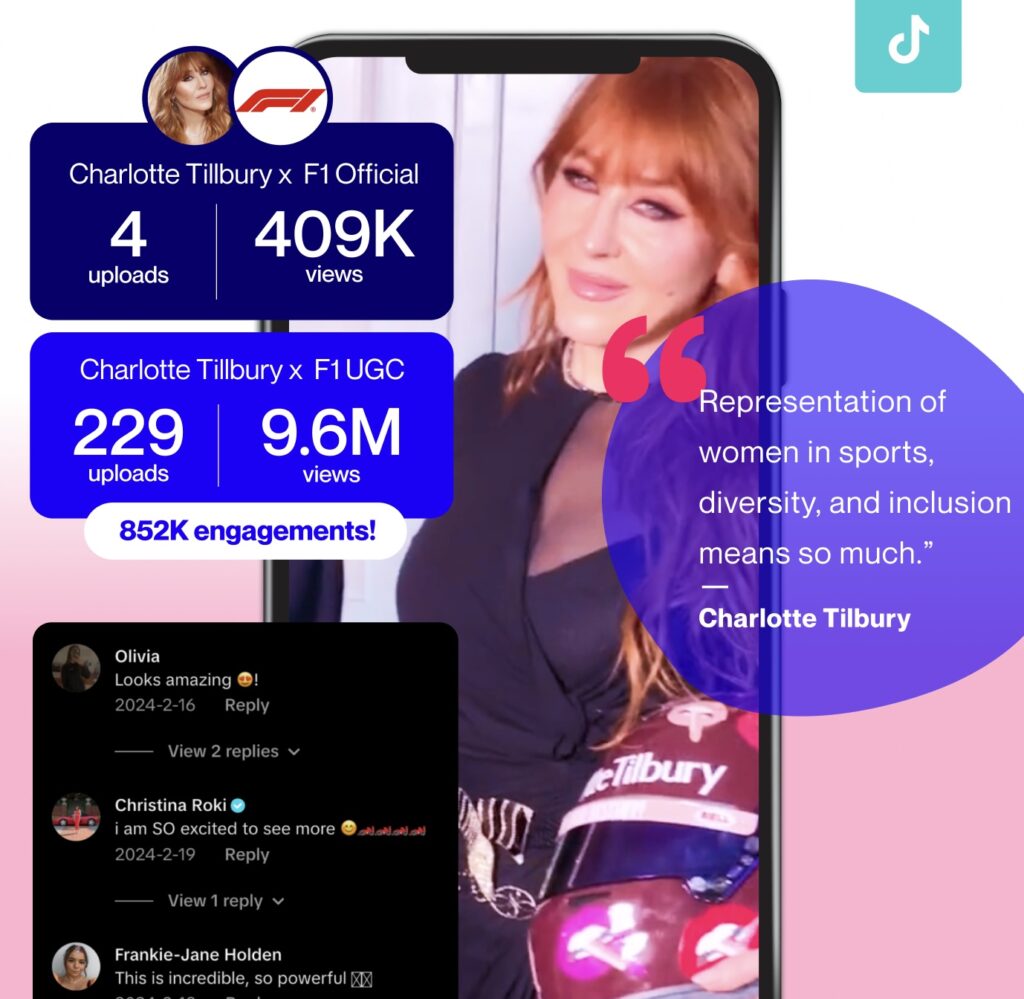
One of the most compelling examples of this data-driven shift is the partnership between Charlotte Tilbury and the Formula 1 Academy.

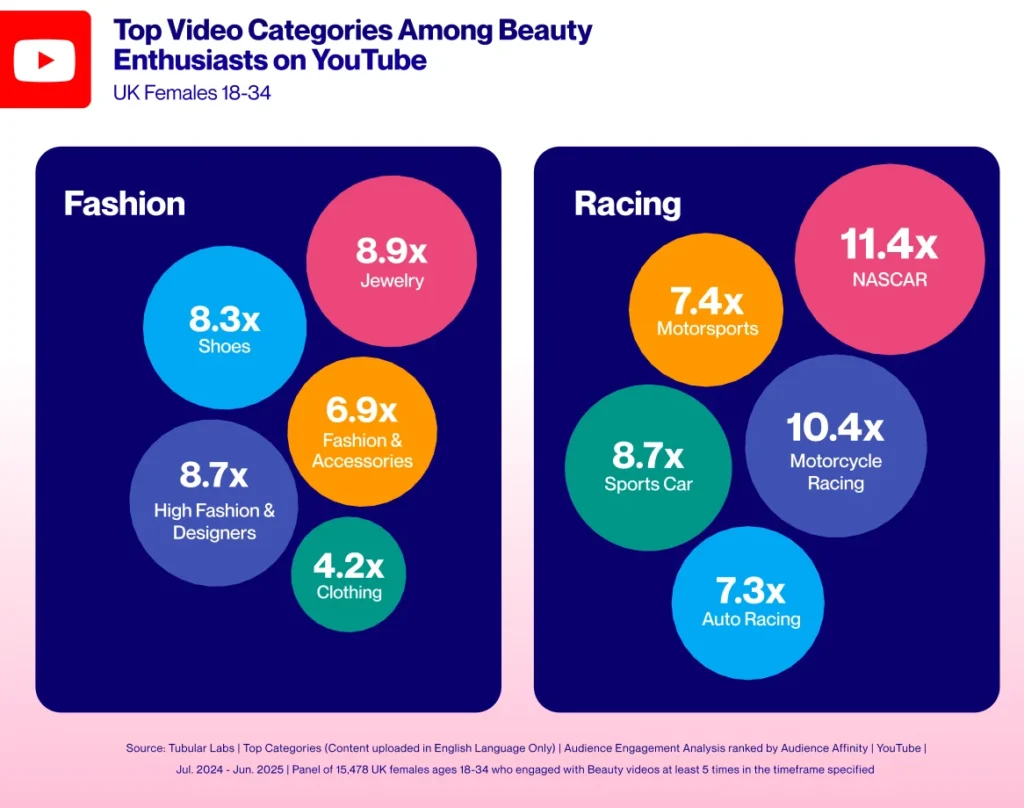
At first glance, the luxury cosmetics industry and the world of high-speed motorsports appear to be fundamentally incompatible. However, Tubular’s data analytics revealed a startling truth: UK female beauty viewers were 11.4 times more likely to consume motorsports content than the average viewer.
This insight was not just a curiosity; it was a business catalyst. Charlotte Tilbury became the first beauty brand to partner with the F1 Academy, effectively bridging the gap between glamour and the racetrack. The campaign didn’t just generate millions of views; it successfully shifted brand perception, positioning Charlotte Tilbury as a brand for high-achievers and modern, multifaceted women.
By following the data, the brand reached an audience segment that was previously ignored by their competitors, turning a "surprising" collaboration into a benchmark for modern marketing effectiveness.
Case Study II: Gaming Meets Glamour
The gaming industry has long been a male-dominated marketing space, yet the reality of the player base is vastly different. Analytics showed a strong, untapped affinity between female gamers and major beauty brands like YSL, NYX, and L’Oréal.
Riot Games, the developer behind the global sensation Arcane, acted on this data. By partnering with Fenty Beauty for a limited-edition makeup collection inspired by the series, they tapped into the intersection of digital fantasy and physical beauty. The result was a viral explosion that resonated across social media, proving that gamers are not just interested in hardware and software—they are deeply engaged in lifestyle and self-expression.
The key takeaway here is fundamental: modern partnerships thrive when they invite the audience to participate in a shared experience rather than merely consuming a static advertisement.
Supporting Data and Strategic Implications
The implications of these findings are profound for marketing budgets. According to current research, brands that utilize cross-category insights experience significantly higher "share of voice" in competitive markets.
The Data Advantage:
- Audience Mapping: Brands can now visualize the "interest graph" of their target demographic, identifying secondary and tertiary interests that were previously invisible.
- Reduced CAC (Customer Acquisition Cost): By identifying natural affinities, brands can place their products in environments where the audience is already primed to receive their messaging, rather than fighting for attention in crowded, traditional spaces.
- Authenticity: Data-driven partnerships feel organic to the consumer. When a brand enters a space because the data says "our audience is here," the resulting creative content feels less like a corporate intrusion and more like a value-add.
Framework for Identifying the "Perfect" Partner
For marketers looking to transition from traditional, siloed thinking to a data-led approach, the following framework is essential:
- Analyze Your Core Audience: Start by identifying the primary interest categories your current customers engage with.
- Uncover the "Long Tail" Interests: Use social video intelligence to look at what else those viewers are watching. Look for categories that are non-obvious but statistically significant.
- Evaluate Cultural Alignment: Once you have the data, ensure the potential partner aligns with your brand values. Data tells you who is watching, but you must ensure the collaboration remains authentic to your brand identity.
- Co-Create, Don’t Just Sponsor: Move away from logo placement. Work with partners to create content that serves both audiences.
- Measure and Iterate: Use real-time analytics to monitor sentiment and engagement throughout the campaign, allowing for pivots if necessary.
Official Industry Perspectives
"The era of guessing is over," says a leading analyst at Tubular Labs. "Marketing directors are no longer satisfied with broad demographics. They want to know the behavioral truth of their consumers. When you look at the intersection of gaming, food, and beauty, you aren’t just seeing categories; you’re seeing the diverse lives of real people. The brands that win will be those that embrace this complexity."
Industry experts also note that the rise of "Nostalgic Entertainment" represents the next frontier. As seen in recent collaborations between major food brands and legacy pop-culture franchises, merging functional products with emotional, nostalgic content is driving record-breaking engagement. By leveraging a beloved franchise, brands can effectively "borrow" the loyalty already established by that property, provided the data backs up the crossover.
The Future of Brand Partnerships
As we look toward the remainder of the decade, the landscape will continue to favor the bold. The "unexpected" partnership is quickly becoming the "new normal." Brands that continue to restrict themselves to traditional categories risk becoming irrelevant, while those that follow the data will unlock new growth engines.
The success of these initiatives rests on the ability to interpret data not as a series of numbers, but as a roadmap for human interest. When a brand understands that a fan of Arcane might also be a devotee of high-end skincare, they open up a world of creative possibilities.
For the modern CMO, the message is clear: The walls between categories have come down. It is time to step into the white space, follow the data, and build partnerships that don’t just reach an audience, but captivate them. The research is clear, the tools are available, and the potential for growth is limited only by the willingness to look beyond the status quo.
Are you ready to stop guessing and start growing? By utilizing advanced social video intelligence, your brand can move past the limitations of traditional targeting and unlock the unexpected, high-performing partnerships that define the future of the industry. The data is waiting—the only question is whether you are ready to follow it.
