
Beyond the Silo: How Data-Driven Intelligence is Redefining Brand Partnerships
In the high-stakes world of modern marketing, the question of "who should we partner with?" is no longer a matter of gut feeling or traditional demographic profiling. For years, brand managers operated under the comfortable, yet limiting, assumption that audiences were monolithic entities—that makeup lovers only consumed beauty content, that gamers were sequestered within the digital walls of Twitch, and that foodies were solely interested in the culinary arts.
However, as the digital landscape evolves, so too does consumer behavior. Modern audiences are multidimensional, fluid, and unpredictable. According to the latest research from Tubular Labs, the most successful brands are those moving away from surface-level engagement metrics and toward "social video intelligence." By leveraging deep-dive analytics, marketers are now uncovering unexpected, high-impact cross-category partnerships that defy traditional categorization.
The Death of Traditional Audience Targeting
For decades, the "marketing silo" reigned supreme. Advertisers were taught that if you were selling lipstick, you bought space on fashion blogs and beauty channels. If you were selling a gaming console, you targeted tech-focused media. This approach, while easy to manage, fundamentally misunderstood the modern consumer.
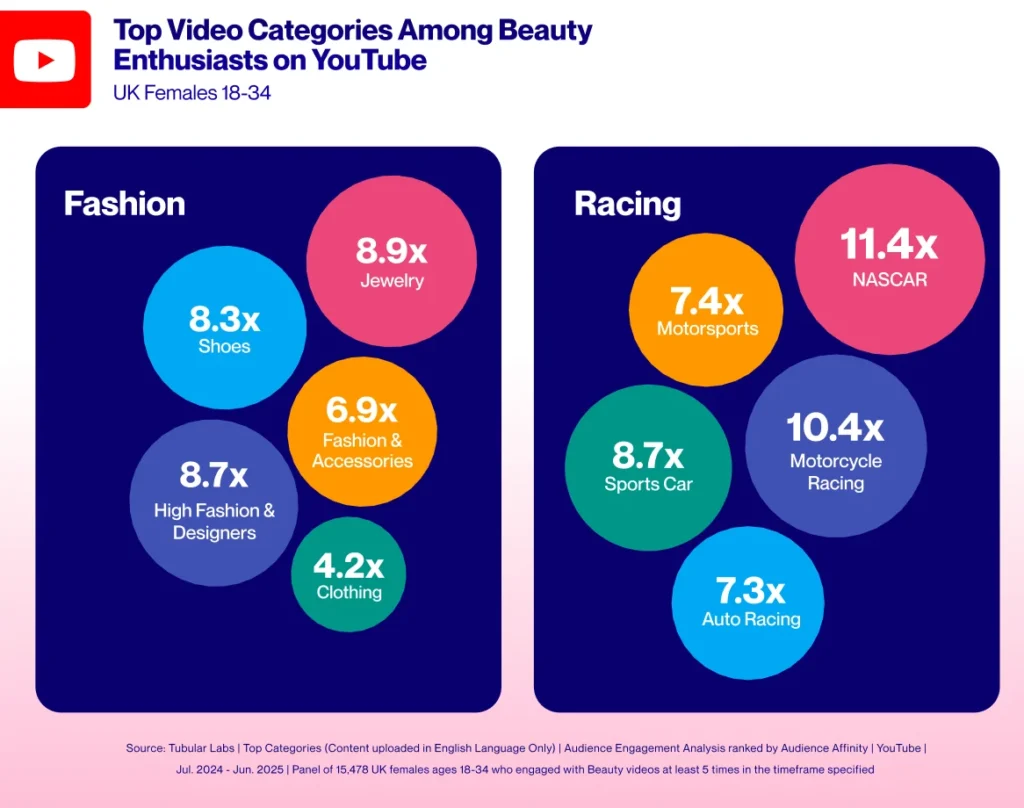
Social video analytics have shattered these silos. By analyzing the cross-platform viewing habits of millions of users, data scientists at Tubular Labs have identified significant, non-obvious affinities between seemingly unrelated interest groups. For instance, data reveals that UK-based female viewers who gravitate toward beauty content are 11.4 times more likely to consume motorsports and racing content than the average viewer.
This revelation represents a tectonic shift in strategy. It suggests that if a beauty brand only markets within the "Beauty" category, they are leaving 90% of their potential resonance—and market share—on the table.

Chronology of Success: The Rise of Unexpected Collaborations
The shift toward data-driven cross-category partnerships has not happened overnight. It is the result of a maturation in how brands interpret the "digital footprint" of their target demographics.
Beauty Meets Motorsports: The Charlotte Tilbury x F1 Academy Case
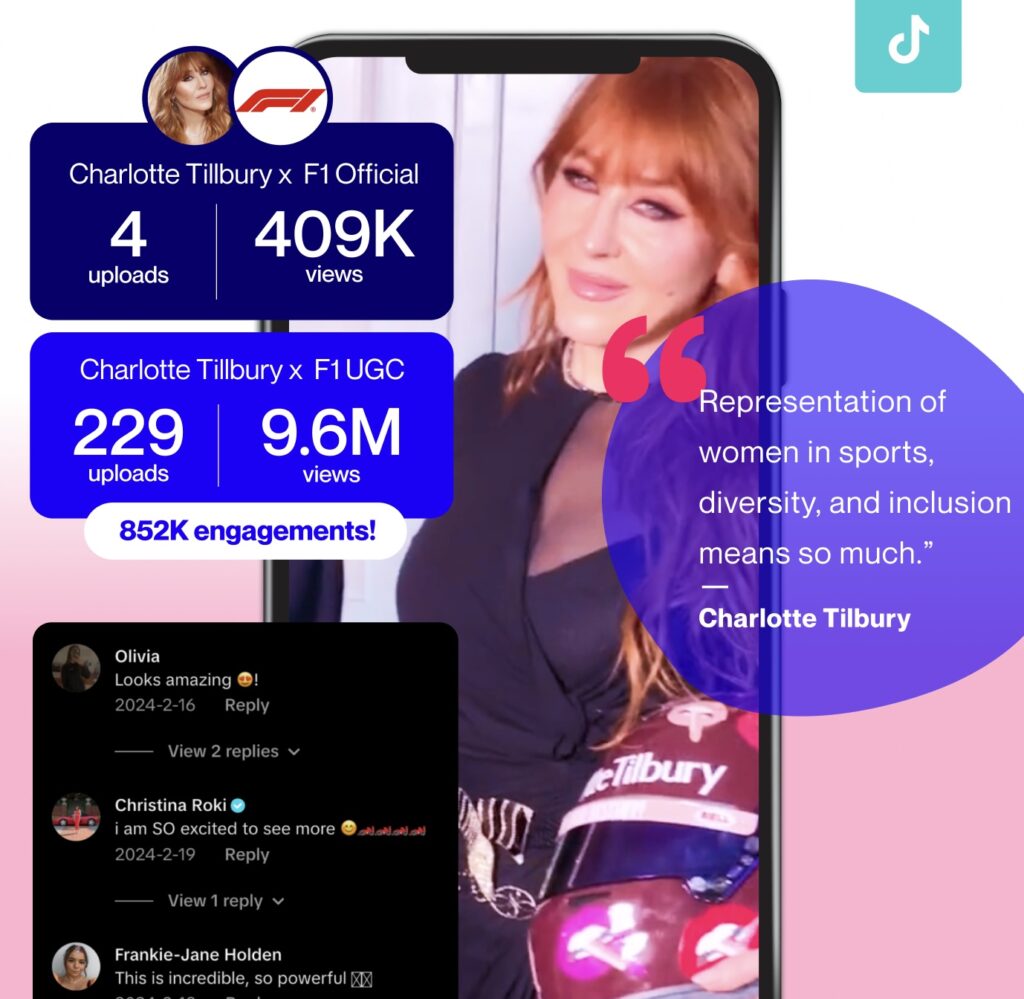
The partnership between Charlotte Tilbury and the Formula 1 Academy stands as the seminal case study for this new era. When the beauty giant announced its partnership with the F1 Academy, industry skeptics questioned the alignment. However, the decision was not arbitrary; it was a calculated move based on the intelligence that beauty enthusiasts were heavily indexed as motorsports viewers.
The campaign, which saw Charlotte Tilbury become the first beauty brand to sponsor the F1 Academy, didn’t just generate brand awareness—it created a cultural moment. By aligning the "high-performance" ethos of racing with the "high-performance" formulation of their products, the brand tapped into a new audience segment that was previously invisible to competitors.
Gaming Meets Glamour: The Riot Games x Fenty Beauty Synergy
Similarly, the collaboration between Riot Games and Fenty Beauty, built around the success of the hit series Arcane, demonstrated the power of community-led participation. Tubular’s analytics had identified a burgeoning, yet historically underserved, segment of female gamers who showed strong, consistent brand affinity for luxury beauty houses like YSL, NYX, and L’Oréal.
Riot Games recognized that this audience wanted more than just a passive viewing experience; they wanted to participate in the Arcane aesthetic. By launching a limited-edition makeup collection, the partnership bridged the gap between virtual entertainment and physical identity, resulting in viral engagement levels that dwarfed traditional, single-category campaigns.
Supporting Data: The Anatomy of an Unexpected Partnership
The success of these campaigns is backed by a shift in how we define "influence." The data suggests that engagement is no longer about the size of an audience, but the depth of their cross-interest overlap.
When analyzing successful cross-category partnerships, the common denominator is the "interest multiplier."
- The Overlap Effect: When brands combine categories, they don’t just add two audiences together; they create a new, hybrid audience that is often more receptive to novel messaging.
- The Nostalgia Factor: As seen in recent trends where cookware brands have partnered with pop-culture franchises, the combination of utility (cooking) and sentimentality (nostalgic entertainment) creates a "sticky" content loop. Consumers are significantly more likely to share content that triggers an emotional connection to a franchise they grew up with, even when the product itself is purely functional.
Official Industry Perspectives: The Shift Toward Intelligence
Industry leaders are increasingly moving away from the "reach-at-any-cost" model. According to internal reports from analysts at Tubular Labs, the directive for 2025 and beyond is clear: Precision over Volume.
"We are seeing a trend where the CMOs who are winning are the ones who treat social video data as a primary source of market research, not just a way to measure ROI on a campaign," says one industry lead. "When you know, for a fact, that your beauty audience is also spending three hours a day watching car racing or retro anime, your entire media buying strategy changes. You stop buying ‘ad space’ and start buying ‘audience interest’."
This sentiment is echoed by the success of the aforementioned campaigns. By focusing on where the audience lives digitally, rather than where the brand wants to live, companies are finding that their budgets stretch further and their conversions are higher.
Implications for Future Marketing Strategies
The implications for the industry are profound. The reliance on traditional, narrow-interest targeting is now considered a liability. To remain competitive, brands must adopt a framework for identifying these "hidden" partnerships:
- Audience Affinity Mapping: Use social video intelligence to map the full spectrum of your customers’ interests. Do not look at your primary category; look at the top five categories they index into outside of your own.
- Cultural Resonance Audits: Once an affinity is identified (e.g., Gaming + Beauty), determine if the brand’s value proposition can solve a problem or enhance an experience within that secondary category.
- Community-First Creative: Ensure that the partnership invites the audience to participate. The most successful viral moments in the last year occurred when brands allowed the community to "co-create" the narrative through user-generated content or interactive elements.
- Agile Measurement: Stop evaluating success solely by views. Instead, evaluate the "lift" in sentiment and the acquisition of new, cross-category followers.
The Road Ahead: Why Data is the Ultimate Creative Tool
The common fear among creative teams is that "data kills creativity." However, the evidence presented by these recent successes proves the exact opposite. Data provides the canvas for creativity. By understanding the surprising ways in which audiences connect, brands can develop campaigns that feel more authentic and less like an intrusive advertisement.
When Charlotte Tilbury tapped into the world of motorsports, they weren’t just slapping a logo on a car; they were participating in the cultural conversation of a group that was already predisposed to their products. This is the future of partnership marketing: a blend of high-level analytical rigor and deep cultural empathy.
As we look toward the remainder of the year and into the next, the barrier to entry for these types of collaborations is falling. The tools are available, the data is actionable, and the consumer is waiting for brands to show them something they haven’t seen before. The question for every marketer is no longer "How do I reach my audience?" but rather "What else does my audience love, and how can I be a part of that story?"
For those ready to move beyond the constraints of traditional silos, the data is clear: the most effective path to growth is often the one that looks the most unexpected. By leveraging social video intelligence, brands can stop guessing and start building partnerships that deliver measurable, meaningful, and record-breaking results.
