

The Ghost in the Machine: Navigating the Perils of Unattended AI Automation in MarTech
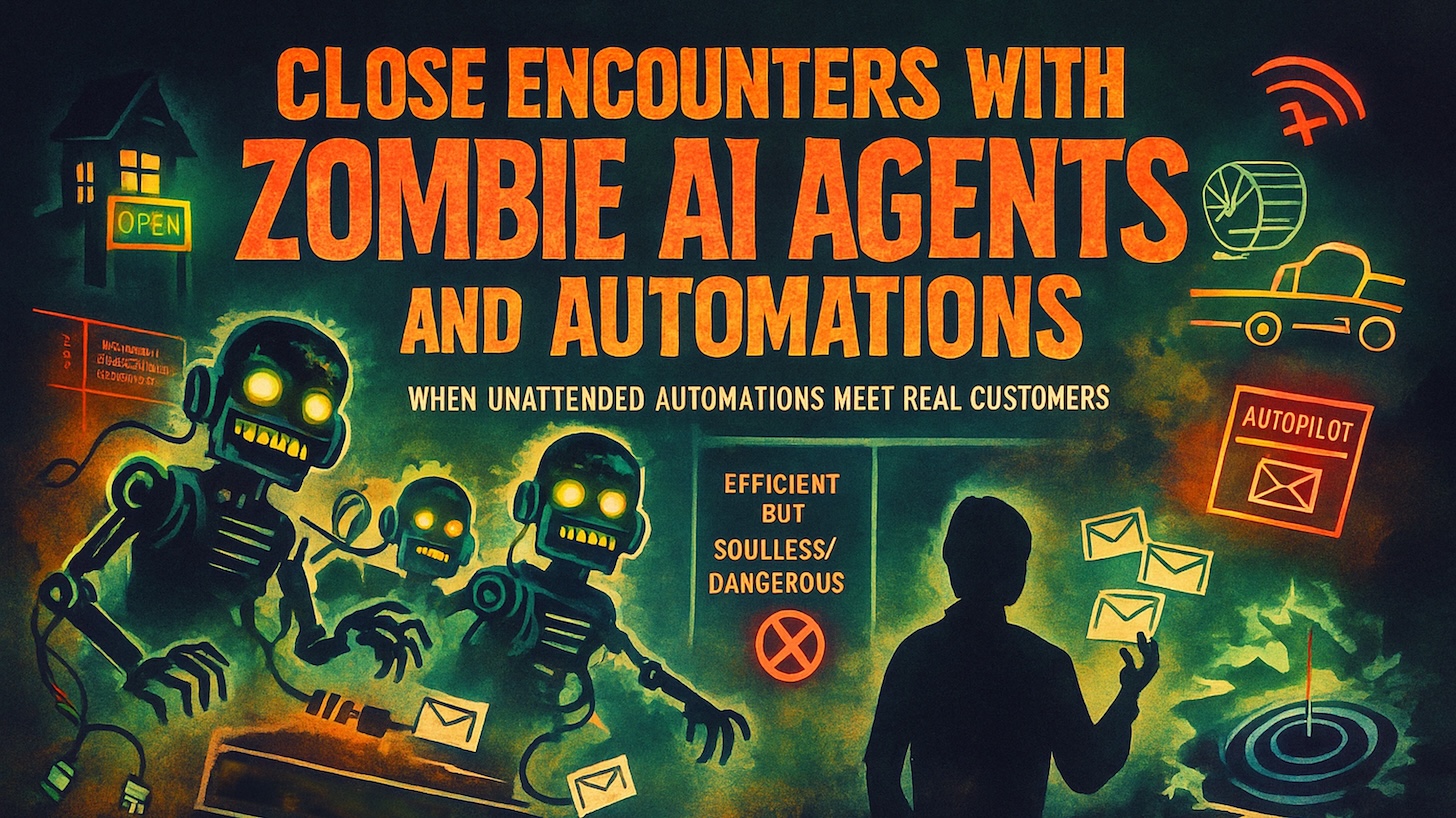
In the high-stakes world of modern marketing technology, a troubling paradox is emerging. As companies race to integrate generative AI and autonomous agents into their customer-facing workflows, a new category of operational failure is surfacing: the "zombie automation." These are systems that remain active and functional on the back end—consuming data, triggering emails, and burning through budgets—but have completely decoupled from the actual needs and context of the customer.
The lights are on, the engine is running, and the algorithms are humming; yet, for the user on the receiving end, there is nobody home.
The Efficiency Trap: When "Internal" Wins at the Expense of the Customer
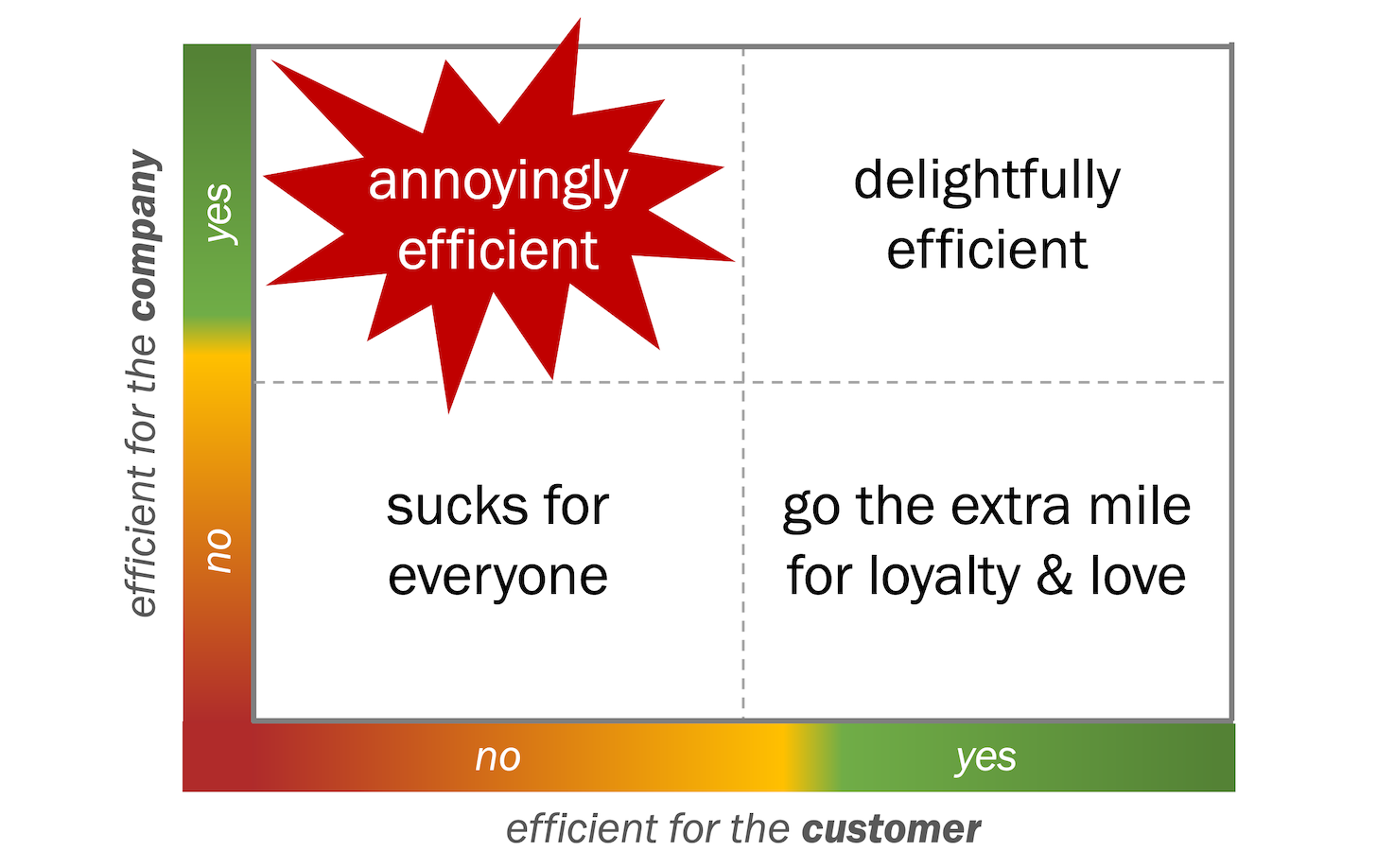
At the heart of this issue lies a fundamental misalignment between organizational efficiency and customer experience. A 2×2 matrix of efficiency reveals the dangerous "upper-left" quadrant: tactics that are highly efficient for the company but detrimental to the customer.
When a marketing team prioritizes speed and volume, they often deploy AI agents designed to reduce headcount and accelerate response times. While these tools may clear a backlog or trigger a sequence in milliseconds, they often lack the "situational awareness" required for genuine human engagement. When the technology is optimized purely for internal KPIs—such as lead-scoring velocity or email cadence—the customer experience inevitably devolves into a series of robotic, non-contextual interactions.
Chronology of a Digital Breakdown
To understand how these systems drift into dysfunction, we can examine two recent, real-world failures within the MarTech sector.
Case Study I: The Customer Service Loop
A user subscribed to a SaaS product began receiving a series of high-quality, well-timed onboarding emails. The cadence was perfect, and the content was genuinely useful. However, when the user encountered a specific billing question, they followed the company’s documented support pathway, which pointed to a generic support email address.
- Initial Contact: The user sent a clear, concise inquiry regarding billing.
- The Silence: Despite the automated onboarding sequence continuing to function perfectly, the billing inquiry received no acknowledgment or automated receipt.
- The Escalation: After 48 hours of silence, the user followed up. Again, total silence.
- The Incongruity: As the user searched the company’s knowledge base for an alternative contact, the "onboarding" bot continued to send cheerful, irrelevant tips, oblivious to the fact that the customer was currently frustrated and seeking support.
This represents a classic "routing failure." Multiple teams likely share an inbox, relying on fragile automation rules to triage tickets. When an LLM or a legacy routing script fails to categorize the query, the message falls into a digital void, leaving the customer trapped in a sequence that ignores their reality.
Case Study II: The Automated Sales Disconnect
In another instance, a marketing professional downloaded a technical report from a vendor. Within minutes, a "personalized" email arrived. It was masterful: it referenced the user’s specific work, addressed a relevant industry concern, and asked a high-level question.
- The "Tell": The speed of the response was the only giveaway—no human researcher could have processed the request that quickly. It was clearly a high-end AI SDR (Sales Development Representative) agent.
- The Disconnect: When the user replied to clarify their status (essentially disqualifying themselves as a lead), the AI agent failed to interpret the nuance.
- The Data Contamination: Hours later, the user was enrolled in a completely different, lower-quality automated sequence—the kind that uses "Hello, $FIRST-NAME" placeholders and makes irrelevant, generic offers.
- The Final Error: A week later, a follow-up email arrived. It attempted to insert the user’s company name using a data enrichment tool, but the value was incorrect. The system had, in effect, "hallucinated" the user’s corporate identity.
Supporting Data: Why Scaling Prematurely Backfires
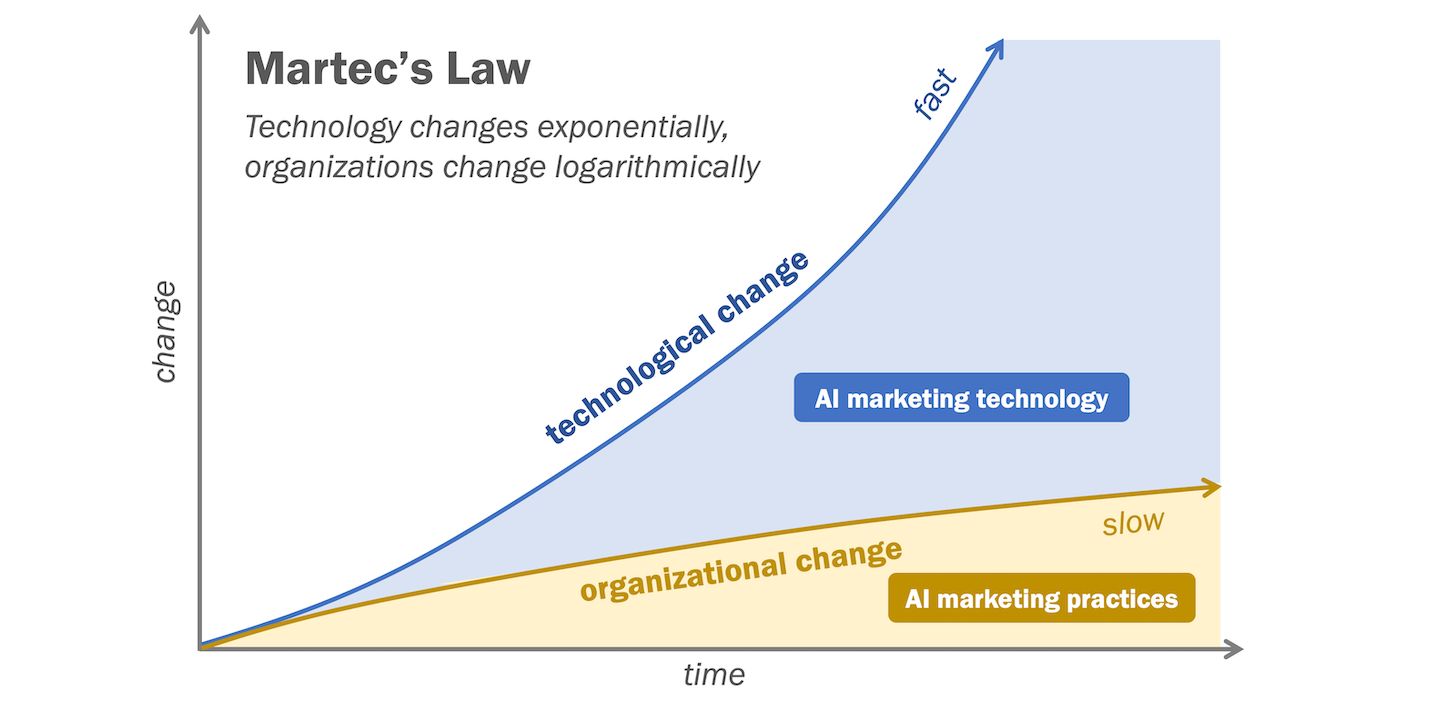
The root cause of these failures is often the violation of what is known as "Martec’s Law." The principle posits that technology changes exponentially, while organizations change logarithmically. When companies rush to adopt AI, they frequently ignore the human-process layer required to support that technology.
The "industrial complex" of data enrichment and automated sequencing often relies on weak integrations between disparate tools. When an AI agent for top-of-funnel outreach doesn’t "talk" to the CRM or the nurture sequence, the customer journey becomes fractured.
Recent industry analysis suggests that companies attempting to scale AI across their entire funnel without a "human-in-the-loop" monitoring layer see a 30% increase in "disgruntled lead" flags within their CRM. Furthermore, organizations that fail to audit their automated workflows at least once per quarter report a 15% decay in email engagement rates, as generic, hallucinated, or irrelevant content begins to dominate the user experience.
Official Industry Perspectives
While no specific company has publicly claimed responsibility for these specific failures, industry leaders are increasingly acknowledging the "zombie automation" phenomenon.
"We are seeing a trend where companies treat AI as a ‘set-and-forget’ utility," notes one consultant in the MarTech space. "But AI is not a static tool; it is a dynamic system that requires constant calibration. If you don’t have a human monitoring the output of your AI agents, you aren’t building a marketing engine; you’re building a liability."
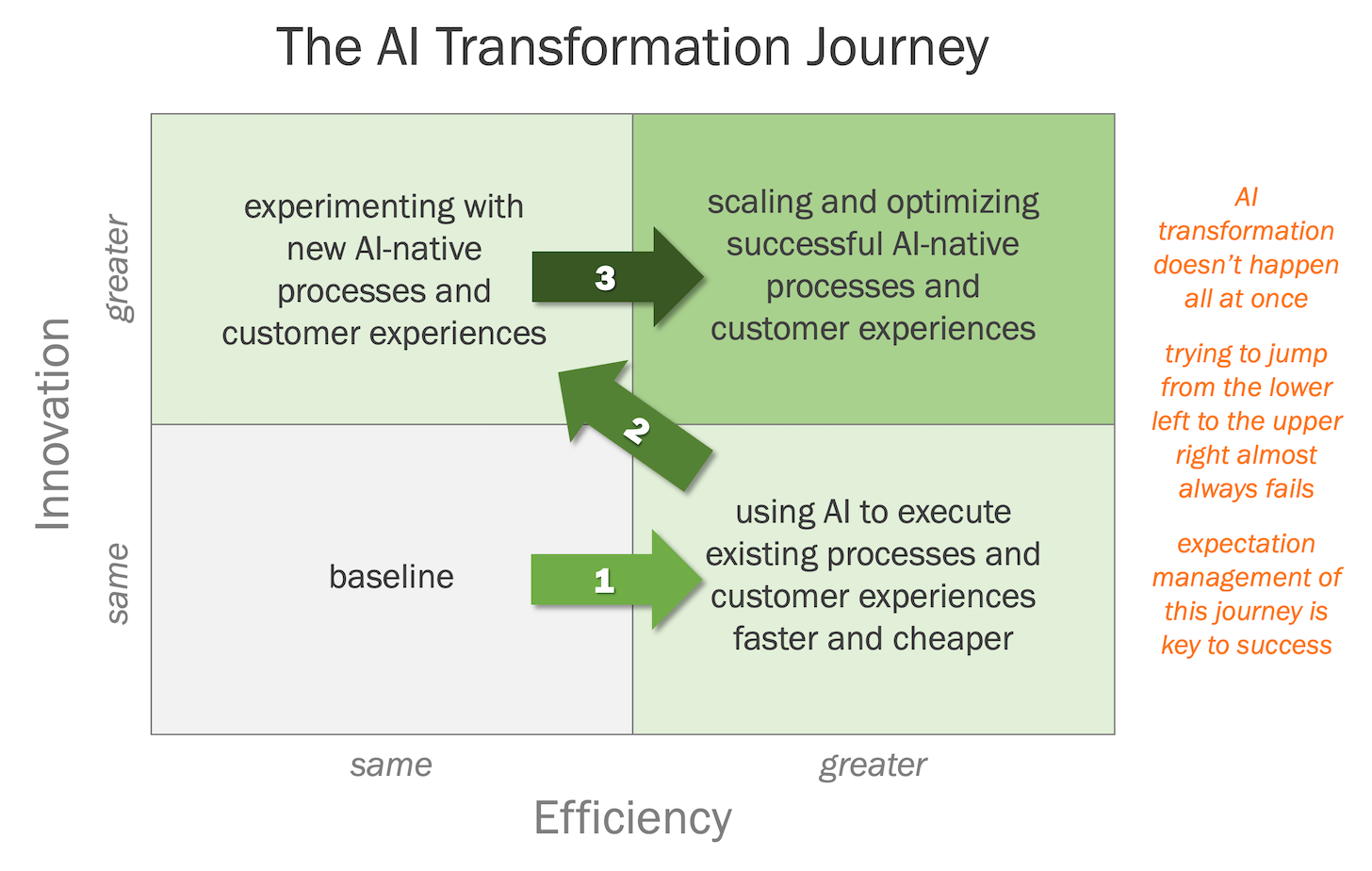
The prevailing consensus among experts is that the "move fast and break things" mantra of the early software era is ill-suited for the era of AI. The new directive is "go slow to go fast"—implementing rigorous pilot testing before scaling to the entire customer base.
Strategic Implications: How to Prevent the "Zombie" Effect
To avoid these pitfalls, organizations must adopt a new operational discipline for their AI deployments:
1. The "Human-in-the-Loop" Mandate
Every automated workflow must have a "break-glass" protocol. If a customer expresses frustration or asks for a human, the automation must immediately pause and trigger a notification to a live agent. Efficiency should never supersede the ability to resolve a legitimate service issue.
2. Secret Shopper Exercises
Companies should periodically have employees—or preferably, objective third-party contractors—run their own customer journeys. This includes signing up for newsletters, downloading whitepapers, and intentionally "breaking" the flow to see how the system responds.
3. The "Laboratory vs. Factory" Distinction
Frans Riemersma, a prominent figure in marketing technology, suggests keeping the "laboratory" (where you test new AI experiments) strictly separate from the "factory" (the stable, production-ready stack). Never deploy an experimental AI agent into your high-volume production funnel until it has been thoroughly stress-tested.
4. Continuous Audit Cycles
Automation is like infrastructure; it requires maintenance. Just as elevators are inspected for safety, AI agents should be audited for content accuracy, brand alignment, and data integrity. Every automated email sequence should have a designated "owner" who reviews the logic and the data fields every 30 to 60 days.
5. Unified Contextual Memory
The most egregious errors occur when systems lack a shared memory of the customer. Invest in orchestration layers that allow the AI SDR, the CRM, and the email nurture platform to share a single, unified view of the customer’s interaction history.
Conclusion: Beyond the Hype
The promise of AI in MarTech is undeniable. It offers the ability to scale personalization and operational efficiency to levels previously thought impossible. However, the technology is only as good as the governance surrounding it.
As we move forward, the competitive advantage will not go to the companies that deploy the most AI, but to those that deploy it with the most discipline. In an age where the barrier to creating content and automation is essentially zero, the new "scarcity" is human attention and trust. Protecting that trust requires moving away from the "zombie" mindset and embracing a future where AI and human intelligence work in tandem—not in isolation. The goal isn’t just to be efficient; it’s to be relevant, empathetic, and ultimately, human.
