

Beyond the Like: The Strategic Guide to Social Media KPIs in 2026
In the modern digital landscape, where billions of users interact with brands across dozens of platforms, the "social media manager" has evolved into a data-driven strategist. As we head further into 2026, the era of tracking "vanity metrics"—such as total followers or simple likes—is effectively over. For marketing teams to justify their budgets and prove their value to the C-suite, they must shift their focus toward Key Performance Indicators (KPIs) that directly correlate with tangible business growth.
Not every metric is a KPI. While a metric provides a raw data point, a KPI provides the context required to measure success against a specific business goal. This article explores how to select, track, and report on the KPIs that actually matter to your organization’s bottom line.

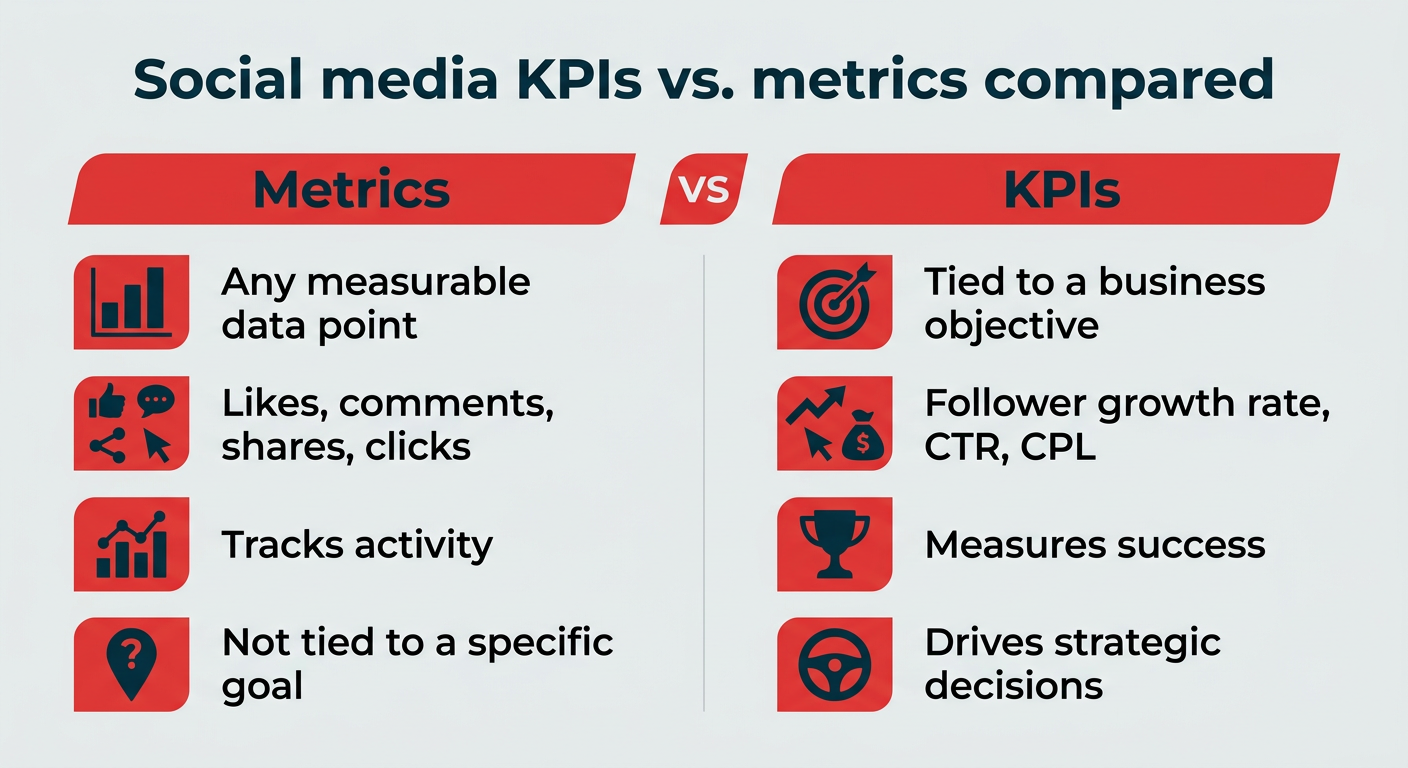
Understanding the Foundation: Metrics vs. KPIs
To build an effective strategy, one must first distinguish between a metric and a KPI. A metric is any measurable data point from your social accounts—it is the raw material of analytics. A KPI, conversely, is a specific, actionable metric tied to a high-level business objective.
"All KPIs are metrics, but not all metrics are KPIs," notes industry expert Hannah Macready. For instance, if your company aims to improve brand awareness, the number of "likes" on a single post is merely a metric. However, the "follower growth rate" or "post reach" over a fiscal quarter becomes a KPI because it maps directly to your ability to expand your brand’s footprint.

The Hierarchy of Data
- Metrics: Used by social teams for day-to-day optimizations and content adjustments.
- KPIs: Used by leadership and management to assess ROI, budget allocation, and long-term strategic health.
Why KPIs Matter for the Modern Brand
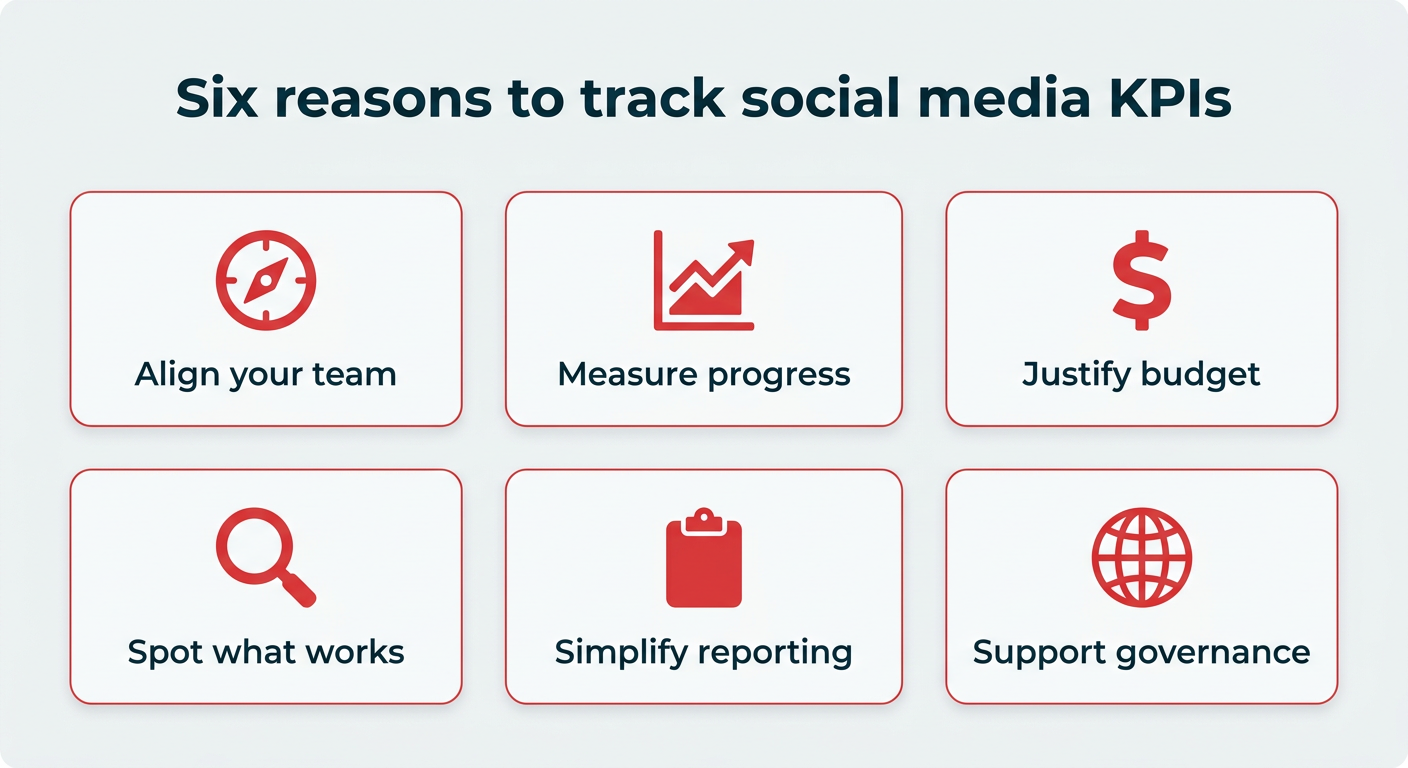
In 2026, CMOs are under immense pressure to prove that marketing spend is driving revenue. According to recent industry reports, 46% of CMOs are currently prioritizing initiatives that demonstrate clear growth trajectories. KPIs serve as the bridge between creative social content and corporate accountability. They allow teams to:
- Justify Budgets: By tying social activity to revenue, teams can argue for increased investment.
- Focus Efforts: By identifying which content types actually drive conversions, teams can stop wasting time on underperforming posts.
- Optimize Performance: KPIs provide a "scorecard" that tells the team exactly when a strategy needs to pivot.
The Six Pillars of Social Media KPIs
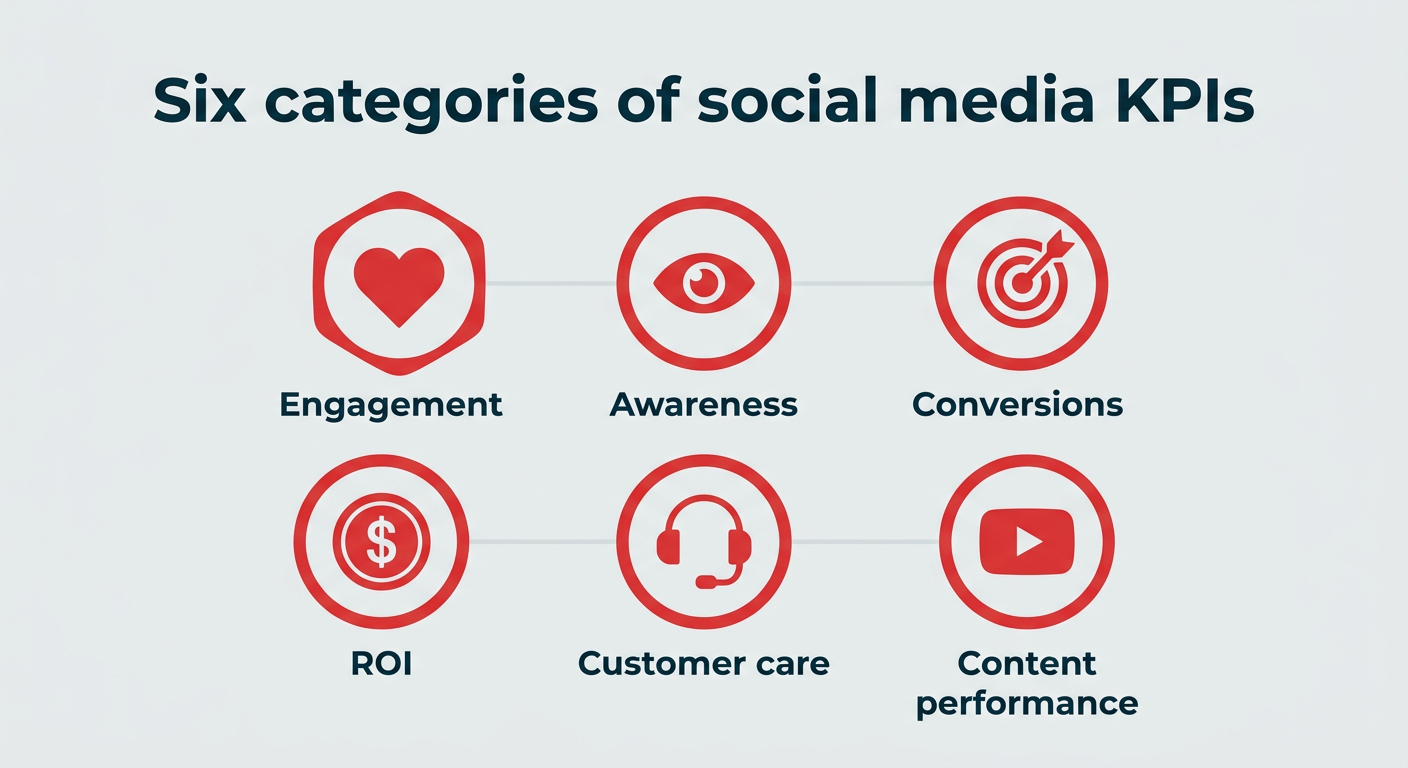
To categorize your efforts effectively, focus your tracking on six core areas: Engagement, Awareness, Conversions, ROI, Customer Care, and Content Performance.
1. Engagement KPIs
Engagement measures the quality of your relationship with your audience. It proves your content is not just being seen, but is actively resonating with the target demographic. Key KPIs here include:
- Engagement Rate: The percentage of your audience that interacts with your posts.
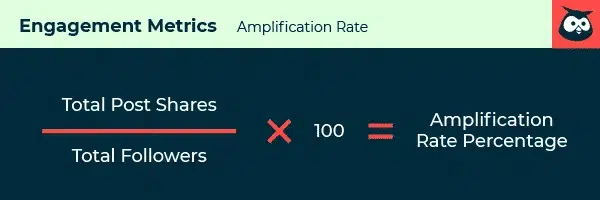
- Amplification Rate: The frequency with which your content is shared, indicating the "virality" or advocacy potential of your brand.
2. Awareness KPIs
With social platforms reaching an estimated 5.75 billion users globally by the end of 2026, awareness is the top of the funnel.
- Reach: The number of unique accounts that have seen your content.
- Impressions: The total number of times your content has been displayed, regardless of whether it was clicked.
3. Conversion KPIs
As social commerce continues its aggressive expansion—with over 50% of U.S. social buyers expected to shop directly on platforms like TikTok this year—conversion KPIs are the most critical metrics for proving revenue impact.
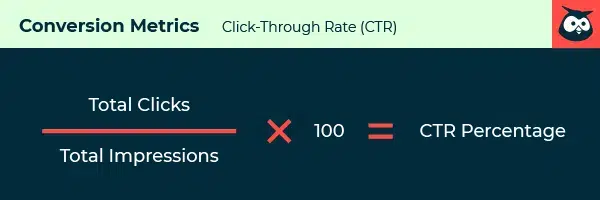
- Click-Through Rate (CTR): The ratio of users who click a link in your post versus those who see it.
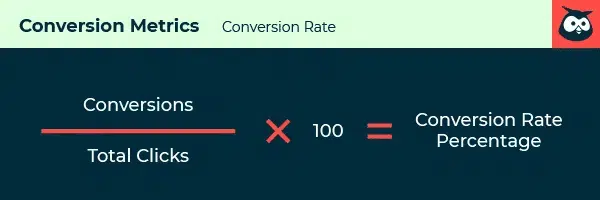
- Conversion Rate: The percentage of users who take a specific action (e.g., signing up for a newsletter or purchasing a product) after clicking a social link.
4. ROI KPIs
These are the metrics that keep social teams employed. They connect spend directly to financial outcomes.
- Cost Per Acquisition (CPA): How much you spend in ads to earn one new customer.
- Earned Media Value: The estimated monetary value of the "free" publicity you receive through organic social shares and mentions.
5. Customer Care KPIs
Social media is the new customer service desk.
- Average Response Time: How quickly your team acknowledges a customer inquiry.
- First Contact Resolution Rate: The percentage of customer issues solved in a single interaction.
6. Content Performance KPIs
These help you determine what to keep in your content calendar and what to cut. By tracking which content types drive the most traffic, you can refine your creative direction based on data rather than intuition.
Setting Your Strategy: The Three-Step Framework
Setting KPIs should not be an arbitrary process. Follow this sequence to ensure your objectives remain relevant:
Step 1: Start with Business Objectives
Your social strategy must mirror your company’s broader mission. If the company is in "growth mode," focus on acquisition and awareness KPIs. If the company is focused on "customer loyalty," prioritize retention and service KPIs.
Step 2: Research Benchmarks
You cannot know if you are performing well if you don’t know the industry standard. Utilize benchmarking tools to compare your growth rate, engagement, and CPC (Cost Per Click) against your direct competitors. This provides the necessary context to determine if your performance is truly "good" or simply average.
Step 3: The SMART Framework
Every KPI should adhere to the SMART acronym:
- Specific: Clearly defined outcomes.
- Measurable: Quantitative data points.
- Achievable: Realistic given your current resources.
- Relevant: Directly linked to your business goals.
- Time-bound: Set within a specific timeframe (e.g., "increase conversion by 5% by Q3").
Reporting to Leadership: The Executive View
When presenting your results to leadership, avoid the temptation to dump raw data. Executives care about outcomes, not the minutiae of individual post performance.
Pro-tip for reporting:
- Lead with the Impact: Start with revenue-driving figures and ROI.
- Use Visuals: Use charts that show trends over time rather than static monthly snapshots.
- Include Context: Always pair your numbers with the "why." If performance dipped, explain the market context or the tactical shift you’re implementing to correct it.
- Keep Technical Data in the Appendix: If a stakeholder wants to see individual post engagement, have it ready in an appendix, but don’t make it the focus of the presentation.
Implications for the Future of Social Marketing
The landscape of 2026 is one where "gut feelings" have been replaced by rigorous analytical frameworks. As AI-powered analytics tools become more accessible, the barrier to entry for high-level data analysis is dropping, while the expectation for high-level performance is rising.
Companies that master the art of tracking these KPIs will be the ones that survive market volatility. By shifting focus from "likes" to "leads" and "sentiment" to "sales," social media managers can finally position themselves as essential strategic partners in the growth of the business.
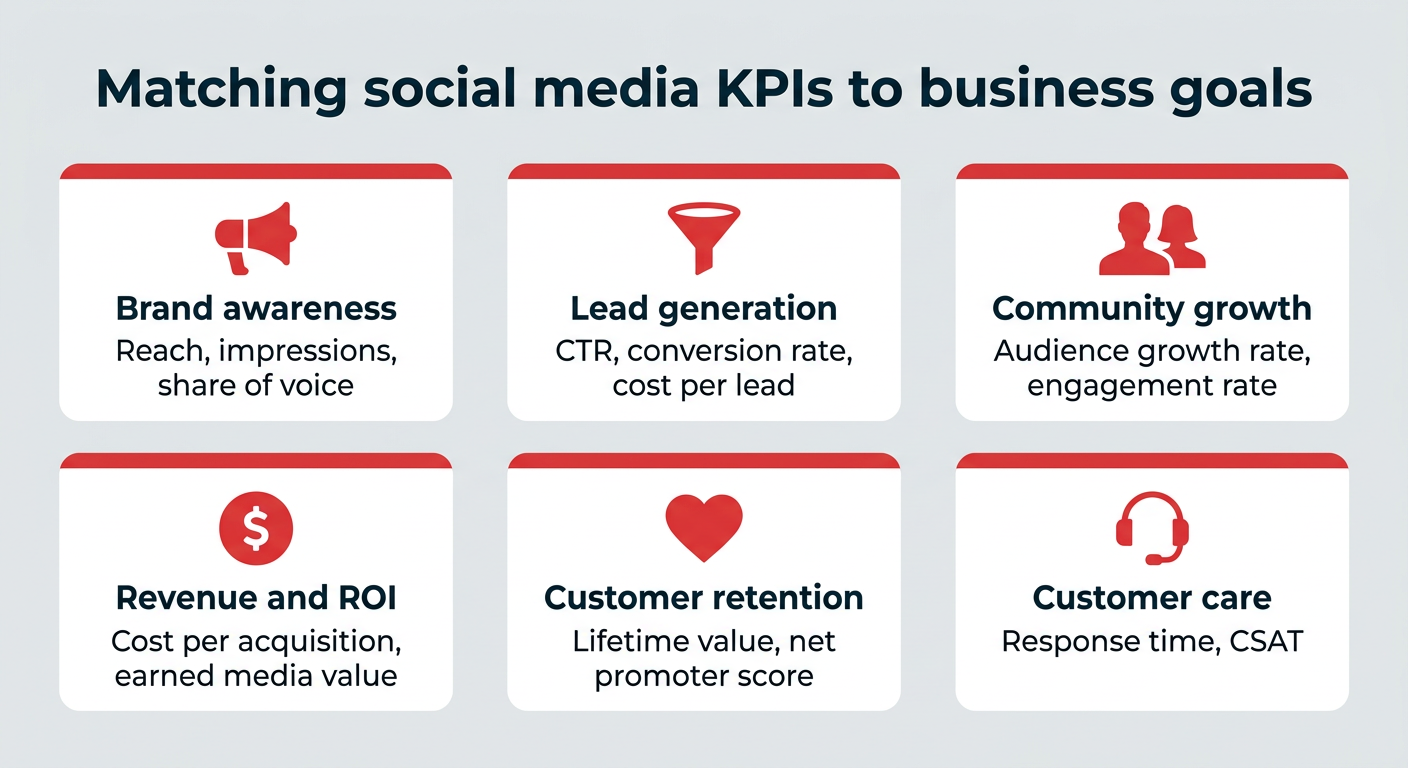
Whether you are a startup or a global enterprise, the path to success remains the same: define your business goals, identify the metrics that measure them, and report your impact with clarity and confidence. The era of vanity metrics is over; the age of performance-driven social strategy has arrived.
