
Beyond the Hype: How Global Brands are Operationalizing AI in Marketing
The marketing industry is currently navigating a pivotal transition. While the past two years have been dominated by the breathless anticipation of artificial intelligence, the narrative is shifting from theoretical potential to practical application. The question no longer centers on if AI can impact marketing, but how it is currently being integrated into the day-to-day workflows of the world’s most sophisticated brands.
Recent data from HubSpot indicates that 80% of marketers are now leveraging AI for content creation. However, the true utility of the technology lies far beyond simple text generation. From the high-stakes environment of Wembley Stadium’s customer support to the precision-targeted campaigns of Unilever, AI is being deployed as a foundational layer in the modern marketing stack.

The Evolution of AI in Marketing: A Chronology of Integration
The trajectory of AI in marketing can be categorized into three distinct phases. Initially, the focus was on automation—using basic bots to handle rudimentary tasks. This was followed by the generative explosion, where Large Language Models (LLMs) enabled the rapid production of copy and imagery.
We are now entering the third and most significant phase: Operational Integration.

In this era, brands are moving away from disconnected "AI experiments" and toward cohesive ecosystems. For instance, companies are no longer just using ChatGPT to write a tweet; they are training proprietary models on their own brand guidelines to ensure consistency. They are connecting sentiment analysis tools directly to their CRM systems and using predictive analytics to optimize ad spend in real-time, long before a campaign concludes.
Supporting Data: The Efficiency Multiplier
The quantitative impact of this integration is significant. Research from Harvard Business School, which analyzed a full year of chat interactions for a major meal delivery service, revealed that AI-assisted agents were 20% more efficient than their counterparts working without the technology.
Furthermore, the scale at which modern campaigns operate has expanded exponentially. When Headspace launched its recent holiday campaign, the brand utilized Meta’s Advantage+ platform to deploy 460 unique assets in under two weeks. By allowing AI to match specific creative variations with individual user stressors—ranging from exam anxiety to scheduling conflicts—the brand cut production time by 67% and achieved a 13% lift in app sign-ups.
Case Studies: Real-World Applications
To understand the practical reality of AI, one must look at how industry leaders are solving specific operational bottlenecks.
Content Scaling: The Unilever Approach
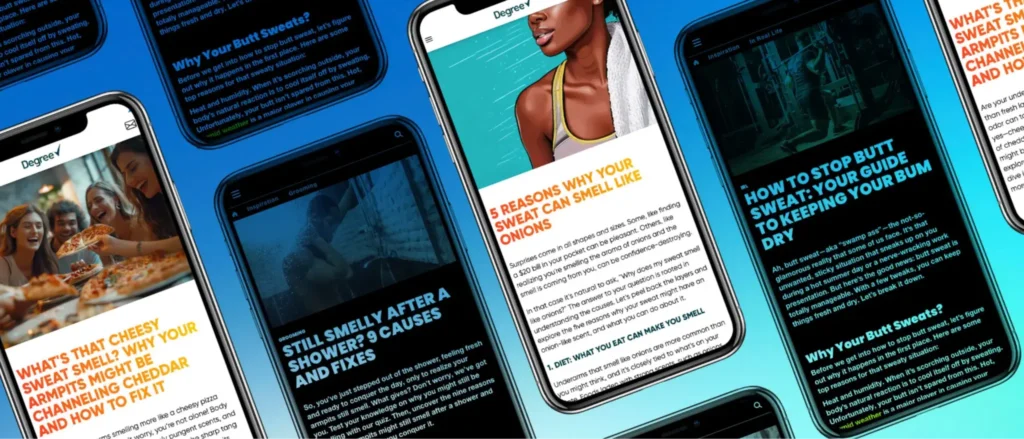
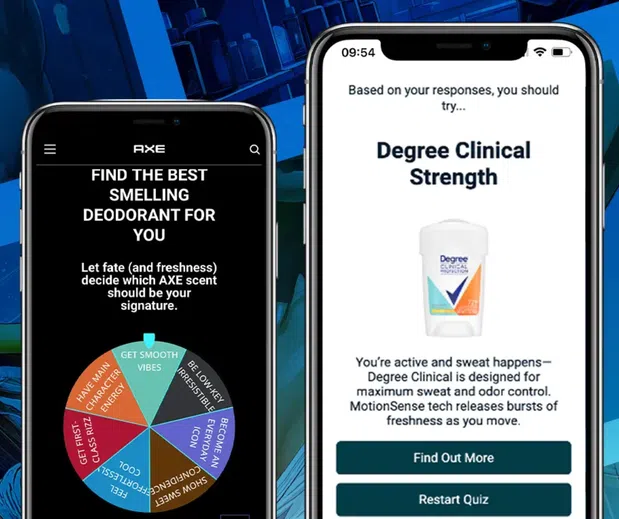
Unilever faced a common challenge: how to maintain a distinct brand voice across a massive library of educational content for its AXE and Degree brands. By training a proprietary AI on the unique tone of each brand, the team generated 162 pages of high-quality content addressing niche consumer queries, such as the science of perspiration. The result was a 3x increase in production speed and a commanding 37% share of voice in AI Overviews for the US deodorant category.
Customer Care: The Wembley Stadium Benchmark
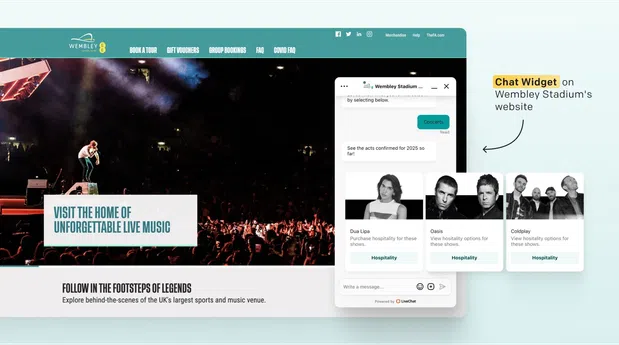
At peak times, Wembley Stadium manages up to 8,000 customer inquiries daily. To prevent human burnout and ensure fan satisfaction, they implemented an AI-driven chatbot specifically trained on event logistics. The bot now successfully handles 12,000 chats per month, while simultaneously qualifying leads for premium memberships—a clear example of AI acting as a top-of-funnel sales engine.
Influencer Marketing: Precision via Kraft
When Kraft introduced its plant-based product line, it did not rely on a "spray and pray" influencer strategy. Instead, the company utilized AI-powered audience segmentation to isolate two distinct consumer groups: those seeking plant-based alternatives and those seeking comfort food. By identifying the specific creators who resonated with each group, the campaign achieved over 2.4 million views, proving that AI is as much a tool for strategic alignment as it is for content creation.
The Human Element: Implications and Risks
Despite these successes, industry experts urge caution. Maria LaMagna Morales, founder of Press Publish Studio, warns that over-reliance on AI can lead to a "homogenization of creativity."

"AI is inherently designed to be predictable—it chooses the most likely next word," Morales notes. "In social media, where the goal is to stop the scroll, ‘predictable’ is the enemy. The most effective content often relies on the weird, the unexpected, and the human—elements that AI struggles to manufacture."
Three Critical Risks for Marketers:
- The Loss of "Weirdness": Human creativity often thrives on juxtaposition and non-sequiturs. AI-generated content tends to gravitate toward a polished, middle-of-the-road mediocrity that fails to hook audiences in a competitive feed.
- Dilution of Brand Voice: Every time a marketer prompts an AI to make text "more professional," they risk scrubbing away the idiosyncrasies—the slang, the tangents, and the personal touches—that actually build emotional connections with consumers.
- Over-Automation of Imagery: While generative AI imagery was a novelty a year ago, consumer fatigue is setting in. There is an increasing market preference for authentic photography and human textures that reflect real-world experiences.
The Role of Platforms: Hootsuite’s AI Ecosystem
For organizations looking to bridge the gap between AI potential and actual performance, integrated platforms like Hootsuite are becoming essential. By embedding AI directly into the workflow, these tools allow for a "human-in-the-loop" approach to marketing.
- Wisdom (Strategic Insights): This tool functions as a social-first AI agent, allowing marketers to ask complex questions like, "What is shaping the perception of our brand this week?" Based on actual social data, Wisdom provides actionable recommendations for upcoming content.
- Perch (Content Creation): By moving the creative process into a centralized hub, Perch allows teams to draft, refine, and schedule content without losing the brand voice. The AI acts as a collaborator that helps navigate the "blank page" problem while maintaining strict adherence to brand guidelines.
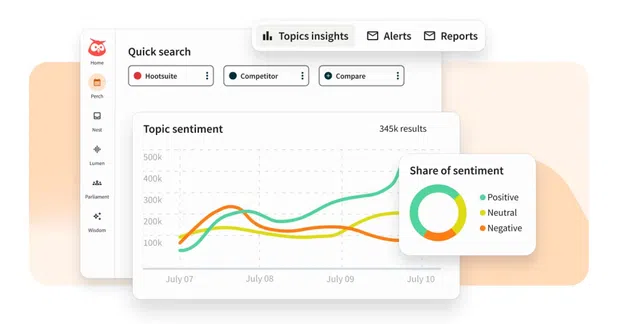
- Lumen (Listening and Sentiment): Tracking over 150 million sources, Lumen provides the necessary layer of social listening. By identifying shifts in sentiment before they escalate into crises, it allows teams to pivot their messaging strategies in real-time.
Conclusion: The Path Forward
The "AI hype" cycle is giving way to a more pragmatic era of digital marketing. The organizations succeeding today are those that treat AI not as a replacement for human intellect, but as an accelerant for human strategy.
The most successful campaigns of 2026 will be those that utilize AI to handle the heavy lifting of data analysis, repetitive customer support, and content scaling, while reserving the "weird," the creative, and the strategic decision-making for the human team. As the barrier to entry for content production lowers, the value of a distinct, human-centric brand voice will only continue to rise.

Marketers who master the balance—using AI to inform their decisions while maintaining their unique brand soul—will not only survive the transition; they will define the next generation of digital engagement.
