

Beyond the Click: Mastering Customer Engagement Analytics for Sustainable Growth
In the modern digital landscape, the difference between a thriving business and one that struggles to stay afloat often comes down to a single, elusive factor: engagement. It is rarely clear whether a visitor is truly invested in your brand or merely passing through. As user attention spans continue to shrink, the ability to discern the "window shoppers" from the "future loyalists" has become a critical competitive advantage.
Customer engagement analytics serves as the compass for this journey. By systematically collecting, tracking, and interpreting data on how users interact with your digital ecosystem, you can peel back the layers of user behavior to identify exactly what drives action. When businesses move beyond vanity metrics and focus on the insights hidden within these interactions, they can foster deeper connections, cultivate long-term loyalty, and transform casual browsers into high-value converters.
The Core Fundamentals of Engagement Analytics
At its simplest, customer engagement analytics is the practice of quantifying the "temperature" of your audience. These interactions are not limited to a single channel; they occur across a fragmented web of touchpoints, including websites, mobile applications, social media platforms, and, increasingly, offline-to-online hybrid environments.
Engagement, in this context, encompasses any meaningful interaction occurring prior to a "macro-conversion" (like a purchase or a subscription). This includes reading a blog post, watching a product video, interacting with a chatbot, or clicking a call-to-action button. In digital marketing, we categorize these into four primary pillars:

- Behavioral Engagement: How users navigate your platform.
- Social Engagement: The depth of interaction on external channels.
- Communication Engagement: How users interact with your direct outreach (email/SMS).
- Product Engagement: Specific behaviors within a software or e-commerce environment.
The Strategic Importance: Why Engagement Matters
Engagement sits squarely between the top and the bottom of the marketing funnel. While top-of-funnel tactics focus on awareness and bottom-of-funnel tactics focus on the final transaction, engagement metrics illuminate the vital "middle ground." This is where users build familiarity, trust, and affinity.
Without a robust engagement strategy, growth is rarely sustainable. Most users require multiple touchpoints before they feel comfortable committing their financial resources or personal data. By analyzing engagement metrics, companies can identify the "friction points"—those specific moments in the user journey where interest wanes and drop-off occurs.
Improving these metrics does not just increase conversion rates; it builds a brand ecosystem that encourages repeat visits. In an era where customer acquisition costs (CAC) are skyrocketing, retention through high engagement is the most cost-effective way to drive long-term profitability.
Best Practices for Implementation
While most modern analytics tools—such as Google Analytics 4 (GA4)—provide pre-built engagement metrics, "engagement" is not a one-size-fits-all concept. Decision-makers must define what constitutes a "meaningful interaction" based on their specific business model.

The Customization Mandate
For a media site, engagement might be defined by "Time on Page" or "Scroll Depth." For a SaaS product, it might be "Feature Activation" or "Number of Projects Created." Relying solely on default settings can lead to a shallow understanding of your audience.
Key Implementation Steps
- Identify Stakeholder Needs: Before diving into code, consult with your sales, marketing, and product teams. Each department views engagement through a different lens. Aligning these perspectives ensures your tracking strategy supports cross-functional goals.
- Define Your Metrics: Start with standard metrics but identify the custom events that actually signal intent for your specific industry.
- Develop an Implementation Guide: Documentation is the backbone of accurate data. Create a comprehensive guide for developers and analysts that outlines exactly what to track, where to track it, and how to define success. This ensures consistency across the entire organization.
Navigating Key Metrics Across Channels
To truly master engagement, one must understand how to read the data across different digital mediums. It is important to note that conversions are outcomes, not engagement. Engagement represents the process of moving toward that outcome.
1. Website & App Engagement
- Page Views: The foundational metric. It tells you the volume of traffic but lacks context.
- Sessions: A period of active engagement. In GA4, this is typically a 30-minute window of activity.
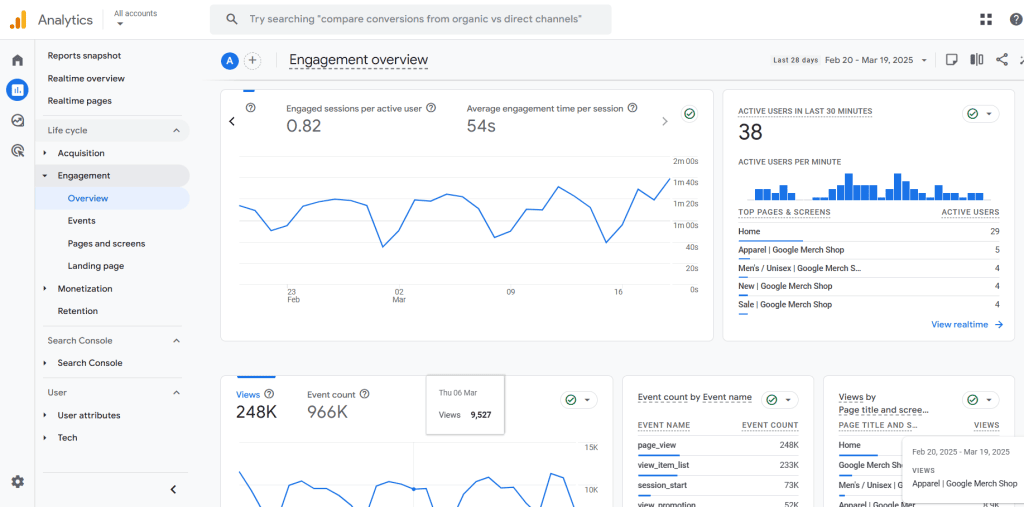
- Engagement Time: This is a superior metric to traditional "time on site." It measures the time a user actually spends interacting with the content, providing a more accurate reflection of interest.
- Pages per Session: A high count here indicates that your internal linking and navigation are compelling enough to drive further exploration.
- Engaged Sessions (GA4 specific): Defined as sessions lasting longer than 10 seconds, having a conversion event, or including at least two pageviews. This is arguably the most critical metric for filtering out "bounce" traffic.
2. Social Media Metrics
Social media platforms offer a unique, public-facing view of engagement. Beyond the vanity of "likes," focus on:
- Amplification Rate: Shares and retweets, which indicate high brand advocacy.
- Conversation Rate: Comments and replies, which indicate active brand-user dialogue.
- Click-Through Rate (CTR): The ultimate measure of whether your content is relevant enough to pull the user away from their social feed and onto your platform.
3. Paid Ads and Email Engagement
When you are paying for traffic, engagement is the gatekeeper of your ROI.
- CTR: For paid ads, a low CTR is a signal that your creative or targeting is misaligned with the audience.
- Open Rate: For email, this is your primary KPI for subject line effectiveness. It is the first step in the engagement funnel; if the email isn’t opened, no further engagement is possible.
4. Product Engagement
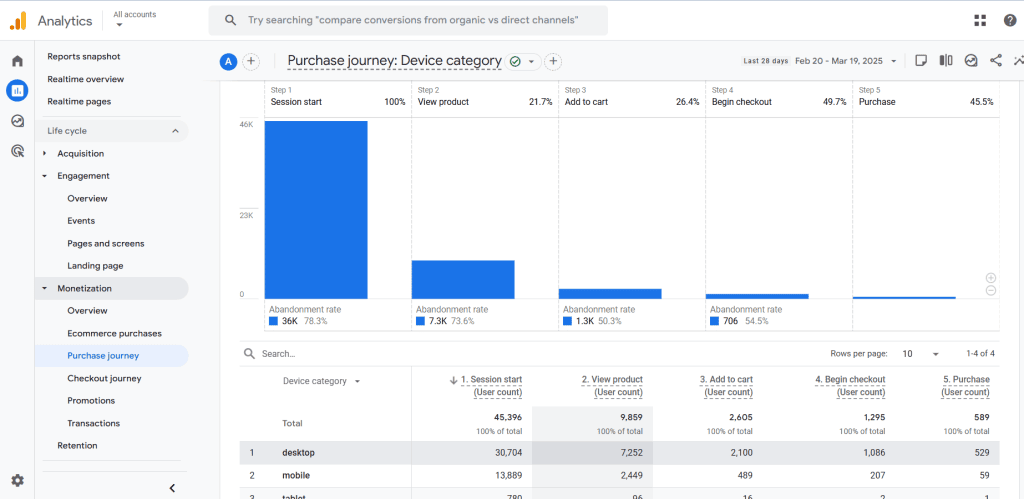
For e-commerce, the funnel is often granular. Key metrics include:
- Add-to-Cart Frequency: Measures intent.
- Product View-to-Cart Ratio: Helps identify if your product descriptions or pricing are causing friction.
- Search Queries: Tracks what users are looking for but perhaps not finding, providing a goldmine of data for site optimization.
The Implications of Data-Driven Decisions
When organizations invest in a comprehensive engagement analytics framework, the results are transformative. By shifting from a "transaction-first" mindset to an "engagement-first" strategy, companies can reduce churn, improve customer lifetime value (CLV), and shorten the sales cycle.
However, the technology is only as good as the strategy behind it. Data without action is simply noise. The implications for leadership are clear:
- Iterative Optimization: Use engagement data to A/B test content and UI elements continuously.
- Personalization: Leverage engagement insights to tailor user journeys. If a user is highly engaged with a specific category, show them more relevant offers.
- Proactive Retention: Identify segments that are showing declining engagement and trigger re-engagement campaigns before they fully churn.
Conclusion: Looking Ahead
Customer engagement analytics is more than just a reporting requirement; it is a fundamental pillar of business intelligence. By capturing the nuanced behaviors that precede a purchase, you gain the power to influence those outcomes.
As we move toward a more privacy-centric digital future, first-party engagement data will become even more valuable. Companies that learn to interpret these signals today will be the ones that define the market standards of tomorrow.
Remember, the goal is not just to track users, but to understand them. When you align your analytics with your customers’ deepest motivations, you do more than just improve your conversion rates—you build a lasting relationship that sustains your business through every market fluctuation.
How is your organization currently defining "engagement"? Are you measuring the metrics that truly drive growth, or are you still relying on the surface-level data? The answers to these questions are the first steps toward a more data-driven future.
