
The Great Plateau: Has the Martech Industry Finally Reached Its Peak?
For fifteen years, the annual release of the Marketing Technology Landscape—the definitive “Supergraphic” of the industry—has been a spectacle of relentless, almost exponential expansion. It was a visual representation of a digital gold rush, where the only direction for the industry was "up." Every year, marketers and technologists braced themselves for the inevitable: more categories, more logos, and a higher count of products that threatened to collapse under its own gravity.
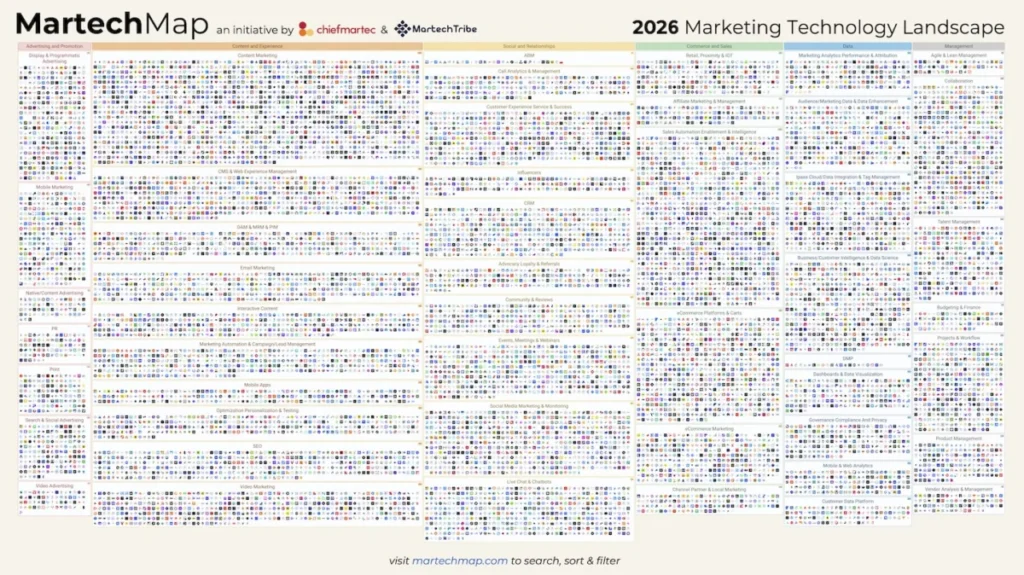
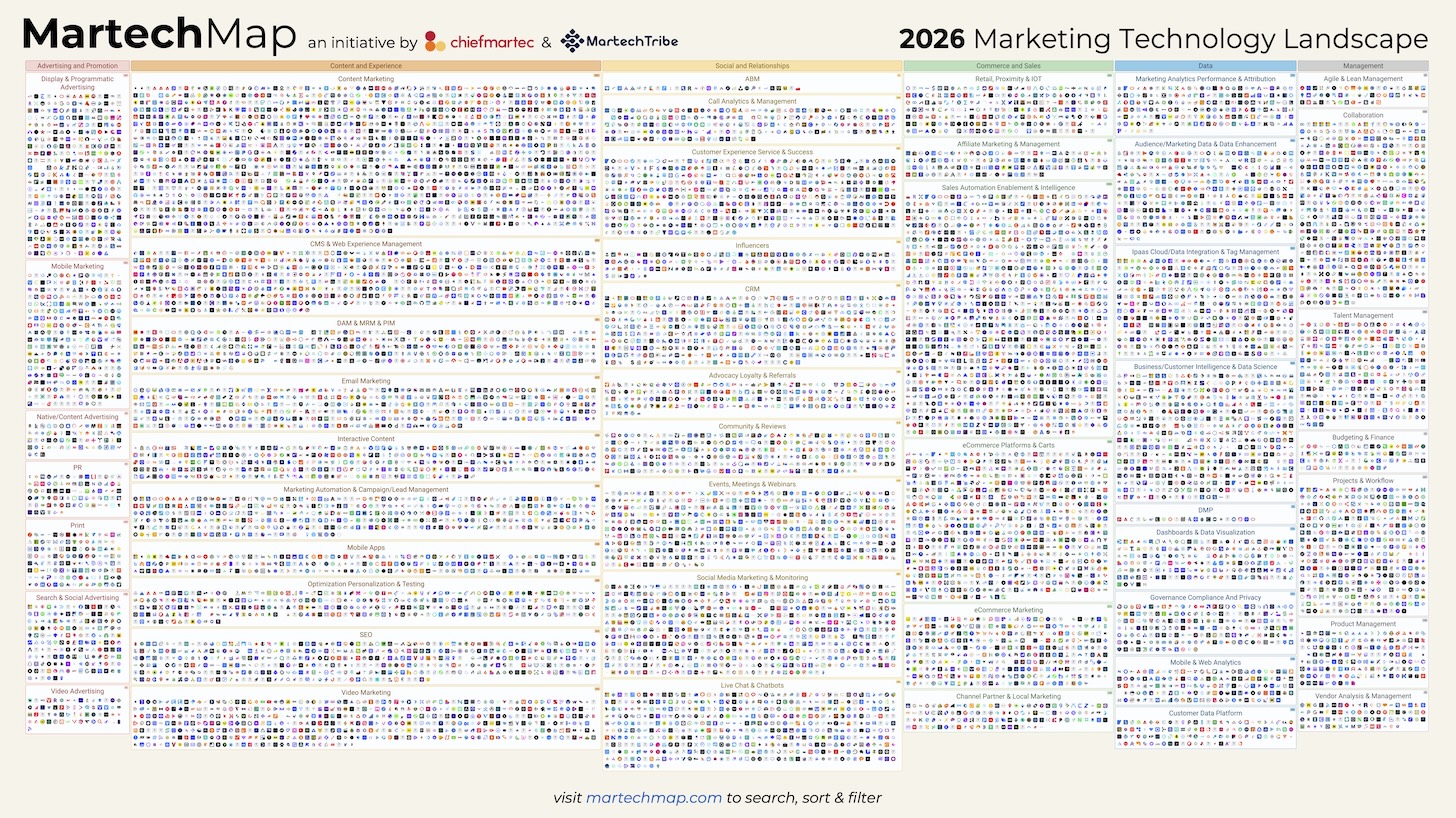
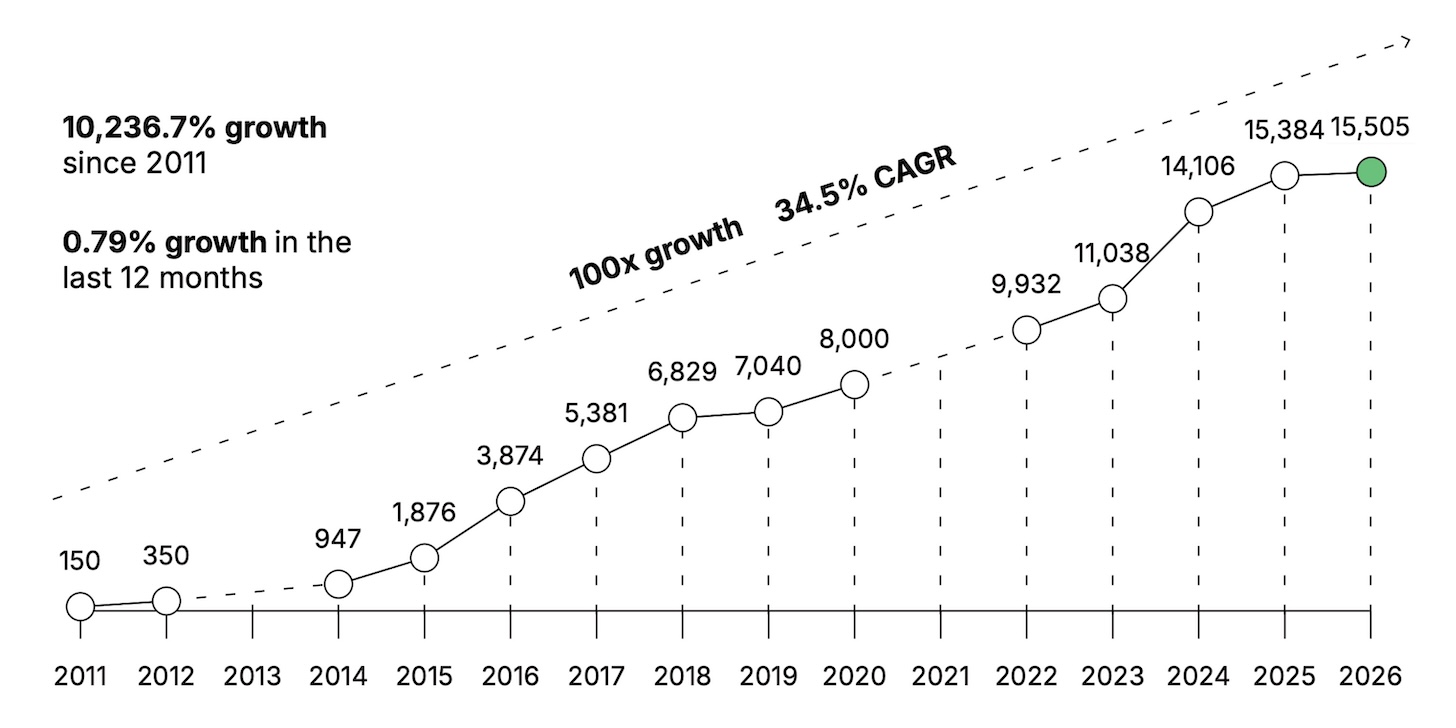
Today, that narrative has shifted. With the release of the 2026 Marketing Technology Landscape, we are witnessing a phenomenon that many industry observers once thought impossible: the growth has effectively stalled. With 15,505 products now documented, the industry grew by a mere 0.79% over the past year. After a decade and a half of explosive, "Jurassic Park-style" proliferation, the martech ecosystem appears to have hit a definitive plateau.
The Chronology of Expansion: From 150 to 15,000
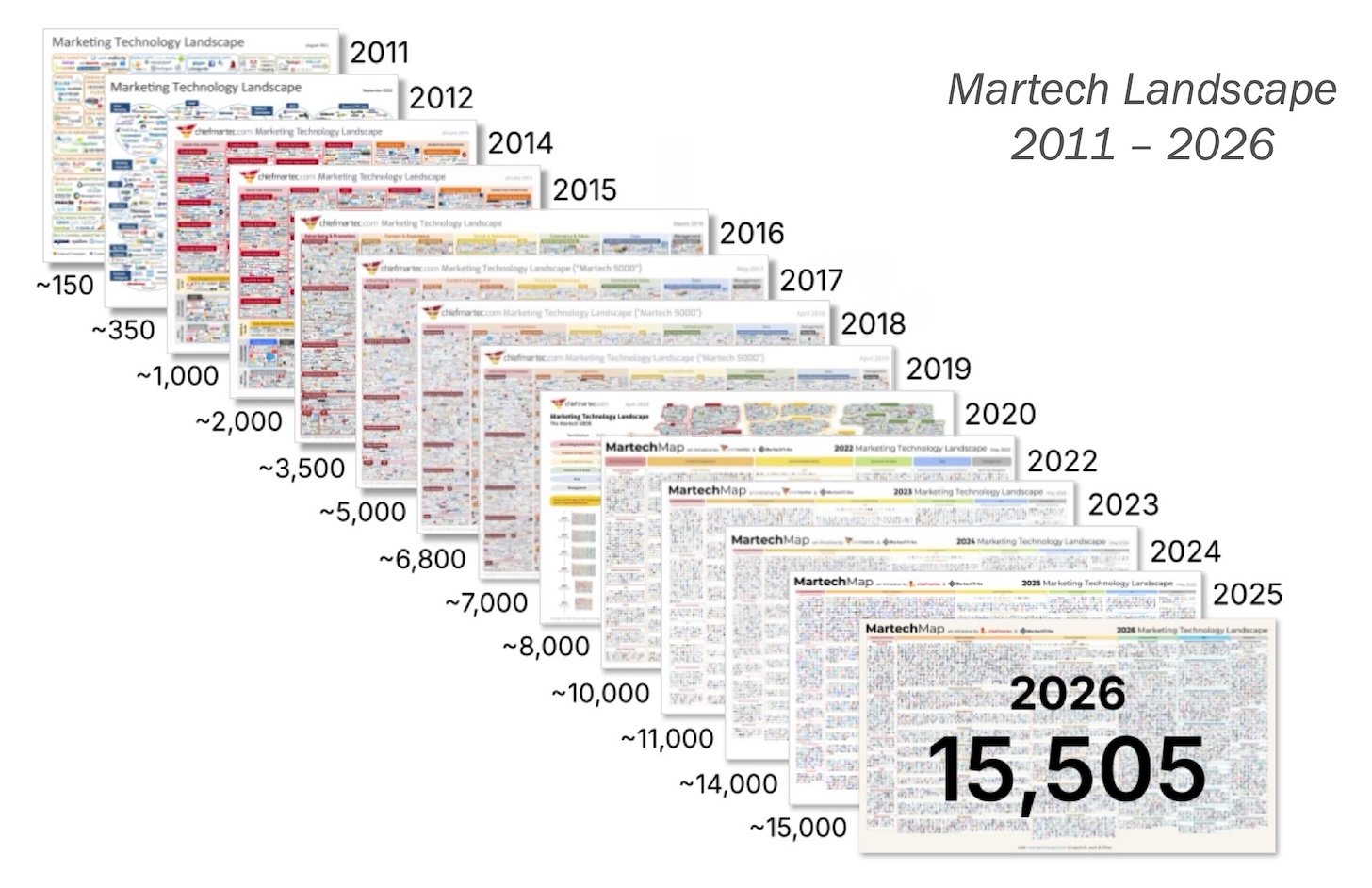
To understand the significance of this year’s stagnation, one must look at the historical trajectory of the landscape. When the first iteration was published in 2011, it featured a modest 150 products. It was a nascent ecosystem, easy to grasp and categorize.
By 2015, that number had swelled to 2,000. By 2020, it surpassed 8,000. Each year, pundits predicted a "great consolidation" that never quite materialized. As soon as one wave of mergers occurred, two waves of agile, AI-driven, or niche-focused startups took their place.
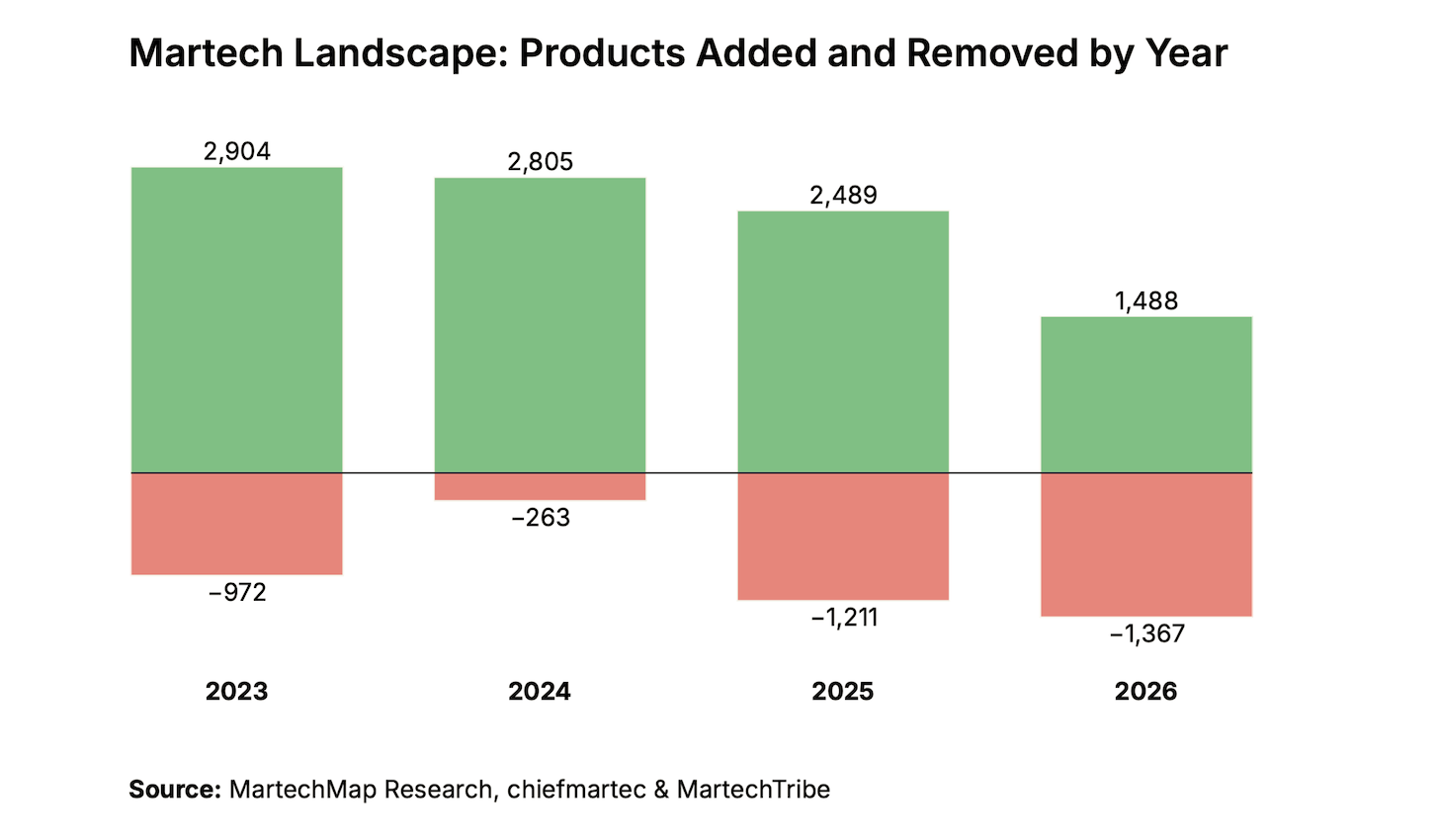
The 2026 data, however, tells a different story. The net addition of only 121 products—a rounding error compared to the thousands added in previous years—suggests that the era of unbridled, horizontal growth is reaching its natural conclusion. We have moved from a period of "mass explosion" to one of "market churn."
Beneath the Surface: The Anatomy of Market Churn
While the net growth figure of 0.79% suggests a stagnant market, the underlying data reveals a sector in the throes of a violent, necessary transformation. This is not a market that has frozen; it is a market that is aggressively self-correcting.
This year, the landscape saw 1,488 new products added, representing a 40% decline in new entrants compared to the previous year. Simultaneously, 1,367 products were removed from the ecosystem. This represents a 13% increase in exits. The math is clear: the influx of new capital and startups has slowed, while the rate of attrition has accelerated.
The Death of the SaaS Middle-Class
A significant portion of these exits—51.7%—comes from the "first wave" of SaaS products that emerged between 2010 and 2019. These were not all failures; many were successful businesses that simply lost their competitive edge.
Data shows that the casualties are concentrated among mid-sized firms. Roughly 45.5% of the removed products were generating between $1 million and $10 million in revenue, with headcount figures indicating that these were companies that had achieved "real" business status but failed to reach "inevitable" status. In the current economic climate, these companies are being squeezed from two directions:
- Incumbents: Large, established platforms are bundling AI features, effectively commoditizing the features that mid-sized SaaS companies previously relied on for differentiation.
- AI-Native Disrupters: Nimble, AI-first startups are launching with lower overhead and higher utility, attacking the incumbents from below.
The Growth Engines: AI and the New Utility
If the overall landscape is flat, where is the growth? The State of Martech 2026 report highlights that growth is not absent; it has simply migrated to mature, essential categories that are being fundamentally reshaped by artificial intelligence.
The Rise of Content and Commerce
Surprisingly, the fastest-growing categories are not the "shiny new objects" of 2023 or 2024. Instead, they are the stalwarts of the web:
- CMS & Web Experience Management: Up 21.4% to 612 products.
- Ecommerce Platforms & Carts: Up 19.9% to 656 products.
The driver behind this growth is the shifting nature of the web itself. For two decades, web architecture was designed for two entities: the human visitor and the search engine crawler. Today, a third entity has arrived: the AI agent. These autonomous machines are acting on behalf of users to extract, compare, and act upon information. Businesses are scrambling to update their CMS and commerce stacks to ensure their product data and content are "machine-readable" and optimized for AI-driven discovery.
Context Engineering as the New Frontier
The report identifies "context engineering" as the critical competitive advantage for the next three years. As companies deploy their own AI concierges, sales assistants, and advisors, the performance of these agents relies less on the underlying Large Language Model (LLM) and more on the quality of the data they access.
This has triggered a secondary boom in supporting categories:
- Mobile & Web Analytics (up 11.3%): Marketers are desperate to instrument the customer journey as more interactions move to "black box" AI environments.
- iPaaS and Data Integration (up 8%): As agents need to pull data from disparate systems to provide accurate answers, the connective tissue between those systems has become a high-priority investment.
- Governance, Compliance & Privacy (up 7.1%): With the rise of autonomous agents, the need for robust "guardrails" and data security has never been higher.
Implications for the Modern CMO
For marketing leaders, the implications of reaching "Peak Martech" are profound. The strategy of "buying everything" is officially over. The era of rationalization has begun.
From "Collection" to "Curation"
For years, the sheer volume of choices allowed for a "best-of-breed" approach that often led to bloated, fragmented technology stacks. In 2026, the focus must shift to curation. CMOs are now prioritizing the "connective tissue" of their tech stacks. If a product cannot integrate seamlessly with an agent-based architecture, or if it does not offer clear utility that is not already covered by a core platform, it is increasingly likely to be pruned.
The Rebirth of Orchestration
Perhaps the most telling statistic in the 2026 report is the 5.9% growth in Marketing Automation and Campaign/Lead Management. This is a category long considered "mature," yet it is seeing a resurgence. Why? Because AI is changing the way orchestration works. Marketing automation is no longer just about email triggers; it is about managing the workflows of agents. When AI begins to manage the customer journey, the orchestration layer becomes the "brain" of the entire marketing operation.
Conclusion: The Quiet Revolution
The 2026 Martech Landscape is a testament to the fact that the industry has finally matured. While the total number of logos may no longer be doubling, the complexity and power of the tools within the ecosystem are growing at an unprecedented pace.
We are leaving the era of "more" and entering the era of "better." The "peak martech" label shouldn’t be interpreted as a signal that innovation has stopped. Rather, it indicates that the industry has moved beyond the chaotic, explosive growth of its adolescence and into a more disciplined, productive, and AI-centric adulthood.
As the market continues to churn, the survivors will be those who stop chasing the "next big category" and start focusing on the fundamental challenge of the AI age: providing high-quality, contextual data to the machines that are now shaping the customer experience. The river of martech is still flowing—it’s just running deeper than it ever has before.
For a comprehensive breakdown of the 15,505 products, a deep dive into 70 AI use cases, and further analysis on the future of the marketing stack, the full State of Martech 2026 report is available as an ungated, free resource. For researchers and strategists, the interactive, searchable version of the landscape can be accessed at MartechMap.com.
