

Beyond the Click: Mastering Customer Engagement Analytics for Sustainable Growth
In the contemporary digital landscape, the difference between a thriving online business and a stagnant one often lies in a single, elusive metric: engagement. It is rarely clear whether a visitor is a genuine prospect or merely a digital passerby. To bridge this gap, businesses are increasingly turning to customer engagement analytics—the systematic process of tracking, interpreting, and acting upon data that reveals how users interact with a brand, product, or service.
By moving beyond vanity metrics and focusing on behavioral insights, companies can decode the "why" behind user actions. This article explores how to harness these analytics to build stronger, more profitable connections with your audience.
Main Facts: The Anatomy of Engagement
Customer engagement analytics encompasses every interaction a user has with a digital ecosystem. It is not limited to a single platform; rather, it tracks the entire user journey across websites, mobile applications, social media, and email marketing.
At its core, engagement is defined by any meaningful interaction that occurs before a final conversion. Whether it is a user lingering on a blog post, watching a product demo video, or interacting with a chatbot, these touchpoints act as breadcrumbs that signal intent. While conversions—such as a purchase or a subscription—are the ultimate goal, engagement analytics focus on the "mid-funnel" activities that nurture a prospect toward that final decision.
The primary objective is to move from passive observation to active participation. By understanding how users engage, businesses can identify friction points, optimize their user experience (UX), and ultimately foster the trust and affinity required for long-term customer retention.

Chronology of the User Journey
To implement an effective analytics strategy, one must view the user experience through a chronological lens. The path to conversion is rarely linear; it is a complex web of touchpoints that unfold over time.
1. The Discovery Phase
The journey begins when a user first encounters your brand—perhaps through a social media advertisement or a search engine result. Here, the primary engagement metrics are Click-Through Rates (CTR) and Page Views. These metrics inform the business whether the initial hook is compelling enough to warrant further investigation.
2. The Consideration Phase
Once the user has entered the site or app, they move into the consideration phase. During this stage, Sessions and Engagement Time become critical. Does the user stay to explore? Are they reading multiple pages? A high bounce rate here suggests that while the initial marketing may be effective, the on-page content fails to resonate or satisfy the user’s intent.
3. The Interaction Phase
In this stage, the user moves from passive consumption to active interaction. This includes clicking on internal links, adding items to a wishlist, or engaging with interactive media. This is where custom event tracking becomes vital—measuring specific behaviors that indicate a high level of interest.
4. The Commitment Phase
Finally, the user reaches the bottom of the funnel. While this is the moment of conversion, it is important to note that the preceding engagement metrics are what enabled this success. By analyzing the data from the previous three phases, businesses can refine their messaging to ensure that users reach this final stage with higher frequency and confidence.

Supporting Data and Metrics
Data is the lifeblood of engagement analytics. Without it, business decisions remain speculative. Below are the key metrics that provide the most actionable intelligence:
Website & App Metrics
- Engagement Time: In platforms like GA4, this is a refined metric measuring the actual time a window or tab is in focus. It is a more accurate representation of "attention" than simple page duration.
- Pages per Session: A high ratio here suggests your content is sticky and your site architecture facilitates smooth navigation.
- Engaged Sessions: A sophisticated metric that filters out "accidental" traffic. It defines a session as engaged if it lasts longer than 10 seconds, has a conversion event, or includes multiple page views.
Paid and Social Media Metrics
- CTR (Click-Through Rate): This remains the gold standard for gauging the relevance of your creative and copy. A low CTR indicates a misalignment between your audience’s needs and your messaging.
- Open Rates: Essential for email marketing. If your open rates are plummeting, your engagement strategy must prioritize subject-line testing and audience segmentation.
Product-Level Engagement
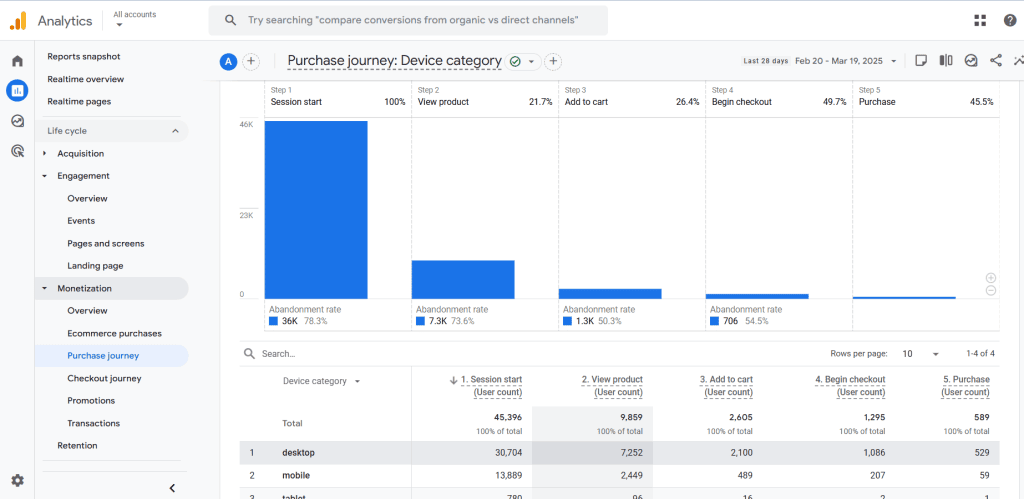
For e-commerce, the funnel is specific:
- Add-to-Cart Rates: High engagement but low cart additions? Your pricing or product descriptions may be the bottleneck.
- Cart Abandonment Rate: A critical indicator of friction during the final, most sensitive stage of the user journey.
Official Perspectives: The Strategic Value of Insights
Industry experts, including those from analytical powerhouses like MeasureSchool, emphasize that engagement metrics are not just numbers—they are business narratives.
"Engagement analytics are the bridge between the top of the funnel and the bottom line," says one industry lead. "When businesses treat engagement as a flexible, objective-driven metric, they can pivot from reactive marketing to predictive growth."
The professional consensus suggests that companies must customize their analytics configurations. Default settings in tools like GA4 are excellent starting points, but they are rarely sufficient for specific business models. For instance, a video streaming service should define "engagement" as "watching 75% of a video," while a SaaS company might define it as "successfully completing the onboarding tutorial."
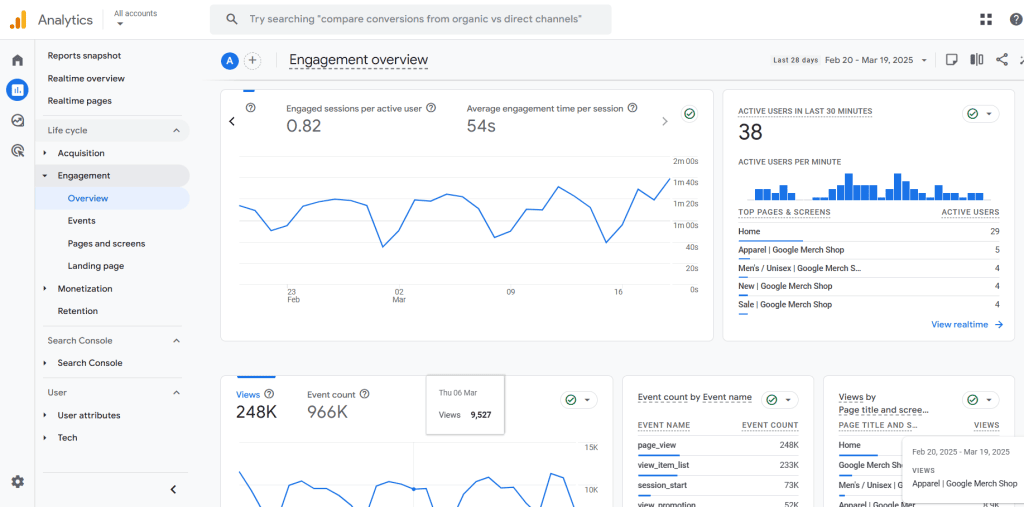
By tailoring these metrics, organizations move from general data collection to specific business intelligence, allowing stakeholders to justify marketing spend and optimize user journeys based on empirical evidence rather than intuition.
Implications for Long-Term Strategy
The implications of robust engagement analytics are profound. Businesses that ignore these signals risk operating in a vacuum, where they continue to attract users who have no intention of converting.
1. Identifying Bottlenecks
Engagement analytics act as a diagnostic tool. If you see high traffic but low session duration, you have a content or UX problem. If you have high session duration but low conversion, you have a sales-copy or pricing problem. By isolating where the drop-off occurs, you can surgically improve your site.
2. Improving Retention
Customer acquisition costs (CAC) are rising across all digital channels. Consequently, retention is the new growth engine. By tracking engagement, you can identify "at-risk" users who are becoming less active and trigger re-engagement campaigns, such as personalized emails or special offers, before they churn entirely.
3. Creating a Feedback Loop
Engagement data provides a continuous feedback loop. When you introduce a new feature or change your website layout, engagement metrics provide an immediate scorecard. This allows for an iterative approach to development, where data, not opinion, dictates the roadmap.
4. Cultivating Trust
Ultimately, engagement is about building a relationship. When a brand consistently provides value—measured by deep engagement—it establishes authority and trust. This trust is the foundation of sustainable growth, transforming one-time visitors into brand advocates who drive word-of-mouth marketing.
Conclusion
Mastering customer engagement analytics is no longer a luxury; it is a necessity for survival in a saturated digital marketplace. By systematically collecting data, identifying key behavioral patterns, and implementing a rigorous testing and optimization framework, businesses can unlock the secrets of their audience’s intent.
The goal is not to track for the sake of tracking, but to understand the human experience behind the screen. As you refine your approach, remember that every metric is an opportunity to improve the user journey. Start small, define what engagement looks like for your specific business goals, and use the insights gained to foster long-term, meaningful relationships with your customers.
How is your team currently measuring engagement? Are you looking at the right data, or are you still focused on the vanity metrics that don’t drive results? The tools are available; the next step is applying them to build a smarter, more responsive digital strategy.
