
The Great Agency Pivot: How AI is Rewriting the Rules of Marketing Engagement
The global marketing landscape is undergoing its most profound structural shift since the dawn of the internet. For decades, the agency model was defined by billable hours, headcount-heavy execution, and a clear separation between creative "thinkers" and operational "doers." Today, that model is being dismantled in real time.
A stark divide is emerging within the industry: on one side are the traditionalists clinging to legacy structures, and on the other are the "AI-native" pioneers who are fundamentally reimagining what an agency can be. These forward-thinking firms are not merely bolting ChatGPT onto their existing workflows; they are building AI-powered systems, expanding into high-level business consulting, and architecting entirely new paradigms for strategy, creative production, and operational performance.
The Evolution of the Agency: A Chronology of Change
To understand where the industry is going, one must look at how we arrived here.
2010–2018: The Era of Digital Specialization. Agencies focused on scaling specific digital disciplines—SEO, social media, and programmatic advertising. The goal was to provide specialized expertise that internal teams lacked.
2019–2022: The Consolidation Phase. Clients began demanding "integrated" solutions. Agencies grew by acquiring smaller boutique shops to offer full-service suites under one roof. The focus was on "omnichannel" presence, but the underlying labor model remained manual and linear.
2023–Present: The AI-Native Disruption. The launch of accessible generative AI models shifted the value proposition. If an AI can perform the tactical heavy lifting, what is the role of the agency? The current wave of innovation is moving away from labor arbitrage and toward intelligence orchestration. The most successful agencies are now positioning themselves as strategic partners who provide the governance, proprietary data, and custom agents necessary to drive growth in an automated world.
Supporting Data: Why the Model Must Shift
The pressure to evolve is not purely academic; it is driven by client demand for measurable impact. According to industry surveys, over 70% of CMOs are currently under pressure to demonstrate how AI investments are contributing to bottom-line revenue.
Traditional agencies that rely on human-only output are struggling with three primary hurdles:
- The Speed Gap: Manual content production cycles are too slow to compete with the rapid-fire testing cycles enabled by AI.
- The Cost Barrier: Clients are increasingly unwilling to pay human-rate margins for repetitive, automatable tasks.
- The Complexity Crisis: With the rise of AI-driven search (AIO) and complex buyer journeys, businesses need specialized technical partners who understand the "plumbing" of the modern MarTech stack.
Leaders in the AI-Native Agency Shift
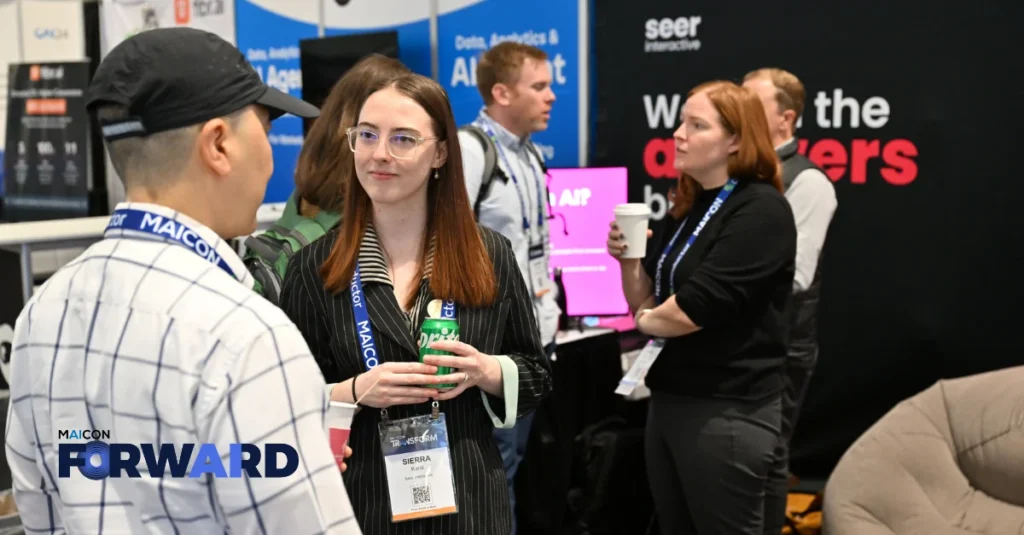
As the industry pivots, a group of vanguard agencies—many of whom will be featured at the upcoming Marketing AI Conference (MAICON)—are setting the blueprint for the future.
Algomarketing: People and Process Transformation
Algomarketing is moving beyond simple tool implementation by focusing on "People and Process Transformation." By embedding senior practitioners into client organizations, they audit existing workflows to identify friction points. They then co-build custom, AI-native agents designed to automate those specific tasks, paired with intensive coaching to ensure internal teams are equipped to manage their new AI-augmented reality.
Demand Spring: The Revenue-First Consultancy
B2B marketing is complex, and Demand Spring recognizes that AI is only as good as the strategy behind it. Operating as a revenue marketing consultancy, they integrate AI advisory into the broader context of ABM (Account-Based Marketing), buyer journey optimization, and marketing automation. Their approach focuses on establishing the essential governance frameworks that allow enterprises to scale AI safely and effectively.
EMMIE Collective: Fractional Operations at Scale
The EMMIE Collective has discarded the traditional "agency of record" mantle in favor of a fractional, embedded model. They provide deep expertise across platforms like Salesforce, HubSpot, and Marketo, acting as an extension of the client’s own team. By offering on-demand, platform-specific operational support, they ensure that the technical infrastructure of marketing keeps pace with the strategic ambition of the business.
Fjorge: The Technical Architecture Partner
While many agencies focus on the "message," Fjorge focuses on the "medium." As a digital development partner, they work behind the scenes with other agencies and internal teams to build custom web applications, mobile experiences, and e-commerce platforms. Their role is the critical bridge between creative intent and technical execution, providing the complex development work required to make AI-integrated digital experiences functional.
Intercept: The AI-Native Delivery Model
Intercept has built a reputation for tackling complex enterprise buying journeys. What distinguishes them is their proprietary AI-native delivery model. By using custom-built AI tools to handle research, data analysis, and content production, they keep the human element focused exclusively on high-level strategy and creative vision. Through "Intercept Labs," they invite clients to collaborate on the development of new, experimental AI-driven marketing methodologies.
Level Agency: AI Orchestration
Level Agency approaches the customer journey through the lens of AI orchestration. They build repeatable systems that bridge the gap between media planning, content creation, and data science. By connecting these silos through a unified, AI-powered architecture, they provide brands with a "brain" that optimizes performance in real-time, regardless of the complexity of the purchase decision.
Seer Interactive: The Lab-to-Consulting Pipeline
With over two decades of experience, Seer Interactive has successfully bridged the gap between legacy digital marketing and modern AI research. Their internal "AI Lab" serves as an incubator where they stress-test new tools before applying them to client work. This hands-on experience has birthed "SeerAdvance," a dedicated consulting arm that helps large brands build their own custom AI roadmaps.
Soarion Digital: Conquering AI Search
As search engines evolve into answer engines, Soarion Digital is pioneering strategies for AI-driven discovery. They focus on the "AI search foundation," moving away from traditional keyword stuffing toward citation-driven content and third-party validation. Their methodical process helps brands become the "go-to answer" for AI tools, systematically growing referral traffic in a landscape where traditional SEO is no longer the only game in town.
Implications for the Industry
The shift toward these new agency models carries significant implications for both service providers and brand leaders:
- Commoditization of Execution: The value of "making" is falling. If an agency’s primary service is writing basic copy or executing simple ad buys, their margins will continue to compress. The new premium is on strategy, governance, and proprietary data integration.
- The Rise of the "Partner-Operator": The line between an agency and a management consultancy is blurring. Agencies are increasingly expected to act as internal partners who understand the client’s data architecture and technical limitations.
- Talent Re-skilling: The agency of the future requires a hybrid workforce. Creative directors need to understand LLM prompting, while data analysts need to understand brand narrative. The most successful agencies are those that foster this cross-disciplinary fluency.
Conclusion: Preparing for the Next Phase
The "status quo" is no longer a viable long-term strategy for any agency. As the examples above demonstrate, the path forward involves embracing transparency, technical literacy, and a willingness to automate the routine to amplify the exceptional.
For marketing leaders and business owners, the message is clear: the opportunity to gain a competitive advantage rests in how quickly you can integrate these AI-native capabilities into your ecosystem. The agencies that are succeeding today are those that view AI not as a replacement for human work, but as the engine that allows human talent to scale their impact.
To continue this exploration of how AI is transforming the marketing ecosystem, industry leaders are invited to gather at MAICON 2026, held October 13–15 in Cleveland, Ohio. The conference promises to move the needle from theoretical experimentation to real-world impact, providing a forum for the next generation of agency leaders to define the future of the industry.
