
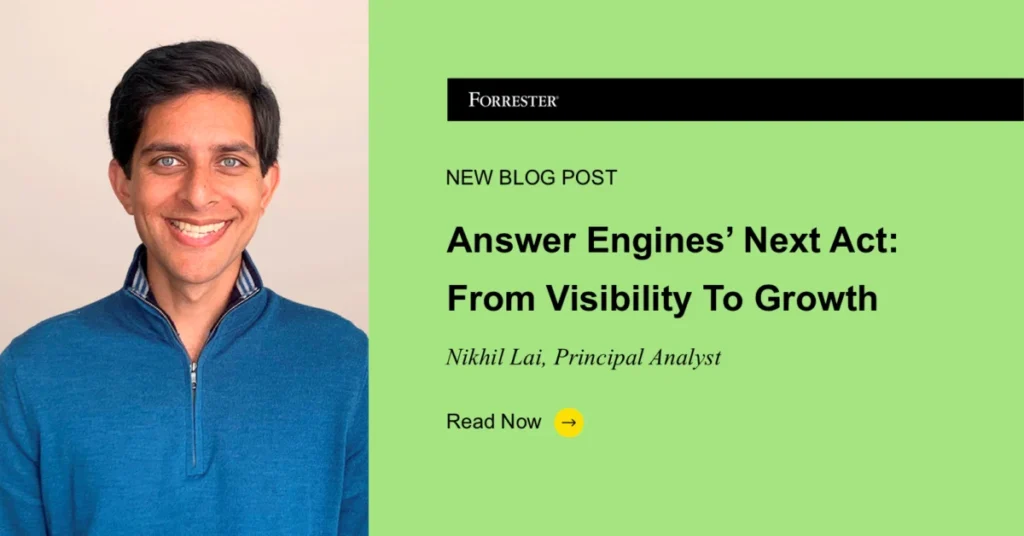
Beyond the Checklist: Why Answer Engine Optimization Is the New Frontier of Brand Strategy
In the rapidly evolving digital landscape, the traditional playbook for search engine optimization (SEO) is undergoing a radical metamorphosis. As artificial intelligence-driven platforms—collectively known as "answer engines"—such as ChatGPT, Claude, and Gemini become the primary interfaces for information retrieval, the old "checklist" approach to search is proving increasingly obsolete. According to new research from Forrester, treating Answer Engine Optimization (AEO) as a simple technical task ignores its profound impact on brand strategy and interdisciplinary workflows. To remain competitive, modern marketers must pivot from merely harvesting demand to actively orchestrating influence within an AI-first ecosystem.
Main Facts: The Paradigm Shift in Digital Discovery
The fundamental shift lies in how consumers interact with information. Traditional search engines served as indexers, pointing users toward external websites. Answer engines, by contrast, act as synthesized brand media. They do not just reflect existing demand; they actively create it. By providing direct, conversational responses, these platforms lift branded search activity, confer salience on specific products, and build the "memory structures" that buyers retain throughout their decision-making journeys.
The primary fact for CMOs to digest is this: Answer engines are now the most important audience for your brand. They determine when and how buyers form preferences. When a user asks an AI tool about the "best high-yield savings accounts," the engine doesn’t just provide a list—it guides the user into a deeper, branded evaluation, often prompting follow-up questions that link specific products to the user’s unique financial situation. The engine has moved from being a librarian to a trusted, albeit algorithmic, advisor.
Chronology: The Evolution of Search to Synthesis
The trajectory of search technology has been moving toward this moment for over a decade, but the acceleration in the last 24 months has been unprecedented:
- 2010–2018: The Era of "Blue Links." SEO was dominated by keyword stuffing, backlink building, and technical site health. The goal was to secure a top-ten spot on Google’s results page.
- 2019–2022: The Rise of Featured Snippets. Search engines began attempting to answer questions directly on the results page, forcing marketers to optimize for "position zero."
- 2023: The Generative AI Explosion. With the mainstream adoption of LLMs (Large Language Models), the interface shifted from a query-to-list model to a query-to-answer model.
- 2024–2025: The AEO Integration. Marketers began to realize that traditional SEO is insufficient. The current phase involves "AI-integrated brand building," where visibility is no longer just about domain authority but about the brand’s presence in the narrative training data of AI models.
- 2026 and Beyond: The future, as identified by industry analysts, points toward a heavily commercialized landscape where advertisements and AI-driven shopping experiences dominate the answer output.
Supporting Data: Why Cross-Functional Coordination is Critical
The influence of answer engines is not controlled by a single department. Because these engines synthesize information from a vast, decentralized array of sources—ranging from technical documentation to social media chatter—the process of "optimizing" for them is a complex, omnichannel challenge.
Data suggests that the most successful brands are those that treat AEO as an interdisciplinary project. Key areas of integration include:
- Search and Social Convergence: Social media listening is now a critical input for AEO. Engines aggregate FAQ-style conversations, prioritizing the "vulnerable, authentic voices" found on Reddit, YouTube, and LinkedIn over the sterile, corporate language of a company’s own website.
- Narrative Authority: Viral narratives supply the vocabulary and sentiment that AI models rely on. If your brand is discussed with specific adjectives or within certain contexts on social platforms, those associations are encoded into the AI’s "opinion" of your brand.
- The "Expertise" Gap: Forrester’s upcoming Answer Engine Optimization Capability Prioritization Tool highlights that the primary barrier to effective AEO is not technical skill but the lack of an "AEO center of excellence" that bridges the gap between SEO practitioners, social media teams, and brand strategists.
Official Perspectives and Expert Analysis
Industry leaders are warning that the "check-the-box" mentality is a strategic liability. As noted in the recent Forrester report, Turn AEO Into Brand Growth, the focus must shift from "ranking" to "being the preferred answer."
"Influencing when and how answer engines mention and cite brands is a thorny process problem," the report states. It emphasizes that marketers cannot simply "buy" their way into the answer box. Instead, they must cultivate a digital ecosystem where their brand is the logical conclusion to the consumer’s inquiry. This involves ensuring that authoritative, high-quality, and sentiment-rich content exists across the diverse channels that AI models crawl for information.
Furthermore, the anticipation of the Answer Engine Optimization Technologies Landscape (Q3 2026) underscores that the industry is preparing for a new wave of tools. These technologies will aim to automate the monitoring of brand sentiment across AI responses, moving beyond standard search rank tracking into a more nuanced analysis of "narrative share of voice."
Implications for Modern Brand Strategy
The implications for brands are profound and necessitate a fundamental reorganization of marketing resources.
1. From "Keyword Intent" to "Journey Context"
Marketers must stop obsessing over singular high-volume keywords. Instead, they must map the consumer journey to identify where AI tools are being used to "induce" interest. If a customer is asking, "Is [Brand] worth it?", the brand must ensure that the supporting evidence—reviews, comparisons, and social proof—is readily available and highly visible to the AI crawlers that inform the answer.
2. The Social-SEO Hybrid
The most significant operational shift is the integration of SEO and social media teams. Traditionally, these teams have operated in silos. In the era of AEO, they are two sides of the same coin. Social teams provide the "authentic voice" and "FAQ-style" content that AI models crave, while SEO teams provide the technical structure to ensure that content is easily discoverable and authoritative.
3. Investment in AI-Integrated Brand Building
Budgeting for 2027 should prioritize an "AI Reset." Rather than simply increasing spend on traditional digital advertising, organizations should look to invest in:
- Governance: Ensuring that the information the brand puts out is accurate, consistent, and easy for AI to interpret.
- Contextual Readiness: Training LLMs through public-facing content that establishes the brand as the authority in its niche.
- Measurement: Shifting KPIs from "Click-Through Rate" (CTR) to "Narrative Inclusion" and "Sentiment Score" within AI responses.
4. Navigating the "Ad-Heavy" Future
As answer engines move toward monetization, the landscape will become increasingly pay-to-play. However, even in a world of AI-shopping and sponsored answers, organic brand authority remains the bedrock of trust. A brand that is cited organically by an AI as a "top choice" carries far more weight than a paid placement, as the consumer perceives the citation as an objective recommendation rather than a forced advertisement.
Conclusion: The Path Forward
The transition to an AI-dominated search landscape is not a temporary trend; it is the new reality of the digital funnel. Brands that cling to legacy SEO tactics while their competitors are busy orchestrating narratives across the AI ecosystem will find themselves invisible.
The successful marketer of 2026 will be the one who treats AEO not as a technical chore, but as a core competency of brand growth. By prioritizing cross-functional collaboration, embracing the power of social sentiment, and investing in the tools that measure narrative impact, companies can turn the disruption of AI into their greatest strategic advantage. As Forrester experts suggest, the time to build this "center of excellence" is now—before the algorithms become even more deeply entrenched in the buyer’s journey.
For those looking to get ahead, the key is to stop fighting the engine and start feeding it the high-quality, authentic, and context-rich content it needs to make your brand the obvious, inescapable answer.
