
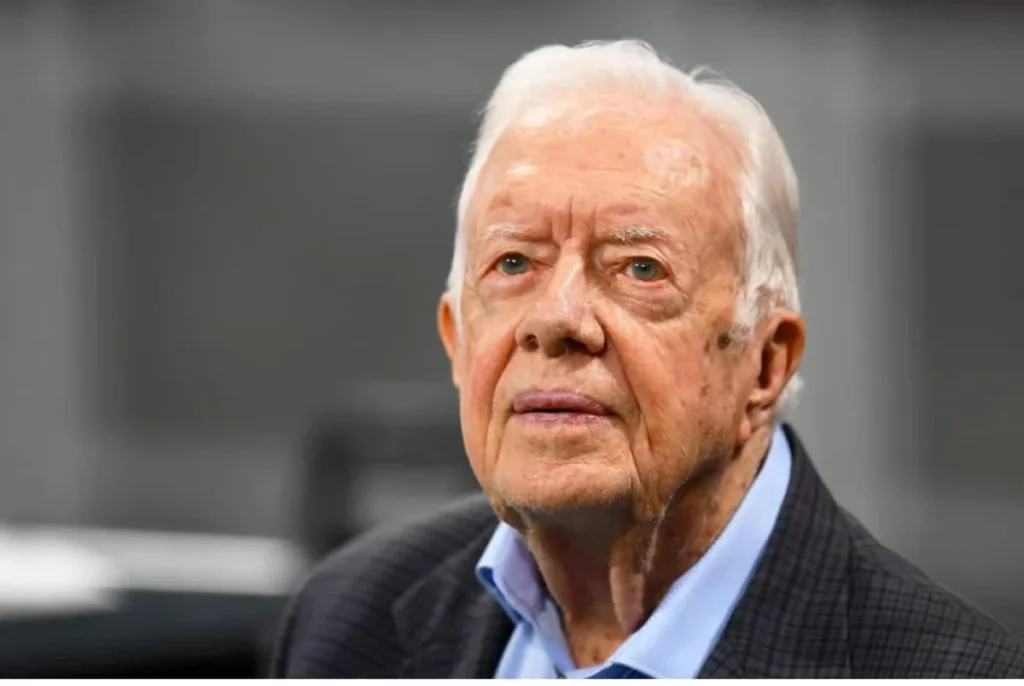
A Legacy of Service: Remembering the Life and Character of President Jimmy Carter
The passing of Jimmy Carter marks the end of an extraordinary chapter in American history. As the 39th President of the United States, Carter occupied a unique space in the national consciousness—a man whose post-presidency arguably eclipsed the historical perception of his time in the Oval Office. Beyond the geopolitical complexities of the late 1970s, Carter will be remembered as a global humanitarian, a tireless advocate for peace, and a symbol of integrity in public service.
To understand the measure of the man, one must look past the headlines of his administration and toward the quiet, personal moments that defined his character. For those who encountered him, whether on the global stage or in small, intimate settings, Carter was defined by a rare, unassuming grace.
A Moment of Grace: A Personal Encounter
In early 1988, years after leaving the White House, Carter visited a local community for a speaking engagement. The atmosphere was charged with the typical expectations of a presidential Q&A session. Among the attendees was a curious observer selected to participate in a brief, staged interaction with the former President.
Recalling the event, the attendee notes the atmosphere: "We were queued up, six of us chosen to ask questions. I was positioned first in line. When I stepped up to the microphone, I decided to depart from the script of political interrogation. I said, ‘Hello President Carter. I really do not have a question.’"
In a display of his characteristic wit and patience, Carter responded, "I like those kind of questions."
The exchange shifted from political inquiry to a moment of genuine appreciation. The attendee continued, "I want to thank you for all the work you do for Habitat for Humanity. You continue to give back and help our country even after your presidency has ended."
Carter, often criticized during his term for policy failures, responded with humility and depth. He spent the next ten minutes discussing the mission of Habitat for Humanity with a passion that silenced the political noise of the room. While other participants in the queue sought to press him on the grievances of his administration, Carter remained engaged, earnest, and deeply human.
The moment of grace arrived as he exited. As he walked past the front row, the former President paused, caught the eye of the person who had thanked him, and with a subtle wink and a wave, mouthed, "Thank you." It was a fleeting interaction that perfectly captured the essence of a man who never viewed his service as something that concluded with the departure from the White House.

Chronology: From Plains to the Presidency and Beyond
James Earl Carter Jr.’s life is a testament to the trajectory of the American Dream, rooted in the soil of Georgia and extended to the far reaches of the globe.
- 1924: Born on October 1 in Plains, Georgia.
- 1946: Graduates from the U.S. Naval Academy and begins a career in the Navy, eventually serving on nuclear submarines.
- 1962: Elected to the Georgia State Senate, marking the beginning of his political career.
- 1971–1975: Serves as the 76th Governor of Georgia, focusing on civil rights and government reorganization.
- 1977–1981: Serves as the 39th President of the United States. His term is defined by the Camp David Accords, the Panama Canal Treaties, and the Iran Hostage Crisis.
- 1982: Founds The Carter Center with Rosalynn Carter to promote peace and health globally.
- 2002: Awarded the Nobel Peace Prize for his decades of untiring effort to find peaceful solutions to international conflicts.
- 2025: Passes away, leaving behind a legacy that has fundamentally altered the role of the "former president."
Supporting Data: The Humanitarian Impact
While the economic challenges of the late 1970s—including stagflation and the energy crisis—are often the focus of historical scrutiny, the data regarding Carter’s humanitarian efforts tells a different story.
The Carter Center, since its inception in 1982, has monitored over 100 elections in 39 countries to ensure democratic integrity. Under his guidance, the center has been instrumental in the near-eradication of Guinea worm disease. When Carter began his work, there were an estimated 3.5 million cases annually in 21 countries; today, that number has been reduced by more than 99.9%.
Furthermore, his association with Habitat for Humanity transformed the organization from a grassroots initiative into a global housing powerhouse. Since his first "Carter Work Project" in 1984, the organization has assisted millions of families in finding decent, affordable shelter. These data points reflect a post-presidency that focused on the structural improvement of human lives rather than the maintenance of political power.
Official Responses and Global Reflections
The reaction to Carter’s passing has been universal in its reverence. Political leaders from across the aisle have acknowledged the unique path he forged.
"Jimmy Carter was a man of profound faith and unshakeable principle," one official stated. "He redefined what it means to be a former president, proving that one’s capacity to serve the American people—and the people of the world—does not end when the term of office expires."
International figures have echoed these sentiments, particularly highlighting his role as an honest broker in peace negotiations. The Nobel Committee, in its reflection on his life, noted that Carter "remained an active and engaged humanitarian until the very end, demonstrating that peace is a process, not a destination."
Implications: A New Model for the Presidency
The passing of Jimmy Carter forces a re-evaluation of how history assesses the American presidency. For much of the 20th century, the role of a former president was somewhat ambiguous—often confined to the role of elder statesman or retired dignitary.
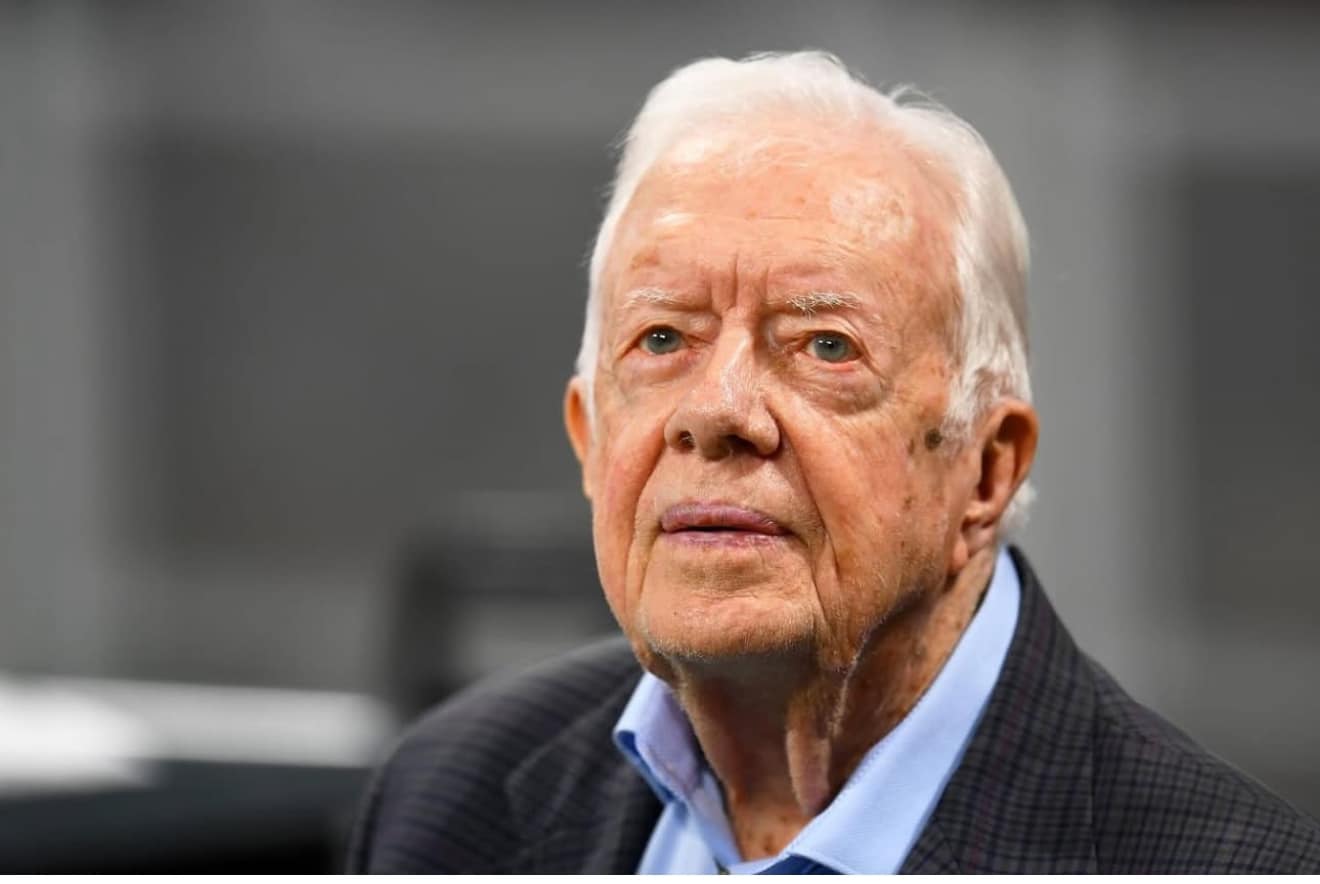
Carter fundamentally altered this paradigm. By throwing himself into the "un-glamorous" work of international election monitoring, disease eradication, and domestic infrastructure projects, he set a standard of "active service" that his successors have felt compelled to emulate.
The implication of his life is clear: The presidency is not merely an executive office; it is a platform. When that platform is utilized to address the fundamental needs of humanity, the impact can far exceed the legislative achievements of any single term.
As the nation mourns, it also reflects on the grace displayed in small, quiet moments—the kind of grace that the attendee in 1988 witnessed. Jimmy Carter did not just lead a country; he led by example, proving that kindness and love of country are not weaknesses, but the ultimate strengths of a leader.
Final Reflections
In his final years, Jimmy Carter faced numerous health challenges with the same fortitude that characterized his political life. He remained an icon of the South, a man of faith, and a relentless optimist.
As we look back, the legacy of Jimmy Carter is not found in the archives of his executive orders, but in the millions of lives improved by his health initiatives, the families sheltered by his labor, and the democratic processes strengthened by his oversight.
America has lost a giant of moral integrity. While his voice may be silent, the echoes of his service will continue to resonate through the corridors of The Carter Center and in the hearts of those who believe that service to humanity is the highest calling. Rest in peace, Mr. President. Your work is done, and you have left the world a much better place than you found it.
