
The Infinite Frontier: Inside the 2025 Marketing Technology Landscape
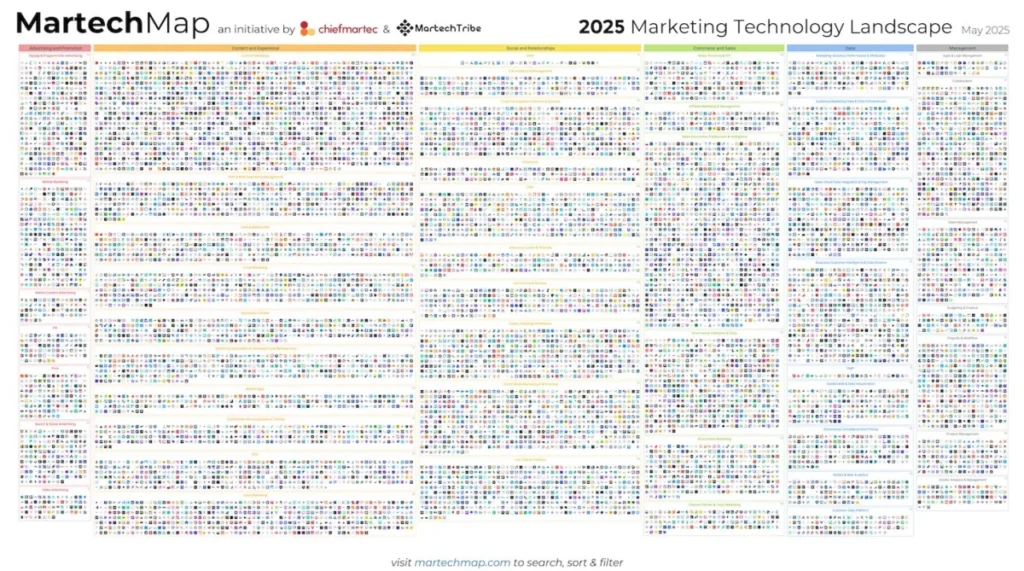
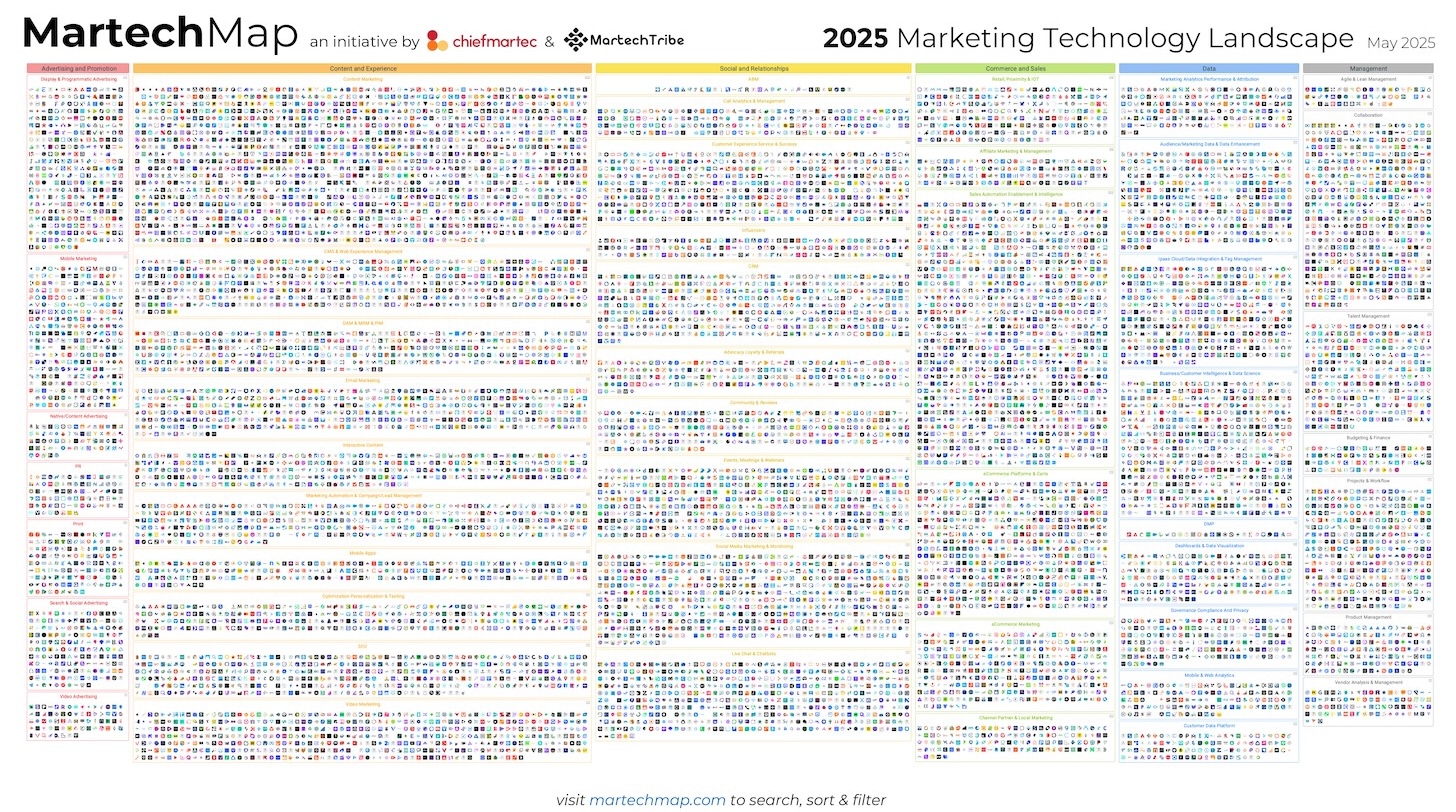
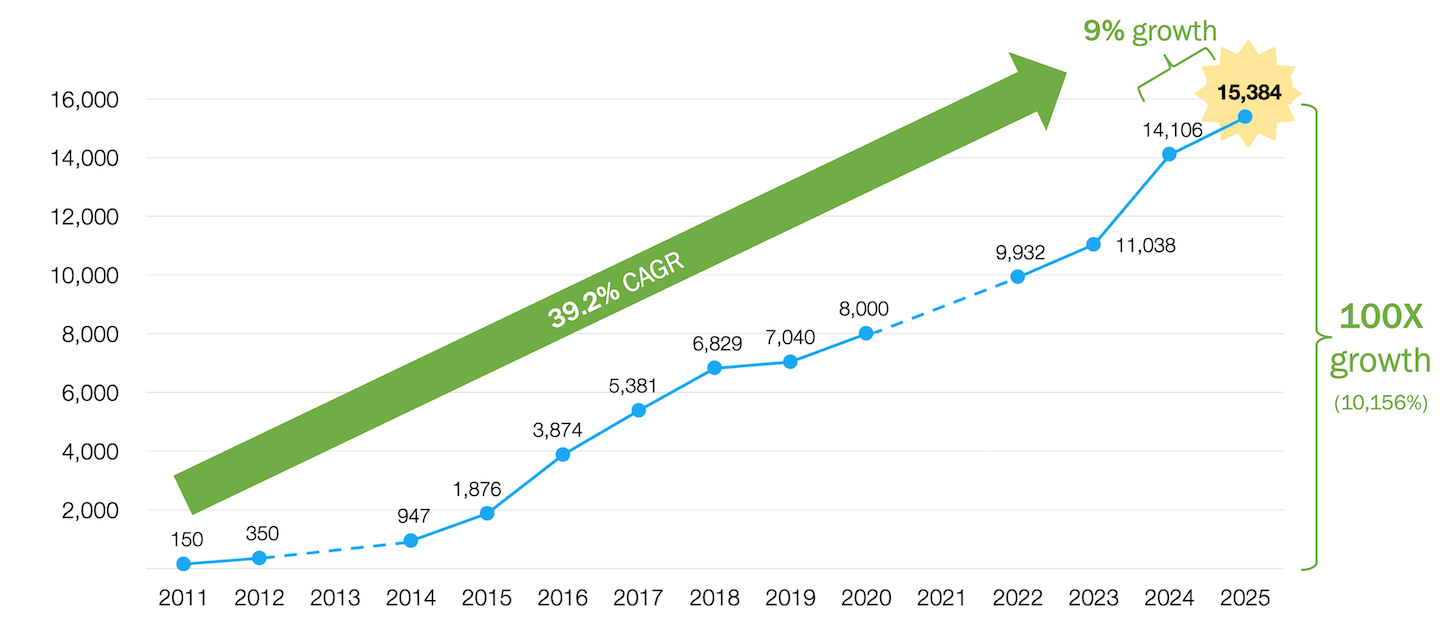
The marketing technology (martech) industry has reached a staggering new milestone. According to the newly released State of Martech 2025 report, the global martech landscape now encompasses 15,384 distinct solutions. This represents a 9% year-over-year growth from 2024’s count of 14,106. For industry observers, this growth is more than just a data point; it is a testament to the relentless evolution of the digital economy and the profound impact of generative AI on software development.
What began over 15 years ago as a humble slide deck intended to alert CMOs to the "Rise of the Marketing Technologist" has transformed into a massive, 49-category supergraphic. While skeptics have predicted the collapse of the martech ecosystem for over a decade, the market continues to defy gravity, expanding at a rate that has seen 100x growth since the landscape’s inception in 2011.
A Chronology of Expansion: From 150 to 15,000+
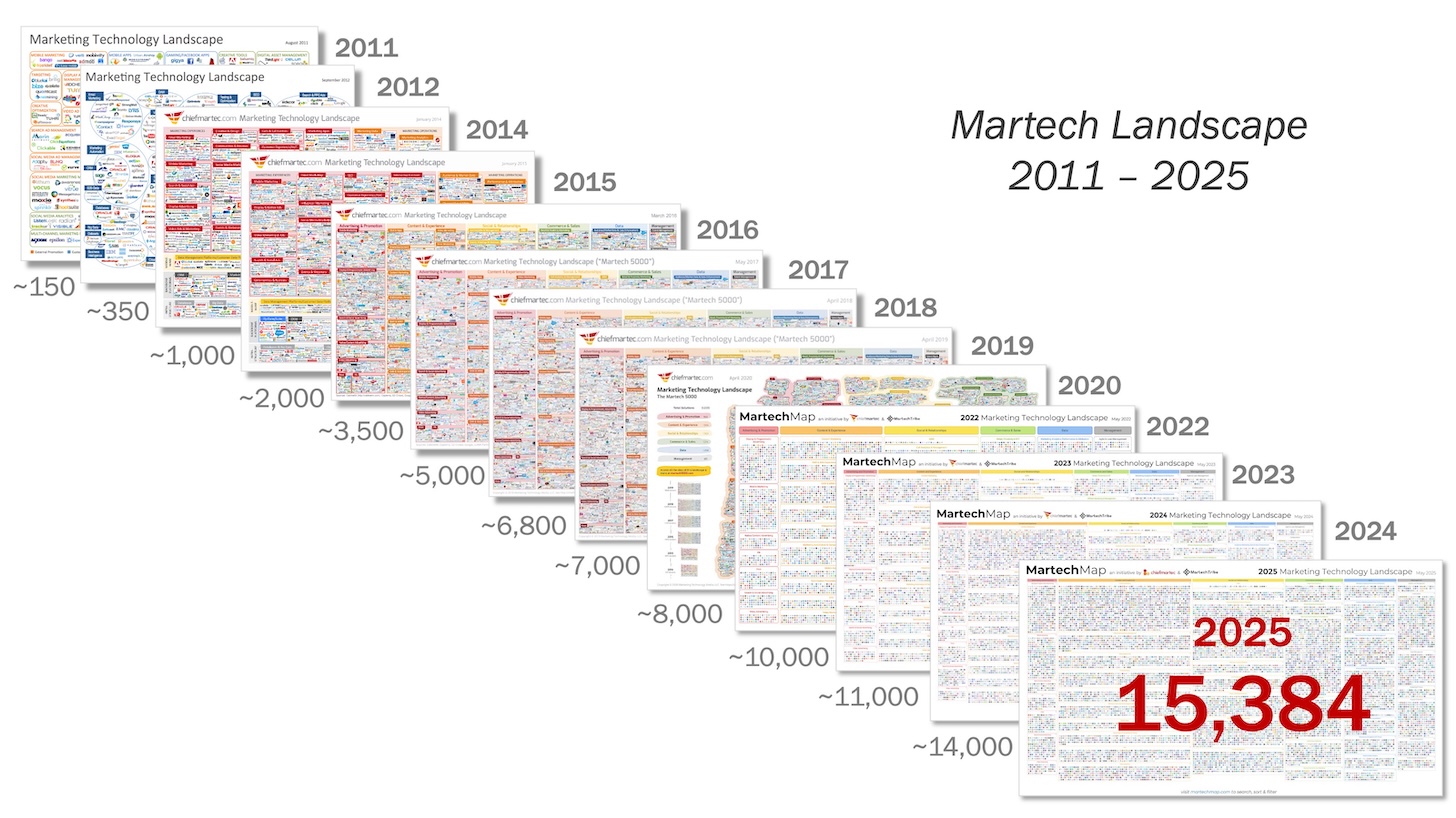
The journey of the martech landscape is a mirror of the digital age. In 2011, the first official infographic documented a mere 150 solutions. At the time, the concept of a "marketing technologist"—a role sitting at the intersection of creative strategy and software engineering—was nascent.
By 2015, the number had climbed into the thousands. By 2020, it had surged past 8,000. Today, the 15,384 figure represents a 10,156% increase from the original 2011 count. This growth has not been a straight line, however. It has been a series of waves driven by cloud adoption, the rise of big data, and most recently, the democratization of artificial intelligence. Each year, the industry faces "market correction" predictions, yet each year, the demand for specialized tools to manage the complexities of customer experience, data privacy, and omnichannel engagement continues to rise.
Data-Driven Insights: The Mechanics of Market Churn
The 2025 landscape report, produced by Scott Brinker and Frans Riemersma, offers a rigorous look at the health of the ecosystem. To compile the 2025 data, the research team evaluated 11,133 new candidates, with only 2,489 meeting the criteria for inclusion.
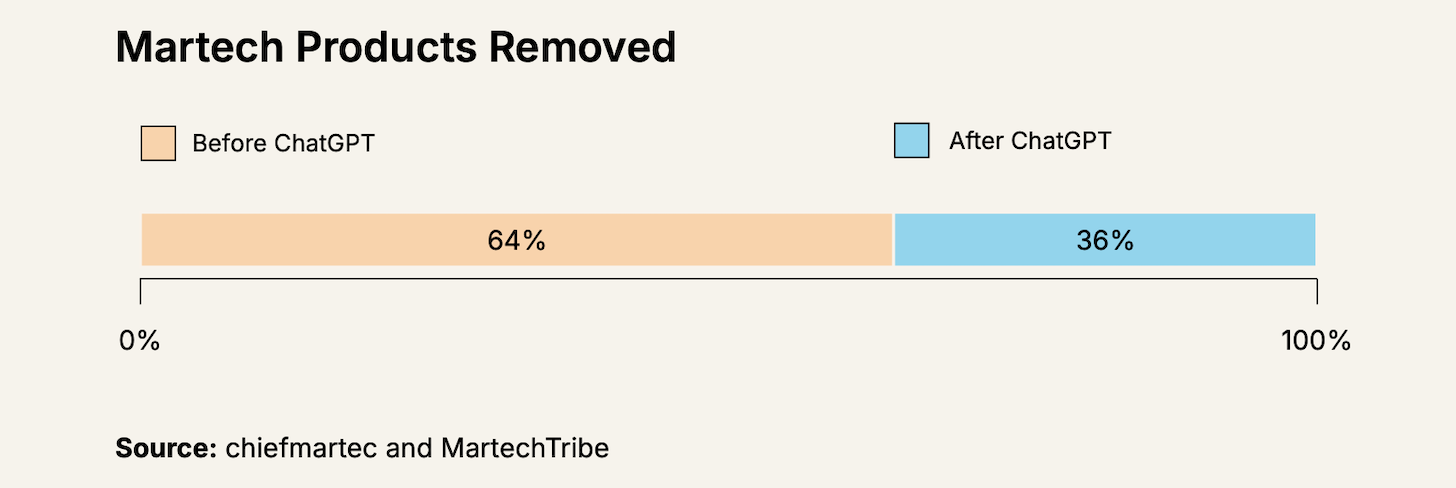
Critically, the report identifies a significant "shakeout" phase. In the past year, 1,211 solutions were removed from the landscape due to acquisition, merger, or business closure—an 8.6% churn rate. Contrary to the assumption that this churn would be dominated by "flash-in-the-pan" AI startups, the data reveals that two-thirds of the discontinued products originated from the 2010–2020 era. This signals a maturation of the market: the "first wave" of martech solutions is being consolidated or replaced by more modern, AI-native platforms.
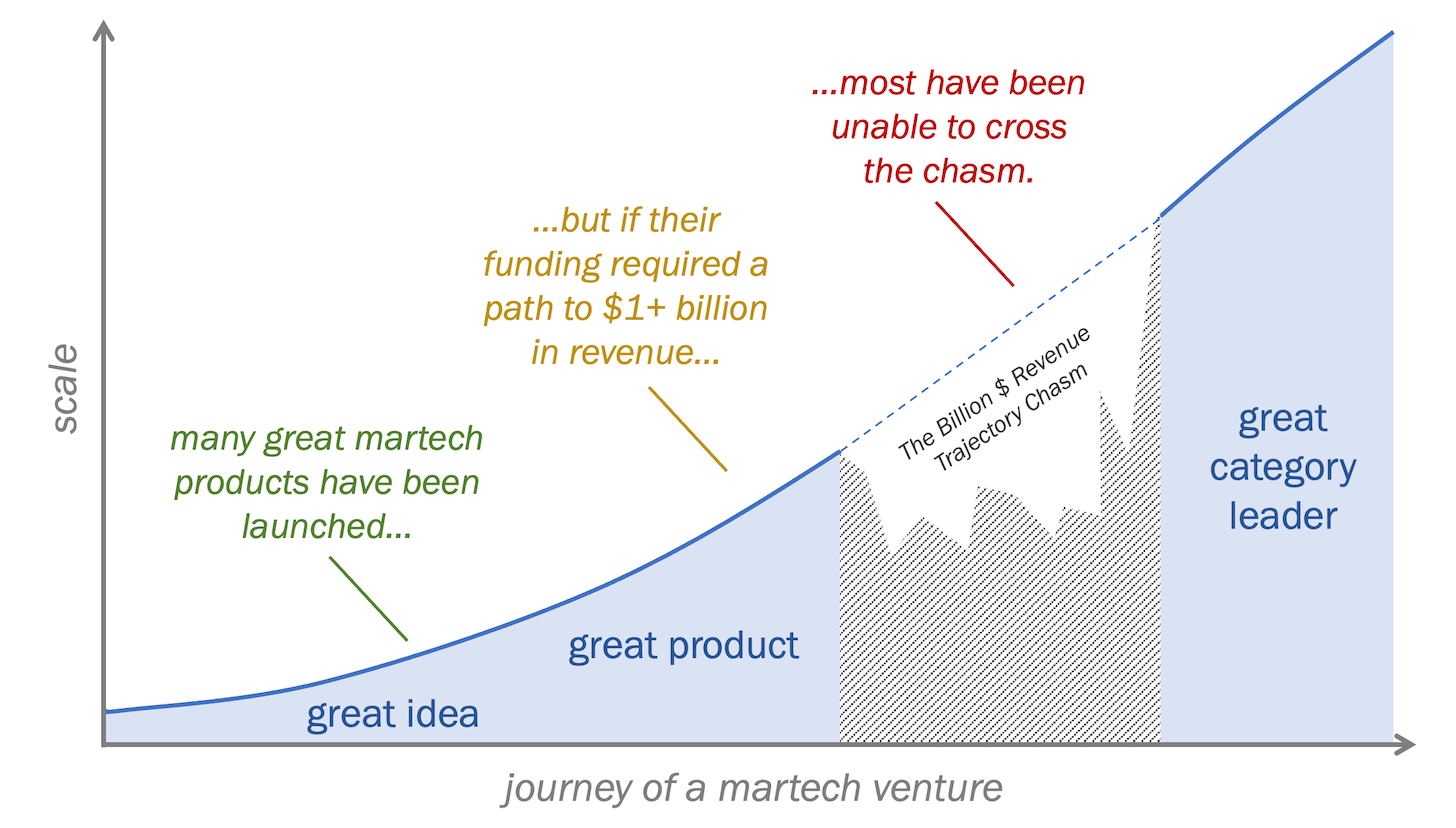
The revenue chasm remains a defining feature for these companies. As products strive to move from niche tools to category leaders, they face intense competition. The surviving companies are those that have successfully pivoted to address the new demands of the "AI-first" marketing stack.
The AI Catalyst and Sectoral Growth
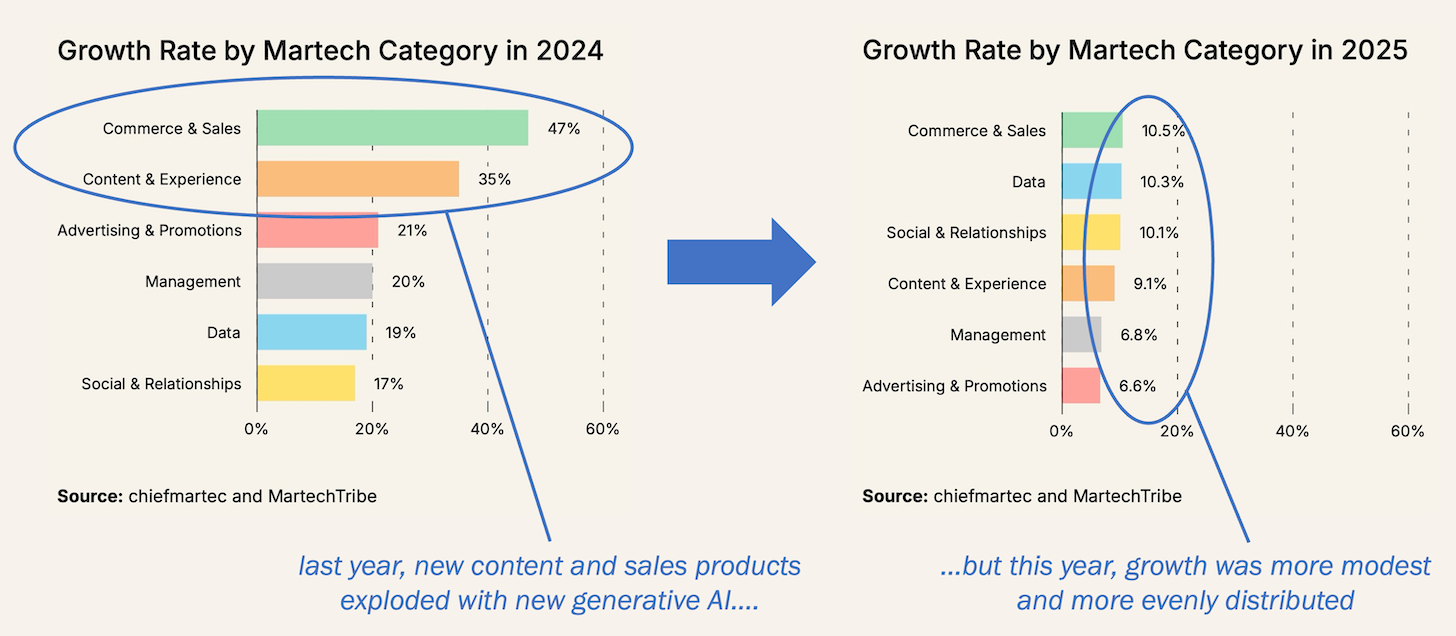
While growth in 2024 was defined by an explosion in content and sales-related tools—driven by the immediate utility of generative AI—the 2025 landscape shows more balanced, consistent growth of 7% to 10% across the six major domains.
Perhaps the most surprising finding in the 2025 report is the resilience of Search Engine Optimization (SEO). Despite the persistent "SEO is dead" narrative, the category grew by 24%, expanding from 212 to 262 products. This growth is driven by a shift toward "AI Optimization" (AIO), as companies scramble to ensure their content is discoverable not just by traditional search engines, but by the large language models (LLMs) that now mediate the flow of information to users.
Shifts in the Martech Stack
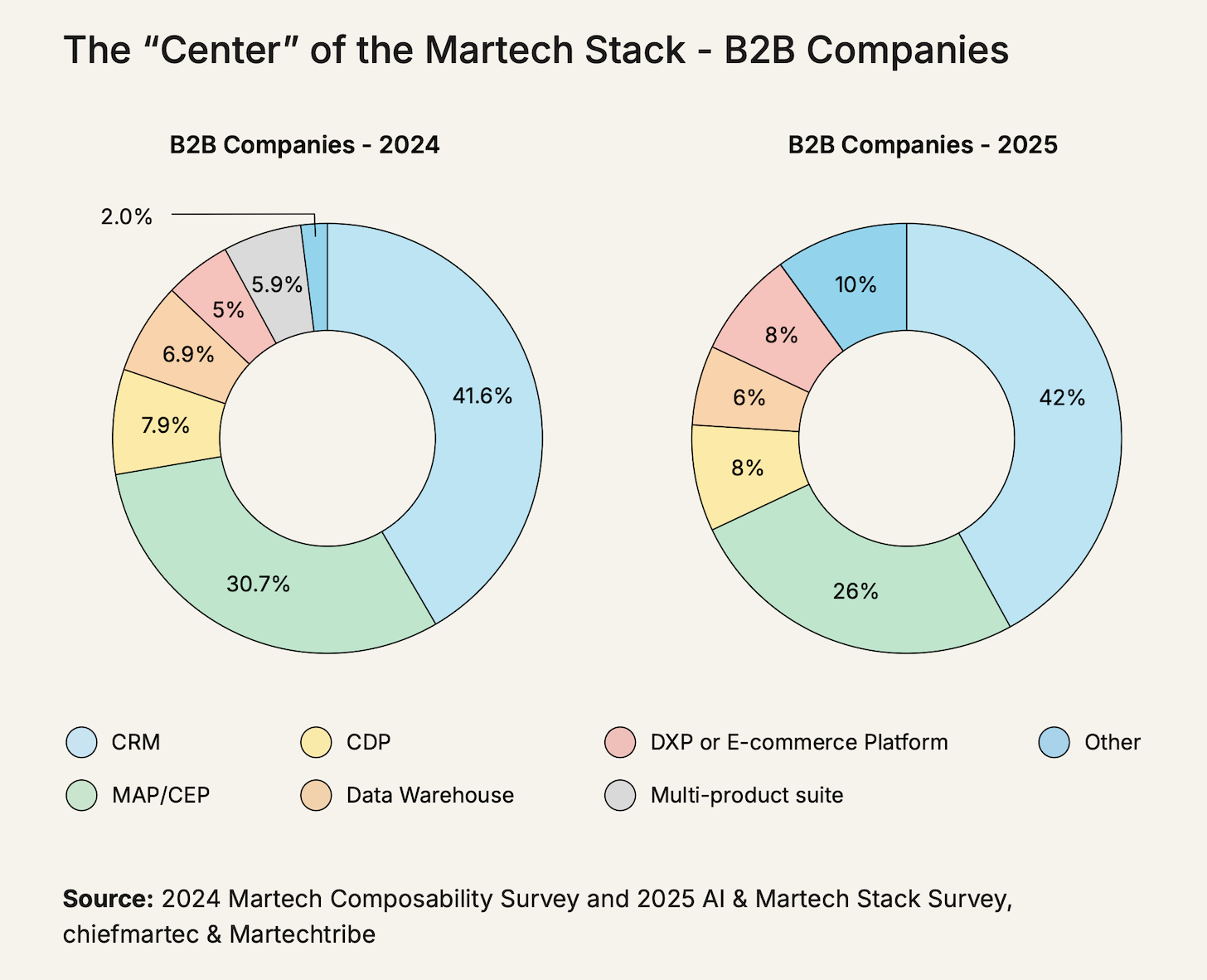
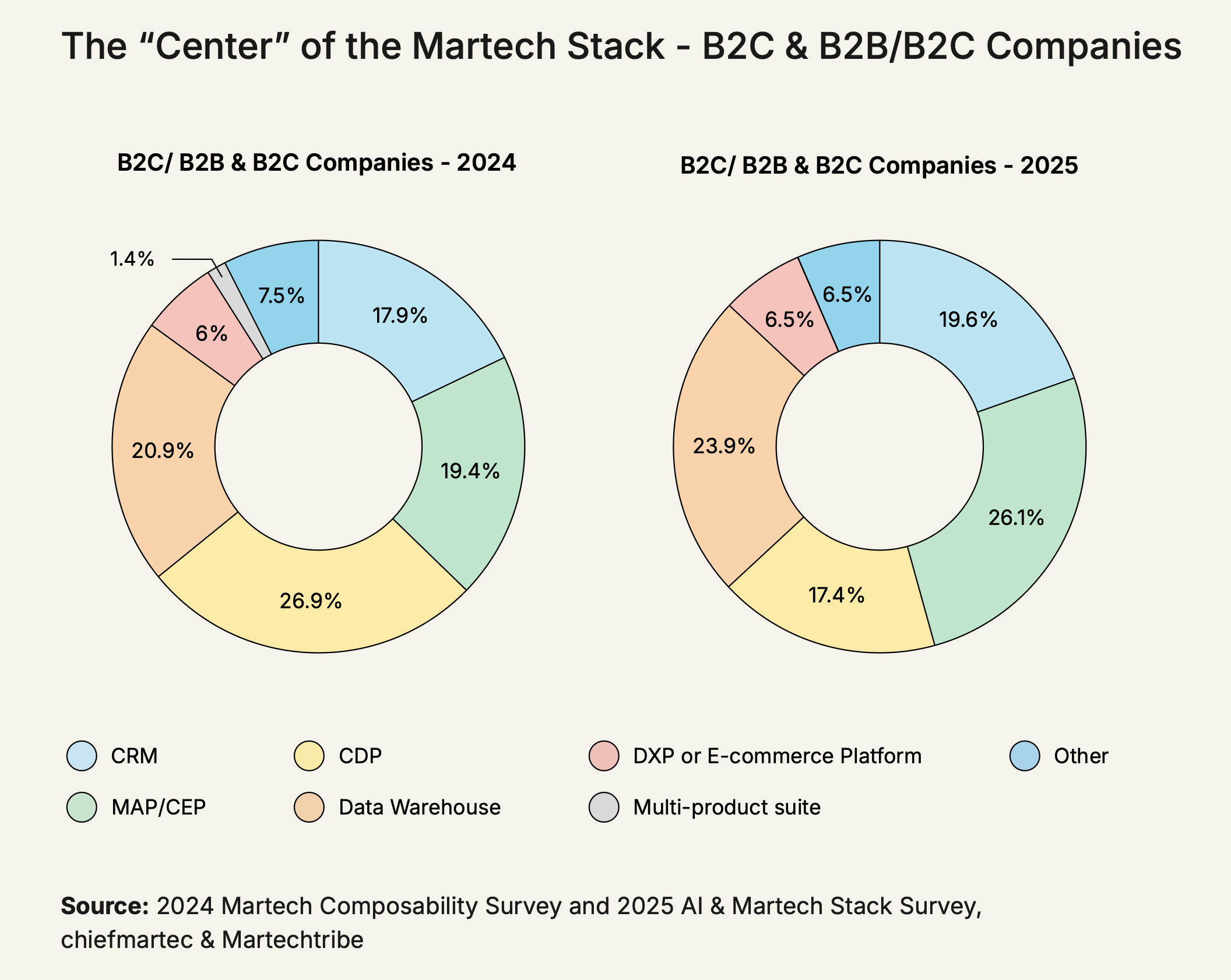
Marketing operations leaders are re-evaluating the "center" of their tech stacks. In B2B organizations, the landscape is relatively stable, with Customer Relationship Management (CRM) and Marketing Automation Platforms (MAP) remaining the primary hubs. However, there is a notable 5x increase in companies opting for "Other" solutions—specifically, custom-built martech platforms. This marks a potential reversal of the decade-long trend that saw companies migrate from custom-built legacy software to standardized commercial "off-the-shelf" solutions.
In the B2C sector, the role of the Customer Data Platform (CDP) has evolved. Survey data shows that CDP prominence as the "center" of the stack dropped from 26.9% to 17.4%. This is not necessarily a sign of failure for CDPs, but rather a sign of integration. CDP capabilities are being "unbundled" and embedded into either the data warehouse layer (the rise of the "composable CDP") or the engagement layer, where platforms are increasingly absorbing data-management functions.
The Rise of the "Hypertail"
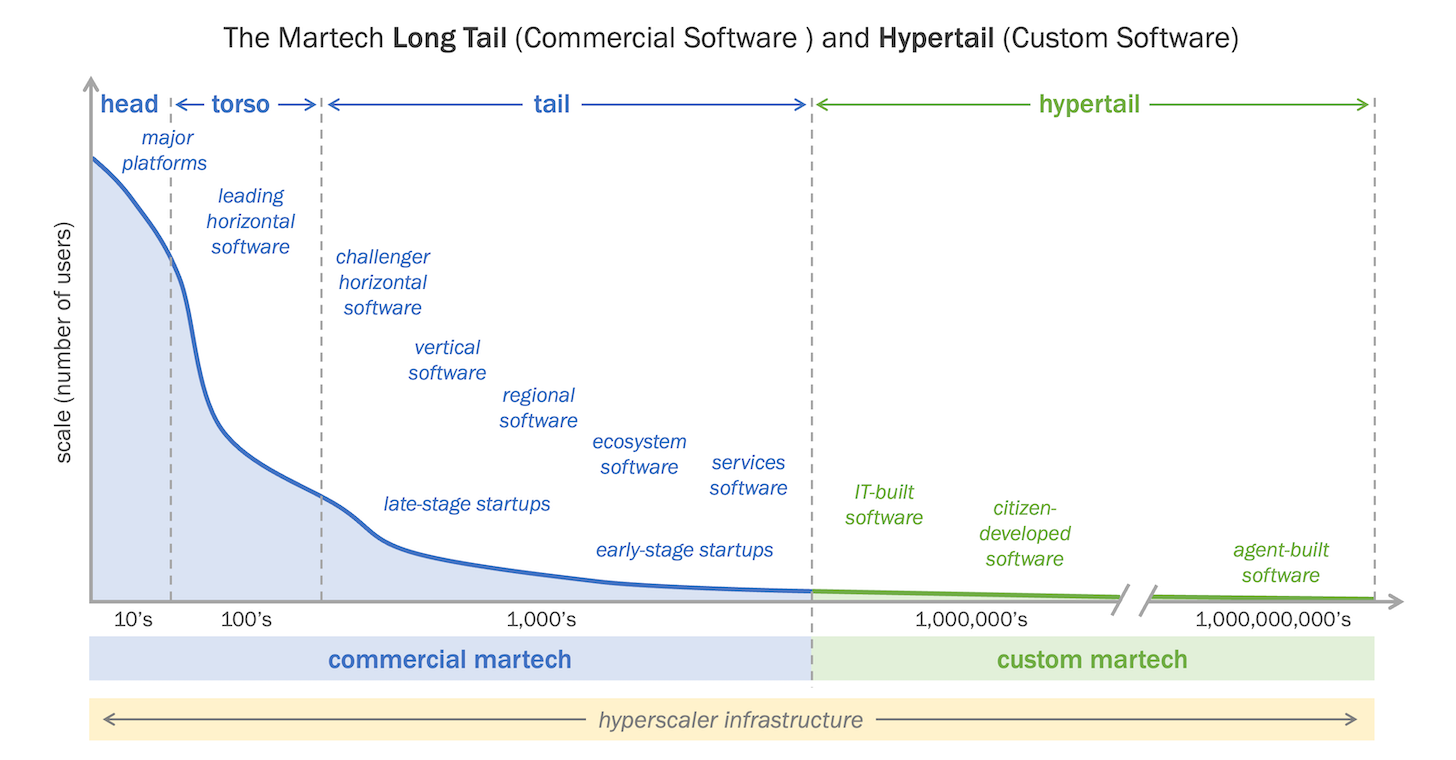
Perhaps the most significant revelation in the 2025 report is the emergence of the "hypertail"—a vast, invisible layer of custom-built software and AI agents.
For years, the "long tail" of the martech landscape consisted of niche commercial products. Today, that is being eclipsed by the proliferation of bespoke, internal software. The barrier to building software has been demolished by three factors:
- Low-code/No-code platforms: These tools have empowered "citizen developers" to build functional applications without traditional engineering backgrounds.
- "Vibe coding": Modern professional developers are now using AI to draft code in hours that previously took weeks, allowing for rapid experimentation.
- AI Agents: Millions of users are currently utilizing assistants like ChatGPT, Claude, and Gemini, which often generate and execute custom scripts on the fly.
This creates a scenario where a company may have thousands of "micro-apps" running in the background, many of which are ephemeral—existing only to complete a specific task before vanishing. We are moving from a world where software is "bought" to a world where it is "instantiated" on demand.
Implications for the CMO and the Enterprise
For the modern marketing leader, these findings present both a challenge and an opportunity. The sheer volume of 15,384 solutions can be paralyzing. However, the report suggests that the goal should not be to capture the entire landscape, but to build a flexible, modular stack.
The "hypertail" suggests that marketing teams will soon be able to build their own custom competitive advantages. Instead of relying solely on the roadmap of a massive software vendor, brands can use AI to build specialized automations that align perfectly with their unique customer journey.
The State of Martech 2025 report ultimately frames the next decade of marketing technology not as an era of "more," but as an era of "intelligent orchestration." As the market consolidates at the top, the true innovation is happening in the invisible, custom-built layers that reside beneath the surface of the official landscape.
Conclusion: Navigating the Future
As the industry looks ahead, the takeaway from the 2025 report is clear: the era of the static marketing stack is over. The future belongs to organizations that can manage the tension between their core enterprise platforms and the rapidly evolving "hypertail" of AI-driven, custom solutions.
For those looking to dive deeper into the data, the full State of Martech 2025 report is available as an ungated, free resource. It serves as a vital compass for navigating a landscape that is, by all accounts, showing no signs of slowing down. Whether you are a CMO, a marketing technologist, or a software developer, the message is the same: the tools are no longer the bottleneck—the strategy is.
The full report, including the complete 2025 Martech Supergraphic, can be accessed via the official Martech Day website. Special thanks are extended to sponsors including GrowthLoop, Hightouch, MetaRouter, MoEngage, Progress, and SAS for their contributions to this year’s extensive research.
