
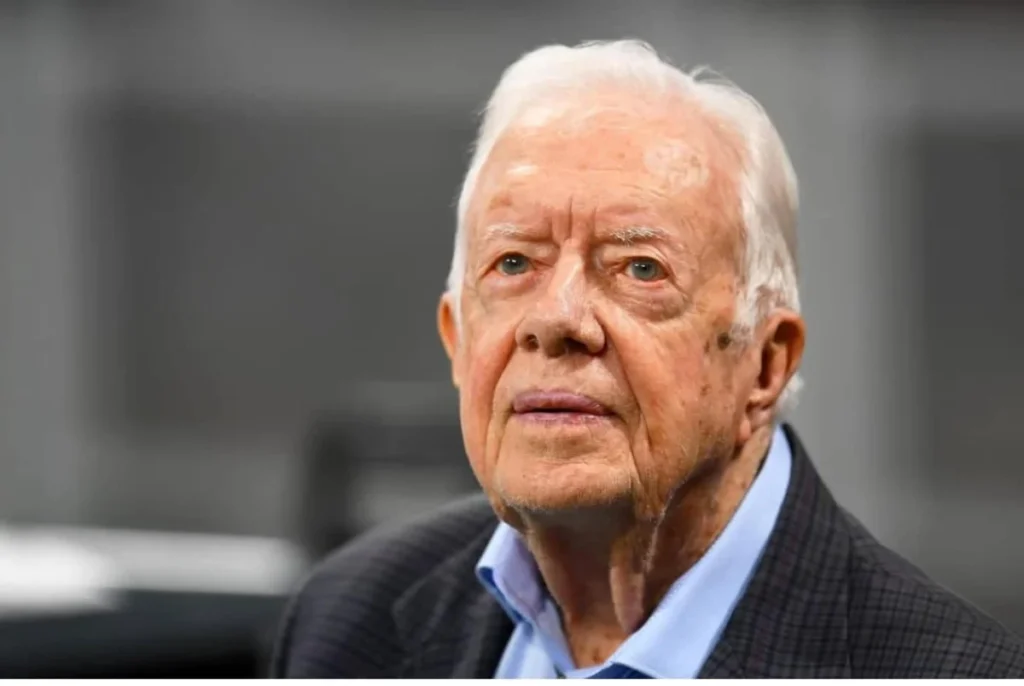
A Legacy of Grace: Remembering the Life and Impact of President Jimmy Carter
The passing of James Earl Carter Jr., the 39th President of the United States, marks the end of an era defined by unwavering moral conviction, humanitarian devotion, and a post-presidential career that redefined the role of a former world leader. As the nation mourns, it is not merely the political policies of his 1977–1981 term that occupy the collective consciousness, but the profound humanity he exhibited until his final days.
Among the many tributes surfacing in the wake of his passing, personal anecdotes—such as a poignant 1988 encounter—highlight the qualities that defined Carter: a man who, even when faced with the rigors of political scrutiny, chose to prioritize personal connection and humble gratitude.
The Main Facts: A Life Defined by Service
Jimmy Carter was born on October 1, 1924, in Plains, Georgia. His journey from a peanut farmer and U.S. Naval Academy graduate to the highest office in the land was marked by a commitment to transparency and human rights. Elected in 1976 against the backdrop of the Watergate scandal, Carter sought to restore integrity to the Oval Office.
His presidency was characterized by significant achievements, including the Camp David Accords, which established a fragile but historic peace between Egypt and Israel, and the creation of the Department of Education and the Department of Energy. However, his tenure was also tested by the Iran Hostage Crisis and significant economic turbulence. Following his departure from the White House, Carter did not retreat into quiet retirement. Instead, he embarked on what many historians call the most impactful post-presidency in American history, focusing on global health, democracy, and affordable housing.
A Moment of Grace: The 1988 Encounter
To understand the man, one must look past the policy debates to his personal interactions. In early 1988, while visiting a local community, Carter participated in a public Q&A session. A member of the audience, selected to be the first in a queue of six, stood before the former President.
The attendee confessed, "Hello President Carter. I really do not have a question." Rather than dismissing the lack of inquiry, Carter smiled and responded with characteristic warmth, "I like those kinds of questions."
The attendee used the moment to express profound gratitude for Carter’s post-presidential work with Habitat for Humanity. The response from Carter was immediate and genuine; he spent the next ten minutes speaking passionately about the mission of providing housing for the impoverished—a stark departure from the adversarial or investigative questions that followed from other audience members. As he departed the stage, he paused to wink and mouth a "thank you" to the individual, a small gesture that spoke volumes about his humility.

Chronology: The Trajectory of a Servant Leader
Early Years and Naval Service (1924–1960)
Raised in the rural South, Carter developed a deep sense of community and faith. After graduating from the Naval Academy, he served as a submarine officer, a period that instilled in him the discipline and technical focus that would later define his administrative style.
The Rise to the Presidency (1961–1976)
Carter served in the Georgia State Senate and as Governor of Georgia before mounting a successful, dark-horse campaign for the presidency. His 1976 victory was seen as a mandate for a "new" kind of politics—one that was open, honest, and morally centered.
The Presidential Years (1977–1981)
Carter’s presidency was a period of intense global transition. His commitment to human rights became the cornerstone of U.S. foreign policy. Despite the successes of the Camp David Accords, the domestic challenges—particularly the energy crisis—ultimately led to his loss in the 1980 election to Ronald Reagan.
The Post-Presidency Era (1981–2025)
Carter’s legacy was firmly cemented in the decades that followed. Through the Carter Center, he monitored elections in dozens of countries, facilitated peace talks, and led massive global health initiatives, most notably the near-eradication of Guinea worm disease. His work with Habitat for Humanity became the visual symbol of his belief that service is the rent one pays for their time on earth.
Supporting Data: The Impact of the Carter Legacy
The scale of Carter’s humanitarian work is quantified by the results of his efforts through the Carter Center and Habitat for Humanity:
- Global Health: Under his leadership, the Carter Center led the fight against neglected tropical diseases. The number of reported cases of Guinea worm disease dropped from an estimated 3.5 million in 1986 to fewer than 15 cases in recent years.
- Democratic Engagement: The Carter Center has observed over 110 elections in 39 countries, helping to foster stable transitions of power in developing nations.
- Housing: Since 1984, Carter personally participated in the Jimmy & Rosalynn Carter Work Project, helping to build or renovate thousands of homes for low-income families worldwide.
- Diplomacy: Carter was the first president to emphasize human rights as a pillar of international diplomacy, permanently altering the discourse on how democratic nations engage with authoritarian regimes.
Official Responses: A Nation in Mourning
Tributes have poured in from world leaders, human rights activists, and ordinary citizens.
"Jimmy Carter was a man of integrity and deep faith," said a former colleague in a statement released earlier today. "He proved that a life of service does not end at the steps of the White House; it merely evolves."
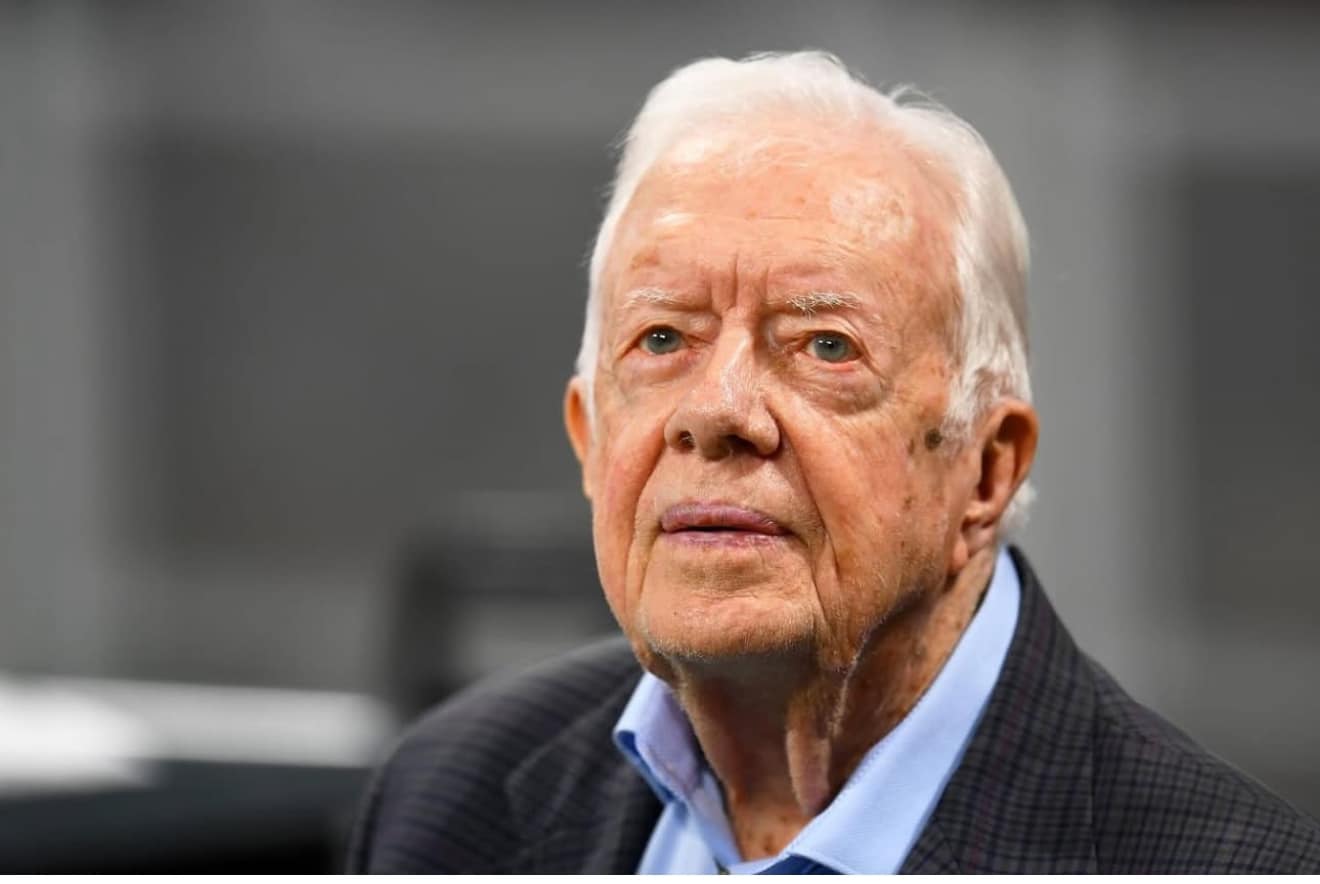
Current political leaders across the spectrum have acknowledged his role in maintaining the dignity of the presidency. While his policy decisions were often debated, his personal character has become a rare point of bipartisan consensus. The common thread in every official statement is the acknowledgment of his "grace, kindness, and love of country."
Implications: What Comes Next?
The passing of Jimmy Carter leaves a void in the American political landscape, but it also provides a roadmap for future leaders. His life poses a critical question for the next generation: How do we define success?
Carter’s life suggests that success is not defined by the office one holds, but by the lives one touches after the power is gone. As we look toward the future, the "Carter Model"—a blend of intellectual rigor, hands-on community service, and unwavering ethical standards—remains the gold standard for public service.
Lessons for the Future
- Humility in Power: Carter’s willingness to listen to non-questions and engage with the public on a human level reminds us that leadership is a relational, not just a transactional, endeavor.
- Global Citizenship: His work with the Carter Center highlights the necessity for American leaders to take an interest in global stability and human rights, even when it does not serve immediate national interests.
- Consistency of Character: Perhaps the most enduring lesson is that one’s character remains constant. Whether in the Navy, the Oval Office, or on a Habitat for Humanity construction site, Carter was consistently driven by the same internal moral compass.
A Final Reflection
The attendee from 1988 who thanked Carter for his post-presidency work captured the essence of the man. President Carter did not just "do" work; he lived it. He spent his time in the spotlight, and the decades of shadow that followed, working to make the world a more equitable place.
As the nation says goodbye to its 39th President, we are reminded that true grace is not found in grand speeches or legislative victories alone. It is found in the small, quiet moments: the wink, the smile, the nod of gratitude, and the enduring belief that every individual deserves a home, a voice, and a chance.
Jimmy Carter’s journey has ended, but the infrastructure of kindness he built—in Plains, in Georgia, and across the globe—remains a permanent fixture of our collective history. Rest in peace, Mr. President. America will miss your grace.
