
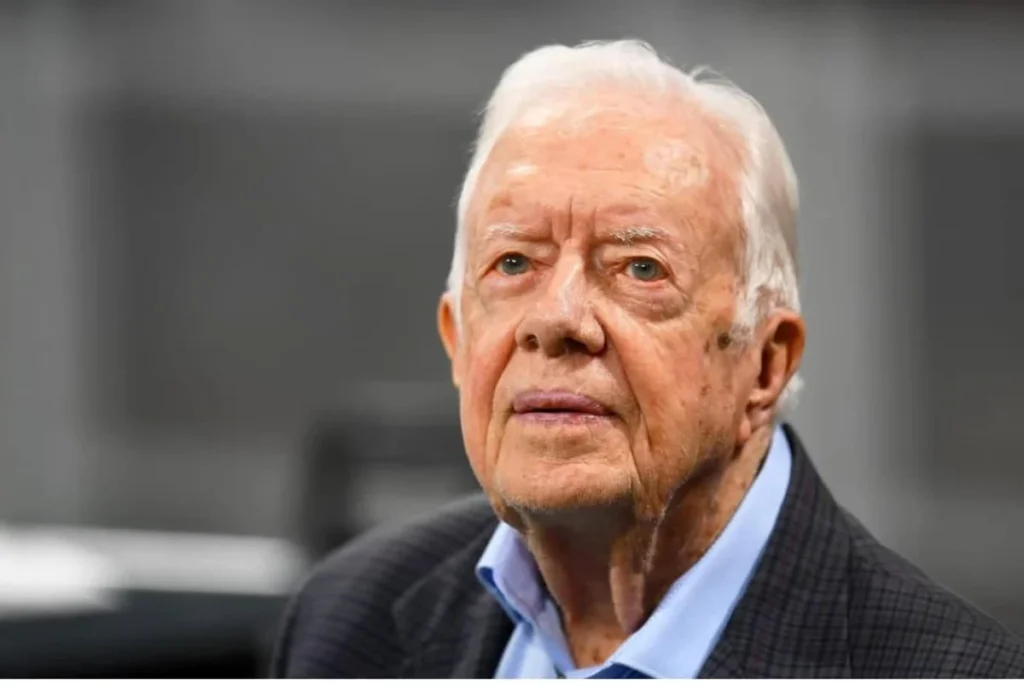
A Legacy of Grace: Reflecting on the Life and Impact of President Jimmy Carter
The passing of Jimmy Carter, the 39th President of the United States, marks the end of an era defined by unwavering moral conviction, humanitarian dedication, and a post-presidency that redefined the role of a former world leader. Across the globe, tributes are pouring in for a man who moved beyond the traditional constraints of political office to become a global advocate for peace, human rights, and the dignity of the underprivileged.
While his tenure in the White House was marked by complex geopolitical challenges—including the Iran Hostage Crisis and the energy crisis of the late 1970s—it was his life’s work after leaving Washington that solidified his reputation as one of the most consequential figures of the 20th and 21st centuries.
The Man Behind the Office: A Personal Reflection
To understand the essence of Jimmy Carter, one must look past the policy debates and into the personal encounters that defined his character. In early 1988, a unique interaction took place that encapsulates the humility of the man. During a speaking engagement, a local attendee was selected to pose a question to the former President. Upon approaching the microphone, the attendee admitted, “I really do not have a question.”
Rather than dismissing the moment or moving to the next person in line, President Carter leaned in with characteristic warmth, responding, “I like those kind of questions.” The attendee used the time not to interrogate, but to express gratitude for Carter’s tireless commitment to Habitat for Humanity.
For the next ten minutes, Carter abandoned the rehearsed talking points of a political stump speech to speak passionately about the mission of providing affordable housing—a cause that had become synonymous with his name. As the event concluded, Carter took a moment to stop, make eye contact, wave, and wink at the individual who had thanked him, mouthing a simple, “Thank you.” This brief, human moment serves as a microcosm of his entire life: a leader who prioritized connection, kindness, and service over the trappings of power.
Chronology: A Life of Service
James Earl Carter Jr. was born on October 1, 1924, in Plains, Georgia. His journey took him from a peanut farm to the United States Naval Academy, and eventually to the pinnacle of American politics.

- 1946–1953: Carter serves as a naval officer, gaining an education in engineering and discipline that would later inform his methodical approach to policy.
- 1962–1966: He enters the Georgia State Senate, marking the beginning of his political career.
- 1971–1975: Serving as the 76th Governor of Georgia, he gains national attention for his focus on civil rights and government efficiency.
- 1977–1981: The Presidency. Key achievements include the Camp David Accords, which brokered peace between Egypt and Israel, and the establishment of the Department of Energy and the Department of Education.
- 1982–Present: The post-presidential era. Carter founds the Carter Center in Atlanta, dedicated to disease eradication, election monitoring, and conflict resolution. In 2002, he was awarded the Nobel Peace Prize.
Supporting Data: The Impact of the Carter Center
While history often focuses on the four years a president spends in the White House, the data surrounding Jimmy Carter’s post-presidency reveals an impact that arguably exceeds his time in office.
The Carter Center has been a juggernaut in global health and democratic governance. Since its founding, the organization has observed over 100 elections in 39 countries, helping to legitimize fledgling democracies and ensure the integrity of the ballot box. Furthermore, the Center’s campaign to eradicate Guinea worm disease has been nothing short of miraculous. When the initiative began in the mid-1980s, there were an estimated 3.5 million cases annually across 21 countries. Today, that number has been reduced by more than 99.9%, a testament to Carter’s persistence in the face of immense logistical and geopolitical hurdles.
Habitat for Humanity, the organization referenced in the personal story above, saw an exponential increase in its public profile and capacity due to the "Carter effect." Thousands of volunteers were mobilized annually to participate in the "Jimmy & Rosalynn Carter Work Project," providing a blueprint for civic engagement that has transcended party lines.
Official Responses and Global Condolences
Leaders from around the world have issued statements reflecting on Carter’s singular legacy.
Current and former U.S. Presidents have praised his unwavering integrity. One official statement noted, "Jimmy Carter was a man of profound faith and unshakeable principle. He did not seek the path of least resistance; he sought the path of most service."
International organizations, including the United Nations and the World Health Organization, have lauded his role in global health. "President Carter was not just a diplomat; he was a doctor to the world’s most neglected causes," a spokesperson for the UN remarked. "His influence on human rights and public health will be felt for generations to come."
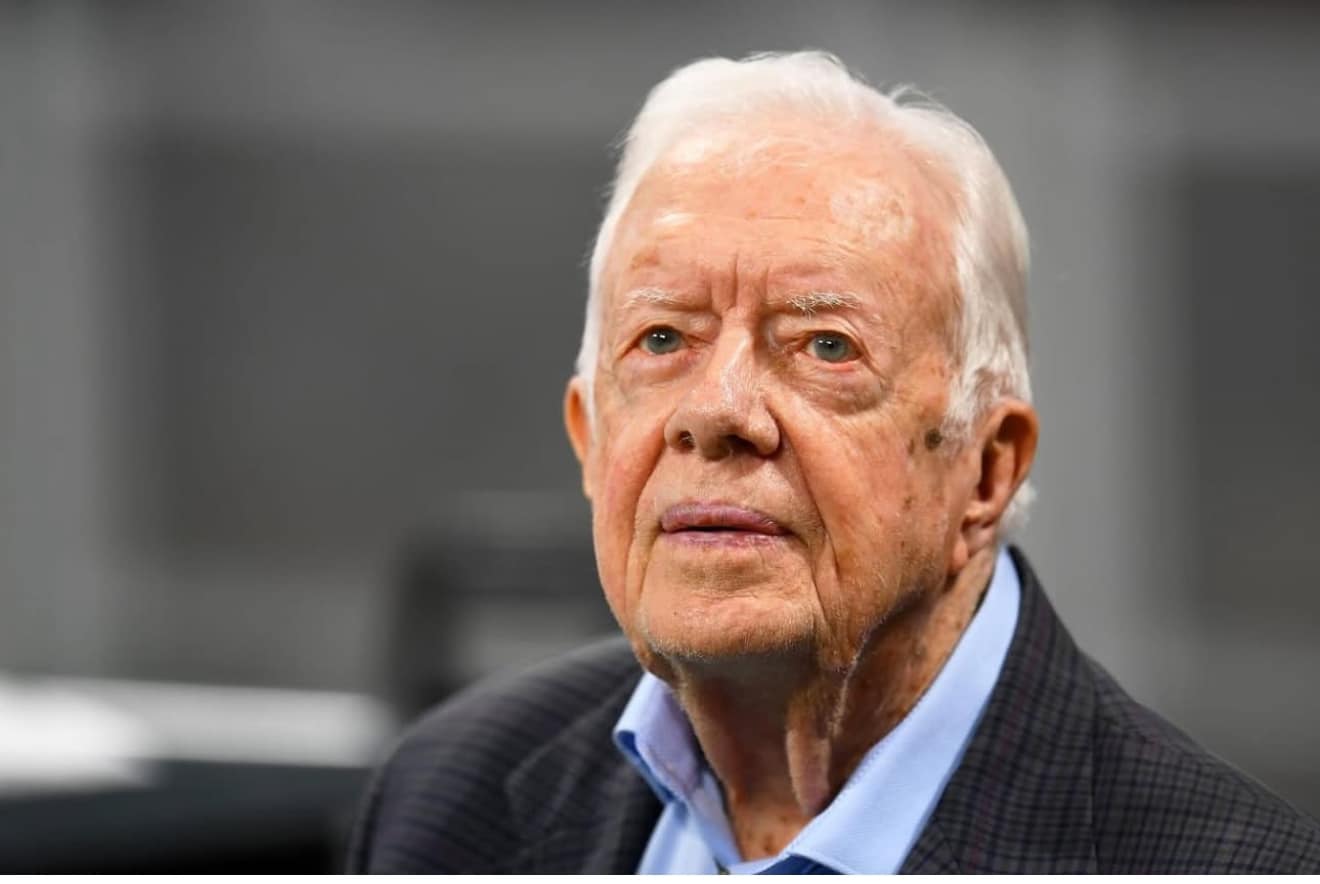
The outpouring of grief is not confined to the political elite. Across the rural communities of Georgia and the construction sites of Habitat for Humanity, ordinary citizens are sharing stories of a man who, even at the height of his fame, was willing to pick up a hammer, share a meal, or listen to a story without a prepared agenda.
Implications: The "Carter Standard"
The passing of Jimmy Carter leaves the American political landscape to grapple with a new benchmark for what a "retired" president can achieve. Before Carter, the post-presidency was often viewed as a quiet retirement or a period of lucrative speaking tours. Carter transformed it into a full-time, high-stakes vocation.
His life forces us to consider the implications of leadership in a post-power context. He demonstrated that influence does not vanish when one leaves the Oval Office; rather, it can be redirected toward the "moral arc of the universe." His work proves that diplomacy is not limited to the State Department—it can be practiced by an NGO, a volunteer on a construction site, or a private citizen monitoring an election in a remote village.
As the nation reflects on his departure, the legacy left behind is one of quiet strength. Jimmy Carter showed us that one does not need the title of "Commander-in-Chief" to command respect or to effect change. His grace, kindness, and love of country were not merely campaign rhetoric—they were the foundational pillars of a life lived in service to others.
Conclusion
Jimmy Carter’s life was a testament to the idea that a single person, driven by a commitment to the common good, can change the world. From the halls of Camp David to the dusty roads of Africa and the housing projects of America, his footprints are everywhere.
As the world mourns his passing, we are reminded that true greatness is measured not by the power one wields, but by the love one gives and the dignity one restores to others. Jimmy Carter has left the stage, but the structures he built—both in policy and in the hearts of those he encountered—will remain long after the final tributes have been read. He leaves behind an America that is more compassionate, a world that is slightly more just, and a standard for humanity that will endure for generations. Rest in peace, Mr. President. Your work is done, but your impact remains eternal.
