
The AI Writing Plateau: Why Frontier Models Are Struggling to Break the Ceiling
Is the "intelligence" in Artificial Intelligence finally hitting a wall when it comes to the written word? For the past two years, the industry has been defined by a relentless upward trajectory—models becoming faster, more accurate, and more nuanced with every release. Yet, a growing chorus of professional writers, researchers, and AI engineers has begun to voice a provocative concern: when it comes to high-quality prose, the most advanced Large Language Models (LLMs) are not just slowing down; they are stagnating.
Despite the hype cycles surrounding new model releases, objective data and qualitative "vibe checks" suggest that we have reached a point of diminishing returns. This article explores why AI writing feels increasingly "mid," what the current benchmarks reveal about this plateau, and what businesses—who are increasingly reliant on AI for content strategy—should do to maintain quality in a post-improvement era.
The Chronology of Stagnation: From Breakthroughs to Incrementalism
To understand where we are, we must look at the timeline of LLM development. Early iterations of models like GPT-3 and Claude 1 felt like a watershed moment—a sudden, exponential jump in linguistic capability. They could mimic human tone, summarize complex documents, and generate creative fiction with surprising competence.
However, as we moved into 2025 and 2026, the delta between model versions began to shrink. The "wow" factor associated with new model releases has been replaced by marginal gains in reasoning or coding efficiency, while the quality of long-form, creative, and persuasive prose has largely flattened.
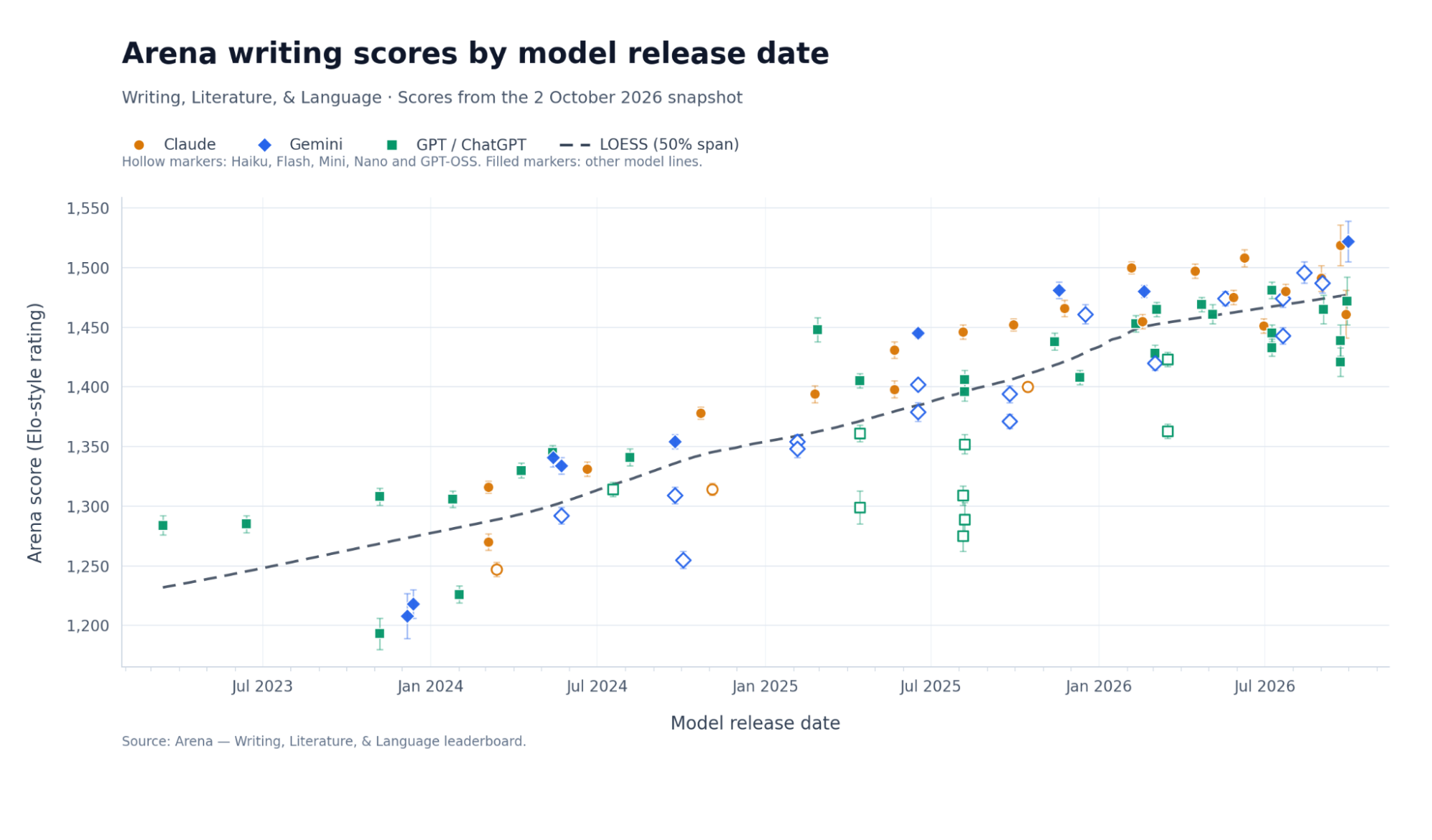
When mapping Elo-style scores from the popular Arena Leaderboard—specifically within the "Writing, Literature, & Language" category—against model release dates, the trend is clear. While the overall scores have risen since the inception of these models, the velocity of that improvement has slowed to a crawl. In fact, some iterations of frontier models have shown actual backsteps, where newer, supposedly "smarter" versions of models like Claude Opus or GPT-5 exhibited a regression in stylistic flexibility and narrative nuance.
Supporting Data: What Benchmarks Reveal
Public leaderboards offer a window into this phenomenon, though they are not without their flaws. The Arena Leaderboard and the specialized Hemingway Bench—which utilizes professional writers to conduct pairwise comparisons—provide the most critical insights.
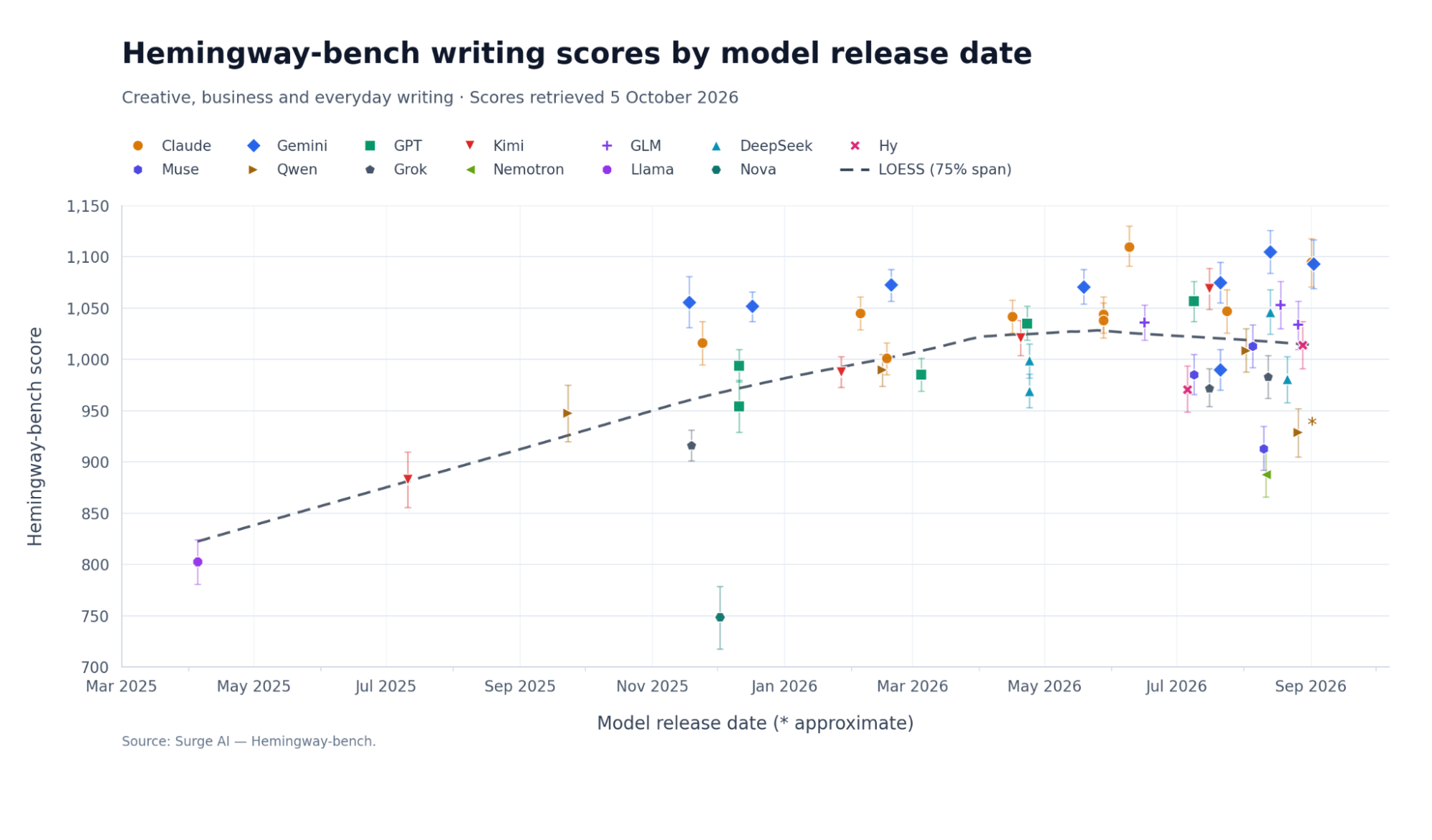
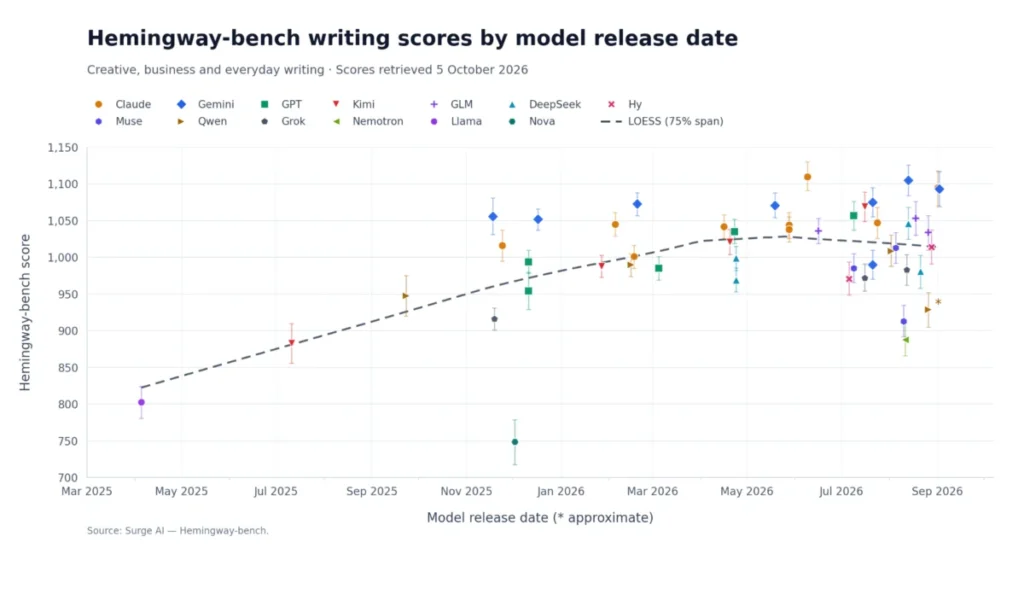
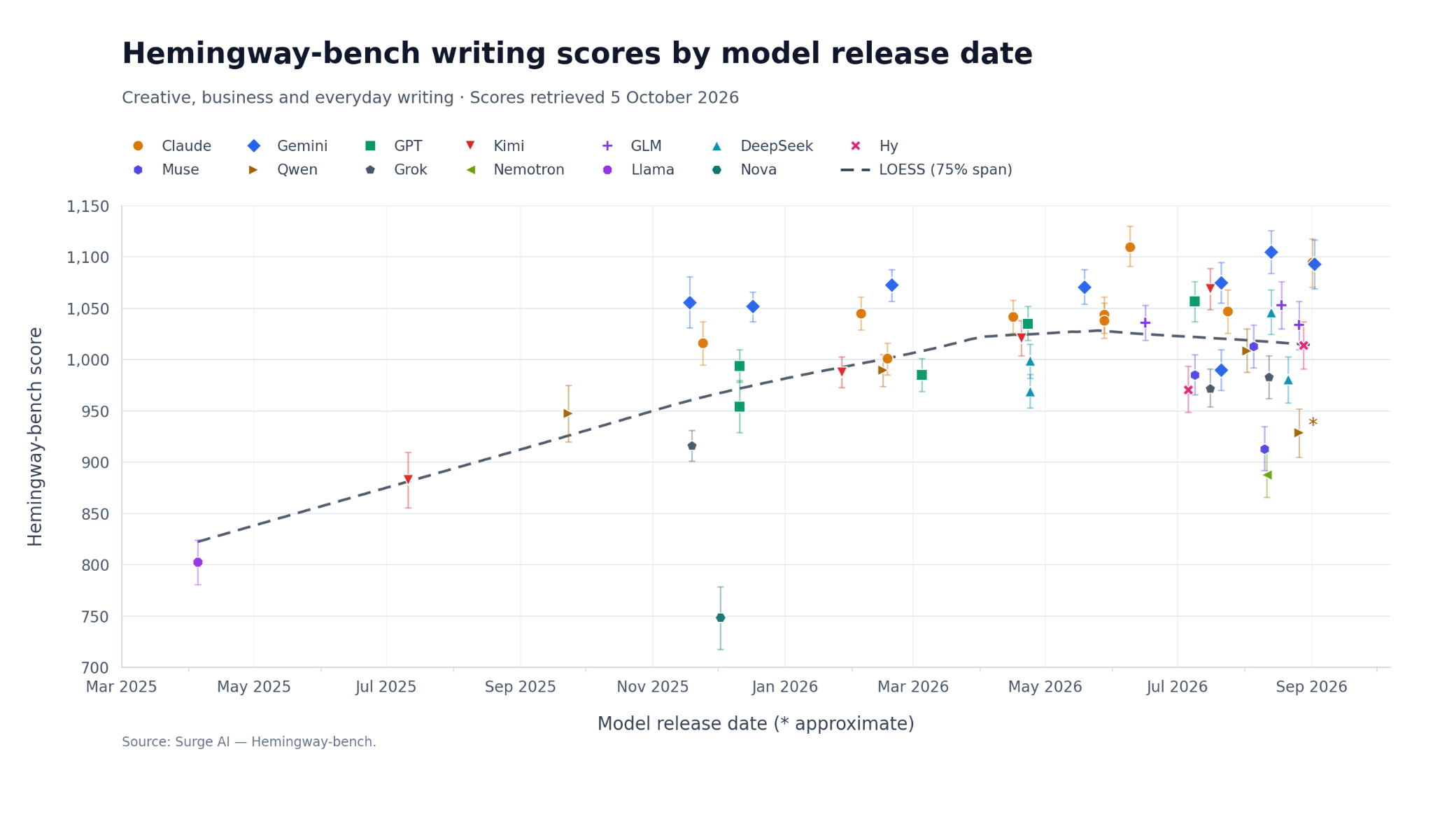
The Hemingway Bench, in particular, paints a stark picture. Because it relies on professional human evaluation rather than automated metrics, it filters out the "hallucination" of high scores caused by technical jargon. The results from this bench indicate a clear plateau. Newer models, which boast massive parameter counts and enhanced compute power, are failing to significantly outperform their predecessors in criteria like stylistic variety, concision, and the ability to avoid repetitive, "robotic" phrasing.
The Technical Ceiling
Why is this happening? David Johnston, Chief Data & AI Scientist at Navalia, suggests that the very nature of how these models are trained creates an inherent bias toward mediocrity.
"AI’s opinions are weighted by the frequency of occurrence, especially among recognized experts," Johnston explains. "It is also always somewhat out of date given that training must precede general use."
More importantly, the post-training layers—specifically Reinforcement Learning from Human Feedback (RLHF)—act as a filter that actively discourages the very thing that makes writing great: a unique, provocative, or non-consensus point of view. Developers are understandably risk-averse; they tune models to avoid fringe, controversial, or "dangerous" outputs. The result is a system that defaults to the "safest" possible answer—the ultimate average.
The Paradox of Capability: Why Coding Isn’t Writing
A common rebuttal to the claim of stagnation is the undeniable progress made in AI coding assistants. Indeed, models have never been better at generating, debugging, and optimizing software. However, as Johnston notes, coding and writing are fundamentally different tasks.
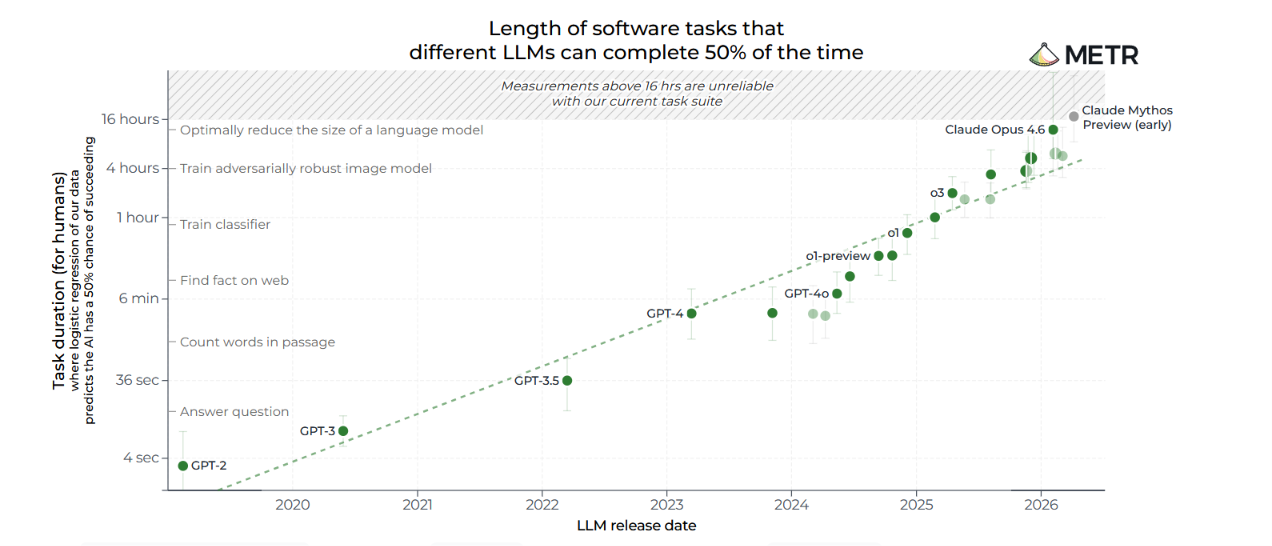
"Coding is completely ideal for AI," says Johnston. "Code is generally correct or incorrect, unlike novels and poems. It is far more constrained, so the number of choices for the next token is far smaller. It can actually be tested by running it, which gives it reinforcement feedback cheaply, allowing it to make instant revisions."
Writing, by contrast, is an infinite game. There is no "unit test" for a compelling argument or a moving narrative. Because AI cannot "run" a paragraph to see if it moves the reader or creates an emotional connection, it is forced to rely on patterns derived from existing, often mediocre, internet data.
Evaluating the "Wrappers": Do Dedicated Tools Help?
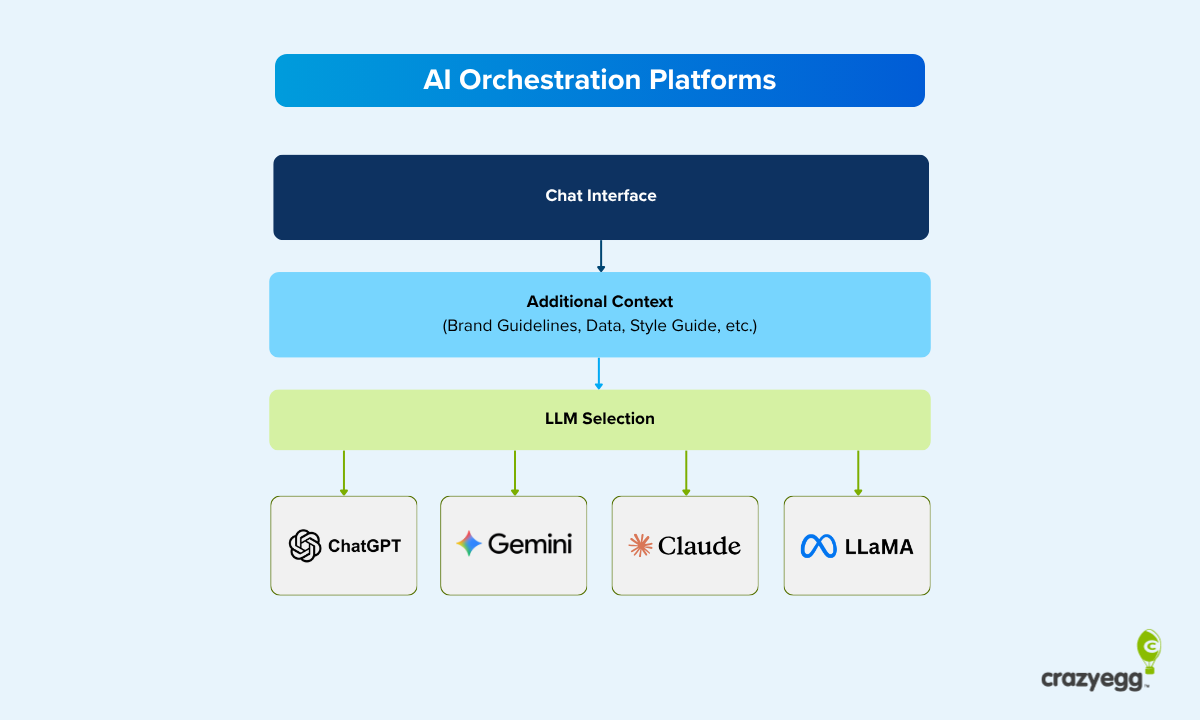
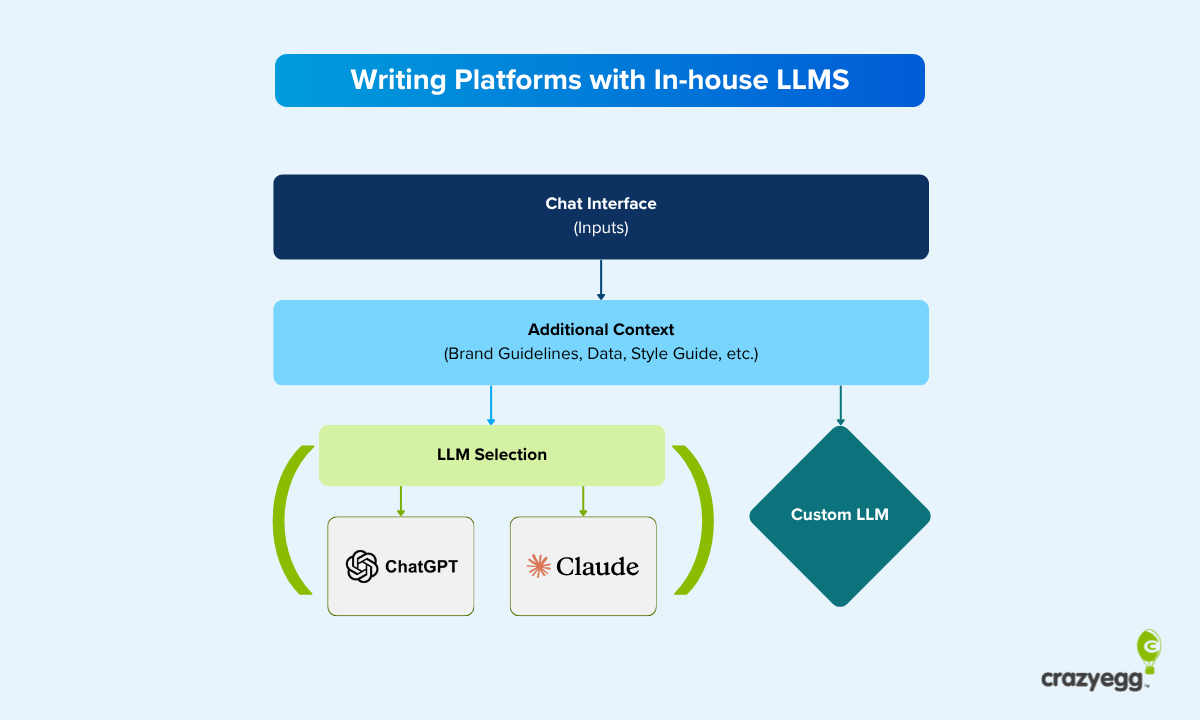
Faced with the limitations of raw frontier models, a massive ecosystem of "AI writing platforms" has emerged. These generally fall into two categories:
- Orchestration Layers (Wrappers): These tools sit on top of GPT-4, Claude, or Gemini, adding a layer of UI and "context injection" to help guide the model toward a specific brand voice.
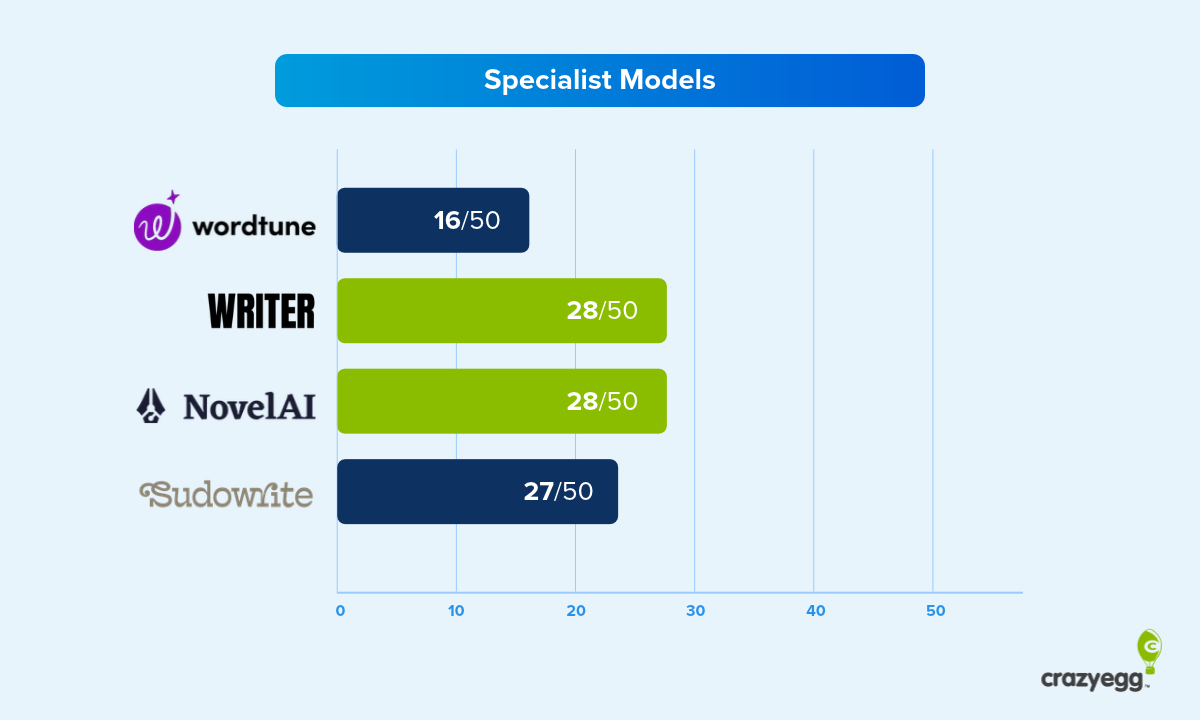
- Specialist Models: These platforms use proprietary or heavily fine-tuned open-source models designed for specific tasks like narrative fiction or business copywriting.
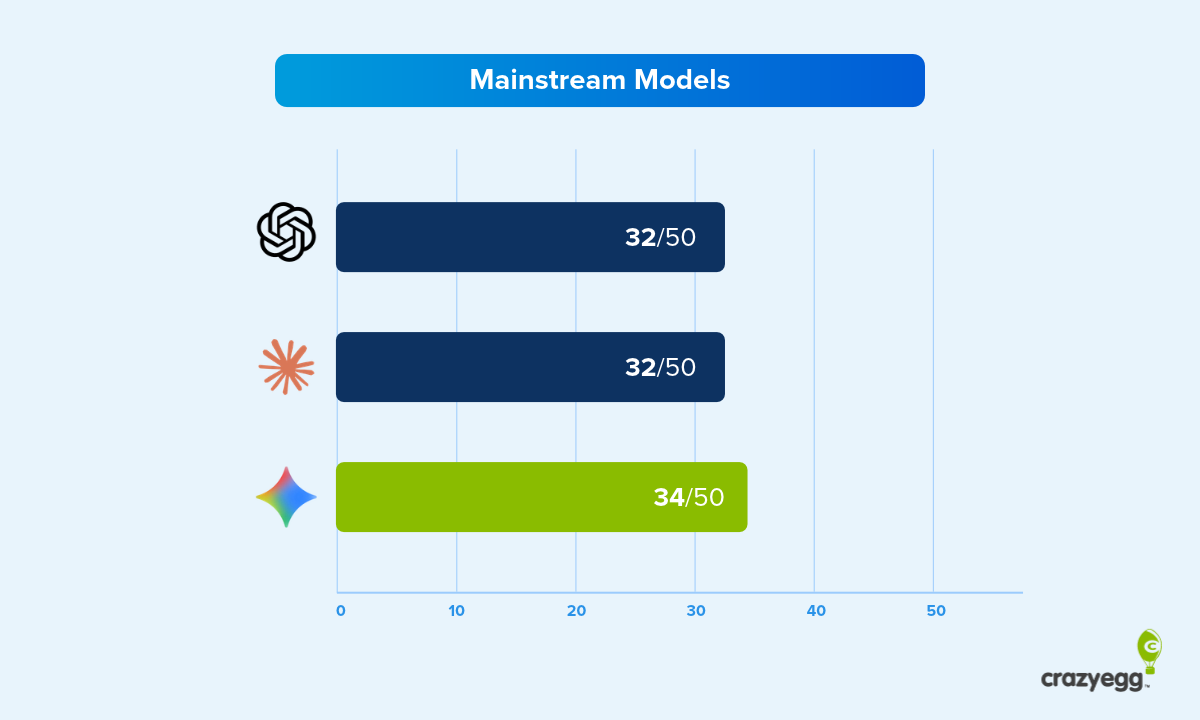
To test whether these tools solve the stagnation problem, I conducted an experiment comparing eight market-leading platforms against the baseline of the raw frontier models. Using a 300-word prompt on the dangers of AI, I evaluated each output on substance, coherence, style, point-of-view, and instruction following.
The Findings
The results were sobering: The dedicated tools failed to outperform the raw, base models.
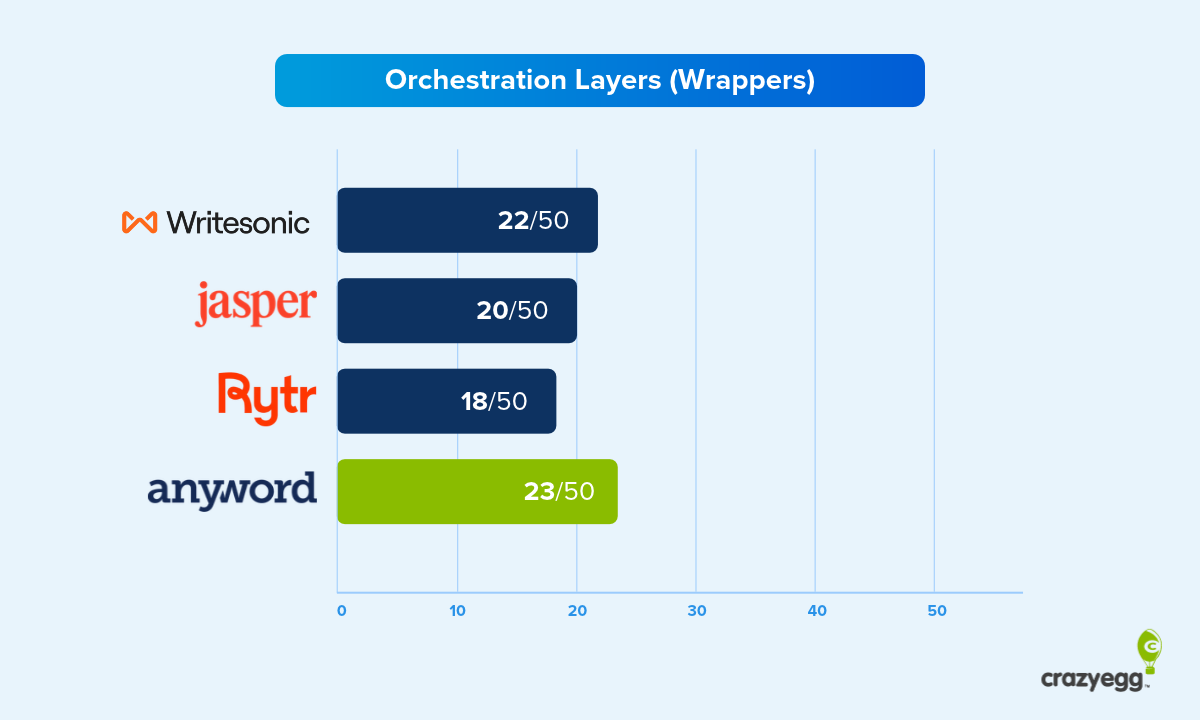
- Orchestration Layers: Tools like Jasper and Writesonic performed capably, but their "added value" was largely in user experience and workflow, not in the actual quality of the prose. They could not fix the fundamental issue of the underlying model’s tendency toward consensus.
- Specialist Models: While platforms like Writer (for business) and NovelAI (for storytelling) showed promise, they were no better than the frontier models at forming a nuanced, non-consensus point of view.
The "secret sauce" of these platforms—their ability to ingest brand guidelines and web-based context—is useful for consistency, but it does not represent an improvement in the fundamental intelligence or creative capacity of the AI.
Implications for Businesses
The stagnation of AI writing capability has profound implications for businesses that have rushed to automate their content marketing pipelines.
1. The Myth of the "Magic Tool"
Businesses should stop searching for a specialized "AI writer" that will magically solve their content quality problems. The most effective approach today is not buying a wrapper, but mastering the "frontier" models directly. By using the raw models with robust, custom-built context files, businesses can achieve the same—or better—results than the most expensive orchestration platforms.
2. The Return of the Human Editor
If AI models are excellent at structure, logic, and grammar, but "hopeless" at forming a strong, original point of view, the role of the human writer is more critical than ever. The current state of AI is an excellent editor and synthesizer, but a poor thinker. Companies that use AI to draft the "bones" of an argument and then use human expertise to inject the "soul"—the unique POV, the counter-intuitive insight, the industry-specific anecdote—will maintain a competitive advantage.

3. Monitoring is the New Strategy
Because the rankings of frontier models shift constantly (today’s winner is tomorrow’s runner-up), benchmarks like the Arena Leaderboard should be a core component of your marketing operations stack. Organizations should not be married to a single model. Instead, they should maintain a flexible infrastructure that allows them to swap out underlying models as performance data evolves.
4. Prioritizing Context over Prompting
The most successful AI-assisted workflows are those that move beyond "prompt engineering" and into "context engineering." Creating a comprehensive, living document of your brand’s voice, your audience’s pain points, and your company’s unique stance on industry debates is far more effective than trying to "trick" an AI into being clever with a clever prompt.

Conclusion: The Path Forward
The "AI writing plateau" is not a sign that the technology has failed; it is a sign that it has matured. We are moving past the era of novelty, where simply having an AI generate a coherent sentence was enough to impress. We are entering an era of diminishing returns for general-purpose models.
For businesses, this means the easy wins are over. True value now lies in the sophisticated application of these tools: using AI to handle the heavy lifting of structure and research, while reserving the high-level, paradigm-shifting thought leadership for human minds. AI can tell you what the consensus is, but it will never be the one to challenge it. That, for now, remains a uniquely human capability.
