

The New Era of Influence: Why Employee Advocacy is the Ultimate Marketing Weapon
In an era where consumer trust in corporate advertising is at an all-time low, companies are increasingly turning to their most authentic asset: their own people. Employee advocacy—the structured practice of empowering staff to share company-approved content on their personal social media channels—has evolved from a grassroots social media tactic into a cornerstone of modern business strategy.
As organizations grapple with rising customer acquisition costs and the volatility of social media algorithms, employee advocacy offers a high-trust, low-cost solution that builds brand awareness, accelerates recruitment, and drives measurable revenue.

What is an Employee Advocacy Program?
At its core, an employee advocacy program is a strategic initiative that encourages employees to act as brand ambassadors. Unlike traditional marketing, which relies on sterile, corporate-led messaging, advocacy leverages the existing, personal networks of staff members on platforms like LinkedIn, X, and Instagram.
The effectiveness of this approach is rooted in human psychology. Data consistently shows that people trust other people significantly more than they trust corporate logos. According to the 2026 Edelman Trust Barometer, 88% of consumers view brand trust as a critical purchase criterion—on par with product quality and value. When an employee shares a company milestone, a product launch, or a "day in the life" post, it humanizes the brand, cutting through the noise of paid advertising.

Informal Advocacy vs. Structured Programs
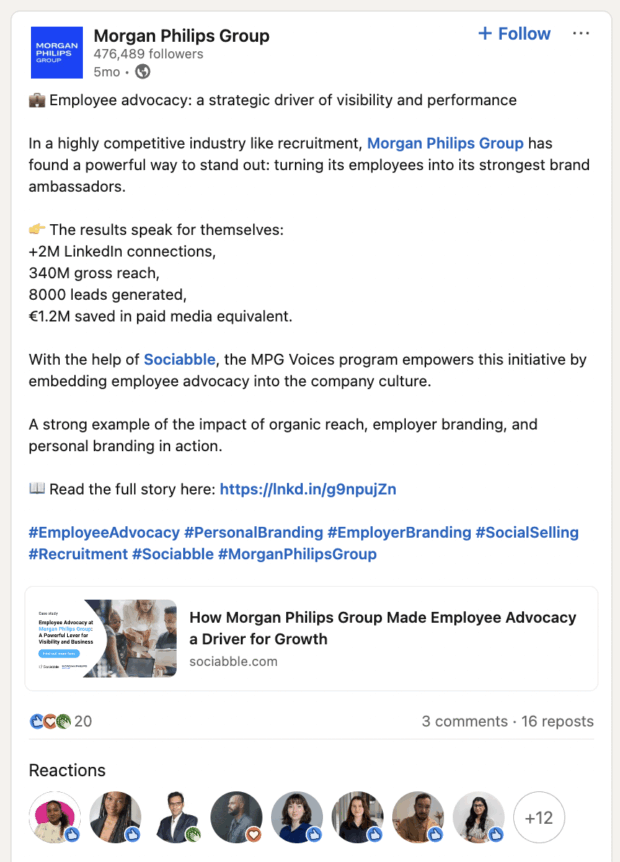
The distinction between informal, spontaneous sharing and a structured program is one of intention. Informal advocacy is organic but unmeasured and inconsistent. In contrast, a structured program provides a curated content library, clear brand guidelines, and specialized software to ensure that messages remain compliant, on-brand, and trackable. Modern tools, such as Hootsuite’s Parliament, allow companies to gamify the process, provide pre-approved posts that employees can share with a few taps, and measure the direct impact on ROI.
Chronology of the Shift: From Social Media to "Social Business"
The rise of advocacy didn’t happen overnight. It tracks the evolution of digital marketing over the last decade:
- 2015–2018 (The Awareness Phase): Companies began realizing that organic reach on brand pages was plummeting. The initial experiment involved encouraging staff to "like" company posts.
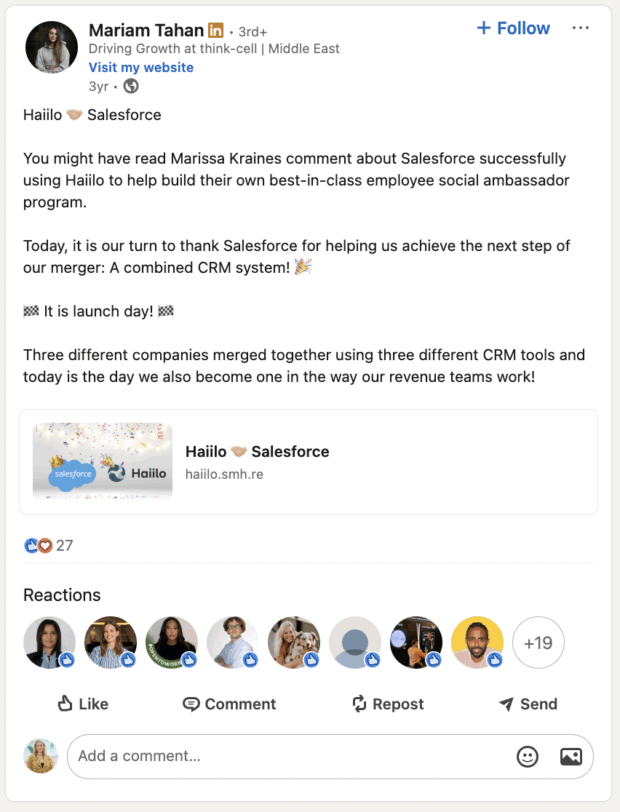
- 2019–2022 (The Tooling Phase): The market saw an influx of dedicated advocacy platforms (like Haiilo and EveryoneSocial). Companies moved from "asking" employees to share to "enabling" them with mobile-first apps.
- 2023–2025 (The Integration Phase): Advocacy became a standard KPI for marketing departments. It moved beyond just "reach" into tangible business metrics like pipeline generation and talent acquisition.
- 2026 and Beyond (The Strategic Imperative): Advocacy is now treated as an essential component of an organization’s digital footprint, with programs integrated into HR onboarding and sales enablement training.
Supporting Data: The ROI of Humanizing the Brand
The business case for employee advocacy is supported by compelling statistics that transcend vanity metrics.
1. Exponential Reach
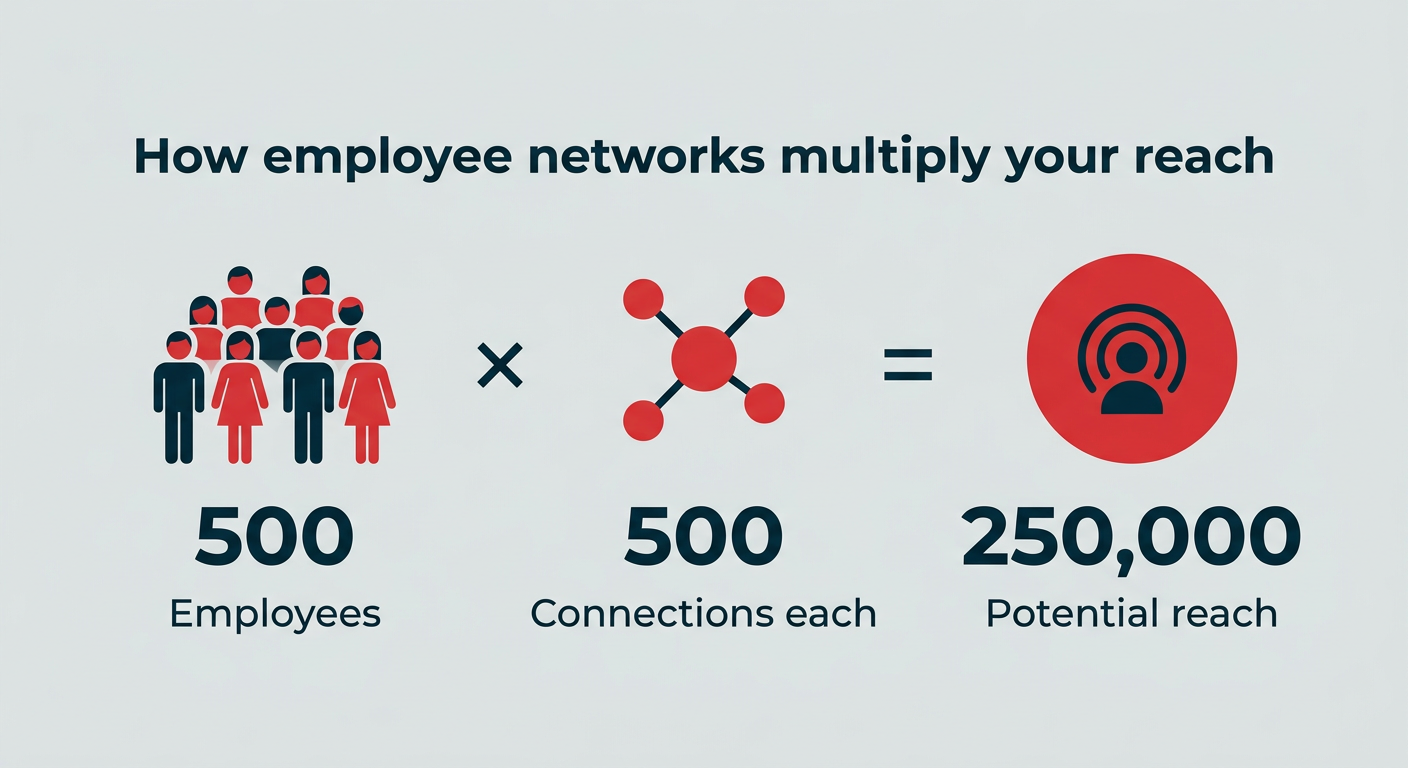
A company with 500 employees, each possessing an average of 500 professional connections on LinkedIn, creates a potential reach of 250,000 people. This audience is often distinct from the brand’s own followers, providing access to entirely new markets without the need for additional paid media spend.
2. Engagement Dominance
Algorithms favor personal profiles over brand pages. Studies, including analysis from Metricool, indicate that personal profiles achieve roughly 63% higher engagement rates than corporate accounts. When employees share content, it is more likely to trigger comments and genuine conversation, which in turn signals to social platforms that the content is valuable.
3. Recruitment and Retention
Employer branding is perhaps the most significant benefactor of advocacy. When potential hires see authentic content from current employees—showcasing team culture, office life, and genuine excitement—the conversion rate of applicants increases significantly. Companies like DaVita have reported a 136% increase in LinkedIn job applicants after implementing formal advocacy strategies.
4. Sales and Pipeline Attribution
Perhaps the most critical evolution is the ability to track advocacy to revenue. By using UTM tracking links within curated content, marketing teams can trace leads directly to employee shares. Major Tom, a marketing agency, recently reported over $100,000 in sales pipeline generated directly from employee-led campaigns.
Official Perspectives: The Experts Weigh In
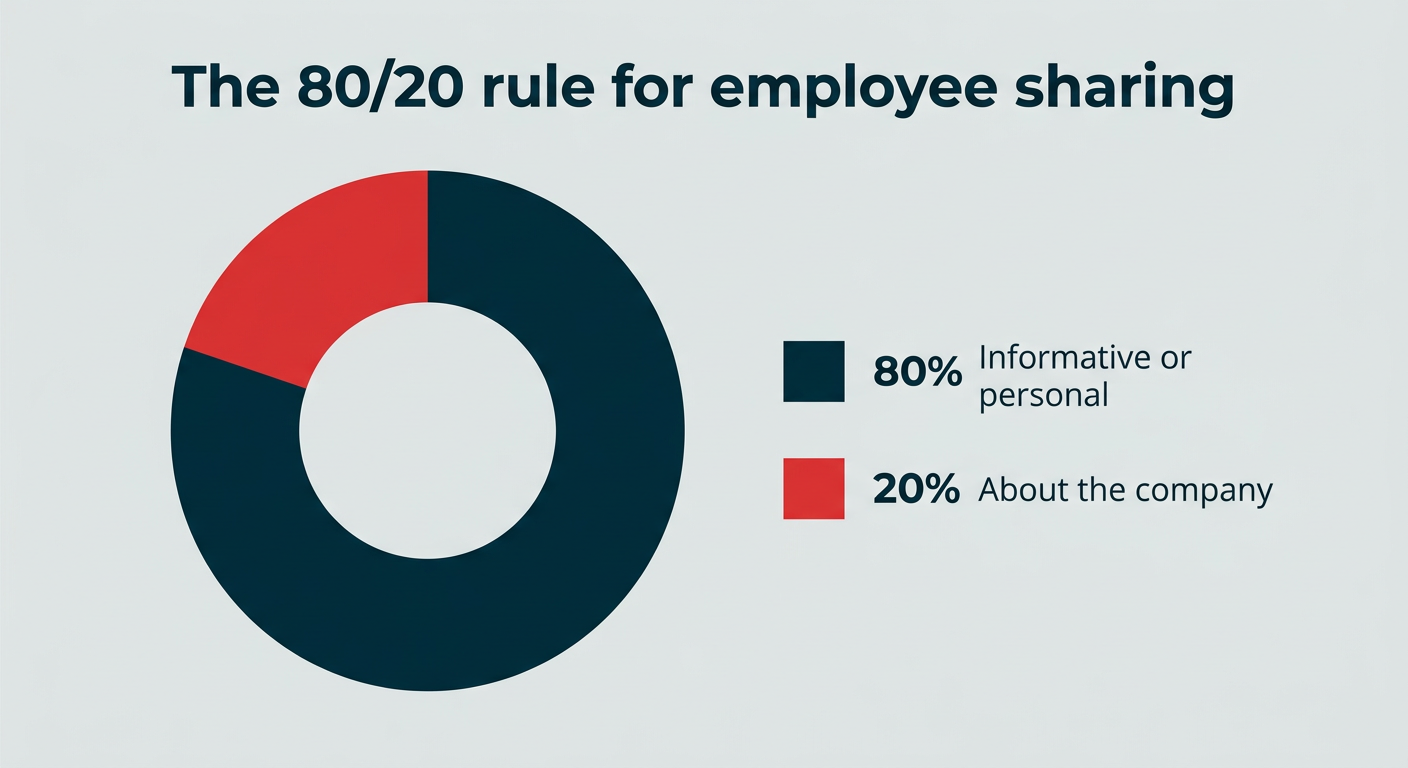
Marketing leaders argue that the success of these programs relies on the "80/20 Rule." Victoria Samways, Marketing & Brand Manager at Major Tom, emphasizes that employees are powerful ambassadors, but they must be given the right content to succeed. "Employees are naturally more inclined to support a co-worker’s achievement rather than a generic brand piece," Samways notes.

The industry consensus is that advocacy fails when it feels forced. Successful organizations treat advocacy as a mutually beneficial exchange: the company gets reach, and the employee gets to build their professional "thought leadership" profile, which benefits their career long-term.
Building a Successful Program: A Six-Step Framework
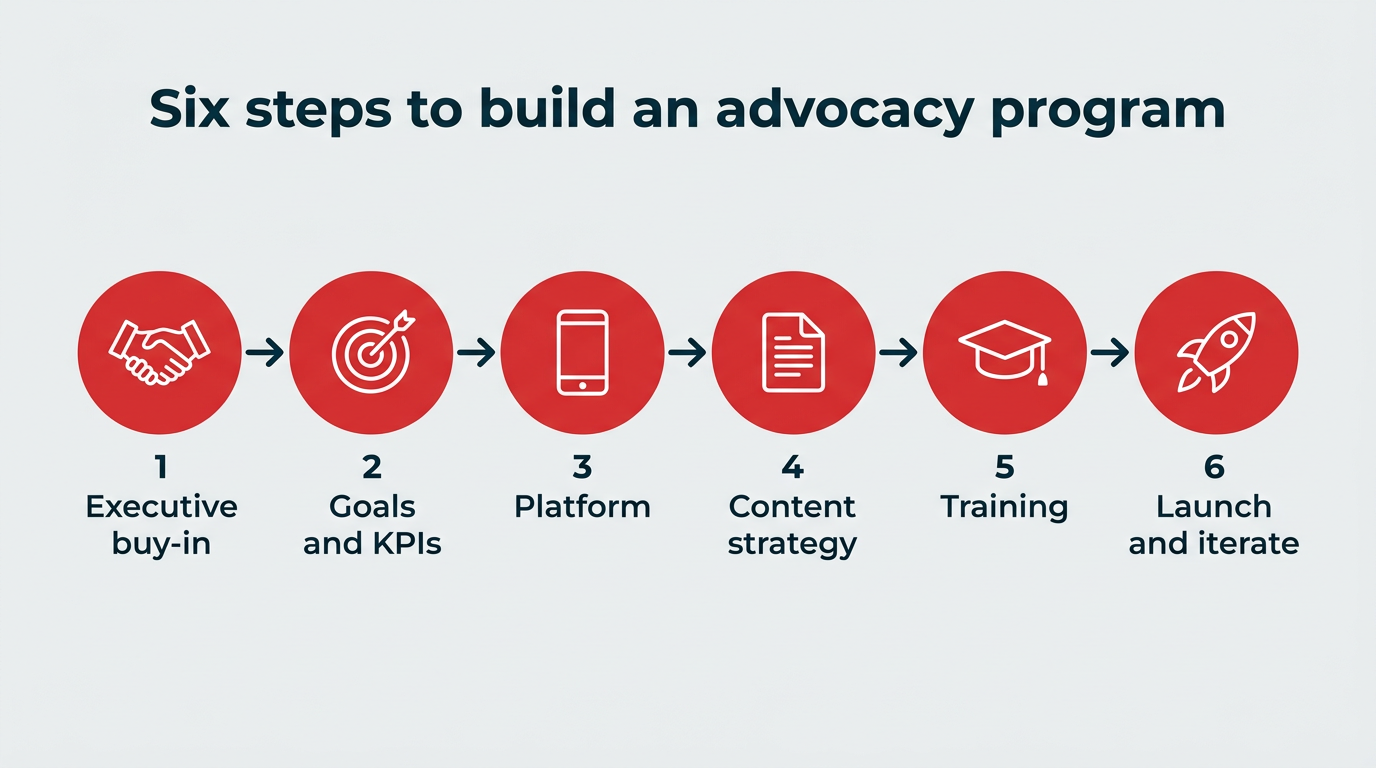
For organizations looking to implement a sustainable advocacy initiative, a structured approach is mandatory:
- Executive Buy-in: Without leadership support, advocacy is treated as a hobby. Executives must set the tone by posting themselves.
- Define KPIs: Whether it is recruiting, lead generation, or brand awareness, pick one primary metric to track.
- Choose the Right Infrastructure: Avoid spreadsheets. Use a platform that provides an easy-to-use mobile interface for employees.
- Curate the Content: Ensure a healthy mix of industry insights, company culture, and product updates. Avoid making every post a "hard sell."
- Training and Compliance: Give employees the confidence to post. Teach them the basics of social media etiquette and brand guidelines to mitigate risk.
- Launch and Incentivize: Use gamification and leaderboards to maintain momentum. Keep the content fresh to prevent "content fatigue."
Implications for the Future of Work
The rise of employee advocacy signals a permanent shift in corporate communications. The "Company as a Person" era is fading, replaced by the "Company as a Community."
The Trust Advantage
As AI-generated content floods the internet, the value of a "human" voice is inflating. In a landscape where bots can generate infinite marketing copy, an employee’s authentic, personal endorsement becomes a rare and high-value currency.
Compliance and Control
As these programs scale, legal and compliance departments are becoming more involved. Future programs will need to balance the "human" aspect with rigorous, automated compliance tools to ensure that employees, while autonomous, stay within the boundaries of industry regulations.
The Career Impact
Employees are increasingly viewing their social media presence as a personal asset. Companies that support this—by providing professional branding training and high-quality content—are seeing higher employee retention rates. Advocacy is no longer just a marketing tactic; it is an employee engagement tool.
Conclusion: Turning Teams into Megaphones
Employee advocacy is not merely a trend; it is the natural outcome of a digital world that demands authenticity. When a company empowers its employees to tell its story, it gains more than just reach—it gains credibility. By combining the right technology, like Hootsuite’s Parliament, with a commitment to authentic storytelling, organizations can turn their greatest asset into their most powerful marketing channel.
As we look toward the remainder of 2026, the question for business leaders is no longer if they should adopt an employee advocacy program, but how quickly they can empower their people to become the voice of the brand.
