
Beyond the Code: Redefining the Essential "Human-Centric" Skills for Data Scientists
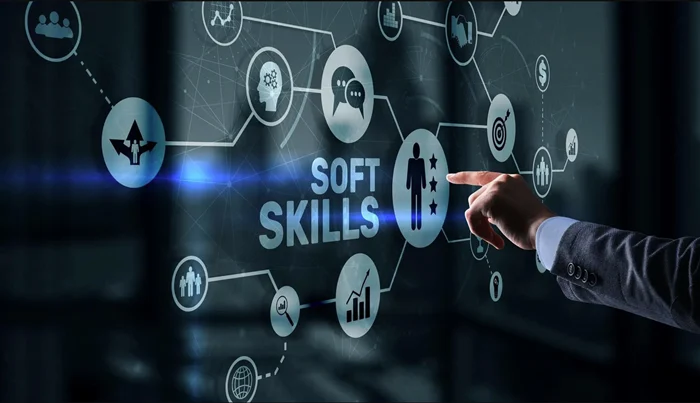
In the rapidly evolving landscape of artificial intelligence and advanced analytics, the role of the data scientist has undergone a profound metamorphosis. While technical prowess in Python, R, SQL, and machine learning architectures remains the baseline for entry, industry veterans argue that the true differentiator between a functional coder and a transformative data scientist lies in a set of competencies often mislabeled as "soft skills."
Bridget Cogley, Co-Founder and Chief Visualization Officer for Versalytix, famously proposed the term "human-centric and investigational skills" to replace the outdated "soft skills" moniker. This distinction is critical: these skills are not merely "easy" interpersonal habits; they are cognitively demanding, difficult to master, and form a necessary, symbiotic relationship with technical capability. As the industry matures, it is becoming clear that technical brilliance without human-centric maturity is a liability.
The Philosophical Foundation: Why "Soft Skills" is a Misnomer
For decades, the tech industry relied on the term "soft skills" to describe everything that wasn’t strictly algorithmic. This terminology is not only dismissive but inaccurate. These skills require rigorous training, high levels of emotional intelligence, and deep intellectual discipline.
The industry is moving toward a model where data science is viewed as a profession of trust. Similar to medicine or law, where practitioners hold a fiduciary duty to their patients or clients, data scientists hold a duty to their organizations and the public. Without this "cohesion and symmetry" between technical ability and human-centric judgment, the data scientist remains merely a tool-user, rather than a strategic advisor.
1. Data Ethics: The Hippocratic Oath of the Algorithmic Age
The most urgent pillar of the modern data scientist is ethics. A professional can possess advanced degrees and decades of experience, but if they lack an ethical framework, their work is fundamentally compromised.
As Hilary Mason, Data Scientist in Residence at Accel, has noted, the data science community faces unprecedented challenges in navigating the uncertainty of black-box algorithms. When machine learning models determine the trajectory of a business or the fate of a consumer loan, the stakes are elevated beyond code performance.
Omoju Miller, a senior machine learning data scientist at GitHub, has advocated for a systemic shift in the industry. In a dialogue with Hugo Browne-Anderson for the Harvard Business Review, Miller proposed that the industry requires a "Hippocratic Oath." The goal is to move beyond self-regulation toward a framework that includes proper licensing, professional standards, and meaningful repercussions for unethical practice. The industry must evolve to a point where "going off the rails" is not just a lapse in judgment, but a professional failure with concrete consequences.
2. Data Literacy and the "Starving in the Midst of Plenty" Paradox
The adage "I am drowning in data, yet I am starving for information" remains the defining struggle of the 21st-century enterprise. Despite the proliferation of Big Data, the ability to derive meaning from that data is increasingly rare.
Data scientists often encounter a lack of foundational infrastructure: missing data dictionaries, nonexistent lineage, and poorly defined metadata. Consider the evolution of telecommunications: in the 1980s, validating an area code was a simple rule-based task. Today, the complexity of area codes—which are no longer strictly constrained by the "0 or 1" middle-digit rule—illustrates how legacy assumptions can destroy modern models.
True expertise requires a radical, unashamed curiosity. A data scientist must be more curious about the business’s data than the business owners themselves. When a data professional admits, "I don’t understand this; please explain it," they are not showing weakness—they are performing the vital work of data discovery.
3. The Discipline of Lifelong Learning
In an era of information overload, the ability to curate knowledge is a survival skill. The modern data scientist must be a voracious reader, but they must also become an expert filter. Distinguishing between genuine innovation and "vendor preening" or biased marketing requires a refined "gut feel."
The recommendation for practitioners is to focus on core pillars—data preparation, statistical concepts, visualization, and machine learning—while remaining peripheral to emerging trends. Engaging with communities, such as the Tableau community, offers more than just technical tips; it provides a window into the philosophy of data representation. Every article read and every product capability documented adds to a mental "bag of tricks," ensuring the practitioner is ready when a novel problem arises.
4. Business Acumen: Understanding the Profit Engine
A recurring issue in the hiring process for data-centric roles is a lack of alignment between technical output and commercial reality. When candidates are asked, "How does your company make a profit?", they often default to describing their own technical tasks—a report generated or an algorithm tuned.
This disconnect is dangerous. A data scientist must understand the financial levers of their organization. Whether it is reading annual reports, dissecting product margins, or identifying key competitive threats, the data scientist’s objective is to solve problems that move the needle. By aiming to understand a specific department’s operations as well as its managers do, the data scientist shifts from being a cost center to a value-multiplier.
5. Communication: Translating Jargon into Action
Communication is the bridge between raw insight and actionable change. The primary rule of effective communication is simple: check your technical jargon at the door.
When presenting to a Finance Department, for example, the discussion should not center on the intricacies of a neural network, but on budget accessibility, revenue trends, and departmental expenditures. Storytelling—the art of weaving data into a compelling, logical narrative—is the most potent tool in the data scientist’s arsenal. When data is presented through clear visualizations and intuitive infographics, it moves from being a static file to a catalyst for executive decision-making.
6. Collaboration and the End of the "Basement" Era
The history of IT is a story of evolution from isolation to integration. In the late 1970s, programmers were often relegated to "cold, damp basements," separated from the business by layers of intermediaries. This Waterfall-style development led to endless loops of misunderstanding and wasted effort.
Today, the data scientist is "front and center." Modern, iterative development methodologies have forced a collaborative reality where technical professionals must interact directly with executives, product managers, and end-users. This evolution is not just efficient; it is necessary. Every individual in the organization—from the C-suite to the frontline staff—is part of the data team. Respecting the domain knowledge of these partners is not merely good manners; it is the cornerstone of professional success.
Implications for the Future
The shift toward "human-centric and investigational skills" signals that the profession is maturing. As we move further into the age of AI, the technical gap between tools will narrow, but the gap in human judgment will widen.
The data scientists of the future will be those who treat ethics as a core responsibility, business context as a prerequisite, and communication as a duty. By embracing these skills, the industry can ensure that data science serves as a force for clarity and progress rather than complexity and confusion. The "basement" is behind us; the future belongs to those who can bridge the divide between the machine and the human experience.
