
Beyond the Blueprint: How Industry Titans Gamify Innovation to Drive Corporate Growth
In the modern business landscape, the term "growth operation" has become a buzzword, yet it remains one of the most misunderstood levers of corporate success. A truly functional growth operation is not merely a department; it is a bottom-up engine of innovation. In an optimized system, every employee—from the base of the pyramid to the corner office—is empowered to propose hypotheses. The growth team acts as the operational nerve center, refining these ideas through rigorous testing, while leadership remains the final arbiter, now equipped with the data-driven clarity required to make high-stakes decisions.
However, bridging the gap between a company that tries to implement growth and one that possesses growth in its DNA is a monumental challenge. The "chasm" separating these two states is often filled with cultural friction. Successful implementation rarely happens organically from the bottom up; rather, it requires a top-down mandate. It begins with high-level executives who understand the methodology, cascades into middle management that structures the strategy, and culminates in a workforce energized by the freedom to experiment.
To bridge this divide, global leaders are increasingly turning to a sophisticated psychological tool: gamification. By institutionalizing rewards for experimentation, they are transforming the daunting task of innovation into an engaging, company-wide pursuit.
The Chronology of Corporate Innovation Programs
The evolution of structured innovation is a story of trial and error spanning several decades. It began in the manufacturing era, evolved through the tech boom, and has now reached the highly regulated spheres of pharmaceuticals and global commerce.
1. Amazon: The "Just Do It" Award (1998–Present)
The origins of Amazon’s culture of action can be traced back to a specific moment of operational necessity in 1998. The customer service team was facing a backlog of 250 open tickets. In a display of grassroots problem-solving, an associate proposed a challenge: any individual who could clear the backlog within 24 hours would receive a $200 bonus. The tickets were cleared in record time.

Jeff Bezos, observing this, identified the core ingredients: urgency, autonomy, and a bias for action. This led to the "Just Do It" award. Today, in a company of over 600,000 employees, the award is granted only twice a year. It remains one of the most prestigious internal honors, serving as a constant reminder that at Amazon, execution is as valuable as ideation.
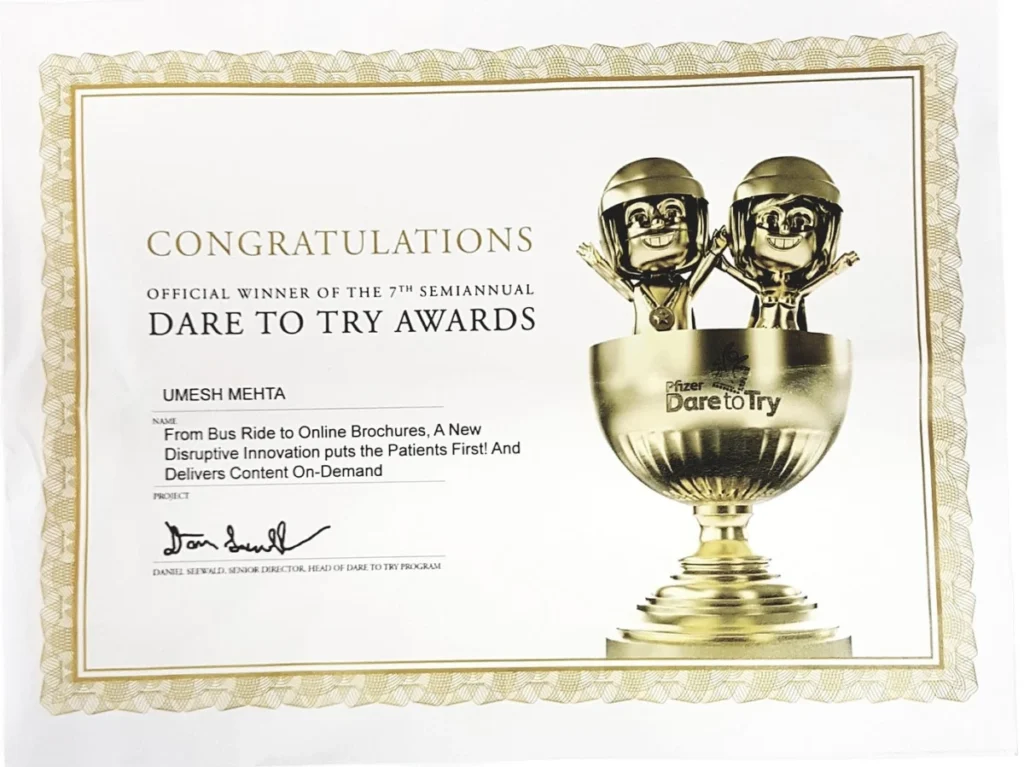
2. Pfizer: The "Dare to Try" Initiative (2013–Present)
If innovation is difficult for a lean startup, it is exponentially harder for a multi-billion-dollar pharmaceutical giant. Recognizing that failure in the lab is expensive but necessary, Pfizer launched "Dare to Try" a decade ago. The program was designed to institutionalize the concept of "failing freely but inexpensively." By establishing a network of "champions"—employees who self-nominate to lead internal innovation efforts—Pfizer shifted the narrative from fearing failure to viewing it as a prerequisite for discovery.
3. 3M: The "Innovate or Die" Mandate
3M’s legacy is built on its ability to stay relevant in commoditized markets. Their strategy relies on a relentless focus on new product revenue. A key rule mandates that 30% of each division’s revenue must be generated from products introduced within the last four years. This creates a "ticking clock" that forces teams to constantly innovate, supported by internal reward systems that protect risk-takers.
4. Google: The 20% Project
Google famously expanded upon 3M’s 15% rule, implementing a "20% Project" policy. By allowing employees to dedicate one-fifth of their paid time to side projects, the company effectively decentralized its R&D. The results speak for themselves: some of the most iconic products in history, including Gmail and Google News, were born from this freedom.
Supporting Data and The Mechanics of Engagement
The effectiveness of these programs is supported by the behavioral science of "intrinsic motivation." When employees feel that their ideas are not just welcomed but incentivized, they shift from "task-completion" mindsets to "problem-solving" mindsets.
- The Power of Recognition: At Amazon, the "Just Do It" award is not just about the monetary value; it is the visibility provided by Bezos himself that carries weight. Recognition functions as a social currency that drives others to replicate the behavior.
- The Champions Network: Pfizer’s model of using internal "evangelists" solves the problem of cultural inertia. By embedding innovation advocates within different departments, the company creates a peer-to-peer training system that is far more effective than top-down directives.
- The Revenue Requirement: 3M’s 30% rule provides a quantitative guardrail. It prevents the organization from resting on its laurels, ensuring that innovation is not just an activity but a performance metric that influences bonuses and promotions.
Official Responses and Internal Philosophies
Corporate leadership, when interviewed regarding these programs, consistently emphasizes that these initiatives are not about "free time," but about "focused risk."
- Pfizer’s Leadership View: Executives have stated that the "Dare to Try" brand was created to provide a "psychological safety net." They argue that if employees are afraid of the consequences of a failed experiment, the company will never reach the breakthroughs necessary to save lives.
- Google’s Perspective: Early leadership at Google often described the 20% project as a "necessary inefficiency." The argument is that while 80% efficiency in core tasks is sufficient, the final 20% of effort is where the "black swan" innovations are discovered.
Implications for the Future of Growth Operations
The shift toward gamified innovation represents a fundamental change in the relationship between the employer and the employee. As organizations move further into the digital age, the ability to iterate quickly will be the only sustainable competitive advantage.
The Death of the "Top-Down" Innovation Myth
The primary implication of these case studies is that innovation cannot be mandated by decree; it must be designed into the incentive structure. When companies like Amazon or Google foster innovation, they are not asking employees to work harder; they are changing the rules of the game so that experimentation becomes the path of least resistance.
Culture as a Growth Metric
Most companies treat culture as a soft HR metric. However, the success of these programs suggests that culture—defined as the collective behavior of employees when they believe no one is watching—is the hardest asset to build and the most difficult for competitors to replicate.
The Risk of Stagnation
For companies that fail to adopt these frameworks, the implications are dire. In a market where technology reduces the barriers to entry, "business as usual" is often a slow-motion decline. Companies that do not provide a framework for their employees to innovate will inevitably suffer from "innovation atrophy," where the best talent migrates to firms that offer the freedom to experiment.
Conclusion: Designing Your Own Growth Game
To build a growth-oriented organization, leadership must move beyond the basic methodology and address the human element. The "growth operation" is a symphony, not a solo performance. By gamifying the process—whether through awards like Amazon’s, brand-led initiatives like Pfizer’s, or temporal mandates like 3M and Google—leaders can turn a rigid corporate structure into a dynamic, learning entity.
The takeaway for modern executives is clear: if you want a culture of growth, you must create a game that everyone can play, where the rewards for discovery outweigh the risks of failure, and where every employee—from the warehouse floor to the developer’s desk—is a contributor to the company’s next great breakthrough. The future belongs to those who build, test, learn, and iterate—not as a department, but as a collective way of life.
