
Navigating the Martech Frontier: A Pragmatic Blueprint for 2026
As the calendar turns toward the end of the year, the marketing technology industry is once again bracing for the "prophecy season"—a time traditionally dominated by hyperbolic predictions and speculative fever dreams. However, for the past several years, industry veterans Scott Brinker and Frans Riemersma have cut through the noise, providing a grounded, data-backed assessment of the reality governing marketing technology stacks.
Their latest collaborative effort, Martech for 2026, is set to launch on Tuesday, December 2. This year’s release promises to be their most comprehensive yet, offering a rigorous examination of the trends that will define the next 6–12 months. Moving beyond mere conjecture, the report aims to provide marketing leaders with a pragmatic, evidence-based roadmap to navigate an increasingly complex ecosystem.
The Core Objective: Moving Beyond the Hype Cycle
In an industry prone to rapid shifts and fleeting trends, Brinker and Riemersma have established a reputation for identifying the "signals" amidst the "noise." The Martech for 2026 initiative is not a collection of wild guesses; it is a systematic analysis of real-world patterns observed within actual marketing organizations.
By focusing on how technology is currently being deployed—and how that deployment is yielding (or failing to yield) results—the duo provides a sober assessment of the industry’s trajectory. The upcoming report, which spans over 100 pages, is designed to prepare CMOs, marketing operations leaders, and technology architects for the operational challenges that lie ahead in the coming year.
Chronology of the 2026 Martech Forecast
The rollout of this year’s research is structured to maximize accessibility and engagement for a global audience of marketing professionals.
- December 2, 2025 (The Launch): The official release of the Martech for 2026 report. This date marks the debut of the comprehensive findings, including the "no-holds-barred" presentation by Brinker and Riemersma.
- December 2025 (Engagement Period): Throughout the month, the report and the accompanying virtual seminar will be available to all registrants. The event is designed to be flexible, offering both live interaction and on-demand access, allowing busy professionals to integrate the findings into their planning cycles before the holiday break.
- Post-Keynote Sessions: Following the primary presentation, the event will feature a series of candid, non-promotional interviews with senior product and marketing leaders from industry-leading sponsors.
Unpacking the AI Agent Revolution
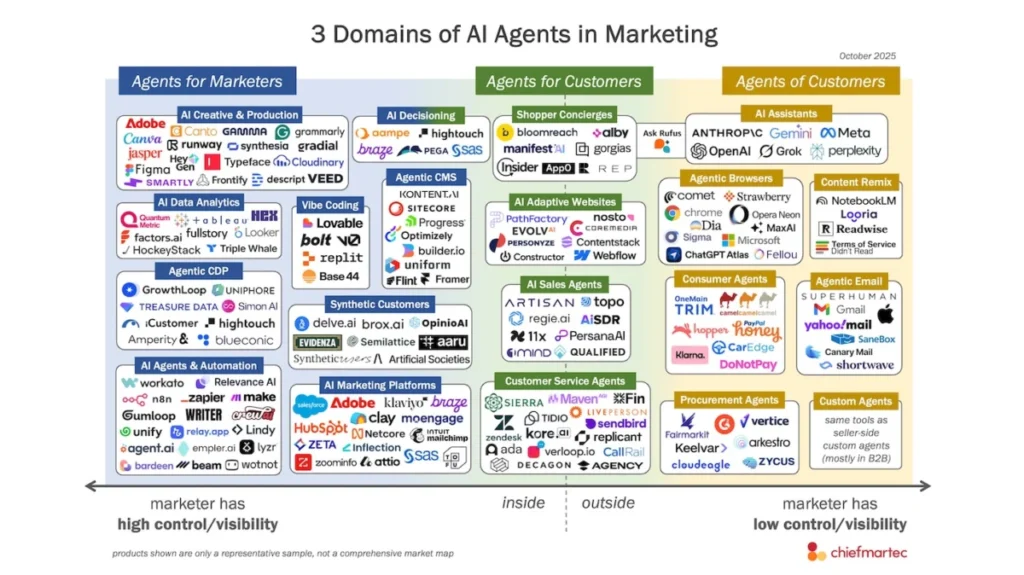
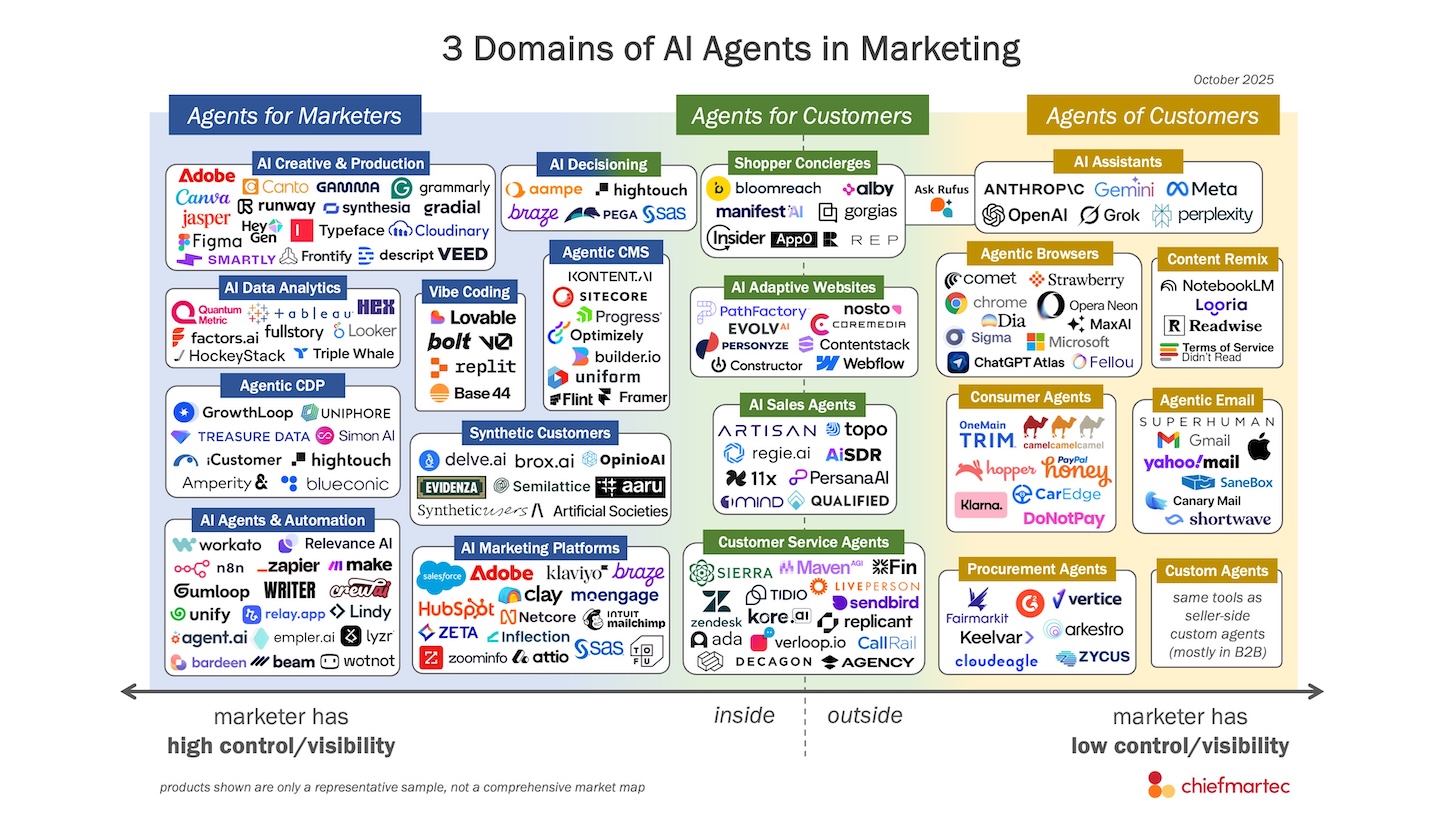
Perhaps the most anticipated segment of the upcoming report is the deep dive into the proliferation of AI agents. While "AI" has been the industry buzzword for the past two years, the focus is now shifting from broad language models to specific, functional AI agents embedded within the marketing workflow.
The report categorizes these agents into three distinct domains, exploring their current and potential roles within existing martech stacks.
The Science Fair vs. The Factory Floor
A critical component of the research involves the results from the latest AI & Data in Marketing survey. The authors have set out to differentiate between AI use cases that are currently scaling in production and those that remain in the experimental "science fair" stage. This distinction is vital for leaders who need to allocate budget toward technologies that offer tangible ROI rather than just theoretical potential.
Context Engineering: The New Frontier
Beyond the agents themselves, the report introduces the concept of "context engineering." In an era where data is abundant but context is often scarce, the authors argue that the efficacy of an AI agent is largely dependent on its ability to access and interpret the right data at the right time. The report will provide detailed statistics on the spectrum of data sources being connected to these agents, offering a blueprint for how organizations should structure their data architecture to support advanced AI integration.
Implications: Augmentation or Obsolescence?
A central question facing every marketing leader is the long-term viability of their current SaaS investments. Are the new AI agents augmenting these platforms, or are they poised to replace them entirely?
Brinker and Riemersma address this tension head-on. The report analyzes whether these new agents are simply enhancing the features of existing tools, or if they are facilitating entirely new use cases that render legacy workflows obsolete. By examining the evolving relationship between AI and existing SaaS platforms, the authors aim to provide clarity on how companies can optimize their current tech stacks without falling victim to the "shiny object syndrome."
Supporting Data and Collaborative Insight
The integrity of the Martech for 2026 report is bolstered by the support of industry leaders who are actively shaping the landscape. The project is sponsored by a coalition of organizations, including GrowthLoop, Hightouch, Intuit Mailchimp, MetaRouter, Progress, SAS, and Treasure Data.
Crucially, the organizers have committed to a "no-sales-pitch" policy during the post-keynote sessions. By interviewing senior leaders from these organizations, the report seeks to uncover:
- Candid Observations: What are these leaders seeing within their own organizations regarding AI adoption?
- Customer Challenges: What are the most common obstacles their clients face when deploying new AI technologies?
- Future-Proofing: How are these companies evolving their own product strategies to accommodate the next wave of AI-driven marketing operations?
The Imperative for Marketing Leaders
As 2025 draws to a close, the pressure to integrate AI into marketing operations has never been higher. However, the risk of misaligned implementation is equally significant. The Martech for 2026 report serves as a corrective to the industry’s tendency toward over-optimism.
For those tasked with overseeing technology investments, the report offers more than just data; it provides a framework for decision-making. By understanding which AI agents are ready for the factory floor and how "context engineering" can bridge the gap between raw data and actionable strategy, leaders can enter the new year with a clearer, more resilient plan.
How to Access the Findings
Registration for the Martech for 2026 event is currently open and is free of charge. By signing up, participants gain access to:
- The complete 100+ page research report.
- A full hour of expert narration and analysis from Scott Brinker and Frans Riemersma.
- Exclusive, candid interviews with senior leadership from key industry players.
- On-demand access throughout the month of December.
In a professional landscape defined by rapid, often overwhelming change, the ability to discern the difference between a passing fad and a foundational shift is a competitive advantage. With Martech for 2026, Brinker and Riemersma are once again providing the clarity required to turn that advantage into tangible growth. As they state, a sense of humor and a pragmatic outlook are essential for making these complex insights digestible—and for ensuring that the future of marketing remains firmly grounded in reality.
