
The Decade of the Augmented Marketer: A Mid-Point Audit of the Martech 2030 Vision
As the calendar turns to 2026, the marketing technology industry finds itself at a critical inflection point—the exact halfway mark of the "Decade of the Augmented Marketer." Five years ago, in a seminal report titled Martech 2030, industry thought leaders Scott Brinker and Jason Baldwin outlined a roadmap for how technology would fundamentally reshape the profession.
Now, with the benefit of five years of hindsight, the authors have put their original predictions to the test. By benchmarking their vision against the rapid, often volatile, evolution of generative AI and platform ecosystems, a clear picture has emerged: the future arrived faster, and more dramatically, than many anticipated.
Main Facts: The Five Pillars of Transformation
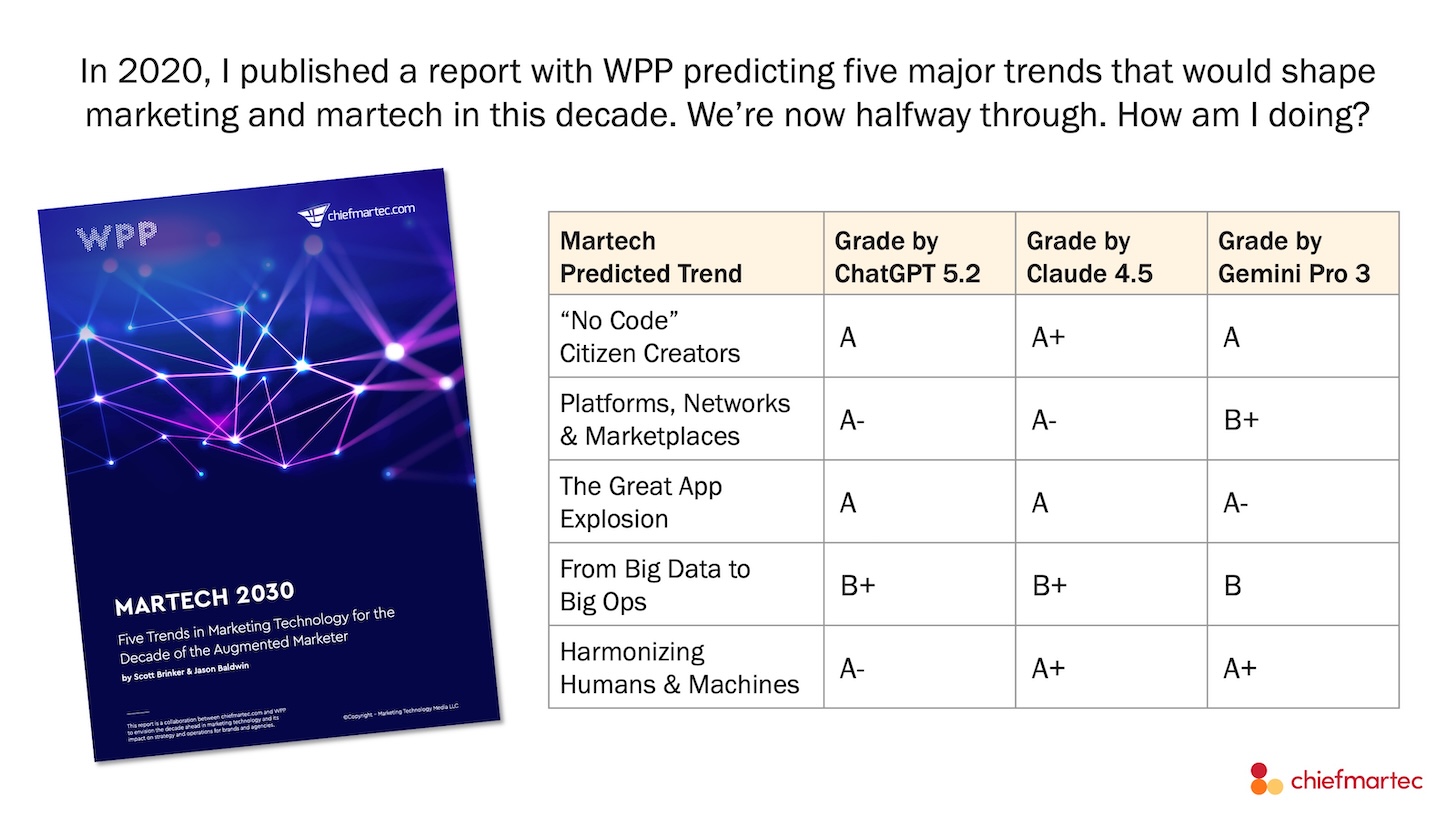
The Martech 2030 thesis was built on five core pillars, each designed to capture the shifting tectonic plates of the industry. These pillars—"No Code" Citizen Creators, the rise of Platforms and Marketplaces, the Great App Explosion, the transition from Big Data to Big Ops, and the harmonization of humans and machines—have served as the foundational narrative for the industry since 2021.
To evaluate their accuracy, Brinker solicited objective feedback from the industry’s most prominent LLMs: ChatGPT, Claude, and Gemini. The results were striking. The models offered high praise, particularly regarding the concept of human-machine harmony, awarding near-perfect marks for the foresight displayed half a decade ago.
Chronology: From Concept to Reality
The evolution of these trends has not been linear. While the groundwork was laid in the late 2010s, the "Big Bang" moment occurred in late 2022 with the widespread public adoption of generative AI.
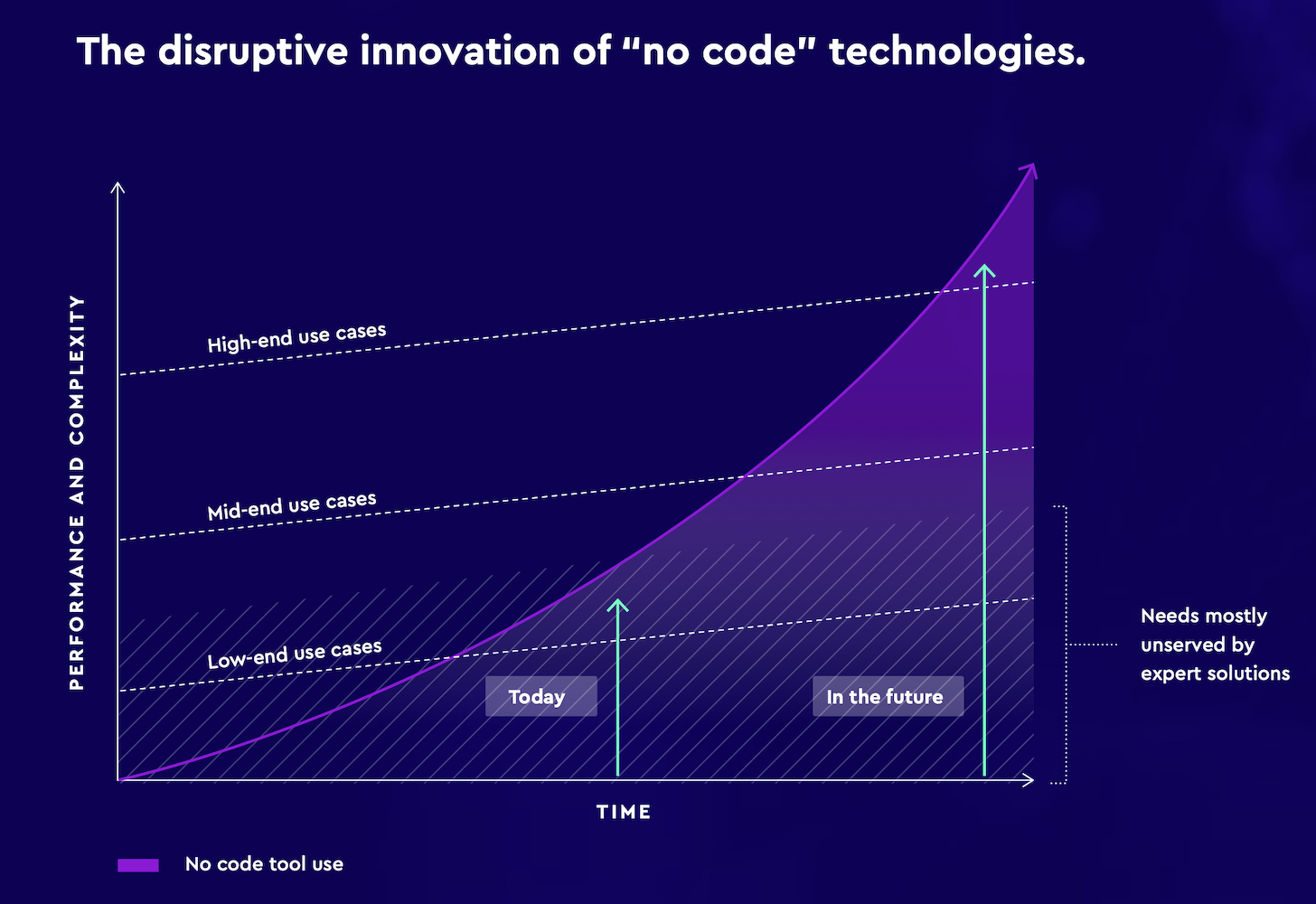
- 2020–2021: The "Martech 2030" report is published, defining the framework for the decade. At the time, "no code" was primarily seen through the lens of drag-and-drop interfaces like Airtable and Zapier.
- 2022–2023: The Generative AI explosion shifts the goalposts. Suddenly, complex coding tasks are replaced by natural language prompts. Andrej Karpathy’s declaration that "the hottest new programming language is English" becomes the industry mantra.
- 2024–2025: The rise of "Vibe Coding." Tools like Bolt, Lovable, and Replit allow non-engineers to build functional applications simply by describing their desired outcomes. This era solidifies the "Citizen Creator" movement.
- 2026: We enter the second half of the decade. The focus shifts from the initial shock of AI capabilities to the mature, structural challenges of governance, orchestration, and "Big Ops."
Supporting Data: The Scale of Expansion
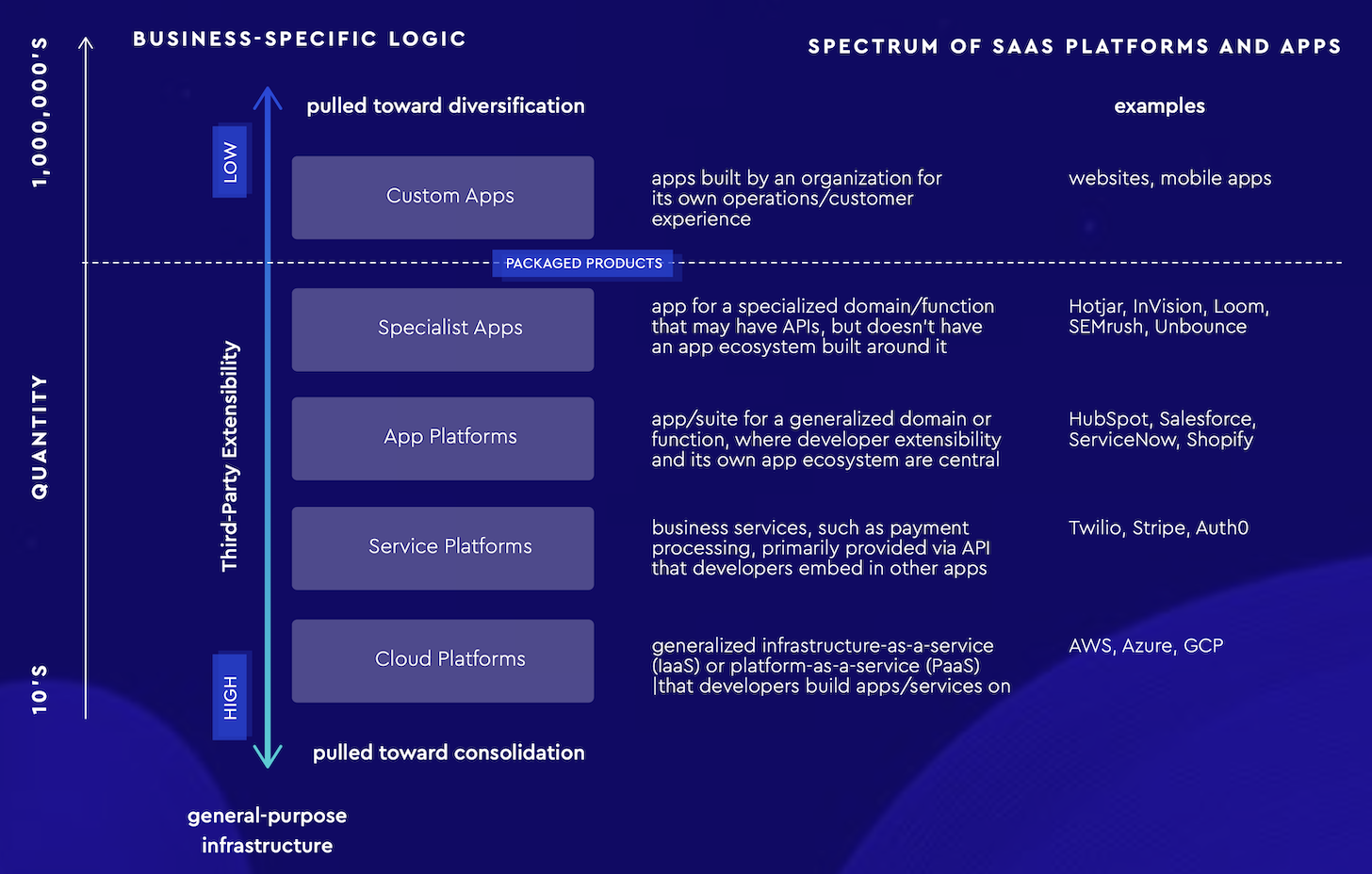
The sheer scale of the industry’s growth is best evidenced by the numbers. When the original 2020 martech landscape was published, it contained roughly 8,000 solutions. Skeptics at the time suggested we had reached "peak martech."
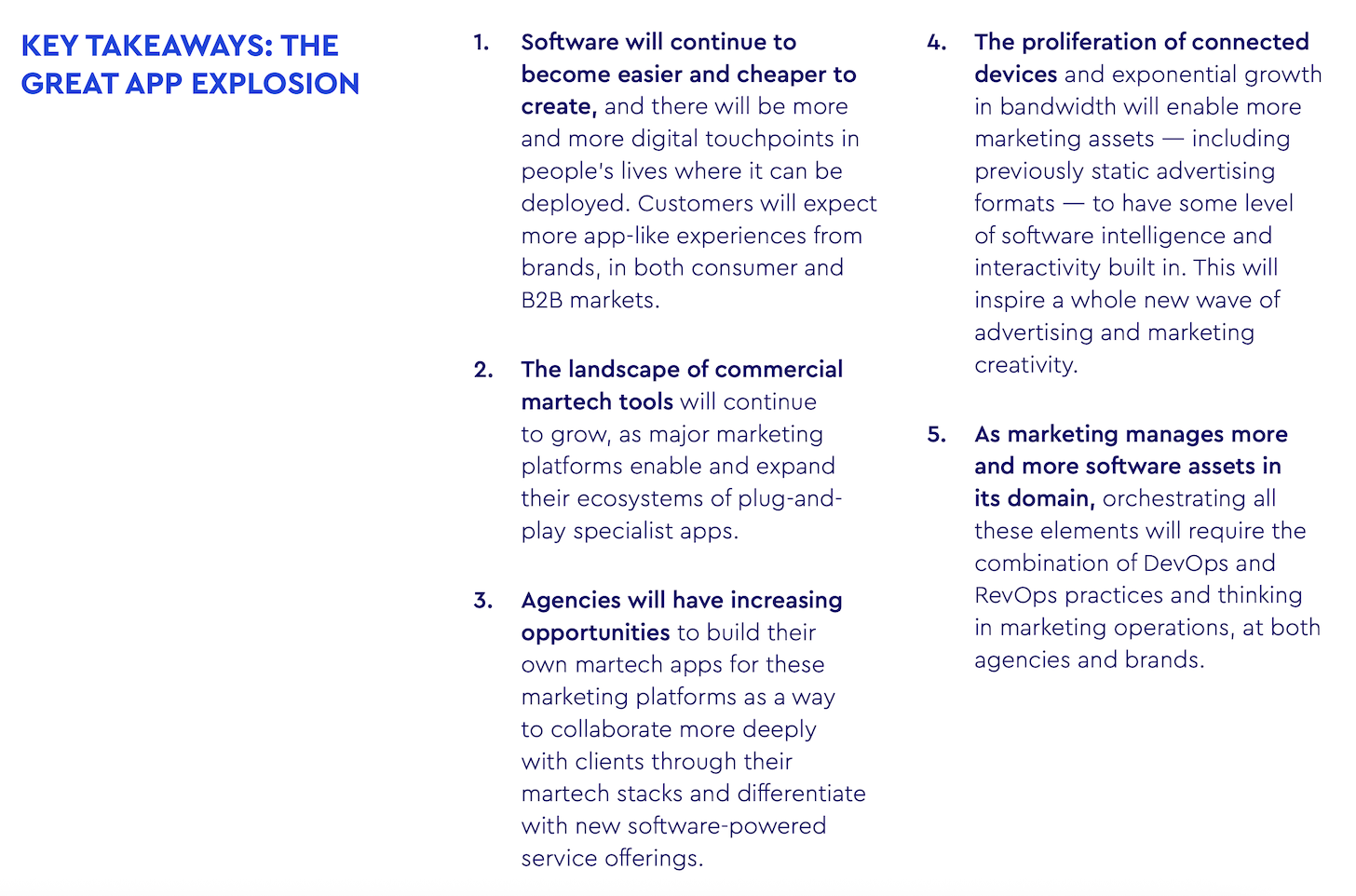
However, by 2025, that number had ballooned to 15,384 commercial solutions. This growth defies traditional logic regarding market consolidation. While M&A activity remains high, the barriers to entry in software have effectively evaporated. Because the marginal cost of building and deploying software is plummeting, new products enter the market at a rate that outpaces the speed of consolidation.
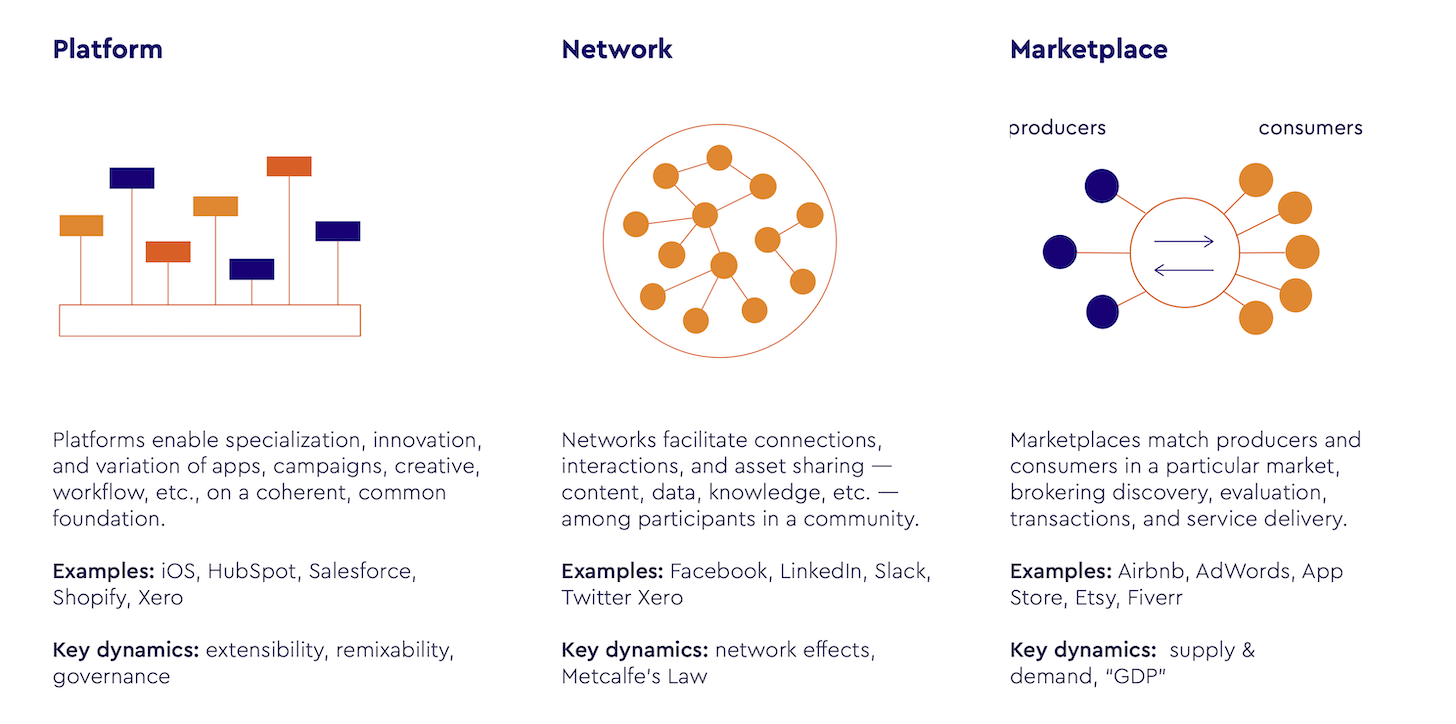
Furthermore, the hyperscalers—AWS, Google Cloud, and Microsoft—have become the new retail giants of software. These marketplaces now facilitate an estimated $45 billion in annual enterprise software sales, proving that the future of software distribution is as much about the ecosystem as it is about the individual application.
Official Responses: Grading the Predictions
The assessment from current AI giants suggests that the Martech 2030 report was remarkably accurate.
Trend #1: The Rise of the Citizen Creator
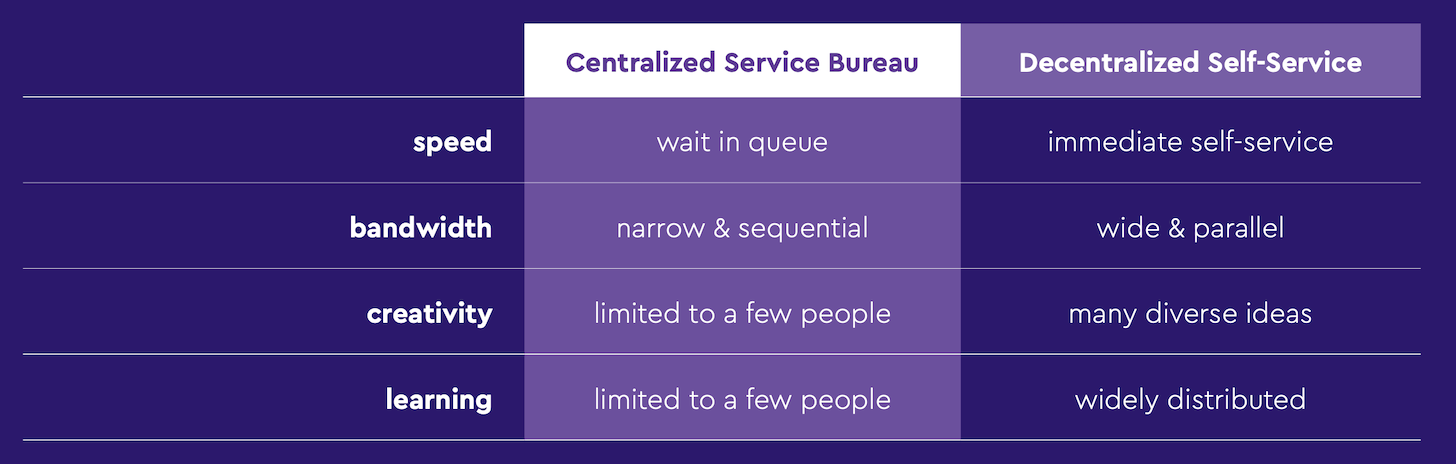
The shift from drag-and-drop to "vibe coding" was the primary engine of disruption. By enabling marketers to build their own agents and workflows, the democratization of development has reached a fever pitch. However, this has created an "immature governance" vacuum. Organizations are now grappling with how to balance the speed of decentralized innovation with the necessity of brand safety and compliance.
Trend #2: Platforms and Ecosystems
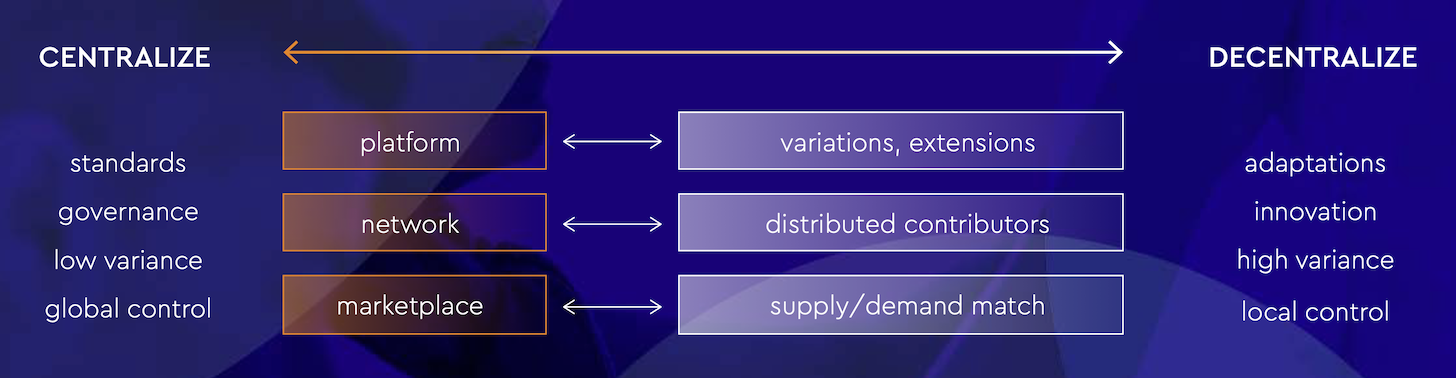
The old "suite vs. best-of-breed" debate is dead. Today’s reality is defined by the "centralize to decentralize" paradox. Companies are adopting universal data layers like Snowflake and Databricks as the central hub, allowing them to spin off thousands of specialized, decentralized applications.
Trend #3: The Great App Explosion
While the commercial landscape is crowded, the real story is the "hypertail"—the billions of custom-built, internal applications that organizations are creating to solve unique, narrow operational problems. The era of the "all-in-one" platform has given way to an era of "composed" architectures.
Trend #4: The Shift to Big Ops
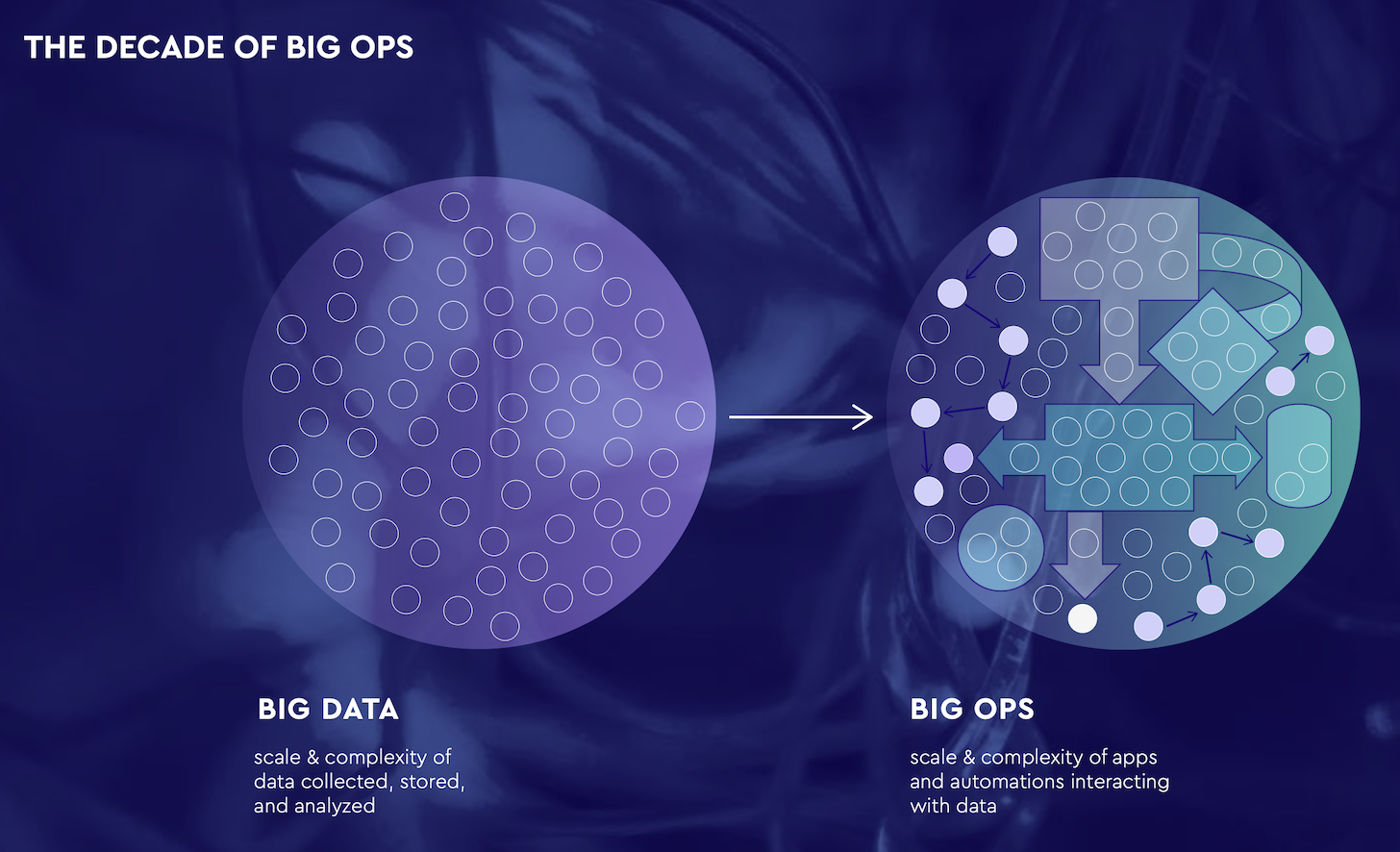
If the 2010s were about wrangling Big Data, the 2020s are about wrangling Big Ops. The central challenge is no longer just collecting data, but orchestrating the hundreds of parallel, autonomous agents running on that data. This is currently the central "battleground" for the remainder of the decade.
Trend #5: Harmonizing Humans and Machines
The prediction that AI would free marketers to focus on creativity has proven true, though not in the way many expected. We are seeing a shift from SEO (Search Engine Optimization) to AEO (AI Engine Optimization) and the rise of "Agentic Commerce," where AI buyers interact directly with AI sellers.
Implications: What to Expect Through 2030
As we look toward the final half of the decade, the implications for businesses are clear:
- Orchestration is King: The winners of the next five years will be the companies that master "Big Ops." The ability to manage the complexity of automated agents and workflows will define competitive advantage more than the specific software tools themselves.
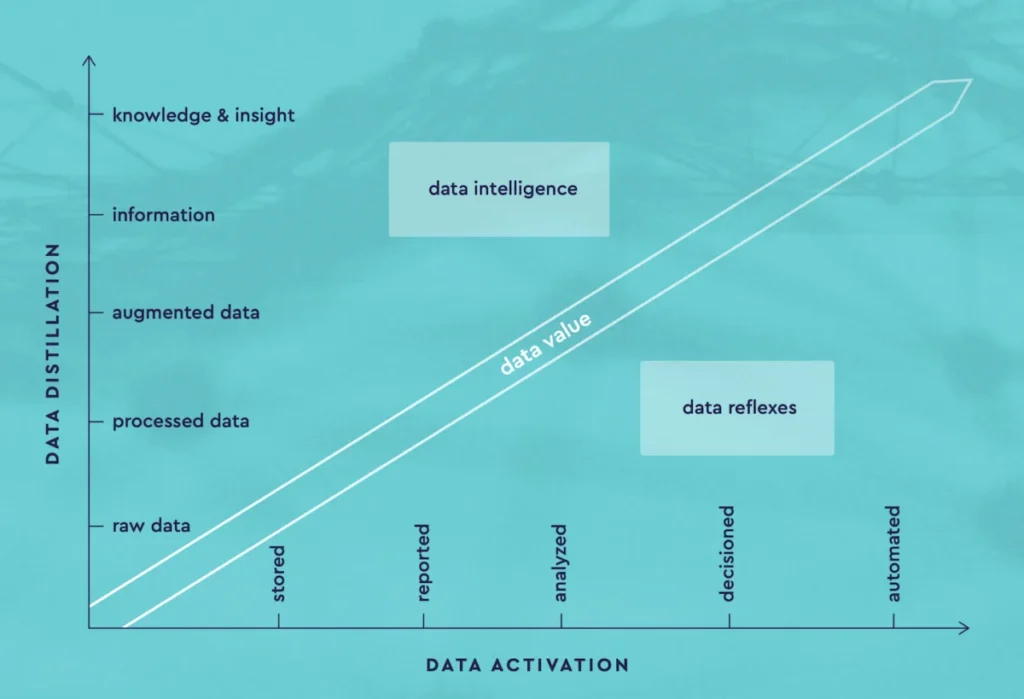
- Data as Paint, Not Oil: We must shift our mental model. Data is not merely a fuel or a commodity; it is a raw material, like oil paint. The value isn’t in the paint itself, but in the "masterpiece"—the specific, creative, and strategic output that an organization can produce using that data.
- The Persistence of Decentralization: The "hypertail" of software is not a bug; it is a feature. Organizations must stop fighting the proliferation of apps and start building the governance frameworks that allow for safe, decentralized creation.
- The Human Role: As machines handle more of the "doing," the role of the human marketer will evolve toward "curation and intent." Defining the why and the what of a campaign will become significantly more important than the manual execution of the how.
Conclusion: The Long-Term Arc
Amara’s Law—which posits that we overestimate the short-term impact of technology while underestimating its long-term effects—seems to have been a guiding light for the Martech 2030 vision. While the immediate chaos of generative AI caught many by surprise, the underlying trajectory toward a decentralized, automated, and platform-driven ecosystem has remained consistent.
As Scott Brinker noted, the pace is quickening. The transition from the "shock" of the last five years to the "optimization" of the next five will likely be just as tumultuous. By 2030, the line between human effort and machine assistance will be almost entirely blurred, leaving behind a profession that is fundamentally more powerful, more complex, and more creative than the one that existed when this report was first conceived.
For the modern marketer, the advice remains simple: keep your popcorn ready. The next five years promise to be an even more intense exploration of the potential of the augmented marketer.
